

 Roger Evans
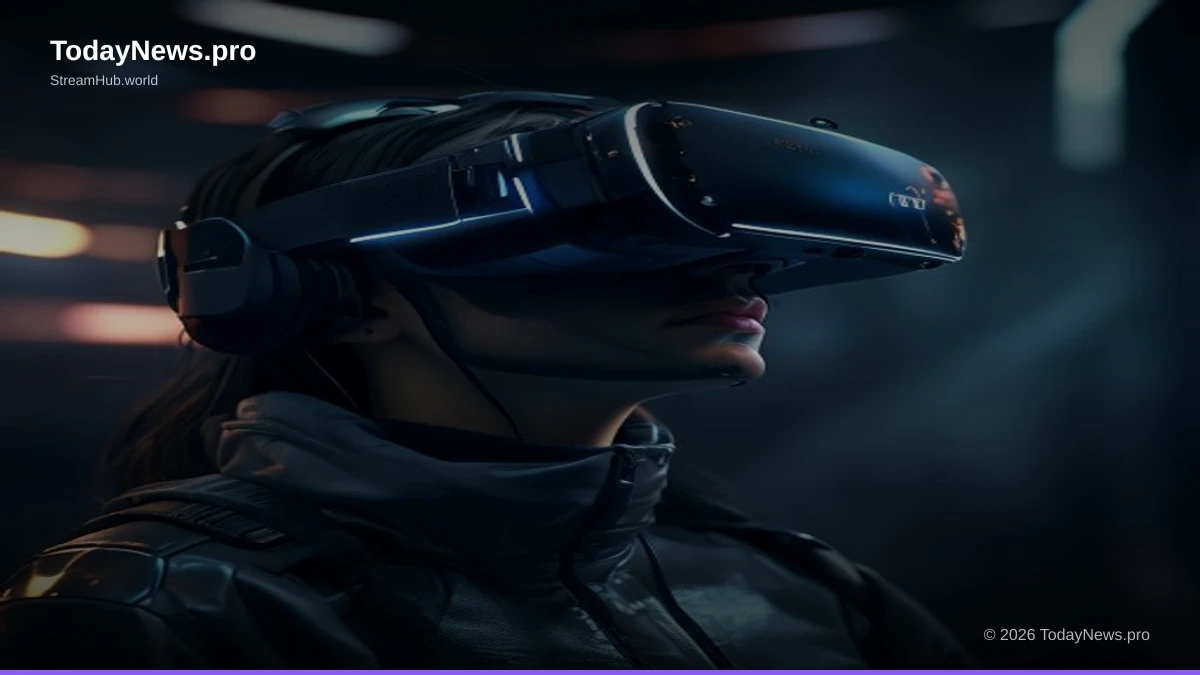
By 2030, the global market for extended reality (XR) technologies, encompassing VR and AR, is projected to reach over $500 billion, signaling a profound shift in how we consume digital content, including cinematic narratives.
The Dawn of Immersive Cinema
For over a century, cinema has been a passive, two-dimensional experience. Audiences have sat in darkness, gazing at a rectangular screen, their engagement dictated by the director's frame and the narrative unfolding within it. This paradigm, while immensely successful, has always held a latent promise of something more – a deeper, more visceral connection to the stories being told. Today, this promise is being realized through the revolutionary power of Virtual Reality (VR) and Augmented Reality (AR), technologies that are fundamentally reshaping the very definition of a "movie experience." These technologies are not merely evolving filmmaking; they are forging entirely new pathways for storytelling, moving beyond the confines of the screen to place the audience directly within the narrative fabric.
The allure of immersion is deeply rooted in human psychology. We are wired to engage with our environment through multiple senses, to feel present and involved. Traditional cinema, by its very nature, creates a deliberate distance. VR and AR, conversely, aim to dissolve this distance, creating a sense of embodiment and agency that was previously unimaginable in a cinematic context. This shift is moving us from observing a story to *inhabiting* it, a profound transformation with far-reaching implications for creators, audiences, and the industry as a whole.
From Spectator to Participant
The core difference lies in the shift from being a spectator to becoming a participant. In a traditional film, the camera acts as the audience's eyes, guiding their attention precisely. In VR, the audience's head movements dictate their view. This simple, yet profound, change empowers the viewer, granting them a degree of control over their perspective that is unprecedented. They can choose to focus on the main action, scan the periphery for hidden details, or even look away from a moment of intense drama, thereby influencing their personal experience of the narrative. This active engagement fosters a much deeper emotional connection, as the viewer becomes an integral part of the unfolding events, rather than a detached observer.
AR, while often less encompassing than VR, offers its own unique brand of immersion by layering digital elements onto our real-world view. Imagine a historical documentary where the figures and events of the past materialize in your living room, or a fantasy film where mythical creatures roam your backyard. This blending of the digital and physical realms creates a novel form of storytelling, one that is seamlessly integrated into our everyday lives. The audience’s environment becomes the canvas, and the story unfolds around them, blurring the lines between fiction and reality in captivating new ways.
Virtual Reality: Beyond the Screen
Virtual Reality headsets, once relegated to the realm of science fiction and niche gaming, are now entering the mainstream, offering unparalleled immersion. These devices create a completely artificial, computer-generated environment that users can interact with, effectively transporting them to different worlds. In the context of filmmaking, VR allows for 360-degree viewing, meaning the audience can look in any direction and experience the scene unfolding around them. This is a radical departure from the fixed perspective of traditional cinema.
The implications for storytelling are immense. Directors are no longer limited by the confines of a frame; they can design entire environments, allowing viewers to explore them at their own pace. This opens up possibilities for sub-narratives, hidden details, and a much richer understanding of the world the story inhabits. A character might be delivering a monologue center-stage, but the observant viewer might notice subtle environmental cues or interactions happening off to the side that add layers of meaning to the scene.
The Power of Presence
The key differentiator of VR storytelling is the sensation of "presence." When immersed in a well-crafted VR experience, users often report feeling as if they are truly *there*. This feeling of embodiment is incredibly powerful and can elicit stronger emotional responses than traditional media. A horror film experienced in VR can be genuinely terrifying, not just because of the visuals and sound, but because the user feels physically vulnerable within the narrative space. Similarly, a dramatic scene can resonate more deeply when the viewer feels they are standing beside the characters, witnessing their emotions firsthand.
This heightened sense of presence also allows for innovative narrative structures. Instead of a linear plot, VR films can be non-linear, allowing viewers to choose their own path through the story. They might revisit scenes from different perspectives, uncover alternative endings, or focus on specific characters or plot . This fosters a more personal and engaging experience, where the viewer becomes an active co-creator of their journey through the narrative.
Challenges in VR Narrative Design
Despite its potential, VR storytelling faces significant creative and technical challenges. One of the primary hurdles is guiding the audience's attention without resorting to the manipulative techniques of traditional filmmaking, which can feel jarring in an immersive environment. If the viewer's gaze is not directed, they might miss crucial plot points, leading to confusion or a diminished experience. Filmmakers must learn to subtly guide attention through sound design, character movement, and environmental cues, encouraging exploration rather than dictating it.
Another challenge is the technical demand. VR production requires specialized cameras, extensive post-production work, and robust rendering capabilities to create believable, high-fidelity environments. Furthermore, the physical act of wearing a VR headset for extended periods can lead to discomfort or motion sickness for some users, limiting the duration and accessibility of VR narratives. The industry is continuously working on improving headset comfort, reducing latency, and developing more intuitive interaction methods to overcome these limitations.
Augmented Reality: Blending Worlds
While VR creates entirely new realities, Augmented Reality (AR) overlays digital information and imagery onto our existing physical world. This is typically experienced through smartphones, tablets, or specialized AR glasses. AR cinema, therefore, offers a different kind of immersion – one that blends the fantastical with the familiar, bringing stories into our everyday lives.
Imagine watching a historical drama and, with a quick tap on your phone, seeing the characters from the film appear in your living room, interacting with your furniture. Or consider a sci-fi film where alien spacecraft hover above your city skyline, visible through your device. AR allows for an intimate and context-aware storytelling experience, where the narrative can be anchored to specific locations or objects, making it feel more personal and relevant to the viewer's immediate surroundings.
Interactive Storytelling in AR
AR's interactive nature makes it a potent tool for narrative engagement. Viewers can often manipulate AR elements, solve puzzles, or uncover hidden clues that advance the story. This creates a game-like quality, where the audience actively participates in the narrative's progression. For example, a mystery film could have AR elements scattered throughout the viewer's home, requiring them to find and assemble clues to unlock the next part of the story. This transforms passive viewing into an active investigation.
The potential for location-based AR storytelling is also vast. Imagine walking through a historical district and using an AR app to see how it looked centuries ago, complete with animated figures and narrated events. This bridges the gap between educational content and entertainment, offering a deeply engaging way to learn about history, culture, or even fictional universes. The real world becomes the stage, and AR provides the script and performers.
ARs Accessibility and Integration
One of AR’s significant advantages over VR is its accessibility. Most people already own smartphones capable of supporting AR applications. This lowers the barrier to entry for audiences, allowing for wider adoption and easier integration into daily life. AR experiences can be consumed on the go, during commutes, or even while multitasking, making them more flexible than traditional film screenings or dedicated VR sessions.
Furthermore, AR can augment existing cinematic experiences. Imagine watching a traditional movie on a screen, but with AR overlays that provide supplementary information, character backstories, or interactive elements that appear in your physical space. This creates a richer, multi-layered viewing experience that appeals to a tech-savvy audience looking for more than just passive entertainment. The integration of AR into streaming platforms and movie releases is an increasingly likely future development.
Technical Hurdles and Creative Frontiers
The transition to immersive storytelling is not without its challenges. Filmmakers are grappling with a new set of technical and creative considerations that require a complete rethinking of traditional production workflows. From capturing volumetric data to designing interactive narratives, the industry is in a steep learning curve.
Production and Technology
Producing VR and AR content demands entirely new tools and techniques. Standard film cameras capture flat images, whereas immersive content requires capturing depth and spatial information. This often involves specialized 360-degree cameras, multiple camera rigs, or even light field technology. Post-production becomes significantly more complex, involving stitching together multiple video feeds, creating 3D models, and optimizing content for real-time rendering within a virtual environment.
For AR, the challenge lies in seamlessly blending digital assets with the real world. This requires sophisticated tracking technology to ensure virtual objects remain stable and accurately positioned as the user moves. Developers must also consider factors like lighting, shadows, and occlusion to make digital elements appear believable within the physical environment. The computational power required for real-time AR rendering on mobile devices is also a significant constraint.
| Technology | Key Challenges | Current Status |
|---|---|---|
| Virtual Reality (VR) | Motion sickness, headset comfort, content creation complexity, hardware costs | Rapidly improving hardware, growing content library, still niche for mainstream film |
| Augmented Reality (AR) | Device compatibility, tracking accuracy, real-time rendering optimization, battery life | Widely accessible via smartphones, AR glasses in development, integration with existing media |
| Volumetric Capture | Data storage, processing power, realism of captured humans | Emerging technology, promising for digital actors and environments |
Narrative Innovation
The creative aspect of immersive storytelling is perhaps the most exciting and demanding. Filmmakers must move beyond linear narratives and learn to design experiences that cater to user agency. This involves considering multiple narrative paths, creating branching storylines, and developing systems for implicit or explicit user interaction.
"We are essentially becoming architects of experience, not just storytellers," says Anya Sharma, a pioneering VR director. "The audience is no longer just watching a story; they are walking through it, breathing it. This requires a profound shift in how we conceptualize character development, plot progression, and even emotional catharsis. We have to trust the audience to discover elements of the narrative, rather than spoon-feeding them every detail."
The concept of "diegetic" storytelling becomes paramount. This refers to elements that are part of the fictional world itself, as opposed to "non-diegetic" elements like a background score that the characters are unaware of. In immersive media, audiences can interact with or observe any part of the world, so even background details can become narrative drivers. This demands an unprecedented level of world-building and attention to detail from the creative team.
The Evolving Audience and Market Landscape
The adoption of VR and AR in filmmaking is directly tied to the evolution of consumer technology and audience expectations. As headsets become more affordable and user-friendly, and AR capabilities become standard on mobile devices, the audience for immersive content is expanding rapidly.
Consumer Adoption Trends
While VR headsets still represent a significant investment for many consumers, their price points are steadily declining. The growing availability of high-quality VR content, beyond gaming, is also a major driver of adoption. Consumers are increasingly seeking out unique and engaging entertainment experiences, and immersive cinema offers precisely that. Early adopters are often tech enthusiasts and younger demographics, but as the technology matures, it is expected to appeal to a broader audience.
AR, on the other hand, enjoys a much wider installed base thanks to the ubiquity of smartphones. This makes it an inherently more accessible entry point into immersive storytelling. The rise of AR filters on social media platforms has also familiarized a massive audience with the concept of overlaying digital elements onto their reality, paving the way for more sophisticated AR narrative applications. According to Reuters, global smartphone shipments with AR capabilities are expected to exceed 1.5 billion units by 2025, highlighting the vast potential audience.
New Business Models and Distribution
Immersive storytelling necessitates new business models and distribution channels. Traditional cinema release windows and distribution platforms are not always suitable for VR and AR experiences. This has led to the emergence of dedicated VR app stores, standalone streaming platforms for immersive content, and innovative direct-to-consumer distribution strategies.
Subscription services offering curated VR film libraries are gaining traction. Additionally, live, interactive VR events, such as virtual concerts or theater performances experienced by avatars in a shared virtual space, are testing new forms of audience engagement and revenue generation. The integration of immersive content with existing streaming giants is also a significant trend, with platforms exploring ways to offer VR and AR companion experiences to their traditional film and TV offerings.
Case Studies: Pioneers in Immersive Storytelling
Several groundbreaking projects have already demonstrated the power of VR and AR to create compelling and unforgettable cinematic experiences. These case studies offer a glimpse into the creative possibilities and technical achievements shaping the future of film.
VR Documentaries and Experiential Journalism
VR has proven to be an incredibly powerful tool for documentary filmmaking, allowing audiences to experience events and environments firsthand. Projects like "Clouds Over Sidra," a VR film produced by the UN that immerses viewers in a Syrian refugee camp, offer a profound sense of empathy and understanding. Viewers are not just told about the situation; they *feel* it, standing alongside the people affected by conflict. This experiential journalism fosters a deeper connection to global issues than traditional news reporting ever could.
Another notable example is "The Machine to Be Another," a VR project that allows users to swap bodies with another person, offering a unique perspective on identity and empathy. These documentaries push the boundaries of storytelling by leveraging VR's unique ability to create presence and foster emotional resonance, transforming passive viewers into active participants in understanding complex human experiences. For more on the ethics of VR in journalism, see resources on Wikipedia.
AR Enhanced Film Releases
Augmented reality is beginning to be integrated with traditional film releases, offering audiences new ways to interact with their favorite franchises. For example, "The Walking Dead" franchise has seen AR apps that allow fans to place characters and zombies from the show into their own environments, creating personalized, interactive experiences. These applications extend the narrative beyond the screen, fostering deeper fan engagement and providing new avenues for marketing and content expansion.
Similarly, AR filters and games tied to major movie releases allow audiences to become part of the cinematic universe in a playful and accessible way. Imagine a superhero movie where fans can use AR to "wear" the hero's mask or "wield" their powers in their own homes. This type of integration democratizes participation, allowing anyone with a smartphone to engage with the film's narrative and iconography in a personal and memorable manner. The potential for AR to serve as a companion to traditional films is vast, enriching the overall cinematic experience.
Interactive VR Narratives
Beyond passive viewing, interactive VR films are pushing the envelope of what a "movie" can be. "Notes on Blindness: Into Darkness" is a critically acclaimed VR experience based on the audio diaries of a blind theologian. It allows users to navigate the world as he experiences it, using sound and haptic feedback to convey his sensory reality. This project exemplifies how VR can translate abstract concepts and subjective experiences into tangible, interactive narratives.
"Wolves in the Walls," an interactive VR story based on the graphic novel, allows viewers to interact with characters and influence the narrative's progression. The story adapts based on the viewer's gaze and actions, creating a dynamic and personalized experience. These interactive narratives are blurring the lines between film, gaming, and theater, offering audiences a level of agency and immersion previously only dreamed of. This trend points towards a future where stories are not just consumed but actively shaped by the audience.
The Future of Film: A Glimpse Ahead
The journey of immersive storytelling is still in its nascent stages, but the trajectory is clear. VR and AR are not just passing fads; they are fundamental shifts in how we create and consume visual narratives. As technology advances and creative minds continue to innovate, the boundaries of cinematic experience will continue to expand, offering audiences increasingly profound and personal ways to engage with stories.
The Convergence of Technologies
The future will likely see a convergence of VR, AR, and other emerging technologies like Artificial Intelligence (AI) and haptic feedback. Imagine VR films where AI-driven characters react dynamically to your presence and choices, or AR experiences that use advanced haptic suits to simulate touch and texture. This integration will lead to hyper-realistic and deeply personalized storytelling that is currently beyond our imagination.
The development of lighter, more comfortable, and higher-resolution AR glasses will be crucial for widespread adoption. These devices could seamlessly overlay narrative elements onto our daily lives, transforming mundane environments into interactive story worlds. Similarly, advancements in VR locomotion and sensory feedback will make prolonged immersion more comfortable and believable, further blurring the lines between the virtual and physical realms.
Democratization of Storytelling
As the tools for creating immersive content become more accessible, we can expect a democratization of storytelling. Independent creators and smaller studios will be empowered to produce high-quality VR and AR narratives, leading to a diverse range of voices and perspectives reaching audiences. This will foster a richer and more varied cinematic landscape, moving beyond the current dominance of large studios.
The rise of user-generated content in VR and AR environments, similar to what we see on platforms like YouTube and , is also a likely future development. This could lead to entirely new forms of collaborative storytelling and emergent narratives shaped by the collective imagination of communities. The ability for anyone to create and share immersive stories will fundamentally alter the traditional power dynamics of the film industry.
The Evolving Definition of Cinema
Ultimately, VR and AR are challenging and expanding our very definition of "cinema." The traditional passive viewing experience is being augmented, and in some cases replaced, by active participation. The future of film will likely be a hybrid one, where traditional cinema coexists with immersive VR experiences, interactive AR narratives, and entirely new forms of media yet to be conceived. The emphasis will shift from simply "watching" a movie to "living" a story, creating a more profound and memorable connection between the audience and the art form.