

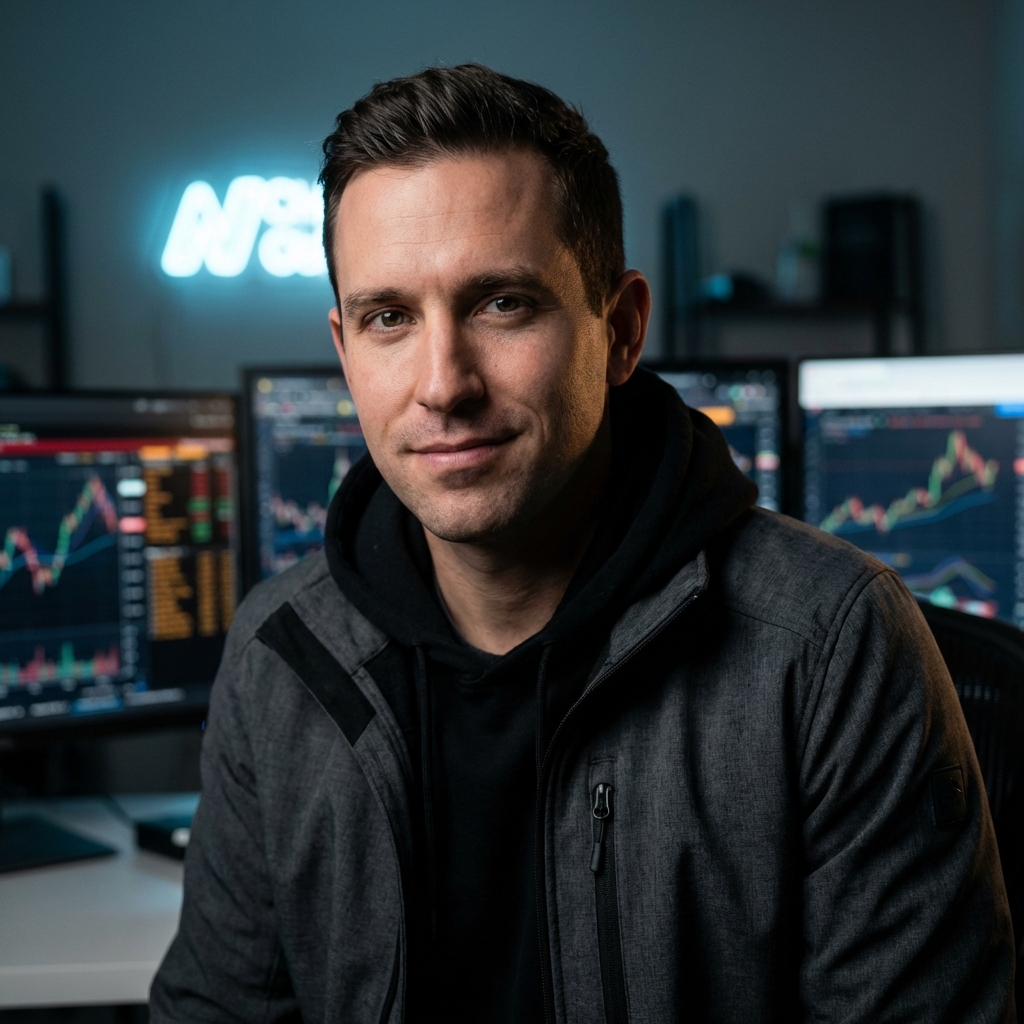
 Simon North
⏱ 15 min
The global creator economy is projected to reach $250 billion by 2023, yet a significant portion of this value accrues to centralized platforms, leaving creators with limited control and diminishing returns.
The Creator Economy: A Decade of Evolution and Its Limitations
For over a decade, the internet has fostered a burgeoning creator economy, empowering individuals to monetize their content, skills, and influence. Platforms like YouTube, Instagram, TikTok, and Patreon have become indispensable tools, enabling artists, writers, musicians, educators, and influencers to reach vast audiences. These platforms offer infrastructure for content hosting, distribution, and monetization through advertising revenue, subscriptions, and direct fan support. However, this growth has been predominantly built on a centralized model. Creators operate within strict terms of service, are subject to algorithmic whims that dictate visibility, and often see a substantial percentage of their earnings siphoned off by platform fees and intermediary cuts. Data ownership remains a contentious issue, with creators often having limited access to or control over the analytics and user data generated by their own content. This dependency creates a fragile ecosystem, where account suspensions, policy changes, or platform obsolescence can have devastating consequences for a creator's livelihood. The promise of direct connection with fans is often diluted by the opaque nature of platform operations, leading to a sense of disempowerment despite the global reach. The current paradigm, while facilitating unprecedented reach, ultimately concentrates power and profit in the hands of a few gatekeepers.The Rise of Centralized Platforms
The early days of online content creation were fragmented. However, the advent of user-friendly platforms revolutionized how creators could build audiences and monetize their work. YouTube, launched in 2005, democratized video content, while Instagram, founded in 2010, transformed visual storytelling. Patreon, emerging in 2013, offered a direct subscription model, allowing fans to support creators with recurring payments. These platforms provided essential tools for discovery, engagement, and monetization, fostering a new generation of digital entrepreneurs.The Constraints of Centralization
Despite the benefits, creators have consistently voiced concerns about the limitations imposed by centralized platforms. These include:- Algorithmic Dependence: Visibility and reach are often dictated by complex, opaque algorithms, leading to unpredictability and the need for constant adaptation.
- Platform Fees: A significant portion of creator revenue is retained by platforms as fees for services, payment processing, and advertising.
- Content Moderation and Censorship: Creators are subject to the platform's content policies, which can be inconsistently applied and lead to arbitrary content removal or account suspension.
- Data Ownership and Control: Creators often lack full ownership or granular control over their audience data, limiting their ability to build direct relationships or leverage insights effectively.
- Limited Interoperability: Content and audience relationships are often siloed within a single platform, making it difficult to migrate or diversify.
Web3: The Decentralized Revolution
Web3, often referred to as the decentralized web, represents a fundamental shift from the current internet architecture. Built on blockchain technology, it aims to create a more open, permissionless, and user-centric digital landscape. Unlike Web2, where data and control are concentrated in the hands of a few large corporations, Web3 empowers individuals by distributing ownership and governance. This is achieved through decentralized protocols, smart contracts, and distributed ledger technologies that enable peer-to-peer interactions without relying on central intermediaries. For the creator economy, this translates to a potential paradigm shift, where creators can own their content, their audience relationships, and even have a stake in the platforms they use. The core tenets of Web3 – decentralization, transparency, and user ownership – directly address the inherent limitations of the Web2 creator economy. It offers a vision of a digital future where creators are not just tenants on rented digital land, but owners and stakeholders in the digital spaces they inhabit and cultivate. This shift promises to unlock new avenues for value creation and distribution, fostering a more equitable and sustainable ecosystem for all participants.Blockchain Technology as the Foundation
At its heart, Web3 is powered by blockchain technology. A blockchain is a distributed, immutable ledger that records transactions across a network of computers. This inherent transparency and security make it ideal for establishing verifiable ownership of digital assets and facilitating secure, peer-to-peer transactions. Smart contracts, self-executing contracts with the terms of the agreement directly written into code, automate processes and eliminate the need for intermediaries.Key Principles of Web3
- Decentralization: Power and control are distributed across a network, rather than concentrated in a single entity.
- Openness and Permissionlessness: Anyone can participate and build on Web3 networks without requiring permission from a central authority.
- User Ownership: Users have greater control over their data, digital assets, and online identity.
- Transparency: Transactions and data are often publicly verifiable on the blockchain.
Non-Fungible Tokens (NFTs) and Digital Scarcity
Non-Fungible Tokens (NFTs) are a cornerstone of Web3's impact on the creator economy, introducing the concept of verifiable digital scarcity. Unlike cryptocurrencies like Bitcoin, which are fungible (each unit is interchangeable with another), NFTs are unique. Each NFT represents ownership of a specific digital or physical asset, recorded on a blockchain. This allows creators to tokenize their work – be it digital art, music, videos, or even unique experiences – and sell it directly to their audience. This not only provides a new revenue stream but also allows for the creation of authentic, collectible digital items, fostering a sense of ownership and value for fans. Furthermore, NFTs can be programmed with royalties, meaning creators can automatically receive a percentage of every future resale of their tokenized work, ensuring ongoing income long after the initial sale. This is a revolutionary concept compared to traditional digital marketplaces where creators receive no residual income from secondary sales. The ability to prove ownership and provenance on an immutable ledger fundamentally changes the value proposition of digital creation, moving it from an ephemeral experience to a tangible, ownable asset.Defining Digital Scarcity
Before NFTs, digital assets were infinitely reproducible, making it difficult to assign unique value. NFTs, by leveraging blockchain technology, create verifiable uniqueness. Each NFT has a distinct identifier and metadata that cannot be altered, making it a one-of-a-kind digital certificate of authenticity and ownership.Applications for Creators
- Digital Art: Artists can sell unique digital artworks, with the blockchain verifying ownership and authenticity.
- Music: Musicians can tokenize albums, singles, or even exclusive behind-the-scenes content, with smart contracts potentially managing royalty splits.
- Collectibles: Creators can issue limited-edition digital collectibles, fostering fan engagement and secondary markets.
- Virtual Real Estate and In-Game Assets: Within metaverse platforms, NFTs represent ownership of virtual land, items, and avatars.
Global NFT Market Growth (Estimated)
Decentralized Autonomous Organizations (DAOs) for Creator Governance
Decentralized Autonomous Organizations (DAOs) represent another significant innovation in Web3, offering creators and their communities new models for governance and collective decision-making. A DAO is essentially an organization run by code on a blockchain, governed by its token holders. Instead of a hierarchical structure with a central authority, DAOs operate based on proposals and voting mechanisms where members, typically holding governance tokens, can propose and vote on changes, funding allocation, and strategic direction. For the creator economy, this means fans and collaborators can become active participants in the evolution of a creator's brand or project. Imagine a musician's fan base collectively deciding on the next album's theme, or a game developer's community voting on new features. This fosters deeper engagement, loyalty, and a sense of shared ownership. DAOs can also facilitate funding for new projects, with token holders investing in the potential success of a creative endeavor and receiving a share of the profits or governance rights in return. This democratizes not only content creation but also its funding and direction, shifting power dynamics from centralized entities to the community itself.How DAOs Function
DAOs are governed by smart contracts that execute predefined rules. Token holders submit proposals, which are then voted on by the community. The outcome of the vote is automatically implemented by the smart contract, ensuring transparency and immutability.Creator-Fan Collaboration
- Community-Driven Content: Fans can propose and vote on ideas for future content, ensuring relevance and engagement.
- Shared Ownership: Token holders can gain a stake in the success of a creator's project, aligning incentives.
- Decentralized Funding: DAOs can serve as a crowdfunding mechanism, allowing communities to directly invest in creators.
"DAOs are not just about making decisions; they're about building true communities where everyone has a voice and a vested interest in the success of the collective. This is a fundamental shift for creators who have historically been isolated behind their work."
— Anya Sharma, Blockchain Ethicist
Tokenization: Beyond NFTs into Fractional Ownership
While NFTs offer a powerful way to tokenize individual, unique assets, the concept of tokenization in Web3 extends much further, enabling fractional ownership of more substantial or illiquid assets. This means that high-value items, such as a piece of real estate, a valuable intellectual property, or even a share in a collective fund, can be divided into smaller, tradable tokens. For creators, this opens up possibilities for co-ownership and collaborative ventures that were previously unfeasible. For instance, a group of artists could pool their resources to acquire a valuable physical studio space, with each artist owning a fraction of the property represented by tokens. Similarly, a film project could be financed by issuing tokens that represent a share of the film's future profits, allowing a broader range of investors and fans to participate. This democratizes access to investment opportunities and allows for more complex, collaborative creative endeavors by breaking down traditional barriers to entry and ownership. It transforms the creator economy from individual endeavors to interconnected, collaboratively owned ecosystems.Fractionalizing Value
Tokenization allows for the division of high-value assets into smaller, more accessible units. This makes investment and ownership more democratic.New Investment Avenues
- Real Estate: Tokenizing properties allows for fractional ownership, making real estate investment more accessible.
- Intellectual Property: Creators can tokenize royalties or ownership stakes in their IP, enabling shared revenue.
- Collectibles and Fine Art: High-value physical assets can be tokenized, allowing multiple people to own a share.
| Asset Class | Traditional Ownership | Tokenized Ownership | Accessibility |
|---|---|---|---|
| Residential Property | Full ownership, high capital requirement | Fractional ownership via tokens, lower entry point | High barrier to entry |
| Fine Art Masterpiece | Single wealthy owner | Fractional ownership, democratized access | Very high barrier to entry |
| Music Royalties | Controlled by labels or publishers | Direct tokenized royalties for artists and fans | Limited for individual artists |
The Shift in Power: From Platforms to Creators
The overarching impact of Web3 on the creator economy is a profound redistribution of power. By enabling direct ownership, decentralized governance, and programmable royalties, Web3 technologies fundamentally alter the relationship between creators, their audiences, and the platforms that facilitate their work. Creators are no longer beholden to the opaque rules and fee structures of centralized intermediaries. Instead, they can build direct, transparent relationships with their fans, fostering a sense of loyalty and co-creation. The ability to own their content as NFTs, to govern their communities through DAOs, and to earn residual income through smart contracts empowers creators with unprecedented autonomy and financial agency. This shift signifies a move from a platform-centric model, where platforms control the distribution and monetization of content, to a creator-centric model, where creators are the architects of their own digital empires. This not only benefits creators by allowing them to capture more of the value they generate but also enriches the entire ecosystem by fostering innovation, authenticity, and a more equitable distribution of wealth. The future of content creation is increasingly looking like a decentralized network of empowered individuals and communities, rather than a centralized marketplace.Empowering Creators
Web3 tools provide creators with the infrastructure to:- Own their Intellectual Property: Verifiable ownership through NFTs.
- Control their Audience Relationships: Direct engagement and data ownership.
- Earn Residual Income: Programmable royalties on secondary sales.
- Govern their Communities: Decision-making power through DAOs.
Audience as Stakeholders
Fans transition from passive consumers to active participants who can:- Own a Piece of the Creation: Through NFTs and fractional ownership.
- Influence the Creator's Direction: Via DAO governance.
- Benefit from the Creator's Success: Through shared ownership and token appreciation.
85%
of creators feel they lack control over their content on traditional platforms.
70%
of creators believe direct fan ownership could increase engagement.
$1.5B
estimated creator economy revenue captured by platforms annually.
"The most exciting aspect of Web3 for creators is the reclamation of agency. It's about moving from being a renter in the digital space to being a homeowner, building equity, and defining your own terms."
— David Chen, Founder of CreatorDAO
Challenges and the Road Ahead
Despite the immense potential, the widespread adoption of Web3 in the creator economy faces several significant hurdles. User experience remains a primary concern; the technical complexities of wallets, gas fees, and blockchain interactions can be intimidating for mainstream users and creators alike. Scalability is another critical issue, as many blockchains struggle to handle the high volume of transactions required for a global creator economy without incurring substantial costs or delays. Regulatory uncertainty also casts a shadow, with governments worldwide grappling with how to classify and regulate digital assets and decentralized entities, leading to potential compliance challenges for creators and platforms. Furthermore, the environmental impact of certain blockchain technologies, particularly proof-of-work systems, continues to be a point of contention, although more energy-efficient alternatives are gaining traction. Overcoming these challenges will require continued innovation in user interface design, advancements in blockchain scalability solutions, and clearer regulatory frameworks. Education will also play a pivotal role, helping both creators and audiences understand the value and mechanics of Web3 technologies.Key Challenges
- User Experience: Complexity of wallets, gas fees, and blockchain interactions.
- Scalability: Handling high transaction volumes efficiently.
- Regulation: Evolving legal frameworks for digital assets and DAOs.
- Environmental Concerns: Energy consumption of certain blockchain protocols.
- Security: Risks of smart contract vulnerabilities and scams.
Pathways to Adoption
- Improved User Interfaces: Simplifying the Web3 user journey.
- Layer 2 Scaling Solutions: Increasing transaction throughput and reducing costs.
- Education and Awareness: Demystifying Web3 for creators and audiences.
- Sustainable Blockchain Technologies: Adoption of energy-efficient consensus mechanisms.
- Industry Standards: Developing best practices for security and interoperability.
For more on the regulatory landscape of digital assets, consult the U.S. Securities and Exchange Commission.
The Future is Decentralized: A New Era of Digital Ownership
The integration of Web3 technologies into the creator economy is not merely an evolutionary step; it represents a fundamental reimagining of digital ownership and value creation. As the technology matures and user experiences improve, we can anticipate a future where creators operate with unprecedented autonomy, directly engaging with and being compensated by their communities. NFTs will evolve beyond speculative art pieces to become integral components of content licensing, fan club memberships, and exclusive access passes. DAOs will empower vibrant, self-governing creative communities, fostering unprecedented levels of collaboration and co-ownership. Fractional ownership models will democratize investment in creative projects, allowing fans to become patrons and stakeholders. The barriers between creators and their audiences will continue to dissolve, replaced by transparent, trustless, and mutually beneficial relationships built on shared ownership and governance. This decentralized future promises a more equitable, innovative, and sustainable ecosystem for everyone involved in the creation and consumption of digital content. The era of creators being solely dependent on centralized platforms is gradually giving way to an era where creators are the architects of their own digital destiny, empowered by the transformative potential of Web3.Discover more about the foundational principles of the internet from sources like Wikipedia.
What is the biggest advantage of Web3 for creators?
The biggest advantage is the shift towards ownership and control. Web3 allows creators to truly own their content (via NFTs), have direct relationships with their audience, and potentially govern their communities (via DAOs), reducing reliance on centralized platforms and their opaque policies.
Are NFTs the only way creators can monetize in Web3?
No, NFTs are a significant tool, but not the only one. Creators can also benefit from tokenized royalties, participation in DAOs, offering fractional ownership of assets, launching their own fungible tokens for community access or governance, and building decentralized applications (dApps) that offer unique utilities.
Is Web3 too complicated for the average creator to understand?
Currently, Web3 can have a steeper learning curve due to technical complexities like wallet management, gas fees, and understanding blockchain interactions. However, the industry is actively working on improving user interfaces and abstracting away much of this complexity to make it more accessible for the average creator and user.
How do DAOs help creators build stronger communities?
DAOs foster community by giving members a voice and stake in the creator's project. Through voting on proposals, members actively participate in decision-making, leading to increased engagement, loyalty, and a sense of shared ownership. This transforms passive fans into active community participants.
What are the environmental concerns associated with Web3?
The primary environmental concern relates to the energy consumption of some blockchain consensus mechanisms, particularly Proof-of-Work (PoW) used by Bitcoin and Ethereum (historically). However, many newer blockchains and Ethereum's transition to Proof-of-Stake (PoS) are significantly more energy-efficient, addressing these concerns.