

 Roger Evans
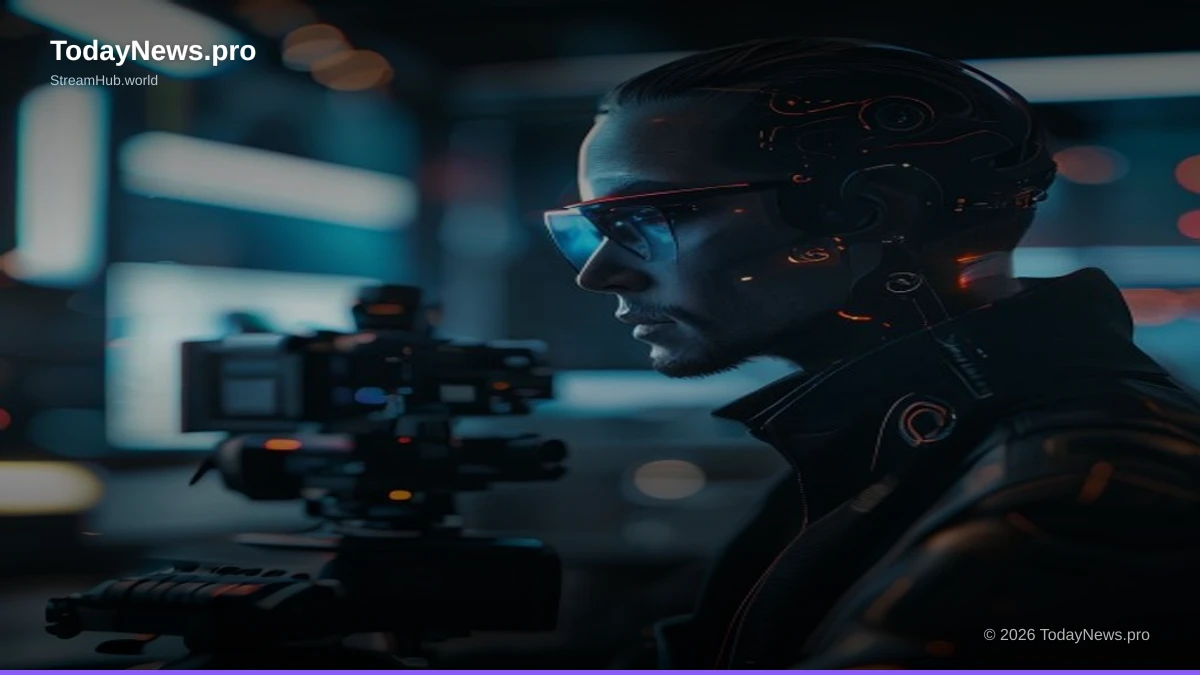
The global film industry, a sector historically defined by human artistry and meticulous craft, is at the precipice of a profound transformation, with artificial intelligence poised to become not just a tool, but a co-creator and even a director. Projections estimate the AI in media and entertainment market will surge to over $70 billion by 2028, a testament to its escalating influence.
The Dawn of the AI Director: A Paradigm Shift
For over a century, the role of the film director has been synonymous with a singular artistic vision, a complex orchestration of talent, narrative, and technical execution. This human-centric process, however, is being challenged and augmented by sophisticated AI systems. These technologies are no longer confined to mere assistance; they are demonstrating capabilities that blur the lines between tool and auteur. The concept of an "AI Director" is emerging, encompassing AI's ability to generate scripts, design visuals, guide performances, and even assemble final cuts with an uncanny understanding of cinematic language.
This shift is not about replacing human creativity entirely, but about creating a new symbiotic relationship. AI can process vast datasets of cinematic history, audience preferences, and narrative structures, offering insights and generating ideas that a human mind might take years to uncover. This democratizes filmmaking to some extent, lowering the barrier to entry for aspiring storytellers, while simultaneously pushing the boundaries of what is technically and artistically possible for seasoned professionals.
The Genesis of AI in Filmmaking
The initial forays of AI into filmmaking were largely focused on back-end processes. Machine learning algorithms were used for tasks such as organizing footage, identifying marketable story elements, and optimizing distribution strategies. Early AI-powered tools assisted with color correction, noise reduction, and basic visual effects. These were incremental improvements, enhancing efficiency rather than fundamentally altering the creative process. However, the rapid advancements in generative AI, particularly in natural language processing and image synthesis, have propelled AI into more direct creative roles.
The development of large language models (LLMs) like GPT-3 and its successors has revolutionized scriptwriting. These models can generate coherent, emotionally resonant, and thematically complex narratives based on simple prompts. Similarly, diffusion models and other generative adversarial networks (GANs) are capable of creating photorealistic images and video sequences, opening up unprecedented possibilities for visual storytelling and virtual production.
Defining the AI Director
The term "AI Director" is multifaceted. It can refer to AI systems that autonomously generate entire film concepts, scripts, and storyboards. It can also describe AI that collaborates with human directors, offering suggestions, simulating different directorial choices, or even taking over specific directorial tasks like shot composition or actor direction. In its most advanced form, an AI director could potentially oversee all aspects of a film's production, from pre-production to final delivery, guided by pre-defined parameters or learning from audience feedback in real-time.
This evolution challenges traditional notions of authorship and artistic intent. If an AI generates a screenplay that resonates deeply with audiences, who is the true author? The programmer? The AI itself? Or the human who provided the initial prompt? These are questions that the industry is only beginning to grapple with.
From Script to Screen: AIs Creative Canvas
The very foundation of a film – its script – is undergoing a radical reimagining thanks to AI. Generative AI models are capable of producing entire screenplays, from basic concepts to detailed scenes, complete with dialogue, character descriptions, and stage directions. This capability has profound implications for writers, producers, and the creative process itself.
AI-Powered Scriptwriting: The Algorithmic Muse
AI algorithms can analyze vast corpuses of existing scripts, identifying successful narrative structures, character archetypes, and dialogue patterns. By feeding these insights into generative models, AI can produce scripts that are not only coherent but also tailored to specific genres, target demographics, or even commercial viability. Tools like Sudowrite and Jasper AI are already being used by writers to brainstorm ideas, overcome writer's block, and generate draft content.
The process often involves a human-AI collaboration. A writer might provide a logline, a brief synopsis, or a set of character profiles, and the AI can then expand upon these elements, generating multiple plot threads, character arcs, or dialogue options. This allows writers to explore a wider range of creative possibilities much faster than traditional methods. The AI can act as an tireless co-writer, suggesting unexpected twists, developing subplots, or even generating dialogue that captures a specific character's voice.
Storyboarding and Pre-visualization: Visualizing the AIs Imagination
Beyond the written word, AI is also revolutionizing the visual planning stages of filmmaking. AI-powered tools can take a script and automatically generate storyboards, translating narrative descriptions into visual representations. These tools can create diverse visual styles, experiment with camera angles, and even simulate lighting conditions, allowing directors and cinematographers to visualize the film before a single frame is shot.
This pre-visualization process, traditionally a labor-intensive task, can now be accelerated dramatically. AI can generate hundreds of storyboard variations in minutes, enabling filmmakers to explore a much broader spectrum of visual approaches. This not only saves time and resources but also fosters a more dynamic and iterative creative process. AI can also be used to create animatics and 3D pre-renders, offering a more immersive and accurate preview of the final film.
AI in Music and Sound Design: Orchestrating the Auditory Experience
The auditory landscape of a film is as crucial as its visuals. AI is making significant inroads in composing original scores and designing soundscapes. Generative AI models can learn the styles of various composers and genres, producing unique and emotionally appropriate music for specific scenes. They can adapt to the pacing and mood of the film, ensuring a cohesive auditory experience.
Similarly, AI can generate realistic sound effects, from ambient noise to complex Foley sounds. It can synthesize voices for background characters or even create entirely new sonic textures that are impossible to capture with traditional methods. This allows for a more intricate and immersive sound design, enriching the viewer's experience and contributing significantly to the film's overall atmosphere and narrative impact. Companies like Amper Music and AIVA have already made waves in AI-generated music for media.
Visualizing the Unseen: AI in Cinematography and VFX
The realm of visual effects (VFX) and cinematography has long been at the forefront of technological adoption in filmmaking. AI is now accelerating this trend, offering unprecedented capabilities in creating realistic imagery, enhancing visual fidelity, and enabling entirely new forms of cinematic expression.
Generative Visuals: From Concept to Reality
Generative AI models like DALL-E 2, Midjourney, and Stable Diffusion have demonstrated an astonishing ability to create photorealistic images and concept art from text prompts. In filmmaking, these tools can be used to generate breathtaking landscapes, fantastical creatures, intricate set designs, and even entire animated sequences. This drastically reduces the time and cost associated with traditional concept art and matte painting.
The application extends beyond static images. AI is capable of generating short video clips, animating still images, and even creating entirely synthetic environments that can be seamlessly integrated into live-action footage. This is particularly revolutionary for science fiction, fantasy, and historical dramas, where creating believable worlds often requires extensive digital artistry. The ability to rapidly iterate on visual concepts allows filmmakers to explore more ambitious and imaginative ideas.
AI in Virtual Production and Set Design
Virtual production, which uses LED screens to display digital backgrounds in real-time, is a rapidly growing area of filmmaking. AI plays a crucial role in optimizing these environments. It can generate and dynamically alter backdrops based on the script, actor movements, and camera perspective. AI can also be used to procedurally generate vast, detailed virtual sets that would be prohibitively expensive to build physically.
Furthermore, AI can assist in set design by suggesting optimal layouts, lighting schemes, and prop placements based on historical data, artistic principles, and even psychological effects on the audience. This allows for faster iteration and more informed decisions in the pre-production and virtual scouting phases.
Enhancing Cinematography: Intelligent Cameras and Shot Generation
The camera itself is becoming smarter with AI. Advanced algorithms can analyze scenes in real-time, automatically adjusting focus, exposure, and white balance to achieve optimal results. AI-powered stabilizers can smooth out camera shake beyond what was previously possible, creating fluid and professional-looking shots. Some experimental systems are even exploring AI's ability to suggest or execute camera movements based on script analysis and directorial intent.
AI can also assist in shot composition by identifying the most aesthetically pleasing framing, considering principles of the rule of thirds, leading lines, and depth of field. For independent filmmakers or those working with limited crews, AI can act as a virtual cinematographer, helping to capture professional-quality footage with fewer resources. The integration of AI into cameras promises to democratize high-quality cinematography.
The Algorithmic Actor: Digital Performances and Synthetic Stars
The concept of digital actors and performances has been a staple of science fiction for decades. AI is now making this a tangible reality, raising profound questions about performance, authenticity, and the future of acting as a profession.
Deepfakes and Digital Doubles: Ethical and Creative Implications
Deepfake technology, powered by AI, allows for the manipulation of video and audio to create hyper-realistic depictions of individuals saying or doing things they never did. While this technology has significant ethical concerns regarding misinformation and consent, it also has potential applications in filmmaking. AI can be used to de-age actors, digitally recreate deceased performers for specific roles, or even generate entirely synthetic actors based on specific characteristics.
The ability to create digital doubles is a powerful tool for VFX. It allows for the performance of dangerous stunts without risking the actor's safety. It can also be used to seamlessly insert actors into scenes where they were not physically present, or to extend the lifespan of a franchise by using a younger or digitally reconstructed version of a beloved actor. However, the ethical implications of using an actor's likeness without their explicit consent or perpetuating the use of deepfakes for malicious purposes are significant and require careful consideration and regulation.
AI-Generated Performances: The Future of Acting?
Beyond manipulating existing footage, AI is also being developed to generate performances from scratch. By training AI on massive datasets of human acting, researchers are creating models that can produce nuanced emotional expressions, convincing body language, and even naturalistic dialogue delivery. These synthetic actors could potentially be used to fill minor roles, provide background characters, or even take on leading roles in entirely AI-generated films.
This development presents a significant challenge to the acting profession. While AI can mimic human performance, it currently lacks the lived experience, emotional depth, and improvisational spontaneity that define great acting. The debate is ongoing whether AI can ever truly replicate the subjective experience of human emotion that actors bring to their roles. For now, AI is more likely to augment human actors, providing tools for enhancement and digital manipulation, rather than replacing them entirely in leading roles.
The Ethical Minefield of Digital Likeness
The use of AI to create digital actors and manipulate existing performances raises complex ethical questions about intellectual property, consent, and the potential for exploitation. Who owns the digital likeness of an actor? What rights do actors have over AI-generated performances that mimic their style? How can we prevent the misuse of deepfake technology to misrepresent individuals or spread disinformation?
Industry bodies and legal experts are actively debating these issues, seeking to establish frameworks and regulations that protect actors' rights and ensure responsible AI development. The ability to create a digital double of an actor, which can then be used in perpetuity, could fundamentally alter the contractual landscape of the entertainment industry. Establishing clear guidelines for consent, compensation, and usage rights is paramount as AI's capabilities in this area continue to expand.
Post-Production Revolution: Editing, Sound, and Color Grading
The final stages of filmmaking, where raw footage is transformed into a polished product, are being profoundly reshaped by AI. From automated editing to intelligent sound mixing and advanced color grading, AI is streamlining workflows and unlocking new creative possibilities.
AI-Assisted Editing: The Intelligent Cut
Video editing, traditionally a highly manual and time-consuming process, is being augmented by AI tools. Algorithms can now analyze footage, identify key moments, and even generate rough cuts based on narrative cues or desired pacing. AI can help editors by automatically transcribing dialogue, synchronizing audio and video, and suggesting optimal takes for specific scenes. This allows human editors to focus on the higher-level creative decisions and narrative shaping.
Furthermore, AI can analyze audience engagement data to suggest edits that are likely to resonate better with viewers. For instance, an AI might recommend cutting a scene shorter if it detects a drop in viewer attention or extending a moment if it predicts increased emotional impact. This data-driven approach to editing is a significant departure from purely intuitive methods and promises to optimize films for maximum impact. Tools like Adobe Premiere Pro's auto reframe and various AI-powered editing plugins are already demonstrating these capabilities.
| AI Feature | Time Savings (Estimated) | Impact on Workflow |
|---|---|---|
| Automated Rough Cuts | 20-30% | Speeds up initial assembly, allowing focus on creative refinement. |
| Dialogue Transcription & Sync | 30-40% | Reduces manual effort in organizing footage and aligning audio. |
| Scene Selection & Best Take Suggestion | 15-25% | Aids editors in making faster, more informed decisions. |
| Color Grading Suggestions | 10-20% | Provides a starting point for colorists, accelerating the process. |
Intelligent Sound Mixing and Mastering
The intricate process of sound mixing, which involves balancing dialogue, music, and sound effects, is also benefiting from AI. AI-powered tools can analyze audio tracks and automatically adjust levels, EQ, and dynamics to achieve a professional, balanced mix. They can identify and remove unwanted background noise, enhance dialogue clarity, and even master tracks to meet industry standards.
This automation can significantly reduce the workload for sound engineers, especially on projects with tight deadlines or limited budgets. AI can also be used to generate spatial audio effects, creating a more immersive and three-dimensional soundscape for audiences. The ability of AI to learn from vast libraries of professionally mixed audio allows it to replicate and even improve upon human mixing techniques.
AI-Driven Color Grading and Finishing
Color grading is an art form that shapes the mood and visual identity of a film. AI is now assisting colorists by suggesting color palettes, matching shots, and automating repetitive tasks. AI can analyze the content of a scene and propose color grades that align with specific genres or emotional tones. It can also ensure continuity across different shots, even if they were filmed under varying lighting conditions.
This not only speeds up the color grading process but also makes sophisticated color correction more accessible to filmmakers with less specialized expertise. AI can also be used for advanced image restoration, upscaling low-resolution footage, and removing digital artifacts, thereby enhancing the overall visual quality of the final film. The precision and consistency that AI can bring to color grading are invaluable for achieving a polished final product.
Ethical Labyrinths and Future Frontiers
As AI becomes more deeply embedded in filmmaking, it brings with it a complex set of ethical considerations and opens up a vista of future possibilities that are both exciting and daunting.
The Impact on the Workforce: Displacement or Augmentation?
One of the most significant concerns surrounding AI in filmmaking is its potential impact on the human workforce. Roles that involve repetitive tasks, data analysis, or basic execution could be automated. This includes some aspects of scriptwriting, storyboarding, VFX work, editing, and even certain directorial functions. The fear of widespread job displacement is palpable within the industry.
However, many argue that AI will primarily serve as an augmentation tool, enhancing human capabilities rather than replacing them entirely. New roles will emerge, such as AI wranglers, prompt engineers for visual generation, and AI ethicists for film production. The focus will likely shift towards creative oversight, strategic decision-making, and the unique human elements that AI cannot replicate, such as nuanced emotional understanding and subjective artistic judgment. The key will be adapting and upskilling to work alongside AI.
Authorship, Copyright, and Originality in the Age of AI
The legal and philosophical questions surrounding authorship and copyright are among the most challenging. If an AI generates a script, who holds the copyright? The developers of the AI? The individual who provided the prompt? Or is the work in the public domain? Current copyright laws are not well-equipped to handle AI-generated content, and legal battles are inevitable.
Furthermore, the concept of originality is called into question when AI is trained on vast datasets of existing creative works. Ensuring that AI-generated content does not infringe on existing copyrights and maintaining a distinction between derivative works and genuine originality will be critical. The development of robust AI ethics guidelines and potentially new legal frameworks will be necessary to navigate this complex terrain.
The Future of Storytelling: Interactive Films and Personalized Cinema
Looking ahead, AI is poised to unlock entirely new forms of cinematic experiences. Imagine interactive films where the audience's choices directly influence the narrative, with AI dynamically generating new scenes and plotlines in real-time. Personalized cinema, where films are tailored to individual viewer preferences, moods, and even biometric data, could become a reality.
AI could enable films to adapt their pacing, tone, or even character focus based on viewer engagement. This opens up possibilities for deeply immersive and uniquely personal entertainment experiences. The ability of AI to understand and predict human emotional responses could lead to films that are not just watched but deeply felt and interacted with. The future of filmmaking promises to be more dynamic, responsive, and personalized than ever before, with AI at its core.
The integration of AI into filmmaking is not a distant possibility; it is a present reality that is rapidly evolving. From the initial spark of an idea to the final polish of the edit, artificial intelligence is reshaping every facet of the industry. While challenges related to ethics, employment, and authorship remain, the transformative potential of AI to democratize filmmaking, push creative boundaries, and forge entirely new cinematic languages is undeniable. The "AI Director" is no longer a theoretical concept, but an emerging force that will define the future of storytelling on screen.