

 Sarah Jenkins
⏱ 25 min
The global AI market is projected to reach over $1.5 trillion by 2030, with a significant portion of this growth fueled by its integration into enterprise workflows and its emergence as a ubiquitous co-worker.
The Dawn of the AI Colleague: A Paradigm Shift
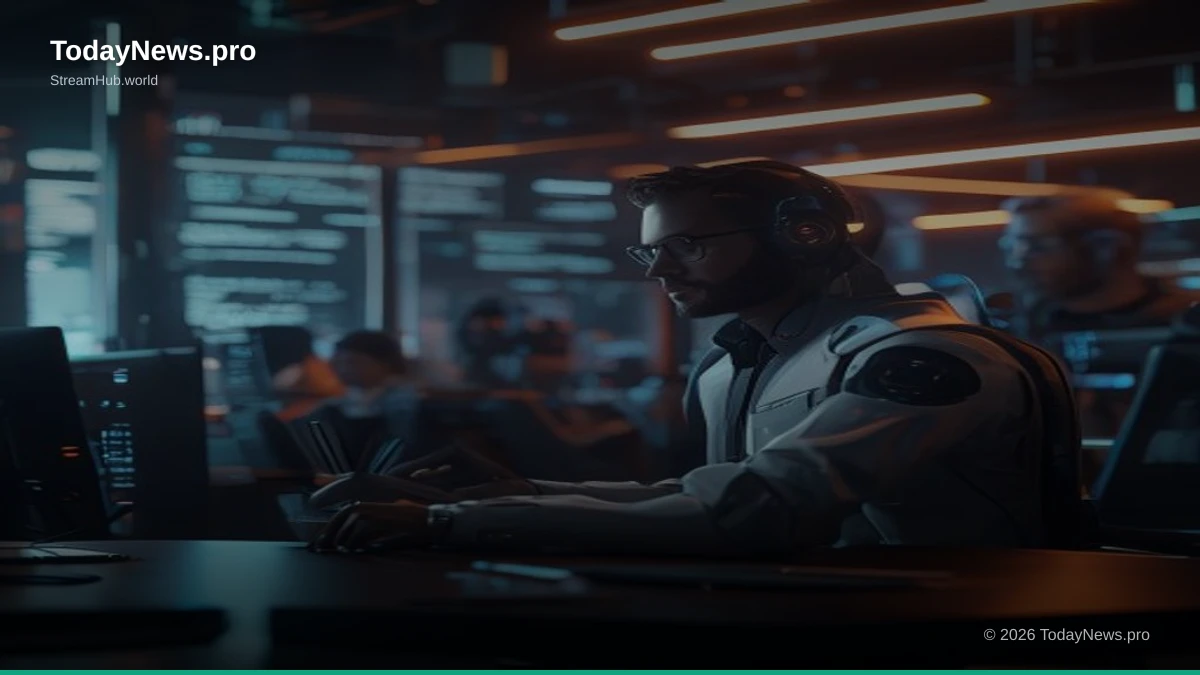
The year is 2030. The hum of servers is no longer confined to data centers; it's an ambient presence in every office, every home office, every collaborative space. Artificial intelligence, once a tool for specific tasks, has evolved into a fully integrated "AI co-worker," a digital entity that collaborates, assists, and even initiates alongside its human counterparts. This isn't science fiction; it's the tangible reality reshaping the modern workplace, moving beyond mere automation to a profound redefinition of productivity and collaboration. The advent of sophisticated Large Language Models (LLMs) and advanced machine learning algorithms has paved the way for AI systems that possess a nuanced understanding of context, intent, and even emotional tone. These AI co-workers are not simply executing predefined commands; they are actively participating in the creative process, offering insights, and streamlining complex workflows with an efficiency that was unimaginable a decade ago.The Evolution from Tool to Teammate
Early AI applications were primarily focused on task automation. Think of chatbots handling basic customer service queries or algorithms optimizing supply chains. While impactful, these were discrete functions, separate from the core human workforce. The AI co-worker, however, is designed for integration. It learns from its human colleagues, adapts to team dynamics, and contributes to ongoing projects in a fluid, organic manner. This shift from a static tool to a dynamic teammate marks a fundamental change in how businesses operate.Personalized Productivity Assistants
At an individual level, AI co-workers act as hyper-personalized productivity assistants. They can anticipate needs, manage schedules with uncanny precision, draft complex documents, conduct preliminary research, and even offer real-time feedback on communication styles. For instance, an AI co-worker might analyze a draft email for tone, clarity, and potential misunderstandings before it's even sent, ensuring optimal reception. This level of proactive support liberates human employees from mundane administrative burdens, allowing them to focus on higher-order cognitive tasks that require creativity, critical thinking, and emotional intelligence.Augmenting Human Capabilities: Beyond Automation
The narrative surrounding AI in the workplace has long been dominated by fears of job displacement through automation. However, by 2030, the dominant paradigm has shifted towards augmentation. AI co-workers are not replacing humans; they are amplifying human potential, enabling individuals and teams to achieve levels of output and innovation previously unattainable.Enhanced Decision-Making Through Data Synthesis
One of the most significant ways AI co-workers augment human capabilities is through their unparalleled ability to process and synthesize vast amounts of data. In fields like finance, healthcare, and scientific research, complex datasets can overwhelm even the most experienced human analysts. An AI co-worker can sift through terabytes of information in minutes, identify patterns, flag anomalies, and present actionable insights in a clear, concise format. This allows human decision-makers to base their strategies on a more comprehensive and accurate understanding of the landscape, reducing the likelihood of errors and missed opportunities. For example, a marketing team preparing a new campaign can leverage their AI co-worker to analyze competitor strategies, consumer sentiment across social media platforms, and historical campaign performance. The AI can then suggest optimal targeting parameters, messaging themes, and budget allocations, leaving the human team to focus on creative execution and strategic oversight.Accelerated Research and Development
In R&D departments, AI co-workers are revolutionizing the pace of discovery. They can accelerate literature reviews, simulate complex experiments, and identify potential breakthroughs by analyzing research papers and patent filings at an unprecedented scale. This significantly shortens the R&D cycle, bringing new products and services to market faster. Pharmaceutical companies are using AI to identify potential drug candidates and predict their efficacy, while material scientists are employing AI to discover new compounds with desirable properties.Personalized Learning and Skill Development
The AI co-worker also plays a crucial role in continuous learning and skill development. By monitoring an individual's performance and identifying areas for improvement, AI can curate personalized learning pathways, recommend relevant training modules, and provide adaptive feedback. This ensures that employees are constantly upskilling to meet the evolving demands of the workplace, fostering a culture of lifelong learning.Redefining Collaboration: The Hybrid Human-AI Team
The most profound transformation brought about by AI co-workers is in the realm of collaboration. The traditional team structure is evolving into a hybrid model, where human and artificial intelligences work in concert, leveraging each other's strengths to achieve synergistic outcomes. This new form of collaboration demands new communication protocols, a shared understanding of AI capabilities, and a redefinition of team roles.Seamless Workflow Integration
AI co-workers are seamlessly integrated into existing workflows. They can participate in virtual meetings, contribute to shared documents in real-time, manage project timelines, and facilitate communication across geographically dispersed teams. Imagine a project manager overseeing a complex software development project. Their AI co-worker can monitor code repositories, flag potential bugs, track sprint progress, and even generate progress reports, all while the human manager focuses on strategic direction and team morale. This seamless integration minimizes friction and maximizes efficiency. AI can handle repetitive communication tasks, schedule meetings across different time zones, and ensure that all relevant information is accessible to the right people at the right time, freeing up human collaborators for more strategic and creative interactions.Bridging Communication Gaps
AI co-workers excel at bridging communication gaps, not just between humans but also between humans and machines. They can translate languages in real-time during international calls, summarize lengthy discussions into key action items, and even help draft communications that are tailored to specific audiences. This fosters a more inclusive and efficient collaborative environment.Conflict Resolution and Team Dynamics Support
While AI cannot fully replicate human empathy, advanced AI co-workers are beginning to offer support in managing team dynamics and even mediating minor conflicts. By analyzing communication patterns and sentiment within a team, AI can identify potential friction points and suggest interventions. For instance, an AI might flag if a particular team member's contributions are consistently being overlooked or if communication within a sub-group has become overly negative. These insights can then be used by human leaders to foster a more positive and productive team environment.Perceived Benefits of AI Co-workers in Team Collaboration
Challenges and Ethical Considerations in the AI-Integrated Workplace
The rapid integration of AI co-workers is not without its complexities and ethical dilemmas. As these systems become more sophisticated and intertwined with our professional lives, careful consideration must be given to issues of privacy, bias, accountability, and the potential for unintended consequences.Data Privacy and Security
AI co-workers require access to vast amounts of data, including sensitive personal and proprietary company information. Ensuring the privacy and security of this data is paramount. Robust encryption, strict access controls, and transparent data governance policies are essential to prevent breaches and misuse. The potential for AI systems to inadvertently reveal confidential information or to be exploited for malicious purposes necessitates a vigilant approach to cybersecurity.Algorithmic Bias and Fairness
AI systems learn from the data they are trained on. If this data contains historical biases, the AI can perpetuate and even amplify these biases in its decision-making and interactions. This can lead to unfair hiring practices, discriminatory performance evaluations, and inequitable distribution of opportunities. Rigorous auditing of AI algorithms for bias and the continuous development of more equitable training datasets are crucial steps in mitigating this risk.72%
of employees express concern about AI bias
60%
of companies have implemented AI bias mitigation strategies
40%
of AI-related ethical breaches involved data privacy
Accountability and Liability
When an AI co-worker makes an error that has significant consequences, who is responsible? Is it the developer, the deploying company, or the human who supervised the AI? Establishing clear lines of accountability and liability for AI-driven decisions is a complex legal and ethical challenge that is still being actively debated and refined. This requires new frameworks for understanding responsibility in a human-AI collaborative environment.The Black Box Problem
The inner workings of some advanced AI models can be incredibly complex, making it difficult to understand precisely how they arrive at their conclusions. This "black box" problem can hinder trust and make it challenging to identify and rectify errors or biases. Research into explainable AI (XAI) is crucial for demystifying AI decision-making processes and fostering greater transparency and trust among human users."The most critical challenge we face with AI co-workers isn't technological; it's human. We must prioritize building trust, ensuring transparency, and fostering a collaborative environment where humans and AI can work together ethically and effectively."
— Dr. Anya Sharma, Lead AI Ethicist, FutureWork Institute
Skills for the Future: Navigating the AI Co-Worker Landscape
The rise of AI co-workers necessitates a fundamental rethinking of the skills required for professional success. While technical proficiency will remain important, a greater emphasis will be placed on uniquely human attributes that complement AI's capabilities.The Ascendancy of Soft Skills
Skills such as critical thinking, complex problem-solving, creativity, emotional intelligence, and adaptability are becoming even more valuable. AI can process data and execute tasks, but it lacks the nuanced understanding of human emotions, the capacity for true innovation, and the ability to navigate complex interpersonal dynamics that humans possess. These "soft skills" are essential for guiding AI, interpreting its outputs, and driving strategic initiatives.AI Literacy and Prompt Engineering
A new form of literacy is emerging: AI literacy. This encompasses understanding how AI systems work, their capabilities and limitations, and how to effectively interact with them. Prompt engineering, the art of crafting precise and effective prompts to elicit desired outputs from AI models, is becoming a highly sought-after skill. Professionals who can communicate effectively with AI will be able to leverage its power more efficiently.Continuous Learning and Adaptability
The pace of AI development is relentless. Professionals must embrace a mindset of continuous learning, staying abreast of new AI tools, applications, and best practices. Adaptability will be key, as job roles and workflows will continue to evolve. Those who are willing to learn and adapt will thrive in this dynamic environment.| Skill Category | Importance in 2025 | Importance in 2030 |
|---|---|---|
| Critical Thinking | High | Very High |
| Emotional Intelligence | High | Very High |
| AI Literacy | Medium | Very High |
| Creativity | High | High |
| Technical Proficiency (Traditional) | High | Medium |
Case Studies: Early Adopters and Their AI Transformations
Forward-thinking companies have been experimenting with AI co-workers for years, paving the way for broader adoption. These early adopters are providing invaluable insights into the practical benefits and challenges of this new era of work.The Financial Sector: Algorithmic Analysts and Client Advisors
Major financial institutions have been at the forefront of AI integration. AI co-workers act as algorithmic analysts, sifting through market data, identifying investment opportunities, and flagging potential risks with remarkable speed and accuracy. Furthermore, sophisticated AI-powered client advisors are providing personalized financial advice and managing portfolios, augmenting the capabilities of human advisors and extending their reach to a broader client base. A prominent investment bank reported a 30% increase in trading strategy development speed after implementing AI co-workers to analyze market trends and predict asset performance.Healthcare: Diagnostic Assistants and Administrative Streamliners
In healthcare, AI co-workers are proving invaluable. They assist physicians in diagnosing diseases by analyzing medical images and patient data, often identifying subtle patterns that might be missed by the human eye. Beyond clinical applications, AI is streamlining administrative tasks, managing patient records, scheduling appointments, and even assisting in medical billing, freeing up healthcare professionals to focus on patient care. A recent study showed that AI diagnostic assistants reduced the time to diagnosis for certain rare conditions by an average of 25%.Creative Industries: AI-Assisted Content Creation
Even in creative fields, AI co-workers are finding their place. Graphic designers are using AI tools to generate initial design concepts, explore color palettes, and even create placeholder imagery. Writers are leveraging AI to brainstorm ideas, draft outlines, and check for grammar and style. While the final creative vision and artistic touch remain human, AI acts as a powerful accelerant, enabling faster iteration and exploration of possibilities. A digital marketing agency noted a 40% increase in content production output by integrating AI writing assistants into their workflow."We're not just automating tasks; we're automating thinking. Our AI co-workers are not just tools; they are collaborators that push us to be more creative, more analytical, and ultimately, more effective."
— David Lee, Chief Innovation Officer, Innovate Solutions Inc.
The Economic Impact: Productivity Gains and Job Evolution
The widespread adoption of AI co-workers is poised to unleash significant economic benefits, primarily through enhanced productivity and a transformation of the job market. While concerns about job displacement persist, the consensus among industry analysts is that AI will primarily lead to job evolution rather than outright elimination.Unprecedented Productivity Boosts
The ability of AI co-workers to handle repetitive tasks, accelerate data analysis, and optimize workflows translates directly into substantial productivity gains. Businesses that effectively integrate AI are reporting significant improvements in operational efficiency, reduced costs, and faster time-to-market for products and services. This boost in productivity is expected to fuel economic growth and create new opportunities. For instance, a logistics company estimated a 15% reduction in operational overhead by deploying AI co-workers for route optimization and inventory management.The Evolution of Job Roles
Instead of mass unemployment, the job market is witnessing a significant shift in the nature of roles. Jobs that are highly repetitive and rule-based are likely to diminish, while new roles focused on AI management, development, ethical oversight, and human-AI collaboration will emerge. The demand for individuals who can leverage AI tools, interpret their outputs, and guide their development will skyrocket. This necessitates a proactive approach to reskilling and upskilling the workforce to meet these new demands.New Industries and Business Models
The capabilities unlocked by AI co-workers are also fostering the creation of entirely new industries and business models. Companies specializing in AI ethics consulting, AI integration services, and personalized AI-driven solutions are experiencing rapid growth. This entrepreneurial activity further contributes to economic dynamism and job creation. The emergence of personalized AI tutors, for example, is opening up new avenues in education and professional development.8-12%
projected annual productivity growth from AI adoption
15-20%
increase in new job creation related to AI by 2030
70%
of existing jobs will be augmented by AI, not replaced
Will AI co-workers take all our jobs?
While AI will automate certain tasks and some jobs may become obsolete, the prevailing trend is towards augmentation. New roles focused on AI management, ethical oversight, and human-AI collaboration will emerge. Most jobs will be transformed rather than eliminated, requiring new skills and adaptability.
How can I prepare myself for the AI co-worker revolution?
Focus on developing uniquely human skills like critical thinking, emotional intelligence, creativity, and complex problem-solving. Cultivate AI literacy, understanding how AI works and how to interact with it effectively, including prompt engineering. Embrace continuous learning and adaptability to stay relevant in a rapidly evolving job market.
What are the biggest ethical concerns surrounding AI co-workers?
Key ethical concerns include data privacy and security, algorithmic bias leading to unfair outcomes, accountability for AI-driven errors, and the "black box" problem where AI decision-making is not transparent. Addressing these requires robust policies, ethical design principles, and ongoing vigilance.
How will AI co-workers change team collaboration?
AI co-workers will facilitate seamless workflow integration, enhance communication by bridging language and information gaps, and even offer support in managing team dynamics. They will enable hybrid human-AI teams that leverage the strengths of both, leading to more efficient and innovative outcomes.