

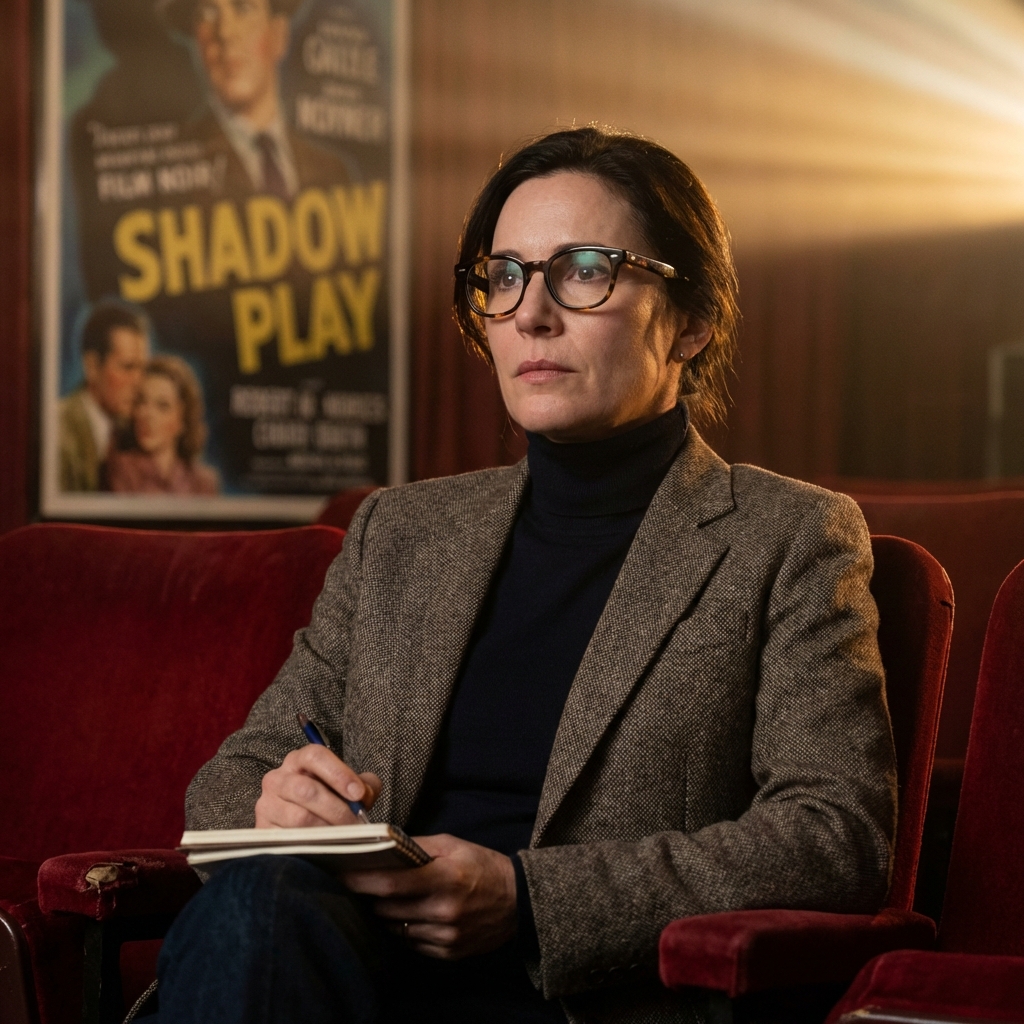
 Kenji Sato

In November 2023, the SAG-AFTRA union concluded a 118-day strike by securing first-of-its-kind protections against the "unregulated use of Artificial Intelligence," a move spurred by data showing that over 40% of major studio productions in 2022 had already integrated some form of digital likeness manipulation. This landmark agreement signaled the arrival of a new era where the boundaries between biological performance and synthetic data have become permanently blurred.
The Digital Disruption: Hollywood’s New Reality
The concept of "synthetic actors" is no longer confined to the realms of science fiction or high-budget experimental cinema. Today, the industry stands at a crossroads where the cost of rendering a photorealistic human face has plummeted by nearly 90% over the last five years. This shift is driven by advancements in Neural Radiance Fields (NeRFs) and diffusion models that allow for the creation of digital twins with unprecedented fidelity.
The industry is transitioning from a "performance-based" economy to a "data-rights" economy. In this new paradigm, an actor’s value is increasingly tied to their biometric data—the unique geometry of their face, the specific cadence of their voice, and the idiosyncratic movements of their body. For studios, the allure is obvious: a digital twin does not age, does not require a trailer, and can perform in multiple locations simultaneously.
However, this transition has birthed a complex dilemma. If a performance is generated by an algorithm trained on a human’s past work, who owns the resulting "art"? The struggle for control over these digital assets has become the central conflict of modern entertainment law, pitting the creative autonomy of performers against the efficiency-driven mandates of global media conglomerates.
The Rise of the Digital Double
Digital doubles were once reserved for dangerous stunts or "impossible" shots. Now, they are being used to extend the careers of aging stars. Harrison Ford’s de-aging in "Indiana Jones and the Dial of Destiny" required over 100 VFX artists and thousands of hours of historical footage, yet the next generation of AI tools could achieve similar results with a fraction of the workforce.
Intellectual Property vs. Human Identity
The legal framework surrounding synthetic actors is anchored in the "Right of Publicity," a concept that varies wildly across different jurisdictions. In the United States, there is no federal right of publicity, leading to a fragmented legal landscape where an actor’s rights in California might be vastly different from their rights in New York. This inconsistency has led to the introduction of the "NO FAKES Act" in the U.S. Senate, which aims to protect individuals from unauthorized AI-generated replicas.
The core of the legal debate centers on whether a digital likeness constitutes "speech" protected by the First Amendment or "property" subject to copyright. When a studio uses AI to recreate a background actor’s face, they are not just capturing an image; they are harvesting data. The question of whether this data can be licensed in perpetuity is the primary sticking point in current contract negotiations.
Actors are now being asked to sign "digital asset riders" that grant studios the right to use their likeness for future, unspecified projects. For a seasoned star, this might mean a multi-million dollar payout. For a background performer, it could mean a one-time fee of $200 in exchange for the permanent loss of control over their professional image.
The Economics of the Digital Twin
The financial implications of synthetic acting are profound. Traditional royalty models—often referred to as residuals—are built on the assumption of a human being working a set number of hours. Synthetic performances break this model. If an AI-generated version of a famous actor appears in a commercial, should that actor receive the same "day rate" as if they had physically been there?
Current trends suggest a tiered royalty system is emerging. Under this model, "Active Performances" (where the actor provides motion capture) command the highest fees, while "Passive Synthetic Use" (where the studio uses existing data to generate a new performance) carries a lower, albeit significant, licensing fee. This has created a new market for "Likeness Agents" who specialize in managing digital portfolios rather than physical schedules.
| Actor Type | Production Cost | Royalty Structure | Creative Control |
|---|---|---|---|
| Traditional Human | High (Travel, Insurance, Time) | Full Residuals + Benefits | High |
| Hybrid (Digital Twin) | Medium (Licensing + VFX) | Tiered Licensing Fees | Shared |
| Fully Synthetic (AI) | Low (Compute Costs) | None (Studio Owned) | Total Studio Control |
Technological Evolution: From CGI to Generative AI
To understand the current dilemma, one must look at the evolution of digital imaging. In the late 1990s and early 2000s, digital characters like Gollum in "The Lord of the Rings" relied on motion capture—a process where a human actor's movements were recorded and "skinned" with a digital mesh. This process was labor-intensive and required the actor to be physically present.
The advent of Generative Adversarial Networks (GANs) changed everything. These systems consist of two neural networks—a generator and a discriminator—that work against each other to create increasingly realistic images. By feeding a GAN thousands of hours of a specific actor’s footage, the system learns to "hallucinate" new performances. This is the technology behind "deepfakes," and it is now being professionalized for high-end cinema.
The Role of Voice Synthesis
Voice is often more difficult to replicate than visual appearance because of the subtle emotional nuances required for a believable performance. However, companies like ElevenLabs and Respeecher have developed "speech-to-speech" technologies that allow a voice actor to provide the emotional inflection while the AI replaces the vocal timbre with that of a famous star. This was notably used in "The Mandalorian" to recreate the voice of a young Mark Hamill.
Posthumous Performances and the Ethics of the Afterlife
One of the most controversial aspects of synthetic acting is the "resurrection" of deceased performers. While audiences were largely supportive of Peter Cushing's digital appearance in "Rogue One" as a tribute, the prospect of a star "working" for decades after their death raises profound ethical questions. Who has the right to decide what roles a dead actor would have taken?
Estates are currently the primary decision-makers, but heirs are often motivated by financial gain rather than artistic integrity. Some actors, like Robin Williams, took proactive steps to restrict the use of their likeness for 25 years after their death. However, most performers do not have such protections in place. This has led to calls for a "digital sunset clause" that would see an actor’s likeness rights expire or enter the public domain after a certain period.
The psychological impact on audiences is also a factor. The "Uncanny Valley"—the point at which a digital human looks almost real but remains slightly "off"—can trigger a sense of revulsion. As technology overcomes this hurdle, the risk shifts toward deception. If an audience cannot tell the difference between a living person and a synthetic construct, the very nature of "truth" in media is compromised.
Case Study: James Dean’s Digital Casting
In 2019, the announcement that James Dean would be "cast" in a new film titled "Finding Jack" sparked international outrage. Critics argued that using a dead actor’s likeness for a role they never auditioned for was a form of "digital necrophilia." The project faced significant delays, highlighting the social and cultural resistance that still exists toward fully synthetic casting of deceased icons.
The Global Legislative Patchwork
As Hollywood grapples with these issues, the rest of the world is watching—and regulating. The European Union’s AI Act is the most comprehensive attempt to date to categorize AI risks. Under this framework, deepfakes and synthetic content must be clearly labeled, a requirement that could change the way audiences consume entertainment. If every frame featuring a synthetic actor must carry a disclaimer, the "magic" of cinema may be diminished.
In South Korea and Japan, where virtual idols like Miku Hatsune have existed for years, the cultural acceptance of synthetic performers is much higher. This suggests that the "Synthetic Actor Dilemma" may be a predominantly Western concern, rooted in the Hollywood star system's emphasis on individual personality and "brand."
International labor unions are also beginning to coordinate. The International Federation of Actors (FIA) has called for global standards on "digital consent," ensuring that a studio cannot move a production to a country with weaker labor laws just to circumvent AI protections. This global solidarity will be crucial as the industry becomes increasingly decentralized.
For more detailed information on international AI regulations, you can visit the official Reuters report on the EU AI Act or explore the history of digital performance on Wikipedia’s Digital Double entry.
Future Outlook: The Democratization of Cinema
While much of the discourse focuses on the threats posed by AI, there is a flip side: democratization. For the first time in history, an independent filmmaker with a laptop could theoretically "cast" a world-class digital actor or create a sprawling epic without a $200 million budget. This could break the gatekeeping power of the major studios and lead to a renaissance of diverse, unconventional storytelling.
The future of cinema will likely be a "centaur" model—a collaboration between human creativity and algorithmic efficiency. Actors will become "directors of their own likeness," using AI to perform in languages they don't speak or to appear in hundreds of personalized versions of a single film. The dilemma of rights and royalties is merely the growing pains of a medium that is evolving from a physical craft into a purely digital art form.
As we navigate this transition, the priority must remain on transparency and consent. The technology is inevitable, but the way we choose to value the humans behind the data will define the soul of the next century of cinema. The "Synthetic Actor Dilemma" is not just a legal hurdle; it is a profound question about what it means to be a creator in the age of the machine.