

 Robert Stark
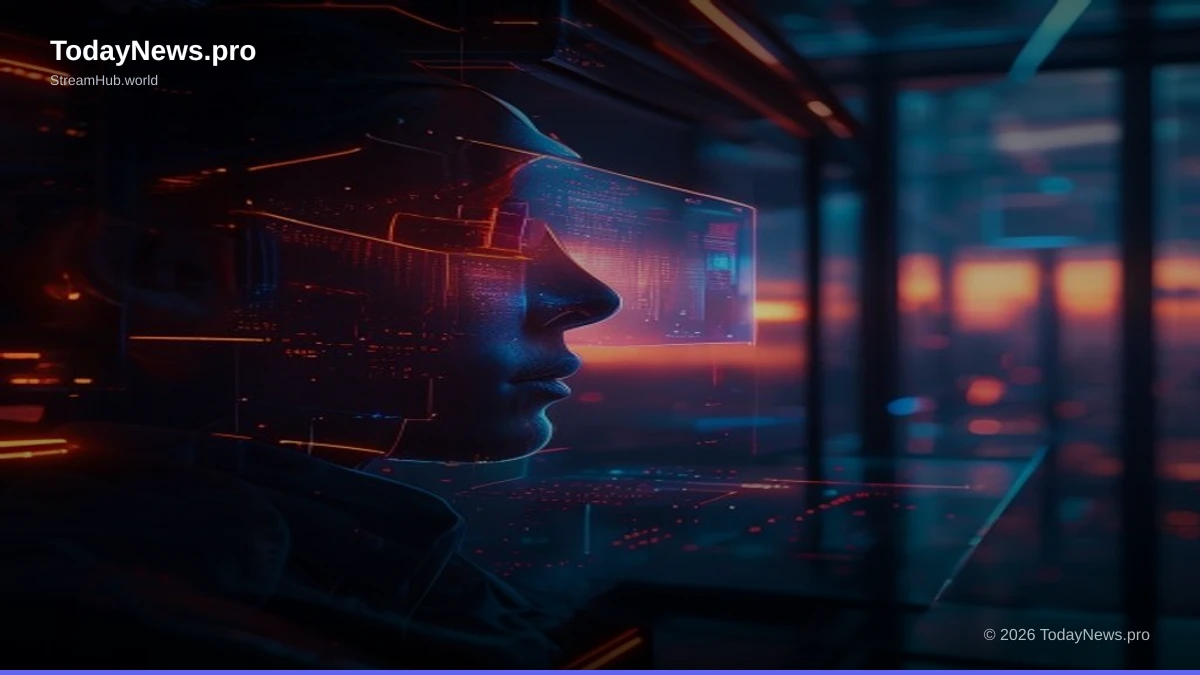
By the end of 2023, the global mixed reality market was valued at an estimated $10.3 billion, with projections indicating a dramatic surge to over $100 billion by 2030, signaling a profound shift in how we interact with digital information and the physical world.
The Immersive Leap: Defining Spatial Computing
Spatial computing represents a paradigm shift, moving beyond the flat, two-dimensional interfaces that have defined computing for decades. It's about seamlessly integrating digital information and experiences into our physical environment, allowing us to interact with computers in three dimensions, much like we interact with the real world. This isn't just about virtual reality (VR) where users are fully immersed in a digital space, or augmented reality (AR) where digital overlays are placed onto the real world. Spatial computing encompasses a broader vision, a future where digital content is as tangible and interactive as physical objects.
At its core, spatial computing relies on understanding and mapping the physical world. Sensors, cameras, and sophisticated algorithms work in concert to create a digital twin of the user's surroundings. This allows digital elements to be anchored to specific locations, react to environmental changes, and be manipulated through intuitive gestures, voice commands, or specialized input devices. The goal is to make computing disappear into the background, becoming an invisible, yet powerful, extension of our senses and capabilities.
This concept moves beyond mere visualization; it's about interaction and presence. Imagine a surgeon using a spatial computing headset to see patient anatomy overlaid with real-time vital signs during an operation, or an architect walking through a digital model of a building on the actual construction site, making adjustments as they go. The digital and physical realms are no longer separate entities but interwoven threads in a new tapestry of experience.
From Flat Screens to Three-Dimensional Worlds
For decades, our primary interface with computers has been through screens. Whether it's a smartphone, a laptop, or a large monitor, we've been confined to a rectangular plane. Spatial computing shatters this limitation. It liberates digital information from its fixed display, allowing it to exist and interact within the three-dimensional space around us. This transition is as fundamental as the shift from command-line interfaces to graphical user interfaces.
The implications are vast. Instead of opening an application, you might simply interact with a digital object that appears on your desk. Instead of navigating a website on a screen, you might walk through a virtual showroom. This shift is not just about novelty; it's about creating more natural, intuitive, and efficient ways to access and utilize information and computational power. It promises to unlock new levels of productivity, creativity, and engagement.
The Role of Sensors and Mapping
The intelligence behind spatial computing lies in its ability to perceive and understand the physical world. This is achieved through a complex interplay of sensors. Depth sensors measure distances, cameras capture visual data, and inertial measurement units (IMUs) track motion and orientation. This data is processed by sophisticated algorithms to create a real-time, three-dimensional map of the environment, known as spatial mapping or scene reconstruction.
This digital representation allows digital content to be accurately placed within the physical space. If you place a virtual vase on a table, it will remain anchored to that table even if you move around it. If a physical object obstructs your view, the digital content will behave accordingly. This level of environmental awareness is crucial for creating believable and functional mixed reality experiences.
Bridging Realities: The Spectrum of Mixed Reality
Mixed reality (MR) is the operational arm of spatial computing, the technology that allows us to blend digital and physical worlds. It sits on a spectrum, with pure virtual reality at one end and augmented reality at the other. True mixed reality experiences are characterized by their ability to seamlessly integrate virtual objects into the real world in a way that feels natural and interactive, allowing for two-way interaction between real and virtual elements.
Unlike AR, which primarily overlays digital information onto the real world, MR allows virtual objects to be occluded by real-world objects and vice-versa. This means a virtual character could realistically hide behind a physical desk, or a real person could walk in front of a virtual projection, enhancing the sense of immersion and presence. This dynamic interaction is what truly distinguishes MR.
Augmented Reality (AR)
Augmented reality is perhaps the most widely recognized form of bridging digital and physical. It enhances our perception of reality by overlaying computer-generated images, sound, or other sensory input onto our view of the real world. Think of Pokémon GO, where virtual creatures appear in your park, or IKEA's AR app that lets you visualize furniture in your home. AR is accessible via smartphones, tablets, and specialized AR glasses.
While AR is a powerful tool for information display and simple interaction, it often lacks the deep integration and environmental understanding characteristic of true MR. The digital elements are typically superimposed rather than truly coexisting within the physical space.
Virtual Reality (VR)
Virtual reality, conversely, aims to create complete immersion in a simulated environment. Users wear VR headsets that block out the real world and present a fully digital experience. VR is exceptional for creating compelling simulations, training scenarios, and immersive entertainment. The sense of presence can be profound, transporting users to entirely different worlds.
However, VR by definition disconnects users from their physical surroundings. While there are emerging forms of "pass-through" VR that allow users to see their real environment, the primary experience is one of isolation from the physical world, in contrast to the blending that defines MR.
The True Mixed Reality Experience
The true promise of mixed reality lies in its ability to seamlessly blend the best of both AR and VR. It's about creating a shared space where digital and physical realities coexist and interact. Imagine a virtual assistant that can project a 3D model of a complex machine onto your workbench, allowing you to manipulate it with your hands, with the ability for the real-world tool you are holding to interact with the virtual model. This is where the power of spatial computing truly shines, enabling richer, more intuitive, and more productive interactions.
This level of integration requires advanced hardware and sophisticated software capable of understanding and responding to both the digital and physical environments in real-time. The development of these technologies is accelerating, paving the way for a future where the lines between the physical and digital are increasingly blurred.
Hardware: The Enabling Foundation
The realization of spatial computing and mixed reality hinges on the development of sophisticated and increasingly accessible hardware. This includes everything from the headsets and glasses that users wear to the sensors and processors that power the experience. The evolution of this hardware is critical for driving mainstream adoption and unlocking the full potential of these immersive technologies.
The current generation of devices ranges from bulky VR headsets to sleeker AR glasses, each with its own strengths and limitations. However, the trend is clear: devices are becoming lighter, more powerful, and more capable of accurately perceiving and interacting with the physical world, bringing us closer to the vision of seamless spatial computing.
Headsets and Glasses
The primary interface for most spatial computing experiences is a head-mounted display (HMD), commonly known as a headset or glasses. These devices are equipped with high-resolution displays, advanced optics, and a suite of sensors. For VR, these are typically enclosed devices that provide full immersion. For AR and MR, they are often designed to be more transparent, allowing users to see the real world, with digital overlays projected onto their view.
Key advancements in this area include wider fields of view to reduce the "binocular effect," higher pixel densities for sharper images, improved eye-tracking for more natural interaction and foveated rendering (rendering only what the user is looking at in high detail), and more comfortable, lighter designs that can be worn for extended periods. The development of passthrough technology in VR headsets is also blurring the lines, allowing users to see their real-world surroundings overlaid with digital elements.
Sensors and Tracking
The magic of spatial computing is powered by an array of sophisticated sensors. Inside-out tracking, using cameras on the headset to map the environment, has largely replaced external base stations. Depth sensors (like LiDAR or structured light) are crucial for understanding the geometry of the physical space, enabling accurate placement and occlusion of virtual objects. Hand tracking, utilizing cameras to interpret hand gestures, is becoming increasingly sophisticated, reducing the reliance on physical controllers.
Advanced processors, often including dedicated AI chips, are essential for real-time processing of sensor data, environmental mapping, and rendering complex digital environments. The miniaturization and efficiency of these components are key to developing more consumer-friendly devices.
Input Devices
While hand tracking is a significant step towards natural interaction, physical controllers still play a vital role, especially for precision tasks and gaming. These controllers often provide haptic feedback, adding a sense of touch to virtual interactions. Beyond controllers, the future may see more integration with wearables, haptic gloves, and even brain-computer interfaces (BCIs) to offer even more intuitive and nuanced control over digital environments.
The goal is to move away from abstract button presses and towards actions that mirror how we interact with the physical world. This could involve grasping virtual objects, manipulating them with our fingers, or even using our gaze to select and interact with digital elements.
Software and Ecosystems: Building the Digital Layer
Hardware is only one piece of the puzzle. The true power of spatial computing and mixed reality is unlocked by sophisticated software platforms, development tools, and robust ecosystems. These elements dictate how users interact with virtual content, how developers create it, and how these experiences integrate into our daily lives.
The development of intuitive operating systems, compelling applications, and accessible development frameworks is paramount. Without a rich library of experiences and a seamless user interface, even the most advanced hardware will remain niche.
Operating Systems and Platforms
Just as iOS and Android dominate the mobile landscape, dedicated operating systems are emerging for spatial computing. These platforms provide the foundation for running applications, managing user interactions, and ensuring compatibility across devices. Key players are investing heavily in creating these foundational layers, aiming to establish themselves as the dominant force in the MR ecosystem.
These operating systems need to be designed from the ground up for 3D interaction, spatial awareness, and multi-modal input. They must also support robust security and privacy features, as these devices will be privy to intimate details about our physical environments and personal interactions.
Development Tools and Frameworks
The creation of MR content requires specialized tools and programming languages. Game engines like Unity and Unreal Engine are already adapting to support spatial computing, providing developers with powerful frameworks for building 3D experiences. Companies are also developing their own SDKs (Software Development Kits) and APIs (Application Programming Interfaces) to facilitate the creation of applications for their specific hardware platforms.
The accessibility of these tools is crucial. As development becomes easier and more intuitive, a wider range of creators will be able to contribute to the MR ecosystem, leading to a more diverse and innovative array of applications. This includes not just experienced game developers but also designers, architects, educators, and many others.
The Importance of Ecosystems
A thriving ecosystem is vital for the long-term success of any computing platform. This includes app stores, content marketplaces, developer communities, and hardware compatibility. The more interconnected and robust the ecosystem, the more attractive it becomes for both users and developers. Early competition among major tech companies to build these ecosystems is fierce, with each vying for developer loyalty and user adoption.
The interoperability between different devices and platforms will also be a key factor. While proprietary ecosystems offer control, open standards and cross-platform compatibility can foster broader innovation and wider adoption. The ultimate goal is a seamless experience that transcends individual devices and companies.
Transformative Applications Across Industries
The potential applications of spatial computing and mixed reality span nearly every sector of the economy and human activity. From revolutionizing how we work and learn to transforming entertainment and social interaction, these technologies promise to reshape our world in profound ways.
The ability to visualize complex data in 3D, collaborate remotely in immersive environments, and interact with digital information as if it were physical opens up unprecedented opportunities for innovation and efficiency. Early adopters are already demonstrating the power of MR in various fields.
Enterprise and Manufacturing
In manufacturing, MR can be used for remote assistance, where experienced technicians can guide on-site workers through complex repairs or assembly processes by overlaying instructions and annotations onto their real-world view. Training is another major area, allowing employees to practice intricate procedures in a safe, simulated environment before working with actual equipment.
Design and prototyping benefit immensely. Engineers and designers can create and interact with full-scale 3D models of products, making it easier to identify flaws, refine designs, and collaborate with remote teams. Imagine a car designer walking around a virtual prototype of a new vehicle, making adjustments to the aerodynamics in real-time.
| Industry | Key MR Applications | Projected Impact |
|---|---|---|
| Manufacturing | Remote assistance, training, design, quality control | Increased efficiency, reduced downtime, improved safety |
| Healthcare | Surgical planning, medical training, patient education, remote diagnosis | Enhanced precision, better patient outcomes, accelerated learning |
| Education | Immersive learning experiences, virtual field trips, interactive simulations | Increased engagement, deeper understanding, personalized learning paths |
| Retail | Virtual try-on, showroom experiences, product visualization | Improved customer engagement, reduced returns, enhanced shopping experience |
| Architecture & Construction | 3D model visualization, site inspection, project management | Faster design cycles, reduced errors, improved collaboration |
Healthcare and Medicine
The medical field is poised for significant transformation. Surgeons can use MR to overlay patient scans (like CT or MRI) onto their actual anatomy during surgery, providing a highly precise view of internal structures. Medical students can learn anatomy and surgical procedures through realistic 3D simulations, gaining hands-on experience without risk to patients.
MR also has potential in diagnostics and patient care, allowing doctors to visualize complex medical data in an intuitive way and to communicate more effectively with patients about their conditions.
Education and Training
Education is set to become significantly more engaging. Imagine students taking a virtual field trip to ancient Rome, dissecting a virtual frog without the mess, or exploring the human circulatory system in 3D. These immersive experiences can make complex subjects more accessible and memorable.
For professional training, MR offers a safe and cost-effective way to learn complex skills. Pilots can train in realistic flight simulators, mechanics can practice repairing intricate machinery, and emergency responders can train for high-pressure scenarios in a controlled environment.
Entertainment and Social Interaction
The entertainment industry is a natural fit for MR. Gaming will become even more immersive, with players physically interacting with virtual worlds. Live events could be enhanced with interactive digital elements, and social interactions could evolve with shared virtual spaces where people can connect and collaborate regardless of their physical location.
Beyond gaming, MR offers new avenues for storytelling and artistic expression. Imagine interactive art installations that respond to your presence or films where you can explore the narrative in 3D. The possibilities for creative content are immense.
The Challenges Ahead: Hurdles to Mainstream Adoption
Despite the immense potential, the widespread adoption of spatial computing and mixed reality faces several significant challenges. These hurdles range from technological limitations to societal and economic factors. Overcoming these obstacles will be crucial for realizing the full promise of these technologies.
The journey from niche enthusiast adoption to mainstream consumer and enterprise integration requires addressing fundamental issues of cost, comfort, content availability, and user experience. The current landscape is still very much in its formative stages.
Cost and Accessibility
Currently, high-end MR and VR hardware can be prohibitively expensive for the average consumer. While prices are decreasing, the cost of powerful headsets and the associated computing power required to run them remains a barrier. For widespread adoption, devices need to reach price points comparable to smartphones or gaming consoles.
Furthermore, accessibility extends beyond price. Devices need to be user-friendly and comfortable for extended use. Issues like motion sickness, eye strain, and the weight of headsets need to be addressed to make these technologies appealing to a broader audience.
Content Gap and Developer Ecosystem
A rich and diverse library of compelling content is essential for any computing platform. While the number of MR applications is growing, there's still a significant gap compared to established platforms like mobile or PC. Developing high-quality 3D content is complex and resource-intensive.
Building a robust developer ecosystem requires accessible tools, clear monetization strategies, and a supportive community. Companies need to invest in developer education and provide ample resources to encourage the creation of a wide range of experiences, from practical business applications to engaging entertainment.
Privacy and Ethical Considerations
As MR devices become more integrated into our lives, they will collect vast amounts of data about our physical environments, our movements, and our interactions. This raises significant privacy concerns. Robust data protection measures and clear ethical guidelines will be crucial to building user trust.
The potential for misuse, such as surveillance or the creation of addictive virtual environments, also needs careful consideration. Establishing clear ethical frameworks and regulatory oversight will be essential to ensure that these powerful technologies are used responsibly and for the benefit of society.
Interoperability and Standards
The current landscape is fragmented, with different companies developing their own hardware, software, and ecosystems. This lack of interoperability can hinder innovation and create a confusing experience for users. The development of open standards and greater compatibility between platforms will be vital for the long-term growth of spatial computing.
Without common standards, users may be locked into specific ecosystems, limiting their choices and the ability to share experiences across different devices. This is a challenge that the industry as a whole needs to address collaboratively.
The Future Landscape: Evolution and Convergence
The trajectory of spatial computing and mixed reality points towards a future where these technologies are not just advanced tools but fundamental interfaces that seamlessly blend the digital and physical. We are witnessing the dawn of a new era of computing, one that is more intuitive, immersive, and integrated into the fabric of our lives.
The coming years will see continued innovation in hardware, software, and applications, leading to increasingly sophisticated and accessible experiences. The convergence of different technologies will accelerate this evolution, blurring the lines between what is real and what is digital.
Hardware Miniaturization and Integration
Expect to see MR and AR devices become smaller, lighter, and more stylish, resembling everyday eyeglasses rather than bulky headsets. Battery life will improve, and processing power will increase, enabling more complex and longer-lasting experiences. The integration of advanced sensors, such as sophisticated eye-tracking and biometric sensors, will lead to more personalized and responsive interactions.
The concept of a single device that can seamlessly switch between AR, VR, and mixed reality experiences will become more prevalent. This flexibility will be key to making these devices ubiquitous.
The Metaverse and Persistent Digital Worlds
While the term "metaverse" has seen its ups and downs, the underlying concept of persistent, interconnected digital worlds where users can socialize, work, and play remains a significant aspect of spatial computing's future. These virtual spaces will become increasingly sophisticated, offering rich experiences that are deeply integrated with our physical lives.
The ability to move seamlessly between different virtual environments, taking digital assets and identity with us, will be a hallmark of this future. This will require significant advancements in networking, interoperability, and digital ownership.
AI and Natural Interaction
Artificial intelligence will play a crucial role in enhancing spatial computing. AI will enable more natural and intuitive interactions, allowing devices to understand our intent, predict our needs, and adapt to our behavior. Natural language processing, gesture recognition, and advanced contextual awareness will make interacting with digital content as easy as interacting with another person.
AI will also be instrumental in generating and managing complex virtual environments, personalizing experiences, and ensuring the smooth functioning of spatial computing systems. The symbiotic relationship between AI and spatial computing is poised to redefine human-computer interaction.
The Blurring of Realities
Ultimately, the most profound aspect of spatial computing's evolution will be the blurring of lines between the physical and digital worlds. As MR technologies mature, the distinction between what is real and what is virtual will become increasingly subtle. Digital information will be seamlessly integrated into our environment, enhancing our perception, augmenting our abilities, and enriching our experiences in ways we are only beginning to imagine.
This convergence promises a future where technology is not a separate entity we interact with, but an invisible, intelligent layer that enhances our understanding and engagement with the world around us. The dawn of spatial computing is not just a technological advancement; it's a fundamental shift in how we perceive and interact with reality itself.