

 William Nye
⏱ 45 min
In 2023, the global space tourism market was valued at approximately $5.2 billion, with projections indicating a surge to over $13 billion by 2030, signaling a significant shift from an exclusive luxury to an increasingly accessible frontier for the average adventurer.
The Dawn of Affordable Space Travel: Beyond the Billionaires Playground
For decades, the allure of space remained an exclusive domain, a realm accessible only to highly trained astronauts selected by national space agencies. Visions of Earth from above, the curvature of our planet against the black expanse of the cosmos, were reserved for a select few. The monumental costs and immense technical challenges associated with spaceflight placed it firmly outside the reach of the general public. However, a seismic shift has been underway, driven by private enterprise and technological advancements, ushering in an era where the dream of space tourism is rapidly becoming a tangible reality for individuals who, while still possessing significant disposable income, are far from the ranks of centi-billionaires. This transformation is not merely about providing a fleeting thrill; it represents a profound redefinition of what is possible and a burgeoning industry poised to redefine human exploration. The early pioneers of this new space age, while certainly requiring substantial personal wealth to fund their ventures, have simultaneously been laying the groundwork for broader accessibility. Companies like SpaceX, founded by Elon Musk, and Blue Origin, established by Jeff Bezos, initially focused on reducing the cost of launch services and developing reusable rocket technology. This foundational work, aimed at making space access more economical for governmental and commercial payloads, has directly benefited the nascent space tourism sector. The reduction in per-launch costs, a direct consequence of these innovations, is the critical enabler for offering seats on flights to a wider demographic. This mirrors historical trends in aviation, where early air travel was an expensive luxury, but technological progress and increased demand eventually made it commonplace. The narrative of space tourism has evolved from mere speculation to concrete achievements. The first commercial human spaceflights, though still commanding prices in the hundreds of thousands of dollars, have successfully transported paying customers to the edge of space and even into orbit. These missions, meticulously planned and executed, have not only proven the viability of the technology but have also generated immense public interest and media attention. This visibility is crucial, acting as a powerful marketing tool and inspiring a new generation of potential space travelers. The psychological barrier, once an insurmountable obstacle for many, is gradually eroding as more people witness and hear about these historic journeys.From Suborbital Hops to Orbital Stays: A Spectrum of Experiences
The current landscape of space tourism offers a spectrum of experiences, catering to different levels of ambition and, importantly, different price points. At the more accessible end of the spectrum are suborbital flights. These journeys, typically lasting around 10-15 minutes from launch to landing, reach altitudes of approximately 100 kilometers (62 miles), crossing the Karman line, the internationally recognized boundary of space. Passengers experience a few minutes of weightlessness and witness the iconic view of Earth's curvature. Companies like Virgin Galactic, with its SpaceShipTwo system, and Blue Origin, utilizing its New Shepard rocket, are the frontrunners in this segment. These flights are often described as offering a taste of space, an exhilarating experience that provides a profound perspective shift without the extreme duration or complexity of an orbital mission. Moving up the ladder of ambition and cost are orbital flights. These missions involve reaching an altitude where a spacecraft can achieve orbital velocity, allowing it to circle the Earth. Currently, this is primarily facilitated by companies like SpaceX, which has flown private citizens to the International Space Station (ISS) and on dedicated orbital missions such as Inspiration4. These trips can last for several days and offer a sustained period of weightlessness, the opportunity to conduct scientific experiments, and extended views of our planet. The training and preparation for orbital missions are significantly more intensive, reflecting the increased duration, complexity, and inherent risks involved. The experience is transformative, offering a prolonged immersion in the space environment. The distinction between suborbital and orbital tourism is crucial for understanding the market's trajectory. Suborbital flights are the stepping stone, offering a more attainable entry point into space tourism. They are paving the way for the development of infrastructure and operational expertise that will eventually support more ambitious ventures. As the technology matures and operational costs decrease, the price of even suborbital flights is expected to become more accessible, potentially reaching figures comparable to luxury travel experiences on Earth, such as a high-end African safari or a private yacht charter.Democratizing the Cosmos: Emerging Players and Their Innovative Approaches
The burgeoning space tourism industry is characterized by a vibrant ecosystem of companies, each with its unique technological approach and business model. While established giants like SpaceX and Blue Origin have captured significant public attention, a host of other innovative players are emerging, driving competition and further democratizing access to space. These new entrants are not only pushing the boundaries of engineering but are also exploring creative ways to reduce costs and expand the market beyond ultra-high-net-worth individuals. Virgin Galactic, founded by Sir Richard Branson, has been a prominent name in suborbital tourism. Their innovative air-launched SpaceShipTwo vehicle, carried aloft by a mothership aircraft before detaching and firing its rocket engine, offers a unique operational model. This approach aims to reduce the reliance on traditional launchpads and provide greater flexibility in flight scheduling. The company has successfully completed multiple crewed test flights and is working towards regular commercial operations, targeting a significant segment of the aspirational space traveler market. Their focus on the passenger experience, from training to the flight itself, is a key differentiator. Beyond these headline-grabbing companies, a new wave of startups is focusing on specific niches within space tourism. Some are developing smaller, more agile launch vehicles, while others are exploring entirely novel propulsion systems. For example, companies are investigating the potential of high-altitude balloons that can ascend to the edge of space, offering a gentler, albeit less velocity-intensive, way to experience the view. These diverse approaches signal a healthy and competitive market, where innovation is spurred by a shared goal of making space accessible. The competition is vital for driving down prices, increasing safety, and expanding the variety of space tourism offerings.The Role of Reusability and Advanced Manufacturing
A cornerstone of the effort to make space travel more affordable is the widespread adoption of reusable rocket technology. Companies like SpaceX have revolutionized the industry with their Falcon 9 and Starship programs, where booster rockets are designed to land vertically after launch and be refurbished for subsequent missions. This dramatically reduces the per-launch cost, as the most expensive components of a rocket are no longer expendable. Blue Origin has also made significant investments in reusable launch systems with its New Shepard and New Glenn rockets. Furthermore, advancements in advanced manufacturing, such as 3D printing, are playing a critical role. These technologies allow for the rapid prototyping and production of complex rocket components at a lower cost. They also enable the creation of lighter, stronger materials, which can improve fuel efficiency and payload capacity. This technological synergy between reusability and advanced manufacturing is accelerating the pace of innovation and is a key driver behind the decreasing cost curves in the space sector, directly impacting the economics of space tourism.Future Visions: Space Hotels and Lunar Excursions
While current space tourism primarily focuses on suborbital and low-Earth orbit experiences, ambitious long-term visions are already taking shape. Companies are actively planning for the development of orbital hotels, which would offer extended stays in space with amenities and services comparable to luxury terrestrial resorts. Concepts like the Orbital Reef, a commercial space station being developed by Blue Origin and Sierra Space, aim to provide a platform for tourism, research, and in-space manufacturing. Looking even further ahead, the prospect of lunar tourism is no longer confined to science fiction. While significantly more complex and costly than Earth-orbit missions, the moon represents the next logical frontier for human exploration and potentially, tourism. Companies are exploring the feasibility of lunar landers and habitats that could eventually accommodate visitors. Such ventures, while likely decades away from widespread accessibility, represent the ultimate aspiration for space tourism, offering a truly otherworldly experience. The development of these future capabilities relies heavily on the foundational successes and lessons learned from current suborbital and orbital tourism efforts.The Journey Itself: What to Expect from a Suborbital or Orbital Experience
Embarking on a space tourism journey is a multi-faceted experience, extending far beyond the few minutes spent in the vacuum of space. It involves rigorous preparation, a unique set of physical sensations, and a profound psychological impact. Understanding these aspects is crucial for potential travelers to set realistic expectations and fully appreciate the significance of their adventure.Pre-Flight Training: More Than Just a Briefing
For suborbital flights, the pre-flight training is typically condensed, often lasting a few days. It focuses on familiarizing participants with the spacecraft, emergency procedures, and the expected physical sensations. This includes G-force tolerance training, often conducted in centrifuges, and instruction on how to move and operate in microgravity. Passengers will learn about the spacecraft's systems and their role during the flight. For orbital missions, the training is far more extensive, often spanning several weeks or even months. This comprehensive preparation includes in-depth medical evaluations, advanced G-force training, simulated spacewalks (if applicable), extensive instruction on spacecraft operations, and survival training. The goal is to ensure that passengers are not only physically prepared but also psychologically ready for the demands of extended spaceflight.The Sensation of Launch and Weightlessness
The launch sequence is a visceral experience. Passengers will feel immense G-forces pushing them back into their seats as the rocket accelerates rapidly. This can be intense, but is usually well-tolerated with proper training. Once the engines cut off and the spacecraft reaches its desired altitude and trajectory, the sensation of weightlessness, or microgravity, begins. This is often described as an exhilarating and disorienting feeling, where up and down lose their meaning. Objects float freely, and passengers can move with effortless ease. For suborbital flights, this period of weightlessness lasts for approximately 4-6 minutes. During orbital flights, it is sustained for the duration of the mission, allowing for a much more immersive experience of living and working in space.The View and the Psychological Impact
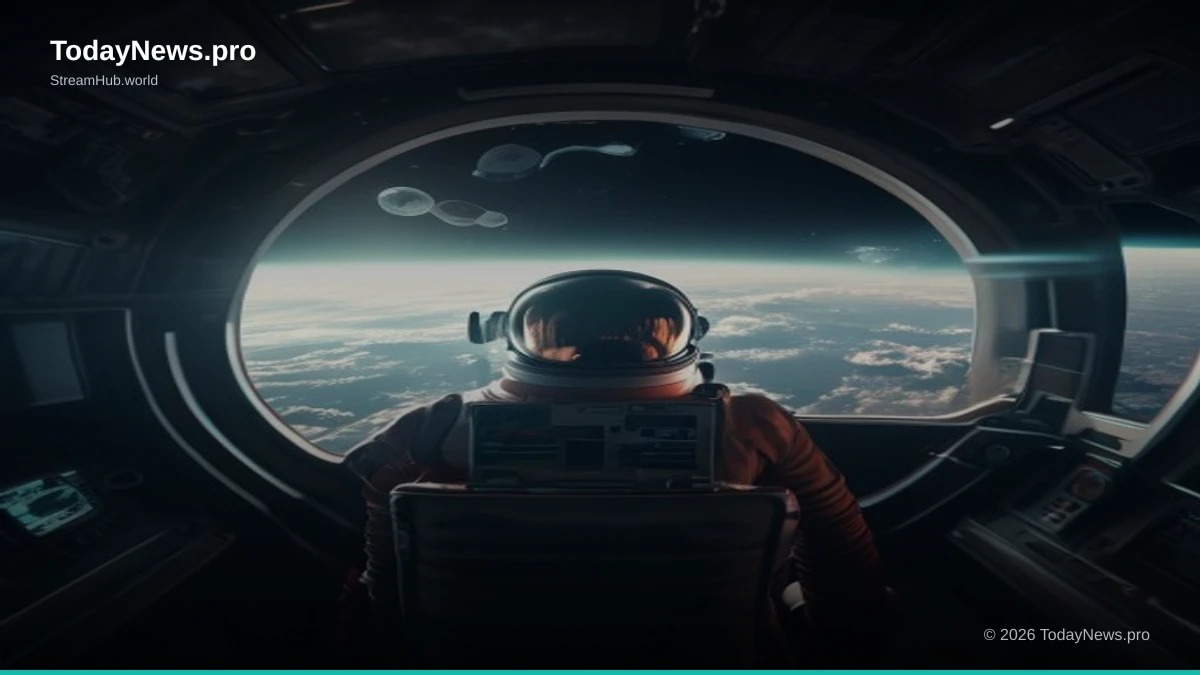
The primary draw for many space tourists is the unparalleled view of Earth. Seeing our planet as a delicate blue marble suspended in the blackness of space is a profound and often life-altering experience. The thin atmospheric layer, the swirling clouds, and the vastness of the oceans provide a unique perspective on Earth's beauty and fragility. This "overview effect," as it's known, can foster a sense of global unity and a deeper appreciation for environmental stewardship. Passengers often report a significant shift in their perspective and a renewed sense of purpose after returning to Earth. The following table illustrates the typical duration and experience for different types of space tourism:| Experience Type | Altitude Reached | Duration in Space | Key Sensations | Typical Cost Range (USD) |
|---|---|---|---|---|
| Suborbital Flight | ~100 km (Karman Line) | ~4-6 minutes of weightlessness | Intense G-forces, brief weightlessness, stunning Earth views | $250,000 - $500,000+ |
| Orbital Flight (ISS Visit) | ~400 km (Low Earth Orbit) | Several days | Sustained weightlessness, extended Earth views, space station environment | $50,000,000+ |
| Private Orbital Mission | ~400 km (Low Earth Orbit) | Several days to weeks | Sustained weightlessness, extended Earth views, mission-specific activities | $55,000,000+ |
The Price of Admission: Unpacking the Costs and the Future of Affordability
The most significant barrier to entry for most aspiring space tourists is undoubtedly the cost. Currently, the price of a ticket to space remains prohibitively high, placing it firmly in the realm of luxury goods and experiences. However, understanding the cost structure and the factors driving these prices is key to appreciating the trajectory towards greater affordability.Deconstructing the Expenses: What Youre Paying For
The exorbitant cost of space tourism can be attributed to several key factors. Firstly, the research and development required to create safe and reliable spaceflight technology are immense. Companies invest billions of dollars in designing, testing, and building spacecraft, rockets, and ground infrastructure. Secondly, the operational costs of each launch are substantial. This includes the fuel, maintenance of the launch vehicles, salaries for highly skilled personnel (engineers, pilots, mission control staff), insurance, and regulatory compliance. Finally, the training and support provided to passengers, especially for orbital missions, add to the overall expense. The cost also reflects the inherent value of such a unique and rare experience.The Trajectory Towards Lower Prices: Reusability and Scale
The primary drivers for reducing the cost of space tourism are technological innovation and economies of scale. As mentioned earlier, the development of reusable launch systems is a game-changer. By reusing expensive rocket components, companies can significantly lower the cost per launch. Furthermore, as the industry matures and the frequency of flights increases, operational efficiencies will be realized, further driving down prices. Increased demand from a wider customer base will also allow companies to achieve economies of scale in manufacturing and operations.Benchmarking Against Other Luxury Experiences
To contextualize the cost of space tourism, it's helpful to compare it with other high-end luxury experiences. A suborbital flight, costing in the hundreds of thousands of dollars, can be benchmarked against private jet charters for global travel, exclusive superyacht charters in the Mediterranean, or bespoke safaris in remote African conservancies. While the experience is fundamentally different, the financial commitment can be comparable. Orbital missions, costing tens of millions of dollars, are in a league of their own, comparable to purchasing a super-luxury property in a prime global city or acquiring a significant art collection. The aspiration is that, over time, suborbital flights will become more accessible, akin to first-class air travel or luxury adventure tourism. Here's a look at the estimated market value and growth projections:$5.2 Billion
2023 Market Value
$13 Billion+
Projected 2030 Market Value
2.5x
Projected Growth Factor
Safety, Regulation, and the Human Factor in the New Space Race
As space tourism transitions from experimental flights to regular commercial operations, ensuring the safety of passengers and crew is paramount. This evolving industry faces the complex challenge of establishing robust safety protocols and navigating a nascent regulatory landscape, all while managing the inherent risks associated with spaceflight.The Imperative of Safety Standards
The history of space exploration is punctuated by both triumphs and tragedies. The lessons learned from past incidents, such as the Challenger and Columbia disasters, underscore the critical importance of rigorous safety engineering, meticulous testing, and comprehensive risk management. For space tourism, this translates to developing spacecraft with multiple layers of redundancy, implementing stringent pre-flight checks, and ensuring thorough crew training. The private sector is investing heavily in safety, often drawing upon the decades of experience accumulated by national space agencies. However, the commercial nature of space tourism also introduces new dynamics, including competitive pressures that could potentially influence safety decisions.Navigating the Regulatory Frontier
The regulatory framework for space tourism is still under development. Unlike established modes of transportation like aviation, which have decades of international and national regulations, spaceflight is a newer frontier. In the United States, the Federal Aviation Administration (FAA) oversees commercial space launches and re-entries, including those involving passengers. However, current regulations primarily focus on ensuring that private spaceflight does not pose an undue risk to the public on the ground. The question of how to regulate passenger safety, akin to commercial airlines, is an ongoing discussion. International cooperation will also be crucial as space tourism becomes a global enterprise."The safety protocols for space tourism must evolve as rapidly as the technology itself. We are not just launching rockets; we are transporting human lives into an environment that is inherently unforgiving. Collaboration between industry, regulators, and international bodies is essential to establish a gold standard for safety that inspires confidence and ensures the long-term viability of this industry." — Dr. Anya Sharma, Aerospace Safety Consultant
The Human Element: Astronauts, Tourists, and Well-being
The human element in space tourism encompasses both the professional astronauts who operate the spacecraft and the paying passengers. While professional astronauts undergo extensive training, the experience for private citizens is different. Ensuring their physical and psychological well-being throughout the journey is critical. This includes managing the effects of microgravity on the body, providing adequate nutrition and hydration, and addressing potential issues like space sickness. The psychological impact of the experience, while often positive, can also be profound, and post-flight support may be necessary for some individuals. The selection and preparation of tourists are key to mitigating potential risks.Beyond the Thrill: The Scientific and Economic Ripple Effects of Space Tourism
While the thrill of seeing Earth from space is a primary motivator for many, the burgeoning space tourism industry promises to deliver significant scientific, economic, and societal benefits that extend far beyond the individual traveler's experience. This new era of space accessibility is poised to accelerate innovation and foster a deeper understanding of our planet and the universe.Catalyst for Scientific Research and Innovation
The increased frequency of human spaceflights, driven by tourism, provides invaluable opportunities for scientific research. Private astronauts can conduct experiments in microgravity, contributing to fields such as medicine, materials science, and biology. The development of technologies required for space tourism, such as advanced life support systems, robust spacecraft design, and efficient propulsion, will have spillover effects into other sectors, including aerospace engineering, telecommunications, and advanced manufacturing. The economic imperative to reduce costs for tourism also drives innovation in areas that benefit scientific missions.Economic Growth and Job Creation
The space tourism industry is a significant economic engine, creating new jobs and stimulating growth across a wide range of sectors. This includes roles for engineers, technicians, pilots, mission controllers, hospitality staff (for future orbital hotels), and researchers. The demand for specialized components, materials, and services will foster the development of a robust supply chain, supporting businesses on the ground. Furthermore, the influx of investment into the space sector can spur economic development in regions that host launch sites and manufacturing facilities.Inspiration and Education: The Overview Effects Broader Reach
The inspiration derived from space travel, often referred to as the "overview effect," has a profound impact on individuals and can ripple outwards into society. Seeing Earth from space can foster a deeper appreciation for our planet's interconnectedness and the need for environmental stewardship. Space tourism can serve as a powerful educational tool, inspiring younger generations to pursue careers in STEM fields and igniting a passion for exploration and discovery. By making space more accessible, it democratizes this inspiring perspective, potentially fostering a more globally conscious citizenry. This bar chart illustrates the projected growth of the space tourism market:Space Tourism Market Growth Projection (USD Billions)
Challenges and Opportunities on the Path to the Stars
Despite the rapid advancements and optimistic outlook, the journey towards widespread space tourism is not without its hurdles. Addressing these challenges head-on will be crucial for unlocking the full potential of this transformative industry.Overcoming Cost Barriers and Accessibility
The most significant ongoing challenge is the prohibitive cost of space travel. While prices are expected to decrease, achieving true accessibility for the average person – meaning prices comparable to mainstream luxury travel – will require further technological breakthroughs and significant scaling of operations. This includes developing more efficient and less expensive launch systems, reducing the cost of spacecraft manufacturing, and optimizing operational efficiencies. The industry will also need to grapple with insurance costs, which are currently very high due to the inherent risks.Environmental Impact and Sustainability
As space tourism grows, its environmental footprint will become an increasingly important consideration. Rocket launches, particularly those using fossil fuels, contribute to greenhouse gas emissions and the potential for space debris. The industry needs to prioritize the development and adoption of more sustainable launch technologies, such as advanced fuels and cleaner propulsion systems. Furthermore, responsible management of space debris is critical to ensure the long-term sustainability of space activities for all users, including future tourists.The Ethical and Societal Implications
Beyond the practical challenges, space tourism raises ethical and societal questions. Is it justifiable to spend vast sums on space tourism when significant problems exist on Earth, such as poverty, climate change, and disease? Proponents argue that the technological advancements and inspiration derived from space tourism can ultimately benefit humanity. However, a thoughtful and ongoing dialogue about resource allocation and the societal value of space exploration is essential. The industry must demonstrate tangible benefits beyond the privileged few to garner broad public support and acceptance. Despite these challenges, the opportunities presented by space tourism are immense. The prospect of making humanity a multi-planetary species, fostering a deeper connection with our planet, and unlocking new frontiers of scientific discovery and economic growth are powerful motivators. The coming decades promise to be a thrilling period for space exploration, as the dream of visiting space gradually transforms into a reality for an increasing number of people. For more information on space exploration and related topics, please see these resources: Reuters: The Space Economy Wikipedia: Space Tourism NASA Official WebsiteWill space tourism ever be affordable for the average person?
While true affordability for the "average person" with typical income levels is likely decades away, advancements in reusable rocket technology and increasing competition are steadily driving down costs. Suborbital flights, currently costing hundreds of thousands of dollars, may eventually become comparable to other high-end luxury travel experiences. Orbital flights will remain significantly more expensive for the foreseeable future.
What are the main safety concerns in space tourism?
Key safety concerns include the inherent risks of rocket launches and re-entries, the effects of G-forces and microgravity on the human body, potential equipment malfunctions, and the psychological impact of spaceflight. Rigorous testing, advanced engineering, comprehensive crew training, and robust emergency procedures are critical to mitigate these risks.
How does space tourism differ from professional astronaut missions?
Space tourism focuses on providing a recreational or experiential journey to space for paying customers, often with less stringent training requirements and a primary focus on the view and sensation of spaceflight. Professional astronaut missions involve extensive scientific research, complex operational duties, and years of specialized training to perform critical tasks for national space programs.
What is the "overview effect" and how does it relate to space tourism?
The "overview effect" is a cognitive shift reported by astronauts and space tourists when viewing Earth from space. It involves a profound realization of the planet's interconnectedness, fragility, and the shared humanity of all people. Space tourism aims to provide this transformative perspective to a wider audience, potentially fostering greater environmental awareness and global unity.