

 William Nye
⏱ 25 min
The global space economy, projected to reach over \$1 trillion by 2040, is no longer solely the domain of government agencies. Private enterprises are now spearheading ambitious missions, from establishing lunar bases to preparing for crewed expeditions to Mars, redefining the frontiers of human exploration and commerce.
The New Lunar Gold Rush: Beyond Footprints and Flags
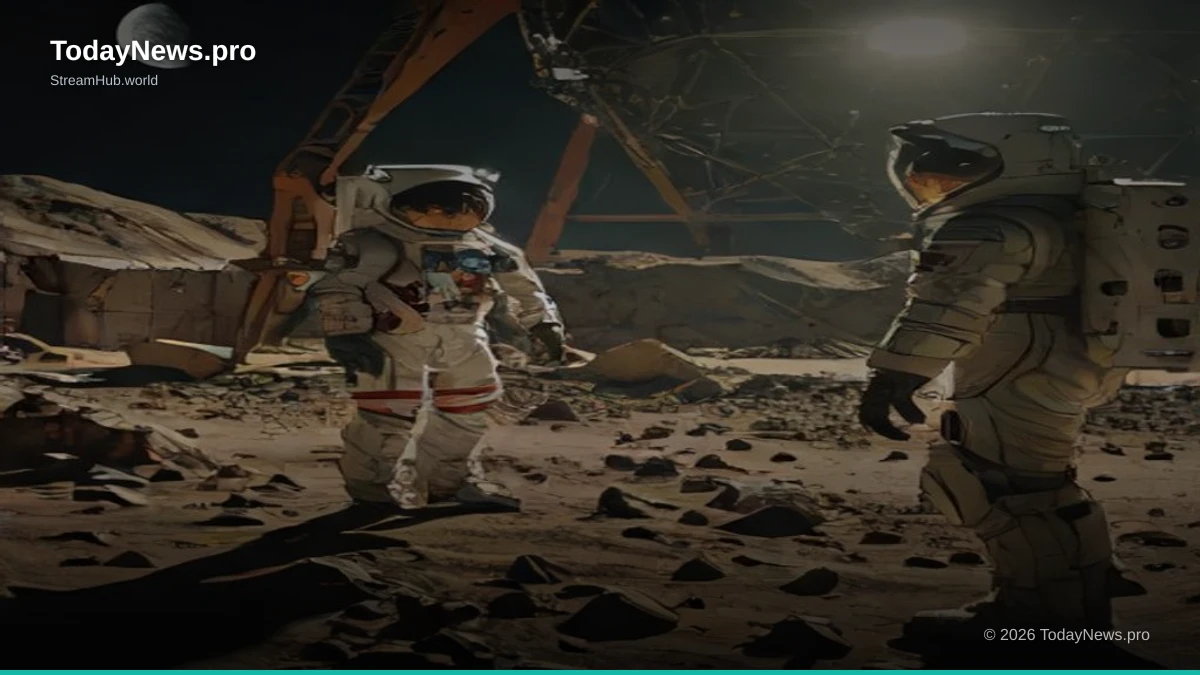
The Moon, once a symbol of national prestige and scientific curiosity, is rapidly transforming into a strategic economic asset in the eyes of private industry. Unlike the Apollo era's singular focus on scientific discovery and geopolitical dominance, Space Race 2.0 sees the Moon as a potential hub for resource extraction, scientific research outposts, and even tourism. Companies are not just aiming to land on the Moon; they are planning to stay, build, and operate. The concept of permanent lunar settlements, once confined to science fiction, is now a tangible goal for several ambitious ventures. These settlements are envisioned not merely as scientific bases but as self-sustaining communities capable of supporting human life for extended periods, laying the groundwork for future interplanetary endeavors. The resource potential of the Moon, particularly water ice in permanently shadowed craters, is a primary driver. This water can be converted into rocket fuel, breathable air, and drinking water, making the Moon a critical refueling station for missions deeper into the solar system. This prospect dramatically lowers the cost and complexity of deep space exploration, opening up new possibilities that were previously economically unfeasible. Furthermore, the unique environment of the Moon, with its low gravity and lack of atmosphere, offers unparalleled opportunities for scientific research in fields such as astrophysics, materials science, and medicine. The potential for lunar tourism, while still nascent, also represents a significant future revenue stream. Companies are already developing concepts for lunar hotels and observatories that would cater to wealthy adventurers and researchers alike. This multifaceted approach underscores a paradigm shift: the Moon is no longer just a destination, but a stepping stone and an economic frontier.Resource Extraction: The Lunar Economys Foundation
The presence of water ice in lunar polar regions is a game-changer. This resource is vital for In-Situ Resource Utilization (ISRU), a concept that involves using local materials to produce consumables and propellants. Companies like SpaceX, with its Starship program, are actively developing technologies to leverage lunar resources, envisioning refueling operations on the Moon to facilitate missions to Mars and beyond. Beyond water, Helium-3, a rare isotope on Earth, is abundant on the Moon and is a potential fuel for future fusion reactors, although the technology for harnessing it is still in its infancy. Other potential resources include rare earth elements and titanium, which are crucial for advanced manufacturing and electronics. The economic viability of lunar mining hinges on developing cost-effective extraction, processing, and transportation methods. This involves robotics, autonomous systems, and innovative propulsion technologies. The challenge is immense, but the potential rewards are substantial, promising to unlock new industries and reduce our reliance on Earth-bound resources. The development of lunar infrastructure, including landing pads, habitats, and power generation systems, is a prerequisite for any large-scale resource utilization. These initial investments will pave the way for more sophisticated operations, creating a virtuous cycle of development and economic growth on the Moon.Scientific Outposts and Lunar Observatories
The Moon offers a unique platform for astronomical observation, free from Earth's atmospheric interference. Telescopes placed on the lunar surface could provide clearer views of the universe than any currently operating on Earth or in Earth orbit. Organizations are exploring the feasibility of building large radio telescopes on the far side of the Moon, shielded from terrestrial radio interference, offering an unprecedented window into the early universe. Beyond astronomy, the Moon's stable environment and low gravity are ideal for a range of scientific experiments. This includes research into fundamental physics, materials science, and the long-term effects of space radiation on biological systems, which is critical for future human spaceflight. The establishment of permanent scientific outposts, potentially operated by consortia of universities and research institutions, is a key objective for several space agencies and private entities. These outposts would not only facilitate groundbreaking research but also serve as testbeds for technologies required for longer-duration missions to Mars and other celestial bodies. The collaborative nature of these endeavors, involving both public and private funding, is essential for their success.The Dawn of Lunar Tourism
While still a distant prospect for the average person, lunar tourism is on the horizon for the ultra-wealthy. Companies are developing concepts for luxury hotels and exclusive excursions on the lunar surface. These ventures aim to offer unique experiences, such as low-gravity walks and breathtaking views of Earthrise, capitalizing on the allure of visiting another world. The development of reliable and safe transportation to the Moon is the primary hurdle. Once this is achieved, the market for lunar tourism, though niche, could be substantial. The infrastructure required for such tourism, including habitats and life support systems, would also benefit scientific and resource utilization efforts, creating synergistic development. The long-term vision includes expanding access to lunar experiences, potentially bringing down costs over time, making it accessible to a broader segment of the population. This future envisionment is what fuels much of the current private investment and innovation in lunar exploration.Mars: The Ultimate Frontier for Private Ambition
Mars represents the zenith of human ambition in the solar system. For private companies, it is not just a destination but a grand challenge that drives technological innovation and long-term strategic planning. The prospect of establishing a self-sustaining human civilization on another planet is a powerful motivator, pushing the boundaries of what is technologically and economically possible. Unlike the Moon, which offers immediate resource potential and a closer proximity, Mars presents a far more formidable set of challenges, from its thin atmosphere and extreme temperatures to its distance and radiation environment. However, the long-term vision of becoming a multi-planetary species is a compelling narrative that attracts significant investment and public interest. The development of the necessary technologies for Mars colonization is an iterative process, with lessons learned from lunar missions directly informing the approach to the Red Planet. The scale of the undertaking is immense, requiring breakthroughs in propulsion, life support, power generation, and radiation shielding.The Race to Colonize: SpaceXs Starship Vision
SpaceX's Starship is arguably the most ambitious private endeavor aimed at Mars. The fully reusable super heavy-lift launch vehicle is designed to transport significant payloads and large numbers of people to Mars, with the ultimate goal of establishing a self-sustaining city. Elon Musk's vision of making humanity a multi-planetary species is deeply intertwined with the development of Starship. The company is aggressively testing prototypes and refining its designs, aiming for orbital flights and eventual crewed missions. The sheer scale of Starship, capable of carrying up to 100 people and vast amounts of cargo, sets it apart from any previous spacecraft. Its reusability is key to reducing the cost per launch, making interstellar travel economically feasible. The long-term plan involves establishing orbital refueling depots and utilizing Martian resources to build infrastructure, including power generation, habitats, and manufacturing facilities. This vision requires a robust ecosystem of supporting technologies and industries, many of which are still in development. The success of Starship would represent a monumental leap for humanity, fundamentally altering our place in the cosmos.Challenges of Martian Habitats and Life Support
Establishing a human presence on Mars requires overcoming significant environmental hurdles. The thin Martian atmosphere offers little protection from solar and cosmic radiation, necessitating robust shielding for habitats and spacecraft. Extreme temperature fluctuations and dust storms also pose substantial challenges. Life support systems must be highly reliable and capable of recycling air and water with near-perfect efficiency, as resupply missions from Earth will be infrequent and expensive. The development of closed-loop life support systems, where waste products are converted into usable resources, is critical for long-term sustainability. In-situ resource utilization will play a vital role, with plans to extract water from subsurface ice and generate oxygen from the Martian atmosphere. Power generation, likely through advanced solar arrays or small nuclear reactors, will be essential to sustain operations. The psychological impact of living in isolation on a distant planet also needs careful consideration, with architects of Martian settlements focusing on creating habitable and stimulating environments.Terraforming: A Distant, Yet Inspiring Goal
The concept of terraforming Mars – altering its atmosphere, temperature, and biosphere to make it more Earth-like – is a long-term aspiration for some Martian colonization proponents. While scientifically complex and requiring millennia of effort, it represents the ultimate vision of making Mars a second home for humanity. This would involve complex engineering feats, such as releasing greenhouse gases to warm the planet and potentially introducing microbial life to begin the process of atmospheric alteration. The ethical implications of such a massive undertaking, including the potential impact on any indigenous Martian life, are subjects of ongoing debate. However, the sheer audacity of the idea fuels research into planetary science and advanced engineering, pushing the boundaries of what we consider possible. Even if full terraforming remains a distant dream, partial modifications of the Martian environment to enhance habitability are more immediate goals. These might include creating underground, pressurized habitats that mimic Earth's conditions or developing enclosed biodomes for agriculture.Key Players Shaping Space Race 2.0
The landscape of Space Race 2.0 is defined by a dynamic interplay of established aerospace giants, agile startups, and visionary entrepreneurs. These entities, driven by diverse motivations ranging from commercial profit to scientific advancement and the pursuit of human expansion, are collectively redefining humanity's relationship with space. Their strategies, technological innovations, and investment levels are crucial indicators of the pace and direction of private space exploration.SpaceX: The Disruptor
Founded by Elon Musk, SpaceX has been a pivotal force in the resurgence of private spaceflight. Its innovations in reusable rocket technology, exemplified by the Falcon 9 and the development of Starship, have drastically reduced launch costs, making space more accessible. SpaceX's dual goals of servicing Earth-orbiting needs and enabling Mars colonization have positioned it at the forefront of interplanetary ambitions. The company’s aggressive development cycle and public demonstrations of its capabilities have inspired both awe and intense competition. Its contract with NASA for cargo and crew transport to the International Space Station (ISS) has provided a stable revenue stream while funding its more ambitious long-term projects. The Starlink satellite constellation, aimed at providing global internet access, also represents a significant commercial undertaking that leverages SpaceX's launch capabilities.100+
Successful Falcon 9 Launches
12
Starship Prototypes Tested
3,000+
Starlink Satellites Deployed
Blue Origin: Bezoss Long Game
Jeff Bezos's Blue Origin, though perhaps less publicly dramatic than SpaceX, is pursuing a methodical, long-term strategy for space access. Its focus on suborbital tourism with the New Shepard rocket and its development of the heavy-lift New Glenn rocket signal a commitment to infrastructure development. Blue Origin's stated goal is to enable millions of people to live and work in space, emphasizing a gradual build-up of capabilities. The company's investment in advanced manufacturing techniques and its focus on developing reusable rocket engines underscore its dedication to sustainable space operations. While it has faced some delays in its heavy-lift program, its consistent progress in suborbital flights and its large-scale engine testing demonstrate a robust R&D pipeline.Other Emerging Players
The space sector is increasingly populated by innovative startups addressing specific niches. Companies like Axiom Space are developing private space stations, aiming to provide commercial platforms for research, manufacturing, and tourism in Earth orbit. Rocket Lab is carving out a significant market for small satellite launches with its Electron rocket, offering dedicated launch services for smaller payloads. Astrobotic Technology and Intuitive Machines are focusing on lunar lander development, aiming to deliver payloads to the Moon for NASA and commercial clients. These companies, often founded by experienced engineers and entrepreneurs, are bringing fresh perspectives and agility to the space industry, complementing the efforts of larger players and accelerating the pace of innovation across the board. The diversity of these players is a testament to the expanding opportunities in the space economy.Technological Leaps and Lingering Hurdles
The ambitious goals of Space Race 2.0 are intrinsically linked to significant technological advancements. While progress has been rapid, several critical hurdles must be overcome to achieve sustainable lunar colonies and Martian settlements. The innovation required spans propulsion, life support, materials science, and robotics.Propulsion Systems: The Key to Interplanetary Travel
The efficiency and reliability of propulsion systems are paramount for making deep space travel economically viable. While chemical rockets have been the workhorse of space exploration, they are relatively inefficient for long-duration missions. Research is ongoing into advanced propulsion concepts, including nuclear thermal propulsion and electric propulsion, which offer higher thrust-to-weight ratios or greater fuel efficiency. SpaceX's Starship, with its Raptor engines, represents a leap in chemical rocket technology, but even more advanced systems may be necessary for faster transit to Mars. The development of in-orbit refueling capabilities, particularly on the Moon, is also a critical technology that will reduce the mass required for launch from Earth. This concept allows spacecraft to take off with less fuel, making them lighter and more efficient for their primary mission.Estimated Transit Time to Mars (Current Chemical Rockets vs. Future Concepts)
Life Support and Radiation Shielding
Sustaining human life in the harsh environment of space requires sophisticated closed-loop life support systems that can efficiently recycle air, water, and waste. Radiation is another major concern, as prolonged exposure to cosmic rays and solar flares can cause severe health problems. Developing effective, lightweight radiation shielding for habitats and spacecraft is a significant engineering challenge. Solutions being explored include advanced materials, water-filled shielding, and even the use of Martian soil (regolith) for constructing habitats. For long-duration missions to Mars, where the journey itself exposes astronauts to radiation, these challenges are particularly acute. The development of countermeasures, such as pharmaceutical interventions to mitigate radiation damage, is also an area of active research.Robotics and Automation
Robotics and automation are indispensable for the success of private space ventures. They enable tasks that are too dangerous, repetitive, or precise for humans, from lunar resource extraction to the construction of Martian habitats. Advanced AI and machine learning are being integrated into robotic systems to enhance their autonomy and adaptability. This includes autonomous rovers for exploration, robotic arms for assembly and repair, and even AI-driven systems for managing complex operations on off-world bases. The development of dexterous robots capable of performing intricate tasks is crucial for reducing the need for human extravehicular activities (EVAs), which are costly and risky. The ability for robots to operate semi-autonomously, making decisions and problem-solving in real-time, is essential for missions where communication delays with Earth can be significant.Economic Viability and the Business of Space
The transition from government-funded space exploration to a private-led endeavor hinges on demonstrating economic viability. The business models for lunar colonies and Martian dreams are diverse, encompassing resource utilization, scientific services, tourism, and advanced manufacturing. The challenge lies in creating sustainable revenue streams that justify the immense upfront investment.The Business Case for Lunar and Martian Resources
The potential for extracting valuable resources from the Moon and Mars is a primary economic driver. Water ice, for instance, can be used to produce rocket propellant, dramatically lowering the cost of future space missions. This creates a potential "gas station" in space, enabling more ambitious exploration. Other potential resources include Helium-3 for fusion energy, rare earth elements for electronics, and minerals for construction. The economic feasibility of these ventures depends on developing cost-effective extraction, processing, and transportation technologies. The development of a lunar economy, where resources are produced and consumed locally, is a key stepping stone towards establishing a self-sustaining Martian colony. This creates a circular economy in space, reducing reliance on Earth-based supply chains.| Resource | Potential Location | Primary Use | Estimated Market Value (Speculative) |
|---|---|---|---|
| Water Ice | Lunar Poles, Martian Subsurface | Rocket Propellant, Life Support | Trillions USD (as propellant) |
| Helium-3 | Lunar Surface (Regolith) | Fusion Fuel | Extremely High (if fusion becomes viable) |
| Rare Earth Elements | Lunar Regolith, Asteroids | Electronics, Advanced Manufacturing | Billions USD |
| Metals (e.g., Titanium, Aluminum) | Lunar Regolith, Asteroids | Construction, Manufacturing | Billions USD |
Commercial Services in Earth Orbit and Beyond
Beyond resource extraction, private companies are developing a range of commercial services. This includes launching satellites, providing data services, operating space tourism platforms, and even establishing private space stations. Axiom Space's plans for a commercial space station are a prime example of this trend, offering research facilities, manufacturing capabilities, and crewed missions. These services generate revenue that can be reinvested into more ambitious interplanetary projects. The growing demand for Earth observation data for applications such as climate monitoring, agriculture, and disaster management is also driving the commercial satellite market. Companies are developing specialized constellations to meet these needs.The Role of Public-Private Partnerships
Public-private partnerships (PPPs) are crucial for the success of Space Race 2.0. Government agencies, like NASA, provide funding, technical expertise, and a clear demand for services through programs like the Commercial Lunar Payload Services (CLPS) initiative. This allows private companies to develop and demonstrate their capabilities, fostering innovation and reducing the financial risk. These partnerships help bridge the gap between early-stage development and commercial viability, ensuring that government objectives are met while stimulating private sector growth. The Artemis program, which aims to return humans to the Moon, relies heavily on private sector involvement for its landers, habitats, and other critical components. This collaborative approach is a hallmark of Space Race 2.0, blending the exploratory mandate of governments with the entrepreneurial drive of the private sector.The Regulatory Landscape and International Cooperation
As private entities venture further into space, the need for a robust and evolving regulatory framework becomes increasingly critical. International treaties, national laws, and industry standards are all essential to ensure responsible exploration, prevent conflict, and foster equitable access to space resources.The Outer Space Treaty and its Modern Interpretation
The Outer Space Treaty of 1967, a foundational document of space law, declares that outer space is the province of all mankind and prohibits national appropriation of celestial bodies. While this treaty has guided international space activities for decades, its interpretation in the context of private resource extraction and colonization is a subject of ongoing debate. Modern interpretations are grappling with how to reconcile the "non-appropriation" principle with the commercial realities of private ventures seeking to extract and utilize space resources. Several countries have enacted national legislation to facilitate space resource utilization by their citizens and corporations, creating a complex patchwork of regulations. The debate centers on whether these national laws are compatible with the spirit and letter of the Outer Space Treaty.
"The Outer Space Treaty is an excellent foundation, but it wasn't designed with private enterprise in mind. We need clear, internationally agreed-upon rules for space resource utilization to prevent a free-for-all and ensure sustainable development."
— Dr. Anya Sharma, International Space Law Expert
Managing Space Debris and Orbital Congestion
The increasing number of satellites and space missions has led to a growing concern over space debris and orbital congestion. Collision risks are rising, threatening operational satellites and future missions. International efforts are underway to develop best practices for debris mitigation, including end-of-life deorbiting strategies for satellites. Private companies are increasingly being held accountable for the debris they generate, with regulations and guidelines evolving to address this challenge. The long-term sustainability of space activities depends on proactively managing this growing problem. This includes developing technologies for debris removal and establishing stricter guidelines for satellite design and operation. The increasing use of large satellite constellations, like Starlink, further amplifies this concern, requiring careful management to avoid creating Kessler syndrome scenarios.The Future of International Cooperation
While competition is a hallmark of Space Race 2.0, international cooperation remains vital. Collaborative efforts on scientific missions, the development of space infrastructure, and the establishment of common standards can foster a more stable and prosperous future in space. The International Space Station (ISS) serves as a prime example of successful international collaboration. Future endeavors, such as joint lunar bases or Mars missions, will likely require similar cooperative frameworks. The establishment of clear protocols for space traffic management and communication will be essential as more actors enter the space domain. This is especially important for managing potential conflicts and ensuring peaceful exploration.Ethical Considerations and the Future of Humanity
The ambitious endeavors of Space Race 2.0 raise profound ethical questions about humanity's role in the cosmos, our responsibilities towards other celestial bodies, and the long-term implications for our species. These are not merely technical challenges but philosophical and moral dilemmas that require careful consideration.Planetary Protection: Avoiding Contamination
The ethical imperative of planetary protection is paramount. As humans venture to the Moon and Mars, there is a risk of contaminating these celestial bodies with terrestrial microbes, potentially jeopardizing the search for indigenous life or irreversibly altering their pristine environments. Conversely, there is also the risk of back-contamination – bringing extraterrestrial life back to Earth. Strict sterilization protocols and guidelines are in place, but their enforcement and evolution in the face of private enterprise present ongoing challenges. The debate over whether to preserve certain celestial bodies as "wilderness areas" for scientific study, free from human interference, is a significant ethical consideration.
"We have a moral obligation to ensure that our expansion into space is responsible and doesn't compromise the scientific integrity of other worlds or pose a risk to life on Earth. Planetary protection is not just a scientific protocol; it's an ethical necessity."
— Dr. Jian Li, Astrobiologist and Ethics Consultant
The Question of Space Ownership and Governance
The notion of "owning" celestial bodies or their resources is a complex legal and ethical issue. While the Outer Space Treaty prohibits national appropriation, the extent to which private entities can claim rights to resources they extract is still being defined. This raises questions about equitable access, potential monopolies, and the governance structures that will oversee activities on the Moon and Mars. The establishment of international agreements and frameworks that balance commercial interests with the common good will be essential. The potential for conflict over valuable resources necessitates proactive diplomacy and robust legal mechanisms.Becoming a Multi-Planetary Species: A Moral Imperative?
For many proponents of private space exploration, becoming a multi-planetary species is not just an aspiration but a moral imperative for the long-term survival and flourishing of humanity. The risks posed by existential threats on Earth, such as asteroid impacts, supervolcanic eruptions, or global pandemics, make establishing off-world settlements a prudent hedge. However, this pursuit also raises questions about resource allocation on Earth and the potential for creating a stratified society where only a select few can escape planetary crises. The ethical considerations extend to the well-being of future generations born in space and the unique challenges they will face. The ultimate vision is not just to survive but to thrive as a species, spreading life and consciousness beyond our home planet.What is Space Race 2.0?
Space Race 2.0 refers to the current era of renewed interest and activity in space exploration, characterized by the significant involvement and ambitious goals of private companies alongside government agencies. It focuses on establishing lunar bases, Mars colonization, and developing a commercial space economy.
Why are private companies interested in the Moon and Mars?
Private companies are motivated by a combination of factors, including the potential for resource extraction (water ice for fuel), scientific research opportunities, space tourism, the development of new industries, and the long-term vision of making humanity a multi-planetary species.
What are the biggest technological challenges for Mars colonization?
The biggest challenges include developing efficient propulsion systems for the long journey, creating reliable and robust life support systems, effective radiation shielding, landing heavy payloads, and establishing self-sustaining habitats with access to local resources.
How is Space Race 2.0 different from the original Space Race?
The original Space Race was primarily driven by geopolitical competition between the US and the Soviet Union, with a focus on national prestige and achieving specific milestones like landing on the Moon. Space Race 2.0 is characterized by significant private sector investment, a broader range of goals (commercialization, colonization), and a more globalized, collaborative, yet also competitive, landscape.
What is the role of NASA and other space agencies in Space Race 2.0?
Government agencies like NASA play a crucial role by providing funding, setting scientific goals, developing foundational technologies, establishing regulatory frameworks, and partnering with private companies through initiatives like Commercial Lunar Payload Services (CLPS). They act as both a customer and a facilitator for private space endeavors.