

 Sarah O'Connor
⏱ 15 min
The global space economy is projected to reach $1.5 trillion by 2040, a staggering increase from its current valuation, signaling a profound shift in investment and innovation. This isn't merely about national prestige or scientific exploration anymore; it's a burgeoning commercial frontier brimming with potential for unprecedented returns.
The New Space Race: A Multi-Trillion Dollar Opportunity
Gone are the days when space exploration was solely the domain of government agencies. Today, a vibrant ecosystem of private companies is driving innovation, reducing launch costs, and opening up new commercial avenues. This new space race is characterized by agility, disruptive technologies, and a relentless pursuit of profitability in the final frontier. Venture capital is flowing into startups aiming to commercialize every aspect of space, from launch services to data analytics and in-orbit manufacturing. The exponential growth is fueled by advancements in reusable rocket technology, miniaturization of satellites, and increasing global connectivity demanding more robust communication and Earth observation capabilities.The Catalyst: Lowered Barriers to Entry
The advent of reusable rocket technology, pioneered by companies like SpaceX, has dramatically reduced the cost of launching payloads into orbit. This has democratized access to space, enabling smaller companies and even research institutions to send their experiments and satellites into orbit without the prohibitive expenses of the past. The development of small satellite constellations, or "smallsats," further amplifies this trend, allowing for more targeted and cost-effective data acquisition and communication solutions.Key Players and Their Visions
The landscape is populated by ambitious players with diverse objectives. SpaceX, under Elon Musk's leadership, continues to push the boundaries with its Starship program, aiming for Mars colonization and large-scale lunar missions. Blue Origin, founded by Jeff Bezos, is focused on developing heavy-lift rockets and orbital infrastructure. Beyond these giants, a constellation of smaller, specialized companies are emerging, each targeting specific niches within the vast space economy. These include companies focused on orbital debris removal, in-space refueling, and even space-based solar power.600+
Active Space Startups Globally
$40 Billion+
Venture Capital Invested in Space Since 2020
20%
Annual Growth Rate of Space Economy (Projected)
Beyond Earths Orbit: The Rise of In-Space Infrastructure
The next frontier of space commercialization lies not just in launching things, but in building and operating services *in* space. This includes orbital manufacturing, satellite servicing, and the development of space-based power generation. As more assets are placed in orbit, the need for maintenance, repair, and even de-orbiting services will surge, creating entirely new industries.Orbital Manufacturing and Assembly
Imagine manufacturing complex components in the vacuum of space, free from gravity's constraints. Companies are exploring 3D printing of parts in orbit, creating high-performance materials and structures that are impossible to produce on Earth. This could revolutionize industries like aerospace and medicine, producing lighter, stronger components and advanced pharmaceuticals. The International Space Station (ISS) has already served as a testbed for these technologies, with experiments in additive manufacturing yielding promising results.Satellite Servicing and Refueling
The lifespan of satellites can be significantly extended through servicing and refueling missions. Companies are developing robotic arms and docking systems to perform repairs, upgrade components, and even transfer fuel to aging satellites. This not only reduces space debris but also enhances the economic viability of satellite constellations, ensuring a consistent return on investment. The ability to refuel in orbit also opens up possibilities for extending the range of spacecraft, enabling more ambitious deep-space missions.Space-Based Solar Power
A long-term, ambitious goal is to harness solar energy in space and beam it down to Earth. Orbiting solar arrays could capture sunlight 24/7, unaffected by weather or night cycles. While technologically challenging and capital-intensive, the potential for a clean, inexhaustible energy source is a powerful driver for research and development in this area. Early-stage companies are exploring various transmission methods and collector designs.Asteroid Mining: The Ultimate Resource Grab
The potential riches locked within asteroids are astronomical, literally. These celestial bodies are estimated to contain trillions of dollars worth of precious metals, rare earth elements, and water. While still in its nascent stages, asteroid mining represents one of the most transformative and potentially lucrative ventures in the space economy.The Promise of Precious Metals and Water
Asteroids are known to be rich in platinum-group metals, which are essential for many advanced technologies on Earth, including catalytic converters and electronics. They also contain water, which can be used for life support, as rocket propellant (through electrolysis into hydrogen and oxygen), and even for creating a sustainable presence in space. The economic impact of bringing even a fraction of these resources back to Earth could be immense.Technological Hurdles and Early Explorations
The challenges are significant: identifying suitable asteroids, developing the technology to reach them, extract resources, and then return them safely. Robotic missions are the logical first step. Companies like Astro-$$$$$, though facing its own set of challenges, once aimed to develop the technology for asteroid prospecting and resource extraction. Planetary Resources, another pioneering company, was acquired, highlighting the high-risk, high-reward nature of this sector. Future missions will likely involve advanced robotics, autonomous systems, and innovative extraction techniques tailored to different asteroid compositions."The resources in the asteroid belt alone are estimated to be worth more than the entire global economy for centuries. The key is developing the cost-effective technology to access and utilize them." — Dr. Anya Sharma, Lead Planetary Scientist, Kepler Institute
Lunar Ambitions: From Bases to Tourism
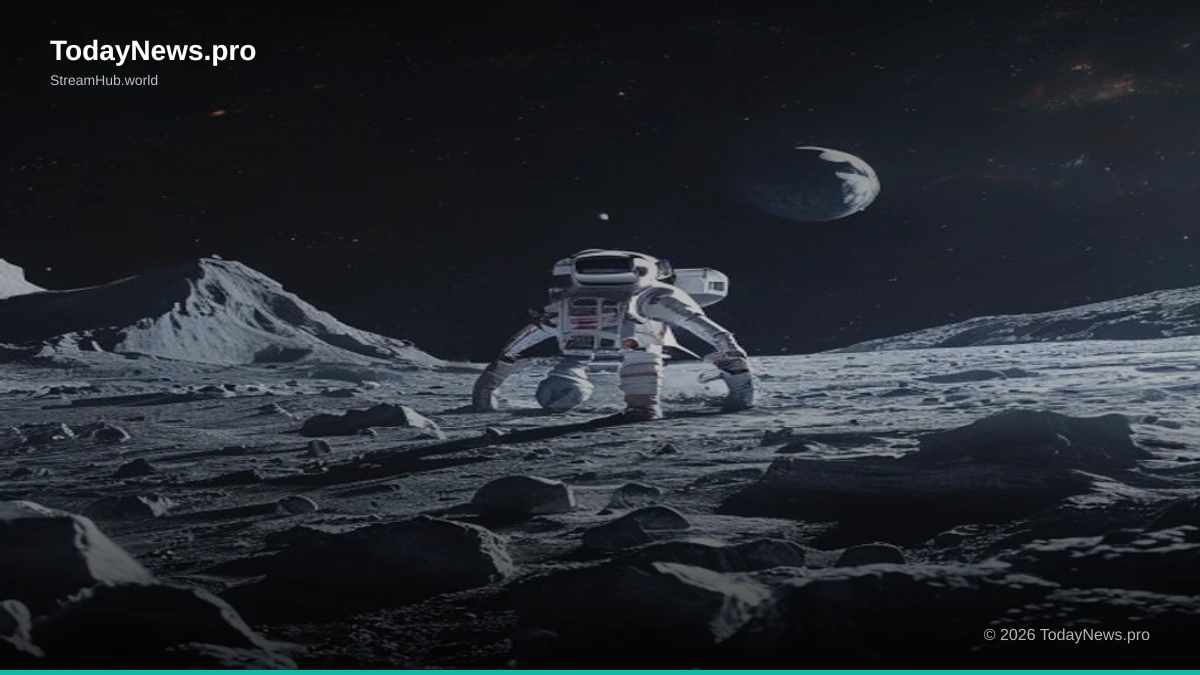
The Moon, our nearest celestial neighbor, is becoming a prime target for human activity, from scientific outposts to commercial ventures and even tourism. The establishment of lunar bases could serve as staging points for deeper space exploration and unlock unique economic opportunities.Scientific Research and Resource Utilization
The Moon offers a unique environment for scientific research, from studying the early solar system to conducting astronomical observations without atmospheric interference. Furthermore, the Moon is believed to contain valuable resources, such as Helium-3, a potential fuel for future fusion reactors, and water ice, which can be used for life support and propellant. Companies are actively pursuing partnerships with space agencies to establish lunar research facilities and explore resource extraction.The Dawn of Lunar Tourism
Imagine vacationing with a view of Earthrise. Lunar tourism, once a concept confined to science fiction, is inching closer to reality. Companies are developing plans for lunar hotels and excursion packages. While the initial cost will be prohibitively high, the long-term vision is to make lunar travel accessible to a broader range of individuals. The Artemis program, led by NASA, aims to establish a sustained human presence on the Moon, which will undoubtedly spur further commercial interest in lunar tourism.| Lunar Resource Potential | Estimated Value (USD Trillions) |
|---|---|
| Helium-3 | > $10 |
| Water Ice | > $5 (for propellant & life support) |
| Rare Earth Elements | > $2 |
| Platinum Group Metals | > $1 |
Satellite Services: The Backbone of the Space Economy
While the headline-grabbing ventures like asteroid mining and lunar tourism are exciting, the more established and currently dominant sector of the space economy is satellite services. This includes telecommunications, Earth observation, navigation, and data analytics, all of which are increasingly vital to global infrastructure and daily life.Global Connectivity and Communication
The demand for ubiquitous internet access, particularly in underserved regions, is driving the growth of satellite internet constellations. Companies like Starlink are deploying thousands of satellites to provide high-speed broadband, transforming connectivity for remote communities, aviation, and maritime operations. This sector also includes traditional geostationary satellites providing television broadcasting and critical communication links.Earth Observation and Data Analytics
Satellites are our eyes in the sky, providing invaluable data for a wide range of applications. Earth observation satellites monitor climate change, track deforestation, manage agricultural yields, support disaster response, and provide intelligence for various industries. The proliferation of high-resolution imaging and hyperspectral sensors, combined with advanced AI-driven analytics, is unlocking new insights and commercial opportunities.Navigation and Precision Agriculture
Global Navigation Satellite Systems (GNSS) like GPS, GLONASS, Galileo, and BeiDou are fundamental to modern life, enabling everything from ride-sharing apps to precision agriculture and autonomous vehicles. The demand for enhanced accuracy and reliability is leading to the development of new satellite constellations and augmentation services. Precision agriculture, which uses satellite data to optimize irrigation, fertilization, and pest control, is a prime example of how space technology is directly impacting terrestrial industries.Investing in the Cosmos: Opportunities and Risks
The space economy presents a compelling investment landscape, but it's not without its unique set of challenges and risks. Investors need to understand the long lead times, technological uncertainties, and regulatory complexities inherent in this frontier.Venture Capital and Public Markets
Venture capital firms are increasingly allocating significant portions of their portfolios to space-related startups. The public markets are also seeing a growing number of space companies going public, either through traditional IPOs or SPACs (Special Purpose Acquisition Companies). This provides avenues for both institutional and retail investors to gain exposure to the sector. However, it's crucial to conduct thorough due diligence, as many of these companies are still in their growth or development phases.Key Investment Areas
Investment opportunities span the entire value chain: * **Launch Services:** Companies providing access to space. * **Satellite Manufacturing and Operations:** Building and managing satellite fleets. * **In-Space Services:** Servicing, refueling, and debris removal. * **Data Analytics and Applications:** Extracting value from space-based data. * **Resource Extraction:** Asteroid mining and lunar resource utilization. * **Space Tourism and Habitation:** Enabling human presence beyond Earth.The Risks Involved
Investing in space is inherently high-risk, high-reward: * **Technological Failure:** Launches can fail, and new technologies may not perform as expected. * **Long Development Cycles:** It can take years, even decades, for some space ventures to become profitable. * **Regulatory Uncertainty:** The legal and regulatory frameworks for space activities are still evolving. * **Geopolitical Factors:** International relations and government policies can impact space ventures. * **High Capital Requirements:** Many space projects demand substantial upfront investment."Space is a frontier, and investing in frontiers always involves higher risk. However, the potential rewards for those who can navigate these challenges are immense. Diversification and a long-term perspective are key." — Sarah Chen, Managing Partner, Stellar Ventures
The Human Element: Workforce and Ethical Considerations
As the space economy expands, the demand for skilled professionals will skyrocket. Simultaneously, ethical considerations surrounding space resource utilization, debris mitigation, and the potential for space colonization will become increasingly important.The Evolving Workforce
The space industry requires a diverse range of talent, from aerospace engineers and astrophysicists to data scientists, robotics experts, and even legal professionals specializing in space law. Universities and educational institutions are adapting their curricula to meet this growing demand. The rise of private space companies is also creating new job opportunities and career paths that were previously unavailable.Ethical Debates and Governance
Questions about who owns space resources, how to manage orbital debris responsibly, and the ethical implications of colonizing other celestial bodies are at the forefront of discussions. International cooperation and robust governance frameworks will be essential to ensure the sustainable and equitable development of the space economy. The Outer Space Treaty of 1967 provides a foundational legal framework, but it requires adaptation to address the complexities of modern space commercialization.Sustainability and Environmental Impact
Ensuring that space activities are conducted sustainably is paramount. This includes minimizing space debris, developing eco-friendly propulsion systems, and considering the long-term environmental impact of any activities on other celestial bodies. A proactive approach to environmental stewardship in space will be crucial for the long-term viability of the industry.What is the estimated value of the global space economy?
The global space economy is currently valued at over $400 billion and is projected to reach $1.5 trillion by 2040.
Is asteroid mining technologically feasible today?
Asteroid mining is still in its early stages. While the concept is understood, significant technological advancements are needed for robotic prospecting, resource extraction, and returning materials to Earth cost-effectively.
What are the biggest risks for investors in the space economy?
The biggest risks include technological failures, long development cycles, regulatory uncertainty, high capital requirements, and geopolitical instability.
How is the space economy impacting everyday life on Earth?
The space economy impacts everyday life through satellite-based services like GPS, internet, weather forecasting, and Earth observation data used for agriculture and disaster management.