

 Maria Curry
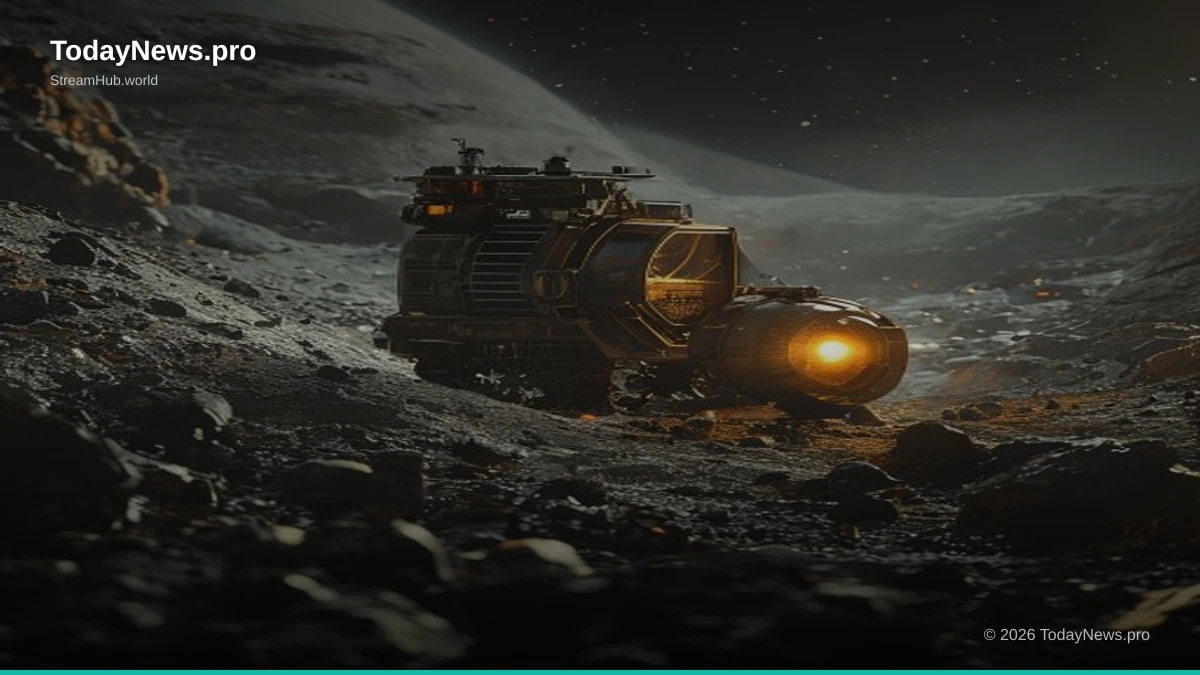
The Dawn of Extraterrestrial Economies
Humanity has always been driven by exploration and the quest for resources. From the age of sail to the industrial revolution, new territories and untapped wealth have fueled innovation and societal change. Today, we stand on the precipice of a similar paradigm shift, but the territory is no longer confined to our planet. The vastness of space, once a realm of pure scientific curiosity, is rapidly becoming the next economic frontier. The concept of space colonization, long a staple of speculative fiction, is now a serious consideration for governments and private enterprises alike. This isn't just about establishing a human presence beyond Earth; it's about creating self-sustaining outposts that can leverage extraterrestrial resources, thereby reducing reliance on Earth's finite reserves and potentially opening up entirely new avenues for economic growth. The initial investments are colossal, but the potential returns are equally staggering, heralding a new era of what can only be described as the next great gold rush, albeit one measured in platinum group metals, rare earth elements, and water ice.From Sci-Fi to Strategic Imperative
The transition from theoretical discussions to concrete planning for off-world settlements has been accelerated by a confluence of factors. Advances in propulsion technology, life support systems, and robotics have brought ambitious projects within the realm of feasibility. Furthermore, a growing awareness of Earth's environmental challenges and resource limitations has lent strategic urgency to the pursuit of extraterrestrial alternatives. Nations and corporations are increasingly viewing space as not just a place for observation or scientific endeavor, but as a vital economic zone. This shift in perspective is fundamentally altering the geopolitical landscape and sparking a competitive race to secure a foothold in the cosmos.The Pillars of Off-World Habitation
Establishing a permanent human presence on celestial bodies requires overcoming immense technical hurdles. Three key areas are paramount: reliable and cost-effective access to space, robust life support systems capable of sustaining human biology in alien environments, and the development of local resource utilization (ISRU) capabilities. Without these foundational elements, any colonization effort would remain a fragile, Earth-dependent outpost, incapable of true self-sufficiency or economic viability. The synergy between these pillars is crucial for long-term success.The Cosmic Commodity Landscape
The allure of space isn't solely about the romantic notion of new worlds; it's about the tangible resources they hold. Celestial bodies, from our own Moon to distant asteroids, are replete with materials that are either scarce on Earth, incredibly difficult to extract here, or possess unique properties valuable for space-based industries. Understanding the composition and accessibility of these cosmic commodities is the first step in unlocking their economic potential.The Lunar Treasure Trove: Water and Helium-3
The Moon, our closest celestial neighbor, is a prime target for early resource exploitation. Its polar craters are known to harbor significant deposits of water ice, a critical resource for life support, agriculture, and, crucially, rocket fuel production. The electrolysis of water yields hydrogen and oxygen, the primary components of most rocket propellants. This capability would revolutionize space travel, allowing spacecraft to refuel on the Moon, drastically reducing the cost and complexity of missions further into the solar system. Beyond water, the Moon's regolith contains Helium-3, a rare isotope on Earth, which is a potential fuel for future nuclear fusion reactors. While fusion power is still in development, the prospect of a clean, abundant energy source is a powerful long-term incentive.Asteroidal Riches: A Celestial Mine
The asteroid belt, located between Mars and Jupiter, is a vast repository of mineral wealth. Scientists estimate that a single large asteroid could contain more platinum than has ever been mined on Earth. These rocky bodies are rich in platinum-group metals (platinum, palladium, rhodium, iridium, osmium, and ruthenium), rare earth elements essential for modern electronics, and base metals like iron, nickel, and cobalt. The economic implications of accessing these vast, relatively untapped reserves are profound, potentially devaluing terrestrial mining operations and reshaping global supply chains.| Celestial Body | Key Resources | Potential Applications |
|---|---|---|
| Moon | Water Ice, Helium-3, Rare Earth Elements, Titanium, Aluminum | Life Support, Rocket Propellant, Fusion Fuel, Construction Materials |
| Near-Earth Asteroids | Platinum-Group Metals, Rare Earth Elements, Iron, Nickel, Cobalt, Water Ice | Industrial Catalysts, Electronics, Aerospace Construction, Rocket Propellant |
| Mars | Water Ice, Carbon Dioxide, Minerals (potential) | Life Support, Atmospheric Processing, Construction Materials |
The Martian Prospect: Water and Atmosphere
Mars, with its thin atmosphere primarily composed of carbon dioxide and subsurface water ice, also presents an attractive target for future colonization and resource utilization. The ability to extract water and generate oxygen from the Martian atmosphere and ice deposits would be foundational for any long-term human presence. Furthermore, the mineralogy of Mars, while less explored than that of asteroids or the Moon, holds the promise of various useful elements for construction and industrial processes, especially for a self-sustaining Martian colony.Technological Pillars of the Space Rush
The realization of space colonization and resource mining hinges on significant technological advancements and innovative engineering. These are not incremental improvements; they represent leaps forward in our ability to operate and thrive beyond Earth's atmosphere.Revolutionizing Space Access: Reusability and New Propulsion
The cost of launching payloads into space has been a perennial barrier. The advent of reusable rocket technology, pioneered by companies like SpaceX, has dramatically reduced launch costs, making space more accessible than ever before. Future advancements in propulsion systems, such as nuclear thermal or electric propulsion, promise even faster and more efficient transit across the solar system, crucial for asteroid mining expeditions and interplanetary colonization.In-Situ Resource Utilization (ISRU): The Key to Self-Sufficiency
The concept of ISRU is central to making space colonization economically viable. Instead of ferrying all necessary materials and fuel from Earth at immense cost, ISRU technologies aim to extract and process resources found on other celestial bodies. This includes 3D printing with regolith for construction, extracting water ice for life support and propellant, and processing atmospheric gases. Without effective ISRU, any off-world settlement would remain perpetually dependent on costly resupply missions from Earth.Robotics and AI: The Unsung Heroes
The harsh and unforgiving environments of space are ideal for robotic and AI systems. Automated mining operations, construction robots, and advanced AI-driven logistics will be essential for the large-scale extraction and processing of resources, as well as for the construction and maintenance of off-world infrastructure. These systems can operate continuously, in conditions that would be lethal to humans, significantly increasing efficiency and safety.Economic Drivers and Projections
The economic case for space colonization and resource mining is multifaceted, driven by both the promise of immense wealth and the strategic imperative to secure future resource independence.The Supply and Demand Equation
The demand for resources is projected to continue its upward trajectory on Earth, driven by population growth and technological advancement. Simultaneously, the accessibility of these resources is becoming more challenging and environmentally costly. Space offers a potentially limitless supply of certain critical materials. The economics are simple: if it becomes cheaper and more efficient to extract platinum from an asteroid than from a terrestrial mine, the market will inevitably shift. This shift will not only create new industries but also disrupt existing ones.New Markets and Industries
Beyond raw material extraction, space colonization will foster entirely new economic ecosystems. In-orbit manufacturing, utilizing the unique microgravity environment, could lead to the production of specialized alloys, pharmaceuticals, and advanced materials impossible to create on Earth. Space-based solar power, beaming clean energy back to Earth, is another potential multi-trillion-dollar industry. Furthermore, the development and support of off-world habitats, transportation networks, and life support systems will create a vast array of jobs and require specialized expertise.According to a recent analysis by Reuters, the total addressable market for space resources, including water, metals, and Helium-3, could easily exceed tens of trillions of dollars in the coming decades. This makes the initial investments, though substantial, appear as strategic long-term plays rather than speculative ventures.
Investment Landscape
Venture capital is increasingly flowing into space-focused startups. Companies are developing everything from asteroid mining technologies and lunar landers to orbital manufacturing platforms and advanced propulsion systems. While still a nascent sector, the level of investment signals strong confidence in the future of space-based economies. Governments are also playing a crucial role, funding research, establishing regulatory frameworks, and engaging in public-private partnerships to de-risk early-stage ventures. The long-term economic upside is driving this surge in capital.Challenges and Ethical Frontiers
The path to space colonization and resource mining is fraught with challenges, both technical and ethical. Overcoming these obstacles is crucial for the sustainable and responsible development of this new frontier.The Immense Cost and Risk
The sheer capital investment required for space colonization and asteroid mining is staggering. Developing and deploying the necessary technologies, launching missions, and establishing operational infrastructure demand resources that dwarf most terrestrial projects. The risk of mission failure is also exceptionally high, with the unforgiving vacuum of space and the vast distances involved posing constant threats. Securing consistent, long-term funding and mitigating these risks will be paramount.Legal and Regulatory Vacuum
The legal framework governing space exploration and resource utilization is still in its infancy. International treaties, such as the Outer Space Treaty, provide a foundation, but they do not adequately address the complexities of private resource extraction and territorial claims. Defining ownership, establishing mining rights, and preventing conflict over celestial resources will require significant international cooperation and the development of new legal norms. The potential for a "wild west" scenario, where powerful entities exploit resources without equitable benefit, is a serious concern. The Outer Space Treaty, signed in 1967, currently prohibits national appropriation of celestial bodies, but it is vague on private ownership of extracted resources.Environmental and Ethical Considerations
While space offers a potentially cleaner alternative for certain industries, we must be mindful of not replicating the environmental mistakes made on Earth. The potential for space debris generation, the ethical implications of altering celestial bodies, and the long-term impact on extraterrestrial environments are critical considerations. Furthermore, discussions about who benefits from space resources and how those benefits will be shared globally are essential to ensure equitable development. The principle of "common heritage of mankind" may need to be re-examined and adapted for the realities of space resource utilization.The Lunar and Martian Frontier: First Steps
The Moon and Mars represent the most immediate and accessible targets for initial colonization and resource exploitation efforts.Lunar Bases: The Stepping Stone
The establishment of permanent lunar bases is seen as a critical intermediate step towards more ambitious deep space endeavors. These bases will serve as testbeds for ISRU technologies, develop operational experience in extraterrestrial environments, and act as potential refueling stations for missions to Mars and beyond. Companies and space agencies are actively developing plans for lunar habitats and resource extraction facilities. The Artemis program, led by NASA, aims to return humans to the Moon and establish a sustained presence, a foundational step for future expansion.Mars: The Long-Term Vision
Mars, with its potential for terraforming and its past habitability, remains the ultimate long-term goal for many space colonization proponents. Establishing a self-sustaining Martian civilization presents enormous challenges, including radiation shielding, atmospheric pressure, and the psychological toll of long-duration isolation. However, the prospect of becoming a multi-planetary species provides a powerful impetus for continued investment and innovation. Early missions will focus on robotic exploration and scouting for resources, paving the way for eventual human landings and settlements.Beyond the Inner Solar System: Asteroid Mining
Once established infrastructure and capabilities are in place within the Earth-Moon system, the focus will inevitably shift to the vast potential of the asteroid belt.The Promise of the Belt
Asteroids, particularly near-Earth asteroids (NEAs), are relatively accessible and contain an astonishing abundance of valuable resources. The ability to capture and process these asteroids, or to mine them remotely, could fundamentally alter global economics. The initial phase will likely involve robotic prospecting missions to identify the most resource-rich and technically feasible targets.Technological Hurdles for Asteroid Mining
Extracting resources from asteroids presents unique challenges. These celestial bodies are often in dynamic orbits, requiring sophisticated navigation and rendezvous capabilities. The low gravity environment of many asteroids necessitates specialized mining equipment that can operate without significant gravitational pull. Furthermore, the long transit times to the asteroid belt, even with advanced propulsion, mean that missions will need to be highly autonomous and resilient. The development of techniques for asteroid capture, deflection, and in-situ processing are key technological advancements required.The concept of asteroid mining, while ambitious, is gaining traction. Pioneering companies are exploring robotic systems capable of identifying, extracting, and processing asteroid materials. The potential for returning vast quantities of precious metals and rare earth elements to Earth, or utilizing them for in-space construction, is a tantalizing prospect that fuels continued research and development in this domain. As stated by NASA, "Asteroid resources could provide key materials to build spacecraft, support human missions, and supply critical elements for Earth industries."