

 David Chen
⏱ 15 min
By 2030, it's projected that over 100 million autonomous vehicles (AVs) could be in operation globally, fundamentally altering the fabric of urban living. This isn't a distant sci-fi fantasy; it's a rapidly approaching reality that promises to reshape our cities from the ground up, impacting everything from our daily commutes to the very design of our urban environments. TodayNews.pro investigates the profound transformations awaiting us.
The Autonomous Dawn: A World Reimagined
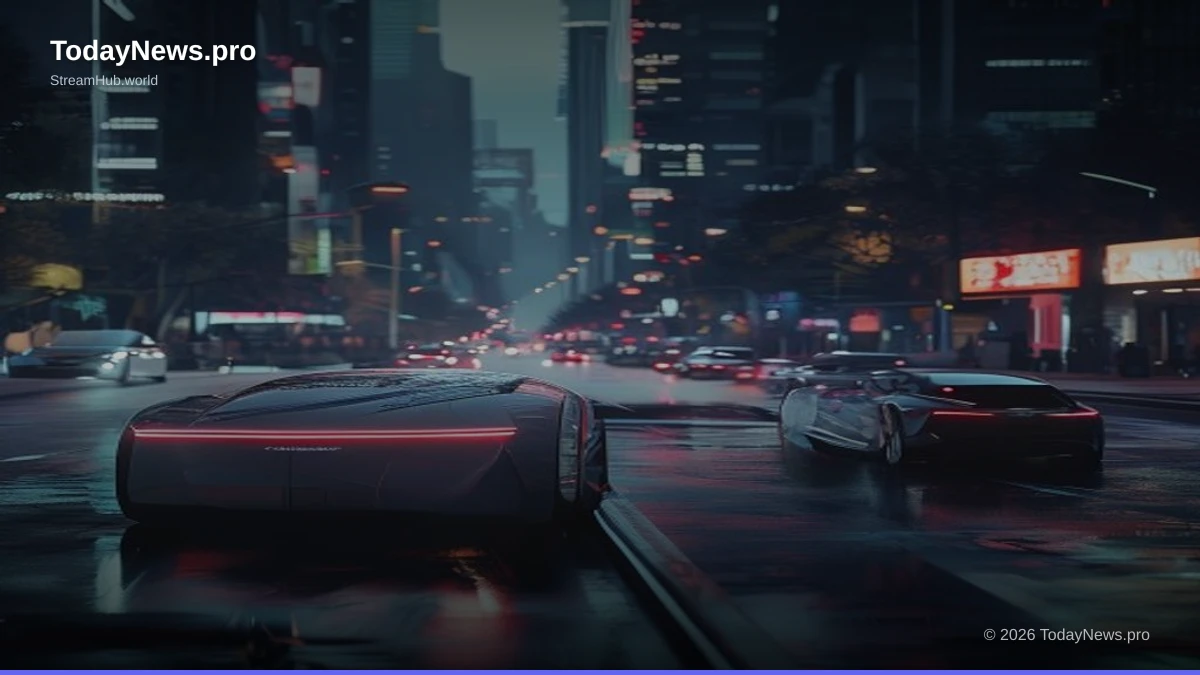
The advent of the self-driving city is not merely about replacing human drivers with sophisticated algorithms and sensors. It represents a paradigm shift in how we conceive, construct, and experience urban spaces. By 2030, the integration of autonomous vehicles (AVs) will unlock unprecedented levels of efficiency, safety, and accessibility, ushering in an era of optimized urban living. The visual landscape will change, the sounds of the city will transform, and the very pace of urban life is poised for a dramatic acceleration. The core promise of AVs lies in their ability to communicate with each other and with city infrastructure, creating a synchronized and fluid transportation network. This interconnectedness will drastically reduce traffic congestion, a persistent urban blight. Imagine a city where vehicles anticipate each other's movements, brake and accelerate in unison, and reroute seamlessly to avoid bottlenecks. This is the future that AVs are poised to deliver, moving us beyond the current gridlock and towards a more harmonious urban flow. Furthermore, the removal of the human element from the driving equation promises a significant reduction in traffic accidents. Human error accounts for the vast majority of road fatalities and injuries. AVs, with their 360-degree perception, lightning-fast reaction times, and adherence to programmed safety protocols, are expected to dramatically enhance road safety. This will lead to fewer emergency room visits, lower insurance premiums, and a palpable sense of security on our streets. ### The Symphony of Sensors and Data The operational backbone of the self-driving city will be a sophisticated network of sensors and data processing. Each AV will be equipped with lidar, radar, cameras, and ultrasonic sensors, constantly collecting and analyzing environmental data. This data will be fused and interpreted by powerful onboard computers and shared with a central urban traffic management system. This constant exchange of information will enable real-time decision-making, dynamic traffic flow optimization, and predictive maintenance of road networks. The sheer volume of data generated will be staggering. Estimates suggest that a single autonomous vehicle can produce terabytes of data daily. This necessitates robust data infrastructure, advanced artificial intelligence for analysis, and stringent cybersecurity measures to protect this critical information. The city of the future will be a living, breathing data organism, with AVs acting as its mobile sensory organs.Redefining Urban Mobility
The most immediate and visible impact of AVs will be on urban mobility. Commuting will be transformed from a chore into an opportunity for productivity, relaxation, or entertainment. The traditional concept of car ownership may also evolve, giving way to on-demand mobility services powered by fleets of autonomous vehicles. For individuals, this means reclaiming lost time. Instead of navigating stressful traffic or searching for parking, passengers can work, read, socialize, or simply unwind during their journeys. This newfound freedom will redefine the daily commute, making it a more integrated and less intrusive part of urban life. The stress associated with driving will dissipate, leading to potentially happier and more productive citizens. ### The Rise of Mobility-as-a-Service (MaaS) The shift towards autonomous fleets will likely accelerate the growth of Mobility-as-a-Service (MaaS) platforms. These integrated services will allow users to book and pay for various transportation options – including autonomous taxis, shuttles, and delivery bots – through a single app. This on-demand model offers unparalleled convenience and flexibility, catering to diverse urban needs. Instead of owning a private vehicle, which incurs costs for purchase, insurance, maintenance, and parking, individuals can subscribe to MaaS or pay per ride. This economic model could be particularly appealing for urban dwellers who face high parking costs and congestion. The efficiency of pooled autonomous vehicles will also lead to lower per-mile costs, making urban travel more affordable for many.| Mobility Service | Pre-AV Era (Estimated) | Post-AV Era (Projected 2030) |
|---|---|---|
| Private Vehicle Ownership Cost (Annual) | $8,000 - $12,000 | $3,000 - $6,000 (via MaaS subscription/pay-per-ride) |
| Average Commute Time | 45 minutes | 25 minutes (due to reduced congestion) |
| Traffic Fatalities per 100,000 Population | 10.2 (US data) | 2.5 - 4.0 (estimated reduction) |
The Shifting Landscape of Urban Infrastructure
The integration of AVs will necessitate significant, albeit potentially phased, adjustments to urban infrastructure. Roads will be reconfigured, parking paradigms will be upended, and new digital networks will become paramount. One of the most significant changes will be the reimagining of parking. As AVs can drop off passengers and then either find remote charging/parking or continue to serve other users, the demand for prime downtown parking spaces will diminish. This will free up valuable urban real estate for parks, housing, businesses, or pedestrian zones. Garages and street parking will become less critical, transforming the visual and functional aspects of our cities. ### Road Design and Smart Infrastructure Roads themselves will be adapted for AV operation. While many AVs will be capable of navigating existing infrastructure, dedicated AV lanes or "smart roads" equipped with sensors and communication nodes could optimize performance. These smart roads will provide AVs with real-time information about road conditions, potential hazards, and traffic signals, further enhancing safety and efficiency. The decommissioning of traditional traffic lights in some areas, replaced by vehicle-to-vehicle communication and intelligent intersection management, is also a possibility. This could lead to a smoother, more continuous flow of traffic, eliminating wasteful idling at red lights.40%
Reduction in parking needs
30%
Increase in road capacity
20%
Decrease in fuel consumption
Projected Impact of AVs on Urban Road Capacity
"The biggest misconception is that AVs will simply replace cars. They will, but more importantly, they will fundamentally change our relationship with public space and urban planning. Cities that embrace this shift strategically will reap enormous benefits in livability and sustainability."
— Dr. Anya Sharma, Urban Futurist, Institute for Advanced Urban Studies
Economic Ripples and New Opportunities
The transition to a self-driving city will undoubtedly create significant economic shifts, leading to the decline of some industries while fostering the growth of entirely new ones. The automotive sector will be at the forefront, but the impacts will extend far beyond. The traditional automotive manufacturing industry will need to pivot dramatically towards producing AVs, focusing on software, sensors, and computing power rather than just engines and chassis. Companies that can adapt and innovate will thrive, while those that are slow to respond may struggle. This will also spur innovation in related fields like artificial intelligence, cybersecurity, and data analytics. ### The Gig Economy on Wheels Delivery services will be revolutionized. Autonomous delivery bots and vans will operate 24/7, significantly reducing delivery times and costs for everything from groceries to packages. This will create new logistical models and potentially impact the gig economy, shifting the focus from human drivers to fleet management and maintenance. The logistics and supply chain industries will see a massive overhaul. Just-in-time delivery will become even more precise, reducing inventory costs and improving efficiency for businesses. This could lead to more resilient and responsive supply chains, better able to withstand disruptions. ### New Industries and Job Creation While some jobs, particularly those involving manual driving, will diminish, new roles will emerge. We will need AV technicians, software engineers, data scientists, cybersecurity specialists, fleet managers, and urban planners who understand the dynamics of autonomous systems. The focus will shift from manual operation to maintenance, oversight, and the development of the underlying technology. The real estate market will also be affected. Reduced need for parking could lower property values in certain areas, while increased accessibility and reduced commute times might drive up demand in others. Businesses may also rethink their office locations, no longer tethered to areas with extensive parking.Challenges on the Road to Autonomy
Despite the compelling vision, the path to a fully autonomous city is not without its obstacles. Technical, regulatory, ethical, and social hurdles must be overcome. One of the most significant challenges is ensuring the safety and reliability of AV technology in all conceivable conditions. While AVs are expected to be safer than human drivers overall, edge cases and unpredictable scenarios, such as extreme weather, complex construction zones, or erratic pedestrian behavior, will require robust solutions. Rigorous testing and validation are crucial before widespread deployment. ### Regulatory Frameworks and Public Trust Developing comprehensive and adaptable regulatory frameworks is essential. Governments worldwide are grappling with how to legislate AVs, address liability in case of accidents, and ensure fair competition. Establishing clear standards for AV performance, data privacy, and cybersecurity will be critical for public acceptance. Building public trust in AV technology is paramount. Many people are still hesitant about relinquishing control to a machine. Education, transparent communication about safety data, and positive real-world experiences will be key to overcoming this apprehension. Initial deployments will likely focus on geofenced areas or specific use cases to build confidence.What are the biggest safety concerns with autonomous vehicles?
The primary safety concerns include the ability of AVs to handle unpredictable situations (edge cases), the reliability of sensors in adverse weather conditions (heavy rain, snow, fog), and the potential for system malfunctions or cyberattacks.
Who will be liable in the event of an accident involving an autonomous vehicle?
Liability is a complex and evolving legal issue. Depending on the level of autonomy and the specific circumstances, liability could rest with the vehicle manufacturer, the software developer, the fleet operator, or even the 'driver' if they were expected to intervene.
How will autonomous vehicles affect traffic congestion?
Autonomous vehicles are expected to significantly reduce traffic congestion. Their ability to communicate with each other and optimize speed and spacing, along with potentially more efficient routing and reduced accidents, can lead to smoother traffic flow and increased road capacity.
The Human Element: Adapting to an Autonomous Future
The integration of AVs is not just a technological or infrastructural challenge; it's also a human one. Our daily routines, our sense of place, and our social interactions will all be influenced by this transition. The skills required in the workforce will shift. As mentioned, manual driving jobs will decline, necessitating retraining and upskilling programs. Educational institutions and governments will need to collaborate to prepare the workforce for the jobs of the future, which will increasingly involve technology, data, and complex problem-solving. ### Redefining Urban Spaces and Lifestyles With less time spent driving and more efficient transportation, urban dwellers may have more leisure time. This could lead to a resurgence of public spaces, increased community engagement, and a greater focus on well-being. Parks, cultural venues, and pedestrian zones could become more vibrant as people have more freedom to explore their cities. The concept of home might also evolve. As commutes become shorter and less stressful, people might be more willing to live further from city centers, potentially leading to a more distributed urban development pattern. However, the convenience of on-demand AVs could also reinforce the appeal of urban living, making dense areas even more attractive.
"The autonomous city is not just about the vehicles; it's about reclaiming our urban environments. It's about creating cities that are safer, cleaner, more accessible, and more human-centric. The technology is a tool, but the vision must be about improving quality of life for everyone."
### The Future of Public Transport
Public transportation systems will need to adapt to remain competitive. Autonomous shuttles and buses could offer more flexible routes and on-demand services, complementing traditional fixed routes. This integration of autonomous and traditional public transport could create a more seamless and efficient public mobility network, making it an attractive alternative to private car ownership.
The potential for AVs to serve as "first and last mile" solutions for public transport hubs is significant. Imagine an autonomous shuttle picking you up from your doorstep and taking you to a high-speed rail station, and another waiting for you at your destination to take you to your final stop. This could make public transport a viable option for a much larger segment of the population. For more information on the future of transportation, Reuters often provides insightful reporting.
— Mark Jensen, CEO, Urban Mobility Solutions Inc.