

 Daniel Volk
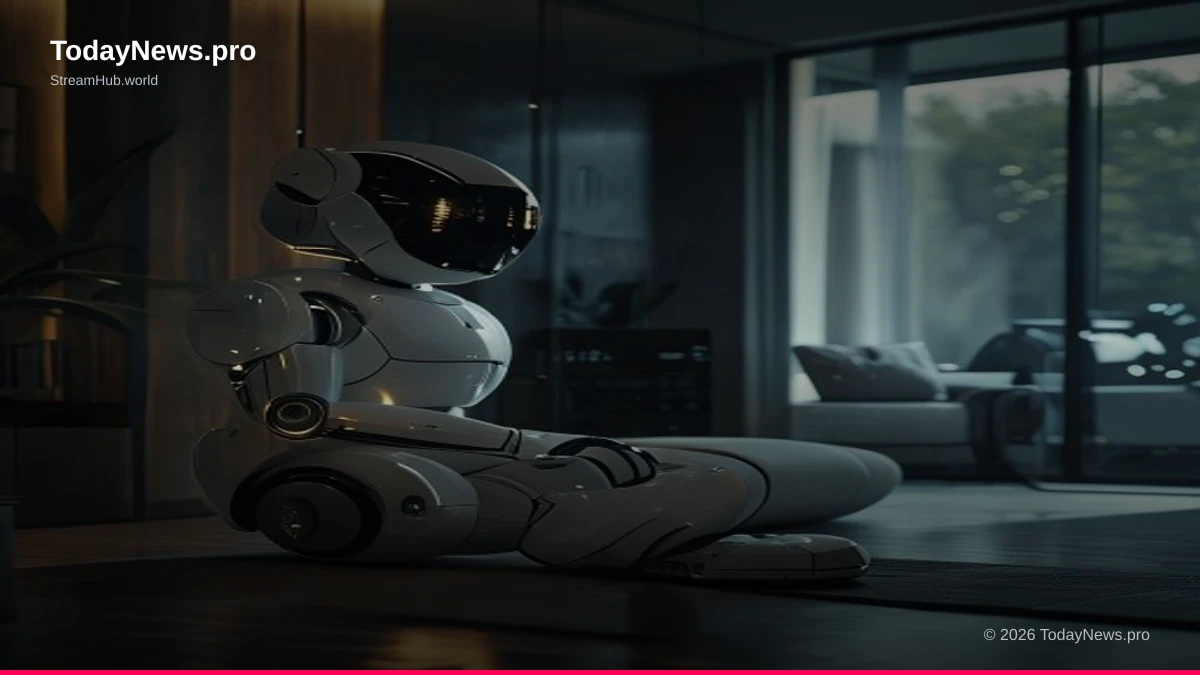
By 2030, the global market for domestic robots is projected to reach over $20 billion, signaling a significant shift in how we envision our living spaces.
The Dawn of the Residential Robot: Beyond the Echo Dot
For years, the "smart home" conjured images of voice-activated lights and thermostats, orchestrated by stationary hubs like Amazon's Echo or Google Home. These devices, while transformative, primarily focused on passive command and control. They were the conductors of an orchestra that didn't yet have many instrumentalists. Now, the smart home is evolving, not just in its connectivity, but in its very inhabitants. We are entering an era where robots are not merely accessories but active participants in the daily lives of households. This isn't science fiction; it's the tangible trajectory of technological advancement, moving beyond voice assistants to create truly intelligent and responsive living environments.
The initial wave of smart home technology concentrated on convenience and automation of simple tasks. Adjusting the temperature, dimming lights, or playing music could all be done with a spoken command. However, these systems lacked true agency. They responded to prompts but did not initiate actions, learn complex patterns, or physically interact with the environment. The next frontier is the integration of mobile, task-oriented robots capable of performing a wider array of duties, ushering in a new paradigm of domestic assistance.
This transition is driven by breakthroughs in artificial intelligence, sensor technology, robotics, and battery life, making sophisticated robotic systems more feasible and affordable for consumer markets. Companies are now investing heavily in developing robots that can navigate homes autonomously, perform physical tasks, and even offer a degree of social interaction. The home is becoming less of a static environment controlled by external devices and more of a dynamic, inhabited space.
The Evolution of the Smart Home Ecosystem
The smart home, as we've known it, has been a symphony of connected devices, each performing a specific function. Smart bulbs, thermostats, security cameras, and door locks have been integrated, often through cloud platforms and mobile apps. Voice assistants acted as the primary interface, translating human language into commands for these individual devices. This created a network of convenience, but it was largely a passive one. The devices reacted; they didn't proactively manage or execute multi-step physical tasks.
The underlying infrastructure of the smart home has been steadily improving. Wi-Fi speeds have increased, and mesh networking solutions have made robust home connectivity more accessible. Standards like Matter are emerging, aiming to simplify interoperability between different brands and devices, creating a more cohesive ecosystem. This foundational work is crucial for the seamless integration of more complex robotic systems that require reliable communication and environmental awareness.
The shift is from a collection of smart gadgets to an intelligent, adaptive environment. Imagine a home that not only knows when you're coming home but can prepare for your arrival by adjusting lighting, temperature, and even tidying up. This requires robots that can move, perceive, and act within the physical space, going beyond the digital realm controlled by current smart home hubs. The intelligence is moving from the cloud and the speaker to embodied agents within the home itself.
From Connected Appliances to Autonomous Agents
Early smart home devices were essentially connected appliances. A smart refrigerator could tell you when you were low on milk or a smart oven could be preheated remotely. These were enhancements to existing appliances, not fundamentally new forms of domestic help. The introduction of mobile robots marks a significant departure, introducing entities with mobility, sensing capabilities, and the potential for complex task execution.
These robots are equipped with an array of sensors, including cameras, LiDAR, and ultrasonic sensors, allowing them to map their environment, detect obstacles, and understand their surroundings. Combined with advanced AI algorithms for navigation, object recognition, and task planning, they are capable of navigating complex home layouts autonomously. This autonomous navigation is a key differentiator from stationary smart devices.
The transition signifies a move from a system that requires constant user input to one that can operate with a degree of autonomy, learning user preferences and anticipating needs. This proactive approach is what truly defines the next generation of smart living.
The Role of AI and Machine Learning
Artificial intelligence and machine learning are the invisible engines driving this robotic revolution. These technologies enable robots to learn from their experiences, adapt to new environments, and improve their performance over time. For example, a robotic vacuum cleaner can learn the most efficient cleaning paths in a specific home, avoiding furniture it previously bumped into.
Machine learning algorithms allow robots to identify and classify objects, understand human gestures, and even interpret emotional cues to some extent. This enables more intuitive and natural human-robot interaction. The goal is for robots to become not just tools, but helpful companions that can understand and respond to the nuances of human behavior.
The continuous improvement through AI means that as robots interact more with their environment and with occupants, they become more adept at their tasks, further enhancing their utility and the overall smart home experience. This iterative learning process is a hallmark of advanced AI.
Key Robotic Players Entering the Home
The landscape of domestic robotics is rapidly expanding, with established tech giants and innovative startups alike vying for a place in our homes. These are not just conceptual prototypes; many are already available or slated for release in the near future, each with a unique approach to tackling household chores and offering assistance.
Companies are focusing on specific areas of home management. Some are developing robots that excel at cleaning, others at security, and some are even exploring companionship and personal assistance. The competition is fierce, driving innovation and pushing the boundaries of what is technologically possible.
The diversity of offerings reflects the multifaceted needs of modern households. From busy professionals seeking to outsource mundane tasks to elderly individuals requiring support and companionship, the potential applications for domestic robots are vast and varied.
Robotic Vacuum Cleaners and Mops
The robotic vacuum cleaner is perhaps the most established category of domestic robots. Brands like iRobot (Roomba), Roborock, and Ecovacs have been refining their technology for years, offering increasingly sophisticated models. These robots can now map entire homes, avoid obstacles with advanced sensors, and even empty their own dustbins.
The evolution has extended to robotic mops, often integrated into vacuuming units. These devices can distinguish between hard floors and carpets, adjust water levels, and provide a more thorough cleaning experience. Advanced models can even scrub floors with rotating brushes or vibrating pads, tackling tougher stains.
This category represents a successful entry point for robotics into the home, demonstrating the practical value and consumer acceptance of autonomous cleaning devices. Their popularity has paved the way for more complex robotic applications.
Home Security and Monitoring Robots
Beyond stationary cameras, a new breed of mobile robots is emerging for home security. These robots can patrol homes autonomously, providing live video feeds, detecting unusual activity, and even alerting homeowners or authorities. Companies like Amazon have explored such concepts, envisioning robots that can navigate homes and provide an extra layer of surveillance.
These security robots can be programmed to follow specific patrol routes, investigate unusual noises, or respond to sensor triggers. Their mobility allows them to cover blind spots that fixed cameras might miss, offering a more comprehensive security solution. Some even feature two-way audio communication for remote interaction.
The integration of AI allows these robots to differentiate between normal household sounds and potential threats, reducing false alarms and increasing their effectiveness. The ability to move and investigate makes them far more proactive than traditional security systems.
Emerging Personal Assistant and Companion Robots
The most ambitious developments are in personal assistant and companion robots. These robots are designed to interact with humans on a deeper level, offering assistance with tasks, providing information, and even offering a form of companionship. Examples include robots like LG's CLOi Hub Bot, which aims to manage smart home devices and provide information, or more specialized social robots designed for elder care.
These robots are equipped with advanced natural language processing (NLP) capabilities, allowing them to understand and respond to complex queries. They can also learn individual preferences and routines, offering personalized assistance. The development of emotive AI is also a key area, aiming to make these robots more engaging and intuitive to interact with.
While still in their nascent stages, these robots hold the promise of transforming how we live, especially for individuals who may require additional support or seek a more engaging home environment. The ethical considerations surrounding such intimate integration are significant and are being actively discussed.
Functionality: From Chores to Companionship
The capabilities of residential robots are expanding exponentially, moving beyond simple automation to encompass a broad spectrum of domestic responsibilities and social interactions. What was once confined to science fiction is now becoming a tangible reality, reshaping our expectations of what a home can and should do for its occupants.
The primary drivers of this evolution are the increasing sophistication of robotic hardware, coupled with significant advancements in artificial intelligence, particularly in areas like computer vision, natural language processing, and machine learning. These technologies empower robots to perceive, understand, and act within the complex and dynamic environment of a human home.
The range of functionalities is not just about efficiency; it's about enhancing the quality of life, providing support, and fostering a more comfortable and secure living experience. The home is becoming an active partner in the lives of its residents.
Task Automation and Efficiency
The most immediate impact of residential robots is their ability to automate tedious and time-consuming household chores. Robotic vacuums and mops are just the tip of the iceberg. Future robots are envisioned to be capable of tasks such as laundry folding, dishwashing, window cleaning, and even basic grocery stocking and organization. Imagine a robot that can sort laundry, load the washing machine, and then transfer it to the dryer.
These robots are designed to learn and adapt to different environments and user preferences. For instance, a laundry-folding robot would need to identify different types of fabrics and adjust its folding technique accordingly. The goal is to free up human time and energy for more meaningful pursuits, whether it's work, hobbies, or spending time with family.
The efficiency gains are not just in the execution of tasks but also in the optimization of home management. A robot could monitor pantry levels, create shopping lists, and even reorder consumables before they run out, streamlining household logistics.
Home Monitoring and Safety
Residential robots are also poised to significantly enhance home security and safety. Mobile robots equipped with sensors can act as dynamic surveillance systems, patrolling homes, detecting anomalies, and alerting residents or emergency services. They can provide real-time video feeds, and some may even be equipped with two-way audio for remote communication with visitors or to deter intruders.
Beyond security, these robots can monitor environmental conditions, such as air quality, temperature fluctuations, or potential water leaks, providing early warnings for potential hazards. For the elderly or those with mobility issues, robots can offer assistance with fall detection, medication reminders, and emergency calls, providing peace of mind for both the individual and their loved ones.
The proactive nature of these robots, capable of actively investigating unusual sounds or movements, offers a significant upgrade over passive security systems. Their ability to navigate and report on specific events provides a level of detail and responsiveness that was previously unattainable.
Companionship and Social Interaction
Perhaps the most profound and ethically complex aspect of residential robotics is their potential to provide companionship. For individuals living alone, particularly the elderly, a robot could offer a sense of presence, engage in conversation, and provide emotional support. These robots are being designed with increasingly sophisticated AI to understand and respond to human emotions, learn personal histories, and engage in meaningful dialogue.
While not a replacement for human connection, these companion robots can help combat loneliness and social isolation. They can play games, tell stories, remind users about appointments, and facilitate communication with family members through integrated video calling features. The development of empathetic AI is a key focus in this area.
The concept of a robot as a friend or confidant raises significant questions about the nature of relationships and the potential for over-reliance. However, for many, the benefits of reduced isolation and increased engagement could be life-changing. The trajectory points towards robots becoming more integrated into the social fabric of the home.
Challenges and Ethical Considerations
As robots become more integrated into the fabric of our homes, a host of practical, ethical, and societal challenges emerge. These are not minor hurdles but fundamental questions that need careful consideration as we navigate this new era of domestic automation.
The rapid advancement of robotic capabilities outpaces the development of clear regulations and societal norms. Addressing these challenges proactively is crucial to ensuring that this technology serves humanity in a beneficial and responsible manner. The integration of robots into personal spaces brings unique complexities.
From privacy concerns to the potential for job displacement, the introduction of intelligent agents into our homes necessitates a thorough examination of their impact on individuals and society as a whole.
Privacy and Data Security
Residential robots, particularly those equipped with cameras, microphones, and sensors, collect vast amounts of personal data about individuals and their living environments. This raises significant privacy concerns. Who owns this data? How is it stored and protected? What are the implications if this data is breached or misused?
The potential for these robots to be used for surveillance, either by malicious actors or by companies without explicit consent, is a serious issue. Robust encryption, transparent data policies, and strict access controls are essential to safeguard user privacy. Furthermore, clear guidelines on data retention and deletion are needed.
The proliferation of internet-connected devices, often referred to as the Internet of Things (IoT), has already highlighted significant vulnerabilities. Robotic systems, with their advanced sensing capabilities, represent an even greater potential attack surface if not secured rigorously. The reputational and financial costs of a significant data breach involving home robots could be immense.
Job Displacement and Economic Impact
The automation of household tasks, while beneficial for individuals, could have broader economic implications. As robots become more capable of performing tasks currently done by human domestic workers, there is a risk of job displacement. This is particularly relevant in economies where a significant portion of the workforce is employed in service industries.
Policymakers and industry leaders will need to consider strategies for retraining and upskilling the workforce to adapt to these changes. The focus might shift towards jobs that involve the design, maintenance, and supervision of these robotic systems, as well as roles that require uniquely human skills such as creativity, empathy, and complex problem-solving.
The transition could also lead to increased economic inequality if the benefits of automation are not broadly shared. Discussions around universal basic income or other social safety nets may become more pertinent in an era of widespread automation. Understanding the long-term economic ripple effects is crucial for societal stability.
Human-Robot Interaction and Societal Norms
As robots become more sophisticated and integrated into daily life, new social norms and expectations will need to evolve. How do we interact with a robot in our home? What level of emotional attachment is appropriate? What are the boundaries between human and artificial companionship?
The development of robots designed for companionship, particularly for the elderly or vulnerable, raises ethical questions about the nature of relationships and the potential for deception or exploitation. Ensuring transparency about the robot's capabilities and limitations is paramount. These robots should augment human connection, not replace it entirely.
Furthermore, the design of robots needs to be sensitive to cultural nuances and individual preferences. A "one-size-fits-all" approach to robot design and interaction will likely not be effective. Ongoing research into human-robot interaction (HRI) is essential to guide the development of robots that are not only functional but also socially intelligent and beneficial.
The Future Landscape: Interoperability and AI Integration
The coming years will witness an unprecedented acceleration in the capabilities and integration of residential robots. The future smart home will not be a collection of disparate devices but a seamlessly integrated ecosystem where robots, smart appliances, and AI work in concert to create a truly responsive and intelligent living environment.
Key to this future is the concept of interoperability – the ability for different devices and systems to communicate and work together harmoniously. Standards like Matter are paving the way for this, ensuring that devices from various manufacturers can connect and share data. This foundation is critical for the complex coordination required by advanced robotic systems.
Beyond connectivity, the deepening integration of AI will unlock new levels of autonomy, learning, and personalization for residential robots, moving them from assistants to true partners in managing our homes and lives.
The Promise of Universal Interoperability
The current smart home market is often fragmented, with different brands and platforms struggling to communicate effectively. The emergence of standards like Matter aims to solve this by creating a unified language for smart home devices. This will allow robots to interact seamlessly with a wider range of appliances, sensors, and control systems, regardless of their manufacturer.
Imagine a robot that can not only clean your floors but also communicate with your smart oven to preheat it for dinner, or with your smart blinds to adjust them based on the ambient light. This level of interoperability will unlock a new dimension of home automation, where devices work collaboratively rather than in isolation.
This interconnectedness will reduce friction for consumers, making it easier to build and manage a smart home without being locked into a single ecosystem. It will also foster greater innovation, as developers can focus on creating intelligent functionalities rather than struggling with compatibility issues.
Advanced AI for Predictive and Proactive Assistance
The future of residential robots lies in their ability to move beyond reactive task execution to predictive and proactive assistance. Powered by advanced AI and machine learning, these robots will learn individual routines, preferences, and even anticipate needs before they are expressed.
For example, a robot might learn your typical sleep schedule and adjust the home's lighting and temperature to optimize your rest. It could predict when you're likely to run out of a specific grocery item and add it to your shopping list. In terms of health, a robot might monitor subtle changes in your gait or behavior that could indicate an emerging health issue, prompting you to consult a doctor.
This level of personalization and foresight will transform the home into a truly adaptive environment, one that actively supports the well-being and convenience of its occupants. The AI will become more sophisticated, capable of complex reasoning and decision-making within the home context.
Consumer Adoption Trends and Market Projections
The adoption of residential robots is no longer a niche phenomenon; it's a growing trend that is reshaping consumer expectations and driving significant market growth. While initial adoption was concentrated among early adopters and tech enthusiasts, the increasing affordability, improved functionality, and clear benefits are bringing these devices into mainstream households.
Market research indicates a strong upward trajectory for the domestic robot sector. As consumers become more accustomed to smart home technology and its conveniences, they are increasingly open to more advanced robotic solutions that promise to further simplify their lives and enhance their living spaces.
Several factors are contributing to this accelerated adoption, including declining manufacturing costs, increased consumer awareness, and a growing demand for convenience and assistive technologies. The market is poised for substantial expansion in the coming decade.
| Year | Market Size | CAGR (%) |
|---|---|---|
| 2022 | 12.5 | - |
| 2023 | 14.1 | 12.8 |
| 2025 | 18.5 | 14.5 |
| 2027 | 24.2 | 14.9 |
| 2030 | 33.8 | 15.3 |
Source: Reuters Market Analysis
Key Drivers of Consumer Interest
Several key drivers are fueling consumer interest in residential robots. The primary appeal is undoubtedly the promise of convenience and time-saving. As individuals lead increasingly busy lives, the prospect of automating mundane chores like cleaning, laundry, and even basic meal preparation is highly attractive.
The growing awareness of the benefits for elder care and independent living is another significant factor. For families with aging relatives, robots that can provide monitoring, reminders, and a degree of companionship offer immense peace of mind. This segment of the market is expected to see particularly strong growth.
Furthermore, the increasing integration of these robots with existing smart home ecosystems makes them a natural extension of current technology adoption. Consumers are already comfortable with voice assistants and connected devices, making the transition to embodied robots a logical next step in enhancing their connected living experience.
Market Segmentation and Future Opportunities
The domestic robot market can be segmented by function, with cleaning robots currently dominating. However, significant growth is projected in areas such as security and surveillance robots, personal assistant robots, and specialized robots for elder care or entertainment. Each segment presents unique opportunities for innovation and market penetration.
The rising disposable incomes in emerging economies also represent a substantial growth opportunity. As these markets mature, the demand for sophisticated home technologies, including robotics, is expected to rise dramatically. Companies that can offer cost-effective and culturally relevant solutions will likely capture a significant share of these markets.
The future is also bright for robots that can offer a combination of functionalities, such as a cleaning robot that also acts as a mobile security monitor. The development of modular and adaptable robotic systems that can be customized to individual needs will be a key area of future development and consumer demand.