

 Marcus Thorne
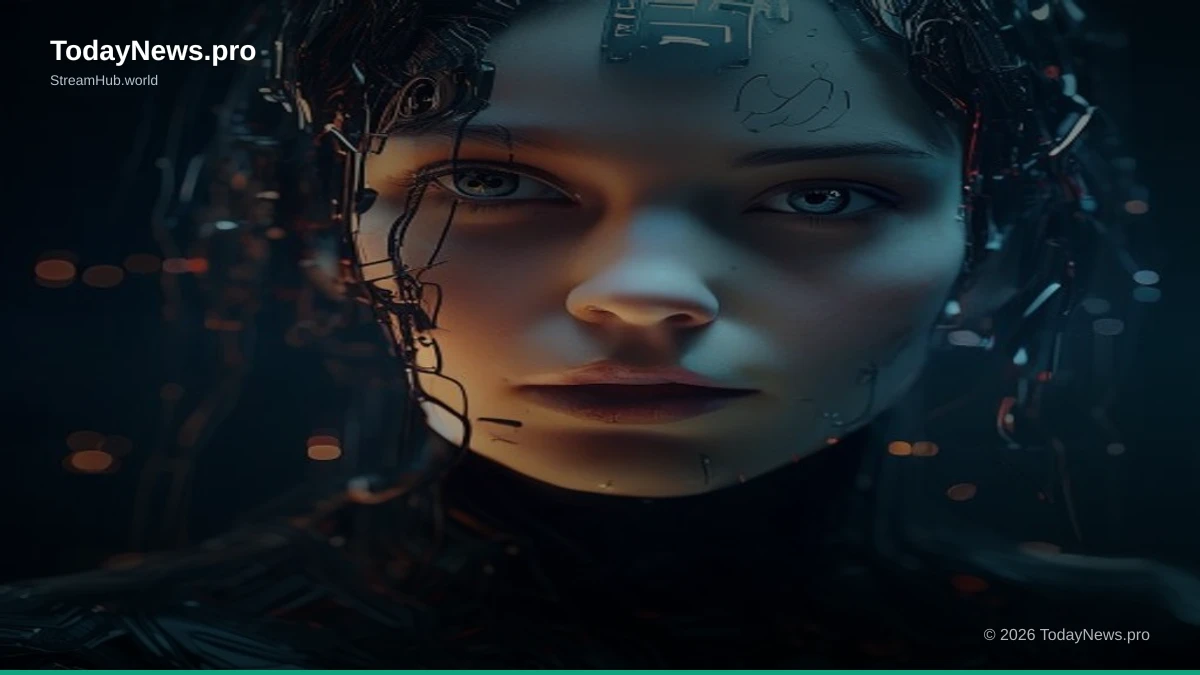
The global market for synthetic media is projected to reach $120 billion by 2025, signaling a dramatic shift in how digital content is created and consumed.
The Dawn of Synthetic Media: A Paradigm Shift
We stand on the precipice of a new digital era, one characterized by the burgeoning power of synthetic media. This umbrella term encompasses any media – be it images, audio, or video – that is generated or manipulated by artificial intelligence. Once confined to the realms of science fiction and highly specialized research labs, synthetic media is now permeating our daily lives at an unprecedented pace. From hyper-realistic AI-generated art adorning online galleries to disconcertingly convincing deepfake videos, the boundaries between authentic and artificial are blurring at an alarming rate. This transformation is not merely about technological advancement; it represents a profound redefinition of creativity, authenticity, and even reality itself. The implications are far-reaching, touching industries from entertainment and advertising to journalism and political discourse, forcing us to confront both the immense opportunities and the significant challenges this new frontier presents.
Understanding the Landscape
Synthetic media is a broad category, but its most prominent sub-fields are deepfakes and AI art. Deepfakes leverage AI to create or alter video and audio content, often superimposing one person's likeness onto another's body or making individuals appear to say or do things they never did. AI art, on the other hand, involves algorithms generating entirely new visual artworks based on textual prompts or existing datasets. Both are powered by sophisticated machine learning techniques, pushing the boundaries of what machines can create.
The rapid evolution of these technologies means that what was once considered cutting-edge is now commonplace. The accessibility of powerful AI models has democratized content creation to an extent previously unimaginable, empowering individuals and small teams to produce professional-grade media with relative ease. This accessibility, however, also amplifies concerns about misuse and the potential for widespread deception.
The Economic Imperative
The commercial potential of synthetic media is immense. Businesses are exploring its use for personalized advertising, virtual influencers, rapid prototyping of product designs, and creating immersive experiences for gaming and virtual reality. The ability to generate high-quality content at scale and at a fraction of the cost of traditional methods is a powerful economic driver. For instance, studios can use AI to generate background characters, digital extras, or even to de-age actors for specific scenes, significantly reducing production time and expenses.
This economic imperative is fueling significant investment in research and development. Venture capital firms are pouring billions into startups focused on various aspects of synthetic media, from foundational AI models to platforms for content creation and distribution. This financial influx is accelerating innovation and bringing new applications to market at an ever-increasing speed.
Deepfakes: From Novelty to Nemesis
Deepfakes, a portmanteau of "deep learning" and "fake," emerged as a startling demonstration of AI's ability to manipulate reality. Initially popularized through online forums, these AI-generated videos and images gained notoriety for their uncanny ability to swap faces, alter speech, and create entirely fabricated scenarios involving real individuals. The technology, rooted in generative adversarial networks (GANs), allows for the creation of highly convincing synthetic media that can be difficult for the untrained eye to discern from genuine content.
The Evolution of Deception
Early deepfakes were often crude, with noticeable visual artifacts and unnatural movements. However, the technology has advanced at a breakneck pace. Modern deepfakes can achieve photorealistic quality, with seamless facial transitions, synchronized lip movements, and even the replication of nuanced vocal inflections. This sophistication makes them potent tools for misinformation campaigns, fraudulent activities, and personal defamation. The ease with which these can be generated and disseminated online poses a significant threat to public trust and the integrity of information.
The malicious applications of deepfakes are a growing concern. They have been used to create non-consensual pornography, spread political propaganda, and impersonate individuals for financial gain. The psychological impact of being targeted by a deepfake can be devastating, leading to reputational damage, emotional distress, and even social ostracization. Detecting these sophisticated fakes is becoming increasingly challenging, requiring advanced AI-powered tools and a constant arms race between creators and detectors.
Case Studies and Real-World Impacts
Several high-profile incidents have highlighted the dangers of deepfakes. In politics, fabricated videos have been used to discredit candidates and sow discord. The ease with which these can be spread on social media platforms means that a well-crafted deepfake can go viral within hours, reaching millions before any fact-checking can occur. The potential for foreign interference in elections through sophisticated deepfake campaigns remains a significant worry for intelligence agencies worldwide.
Beyond the political arena, deepfakes have impacted individuals and businesses. The creation of deepfake audio recordings has been used in sophisticated scams, where fraudsters impersonate executives to authorize fraudulent transactions. The reputational damage to individuals whose likeness is used without consent can be irreparable. The legal framework surrounding deepfakes is still nascent, struggling to keep pace with the technological advancements and the diversity of their misuse.
AI Art: Democratizing Creativity or Devaluing Talent?
The realm of visual art has been profoundly disrupted by the advent of AI art generators. Tools like Midjourney, DALL-E 2, and Stable Diffusion have empowered individuals with no traditional artistic training to create stunning, complex, and often surreal imagery simply by describing their vision in natural language. This has led to an explosion of AI-generated art on social media, in digital galleries, and even in commercial applications, sparking a fervent debate about the nature of creativity, authorship, and the future of human artists.
The Algorithmic Muse
AI art generators operate by learning from massive datasets of existing images and their associated text descriptions. When a user provides a prompt, the AI uses its learned patterns to synthesize an entirely new image that matches the description. The results can range from photorealistic depictions to abstract compositions, often with a distinctive stylistic flair that is a hallmark of the AI's training data. This process democratizes visual creation, allowing anyone with an idea to manifest it visually, bypassing the need for technical skills like drawing or painting.
The accessibility has led to a surge in artistic output. Independent creators can now produce high-quality illustrations for their books, concept art for their games, or unique visuals for their social media presence without significant financial investment. This has also opened up new avenues for artistic exploration, enabling artists to experiment with styles and concepts that might be time-consuming or impossible to achieve through traditional means.
The Ethical Quagmire: Copyright and Authorship
One of the most contentious issues surrounding AI art is the question of copyright and ownership. Since these models are trained on vast quantities of existing artwork, many of which are copyrighted, there are ongoing legal battles over whether the output of these generators infringes on existing intellectual property. Artists have expressed concern that their styles and creations are being used without their permission to train AI models that then compete with them.
The concept of authorship is also being challenged. If an AI generates an image based on a human prompt, who is the artist? Is it the AI, the person who wrote the prompt, or the developers who created the AI? Current legal frameworks are ill-equipped to answer these questions, leading to uncertainty and potential disputes. The debate often centers on whether AI can truly be considered creative or if it is merely a sophisticated tool, akin to a paintbrush or a camera, wielded by a human operator.
The Artists Perspective
Many professional artists view the rise of AI art with a mix of awe and apprehension. While acknowledging the impressive technical achievements, they often lament the potential devaluation of human skill, dedication, and the unique emotional depth that human artists bring to their work. The speed at which AI can generate variations of an idea also raises concerns about the commodification of art, where unique creative visions could be lost in a sea of easily produced, algorithmically generated images.
Some artists are embracing AI as a new medium, integrating it into their workflows to augment their creative process. They see it as a powerful tool for brainstorming, generating initial concepts, or creating complex textures and backgrounds. Others are focusing on developing unique AI-generated styles or using AI to produce art that explores themes related to technology and artificial intelligence itself, turning the medium into a subject of commentary.
The Technical Underpinnings: GANs and Diffusion Models
The impressive capabilities of synthetic media are not magic; they are the result of sophisticated machine learning architectures. Two primary classes of models have driven the recent advancements: Generative Adversarial Networks (GANs) and Diffusion Models. Understanding these underlying technologies is key to appreciating both the potential and the limitations of synthetic media.
Generative Adversarial Networks (GANs)
GANs, first introduced by Ian Goodfellow in 2014, consist of two neural networks trained in opposition to each other. The first, the "generator," creates synthetic data (e.g., images). The second, the "discriminator," tries to distinguish between real data and the data produced by the generator. This adversarial process forces the generator to produce increasingly realistic outputs to fool the discriminator. The generator learns by receiving feedback from the discriminator, improving its ability to mimic the characteristics of real-world data.
GANs have been instrumental in creating hyper-realistic faces, synthesizing images of objects, and even generating short video clips. However, they can be notoriously difficult to train, often suffering from issues like "mode collapse," where the generator produces only a limited variety of outputs. Despite these challenges, GANs remain a foundational technology in the synthetic media landscape.
Diffusion Models: The New Frontier
Diffusion models have recently emerged as a powerful alternative and, in many cases, a superior approach for generating high-quality images. These models work by progressively adding noise to an image until it becomes pure static, and then learning to reverse this process. To generate an image, the model starts with random noise and gradually denoises it, guided by a conditioning signal (such as a text prompt), to produce a coherent and detailed image.
Diffusion models, exemplified by systems like DALL-E 2 and Stable Diffusion, excel at generating diverse and complex images that are often more coherent and artistically nuanced than those produced by GANs. They are also generally more stable to train and can handle a wider range of conditional inputs. The rapid adoption and success of diffusion models have quickly made them a dominant force in AI art generation.
| Model Type | Key Concept | Primary Application Area | Strengths | Weaknesses |
|---|---|---|---|---|
| GANs | Generator vs. Discriminator | Image Synthesis, Face Generation | High realism, Can be very fast | Training instability, Mode collapse |
| Diffusion Models | Noise Addition & Denoising | High-Quality Image Generation, Text-to-Image | Excellent image quality & diversity, Stable training | Computationally intensive for inference |
Navigating the Ethical and Legal Labyrinth
The rapid proliferation of synthetic media has outpaced the development of ethical guidelines and legal frameworks, creating a complex and often challenging landscape to navigate. As these technologies become more sophisticated and accessible, the potential for misuse grows, demanding urgent attention from policymakers, technologists, and society at large. The core challenge lies in balancing innovation and creative freedom with the need to protect individuals and institutions from deception, harm, and exploitation.
The Challenge of Detection and Verification
One of the most significant hurdles is the difficulty in distinguishing between authentic and synthetic media. As deepfakes become more convincing, relying solely on human perception is no longer a reliable method. This has spurred the development of sophisticated detection tools, often employing AI themselves to identify subtle inconsistencies or digital artifacts that betray a synthetic origin. However, this creates an ongoing technological arms race, where detection methods are constantly challenged by advancements in generation techniques.
Verification processes are becoming increasingly critical. For journalists, fact-checkers, and platforms that host user-generated content, establishing the authenticity of media is paramount. This involves employing a combination of technical tools, metadata analysis, and contextual corroboration. The reliance on trusted sources and verification protocols is essential to combating the spread of misinformation powered by synthetic media.
Regulatory Responses and Policy Debates
Governments worldwide are grappling with how to regulate synthetic media. Discussions often revolve around issues of consent, defamation, intellectual property, and the potential for election interference. Some jurisdictions are exploring outright bans on certain types of deepfakes, while others are focusing on disclosure requirements, mandating that synthetic media be clearly labeled. The European Union's AI Act, for instance, includes provisions for high-risk AI systems, which could encompass certain synthetic media applications.
The debate also touches upon the responsibility of technology platforms. Social media companies and content hosting services are under increasing pressure to develop robust policies and tools for identifying and moderating synthetic media that violates their terms of service or poses a threat to public safety. However, the sheer volume of content and the nuances of synthetic media make effective moderation a monumental task.
For more on the legal implications, see Wikipedia's entry on Deepfake.
Promoting Digital Literacy and Critical Thinking
Beyond technological solutions and regulatory measures, a crucial component in navigating the challenges of synthetic media is the promotion of widespread digital literacy and critical thinking skills. Educating the public about the existence and capabilities of synthetic media, and equipping them with the tools to critically evaluate online content, is essential. This includes understanding how AI can generate realistic but fabricated information and fostering a healthy skepticism towards unverified media.
Educational initiatives, media literacy campaigns, and public awareness programs are vital in building societal resilience against the potential harms of synthetic media. The goal is to empower individuals to become discerning consumers of information, capable of identifying potential falsehoods and making informed judgments in an increasingly complex digital environment.
Reuters has been actively reporting on the evolving landscape of AI and its impact, including synthetic media.
The Future of Synthetic Media: Opportunities and Perils
The trajectory of synthetic media points towards an ever-increasing integration into our digital lives. The technology is not a fleeting trend but a foundational shift that will likely redefine how we create, consume, and interact with digital content. The future holds both immense opportunities for innovation and profound perils that require careful consideration and proactive mitigation.
Transforming Industries
The entertainment industry is poised for a revolution, with AI-generated characters, virtual actors, and personalized storytelling becoming commonplace. Advertising will leverage hyper-personalized content, tailored to individual preferences in real-time. The gaming sector can create more dynamic and immersive worlds with AI-generated assets and non-player characters. In education, synthetic media can offer personalized learning experiences, virtual tutors, and realistic simulations for training.
The potential for creative expression is virtually limitless. Artists, designers, musicians, and writers will have access to powerful new tools that can augment their creativity, enabling them to explore ideas and produce content in ways previously unimaginable. The democratization of content creation will likely lead to a richer, more diverse digital landscape, albeit one that also presents new challenges for curation and authentication.
The Growing Threat of Misinformation and Disinformation
Conversely, the ability to generate highly convincing fake content at scale represents a significant threat to societal stability and democratic processes. The sophistication of deepfakes and AI-generated narratives could be used to manipulate public opinion, sow discord, and undermine trust in institutions and legitimate news sources. The speed and reach of online platforms mean that a targeted disinformation campaign using synthetic media could have devastating real-world consequences.
The future may see the development of advanced AI-powered propaganda machines, capable of generating bespoke falsehoods tailored to exploit individual vulnerabilities. Combating this will require a multi-pronged approach involving technological countermeasures, robust regulatory oversight, and sustained efforts to promote media literacy and critical thinking among the general population.
Ethical AI Development and Responsible Deployment
The path forward hinges on a commitment to ethical AI development and responsible deployment. This means prioritizing transparency in how AI models are trained and used, implementing safeguards against misuse, and fostering collaboration between researchers, developers, policymakers, and the public. The creation of industry-wide standards and best practices will be crucial in shaping the future of synthetic media in a way that maximizes its benefits while minimizing its risks.
Ultimately, the rise of synthetic media presents humanity with a pivotal moment. It challenges our understanding of truth, authorship, and creativity. By proactively addressing the ethical, legal, and societal implications, we can strive to harness the transformative potential of this technology for the betterment of society while safeguarding against its darker possibilities. The future is being synthesized, and our choices today will determine the reality we inhabit tomorrow.