

 Sarah Jenkins
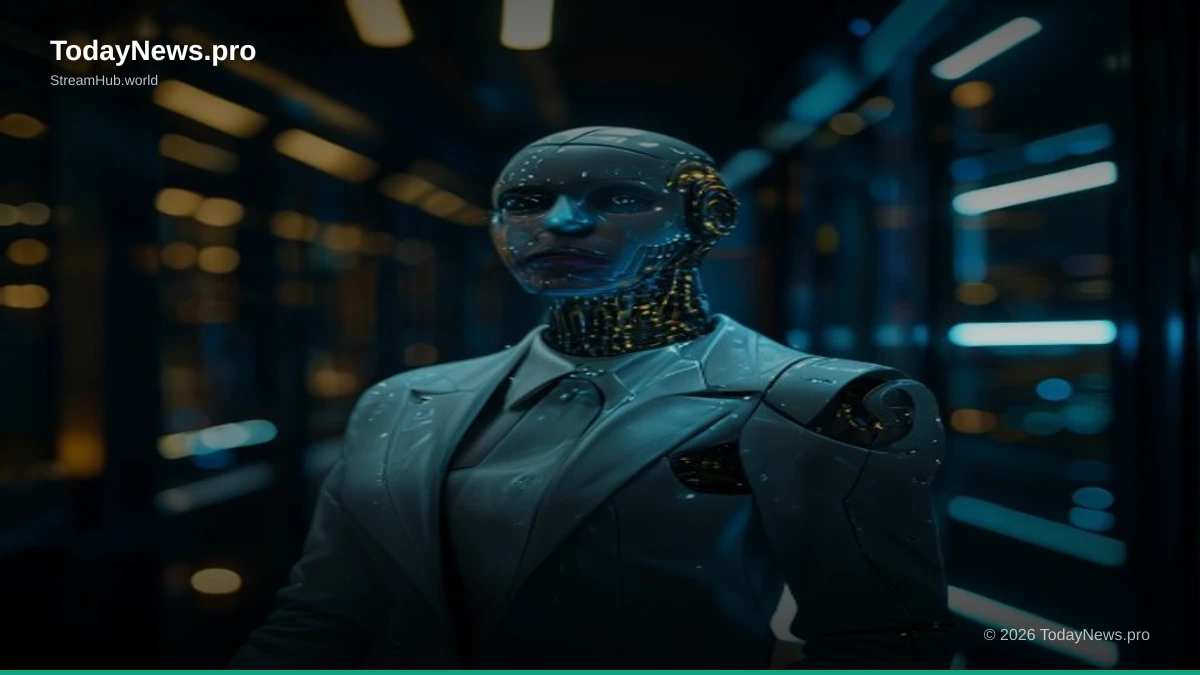
According to a 2024 analysis by Goldman Sachs, the transition from passive large language models (LLMs) to autonomous agentic workflows is projected to contribute to a 7% increase in global GDP over the next decade. Unlike the static chatbots of 2023, the new generation of "Personal AI Agents" operates with a high degree of autonomy, possessing the ability to use external tools, browse the web in real-time, and execute multi-step workflows without human intervention. This evolution marks the end of the "prompting era" and the beginning of the "delegation era," where AI no longer just answers questions but proactively manages lives.
The Paradigm Shift: From Chatbots to Autonomous Agents
The tech industry is currently witnessing a fundamental shift in how software is consumed. For decades, users had to navigate complex interfaces to perform tasks. Today, the interface is disappearing. Personal AI agents are being designed as a "Digital Chief of Staff," a layer of intelligence that sits between the user and the digital world. These agents do not wait for a command to summarize a document; they anticipate the need for a summary before a meeting begins.
This shift is driven by the realization that LLMs, while impressive, are limited by their "chat" box. An agent, however, is an LLM equipped with a feedback loop and tool access. It can plan, reason about its failures, and retry different strategies until a goal is achieved. This represents a move from "System 1" thinking (fast, intuitive) to "System 2" thinking (slow, deliberate) in artificial intelligence.
Industry leaders are calling this the "Agentic Revolution." While the previous year was defined by the novelty of generating text and images, 2025 is being defined by the utility of completing complex, multi-layered errands. Whether it is booking a multi-leg flight itinerary that accounts for personal preferences or managing a corporate budget across dozens of spreadsheets, the Personal AI Agent is the new standard of productivity.
The Rise of Agentic Workflows
The core difference between a standard AI and an agent lies in the workflow. Traditional AI follows a linear path: Input -> Process -> Output. An agentic workflow is cyclical: Input -> Plan -> Act -> Observe -> Reflect -> Act. This iterative process allows the agent to correct its own hallucinations and handle unexpected errors, such as a website being down or a calendar conflict.
For example, if you ask a standard AI to "organize a dinner party," it will give you a list of tips. A Personal AI Agent will check your calendar, cross-reference your friends' dietary restrictions from previous emails, browse local restaurant availability, book a table, and send out the calendar invites. It transitions from a consultant to an executive assistant.
Quantifying the Efficiency Gains: The Economic Reality
The economic implications of wide-scale agent adoption are staggering. By automating the "cognitive overhead" of daily life—scheduling, research, and administrative maintenance—individuals can reclaim an estimated 15 to 20 hours per week. This productivity boom is not limited to the tech-savvy elite; it is democratizing executive-level support for the average worker.
| Task Category | Manual Time (Weekly) | AI Agent Time (Weekly) | Efficiency Gain |
|---|---|---|---|
| Email Management & Sorting | 8.5 Hours | 1.2 Hours | 86% |
| Meeting Scheduling & Logistics | 4.0 Hours | 0.5 Hours | 87% |
| Data Entry & Report Generation | 12.0 Hours | 2.0 Hours | 83% |
| Personal Travel & Expense Planning | 3.5 Hours | 0.4 Hours | 88% |
As shown in the data above, the most significant gains are found in administrative tasks that require cross-platform communication. The ability of an agent to "speak" to different APIs (Application Programming Interfaces) allows it to bridge the gap between siloed applications like Gmail, Slack, and Salesforce without a human intermediary.
Furthermore, the cost of these agents is plummeting. While a human Chief of Staff might command a six-figure salary, the token-based cost of running an advanced agentic system is now measured in cents per hour. This price-to-performance ratio is driving rapid adoption across SMEs (Small and Medium Enterprises) that previously could not afford dedicated administrative staff.
The Technical Anatomy of a Digital Chief of Staff
Understanding how these agents function requires a look under the hood. A Personal AI Agent is composed of four primary components: the Brain (LLM), the Memory (Vector Databases), the Tools (APIs), and the Planning Module. The Brain provides the reasoning, while the Memory allows the agent to remember your preferences over long periods, creating a truly personalized experience.
One of the most critical breakthroughs has been the development of "Long-Term Memory" using RAG (Retrieval-Augmented Generation). This allows the agent to store your specific "world view"—your family's birthdays, your preferred airline seat, your corporate brand voice—in a private database. When a task is assigned, the agent retrieves the relevant context to ensure the output is tailored to you.
The Tool Use Breakthrough
The true power of the agent comes from its ability to use software. Through frameworks like LangChain and Microsoft’s AutoGen, agents can now write and execute Python code to solve math problems, browse the web to find the latest prices, and even interact with physical hardware through IoT (Internet of Things) integrations. This turns the AI from a talker into a doer.
We are also seeing the emergence of "Multi-Agent Systems" where several specialized agents collaborate. One agent might act as a researcher, another as a writer, and a third as an editor. The user interacts only with the "Lead Agent," who coordinates the efforts of the others. This mimics a real-world corporate hierarchy, streamlined for the digital age.
The Sovereign Data Dilemma: Privacy in a Post-Privacy World
With great power comes unprecedented access to personal data. For a Personal AI Agent to be effective, it must have access to your emails, your location, your financial transactions, and your health data. This creates a massive security risk. If an agent is compromised, the attacker doesn't just get your password; they get a digital clone of your entire life.
This has led to a surge in interest in "Local AI." Tech giants like Apple and Google are racing to move the "Brain" of the agent onto the device itself. By processing data locally on a smartphone's NPU (Neural Processing Unit), the most sensitive information never leaves the user's pocket. This "privacy-by-design" approach is likely to be the deciding factor in which agent ecosystem wins the market.
However, local processing has its limits. Complex reasoning still requires the massive compute power of cloud-based clusters. The industry is currently debating the ethics of "Data Sovereignty"—the idea that users should own their model weights and the training data derived from their daily interactions. Without strict regulations, we risk a future where a few corporations hold the "keys" to every citizen's digital assistant.
Market Dynamics: The $1 Trillion Agentic Economy
The competitive landscape is shifting rapidly. While OpenAI and Google have the lead in foundational models, the battle for the "Agent Layer" is wide open. Startups like Adept, Rabbit, and Imbue are building agents that can "see" and "click" on computer screens just like a human, bypassing the need for official APIs. This "Computer Use" capability allows agents to work with legacy software that was never intended for AI integration.
Simultaneously, open-source models like Meta’s Llama and Mistral are providing the backbone for a "DIY Agent" movement. Developers are now able to build highly specialized agents for niche industries—such as a "Medical Billing Agent" or a "Construction Permit Agent"—without paying exorbitant licensing fees to Big Tech. This is creating a fragmented but highly innovative ecosystem.
According to Reuters, venture capital investment in agent-centric startups has tripled in the last eighteen months, even as general AI funding has stabilized. Investors are betting that the "Killer App" of this cycle will not be a website or a social network, but a personalized agent that makes those platforms obsolete by interacting with them on our behalf.
The Future of Human-AI Interaction: Collaboration or Replacement?
As agents become more capable, the question of human agency becomes paramount. If an agent handles all our communications and decisions, do we lose the skills that make us effective? There is a fine line between "delegation" and "atrophy." Educational institutions are already grappling with how to teach critical thinking in an era where an agent can synthesize a 500-page textbook into three actionable bullet points in seconds.
However, proponents argue that agents will free humans from "bullshit jobs"—the term coined by David Graeber for meaningless administrative labor. By offloading the mundane, humans can focus on high-level strategy, creative expression, and interpersonal relationships. The "Digital Chief of Staff" isn't here to replace the executive; it's here to ensure every person can live like one.
We are moving toward a "Human-in-the-loop" model, where the agent does 95% of the work, and the human provides the final 5% of "judgment." This 5% is where values, ethics, and emotional intelligence reside. The successful worker of the future will not be the one who can do the most tasks, but the one who can best direct their fleet of AI agents.
For more technical details on the underlying architecture of these systems, the Wikipedia entry on Software Agents provides a deep dive into the history of this technology, which dates back to the early 1990s but has only now become viable due to the power of LLMs. Additionally, monitoring updates from MIT Technology Review is essential for staying abreast of the latest security protocols being developed to protect these digital assistants.