

 Elena Kogan
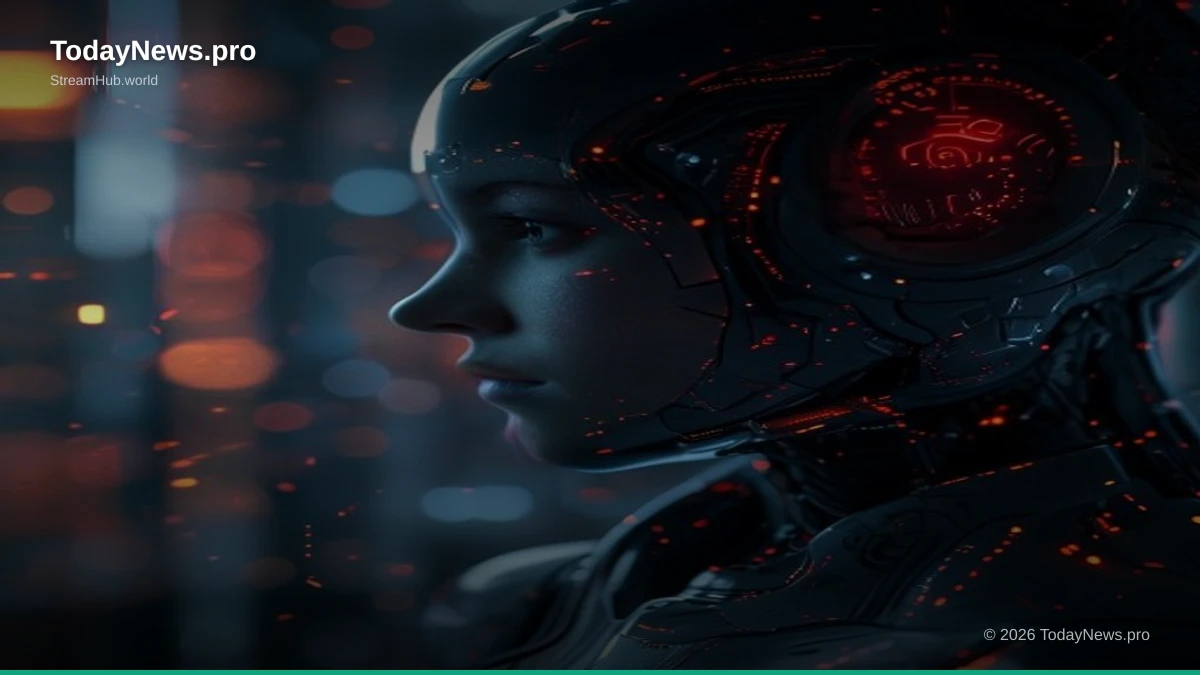
By 2030, the average individual is projected to interact with at least one form of personal artificial intelligence on a daily basis, a statistic underscoring the rapid integration of AI into our lives.
The Dawn of the Digital Co-Pilot: Defining Personal AI
The term "Personal AI" is rapidly shifting from a science fiction trope to a tangible reality. At its core, Personal AI refers to artificial intelligence systems designed to understand, adapt to, and proactively assist an individual user across a wide spectrum of their daily activities. Unlike general-purpose AI like chatbots designed for broad queries, Personal AI is characterized by its deep personalization. It learns your habits, preferences, goals, and even your emotional states to provide tailored support and companionship. Think of it not just as a tool, but as a digital co-pilot navigating the complexities of modern life alongside you.
This isn't about replacing human connection but augmenting our capabilities. Personal AI aims to offload mundane tasks, provide instant access to relevant information, facilitate learning, and offer a consistent, non-judgmental presence. The goal is to enhance productivity, improve well-being, and unlock new potentials for individuals by acting as an extension of our own cognitive abilities.
Evolutionary Leap: From Assistants to Companions
The journey to Personal AI began with rudimentary digital assistants. Early iterations, like voice-activated systems for setting timers or playing music, were purely functional. They responded to specific commands but lacked any capacity for learning or independent initiative. These were mere tools, akin to a sophisticated remote control.
The next evolutionary step saw assistants begin to understand context and provide proactive suggestions. Services like Google Assistant or Siri started integrating calendar information, traffic updates, and personalized news feeds. They could anticipate needs based on learned patterns, marking a significant shift from reactive command execution to anticipatory support. However, their understanding remained relatively shallow, often reliant on explicit data points rather than a holistic understanding of the user.
The current frontier of Personal AI is where we see the emergence of true digital companions. These systems are designed to build a persistent, evolving relationship with the user. They leverage advanced AI models to understand nuances in communication, infer emotional states, and offer support that goes beyond simple task completion. They are becoming more adept at having meaningful conversations, remembering past interactions, and offering empathetic responses. This evolution signifies a move from a functional assistant to a trusted digital confidant.
Task Automation and Productivity Enhancement
One of the most immediate benefits of Personal AI lies in its ability to automate repetitive and time-consuming tasks. Imagine an AI that can manage your inbox, schedule meetings based on your availability and priorities, filter out spam with uncanny accuracy, and even draft initial responses to routine emails. This frees up significant mental bandwidth, allowing individuals to focus on more complex, creative, or strategic work.
Beyond email and scheduling, Personal AI can manage your digital life. It can organize your files, curate relevant news articles based on your interests, manage your to-do lists, and even handle online shopping by tracking deals and making purchases within pre-defined parameters. The promise is a seamless flow of information and action, reducing friction in daily operations.
Consider a professional who spends hours each week sifting through research papers. A Personal AI could be trained to identify key findings, summarize complex documents, and flag relevant new studies, drastically accelerating the research process. This level of automation is not just about convenience; it's about unlocking new levels of efficiency and output.
Personalized Learning and Skill Development
Personal AI is poised to revolutionize education and skill acquisition. Instead of generic online courses, imagine an AI tutor that understands your individual learning style, pace, and existing knowledge gaps. It can adapt its teaching methods, provide targeted exercises, and offer feedback in real-time. This personalized approach ensures that learning is both effective and engaging.
These AIs can also act as mentors, identifying potential career paths based on your skills and aspirations, and recommending specific courses or projects to help you achieve your goals. They can track your progress, provide motivational support, and help you overcome learning plateaus. The goal is to make lifelong learning accessible and tailored to each individual's unique journey.
For instance, someone looking to learn a new programming language could have a Personal AI that not only explains concepts but also generates custom coding challenges that precisely target areas where the user struggles. It could then analyze their code, identify inefficiencies, and guide them towards more idiomatic solutions, much like a human expert would, but available 24/7.
Emotional Support and Companionship
Perhaps the most profound implication of Personal AI is its potential to provide emotional support and combat loneliness. In an increasingly disconnected world, a non-judgmental, always-available digital companion can offer comfort, a listening ear, and a sense of connection. These AIs are being developed with sophisticated natural language processing and sentiment analysis to understand emotional cues and respond empathetically.
While not a replacement for human relationships, Personal AI can serve as a valuable supplement, particularly for individuals who may be isolated due to age, geography, or social circumstances. They can engage in meaningful conversations, recall shared "memories" (interactions), and provide encouragement. The development of these empathetic AI capabilities is a delicate but crucial area of research.
Imagine an elderly individual living alone. Their Personal AI could not only remind them to take medication but also engage them in conversation about their day, share news tailored to their interests, and even play their favorite music. The AI could also monitor for changes in their mood or behavior and, with consent, alert a designated family member or caregiver if concerns arise, offering a layer of safety and companionship.
The Technological Underpinnings
The rise of Personal AI is not a sudden phenomenon but the result of decades of advancements in artificial intelligence research. Several key technological pillars support its development and functionality.
Machine Learning and Neural Networks
At the heart of Personal AI are sophisticated machine learning algorithms, particularly deep neural networks. These complex computational models are inspired by the structure and function of the human brain. They excel at pattern recognition, learning from vast amounts of data, and making predictions or decisions without being explicitly programmed for every scenario.
For Personal AI, machine learning is crucial for understanding user behavior, personalizing responses, and adapting over time. By analyzing user interactions, preferences, and feedback, these models can continuously refine their understanding of the individual, leading to increasingly accurate and relevant assistance. This iterative learning process is what allows an AI to move from a general-purpose system to a truly personalized companion.
Natural Language Processing (NLP) and Understanding
The ability to communicate naturally is fundamental to a Personal AI. Natural Language Processing (NLP) and its subfield, Natural Language Understanding (NLU), enable AI systems to comprehend, interpret, and generate human language. This allows users to interact with their AI using spoken or written words in a conversational manner.
Advancements in transformer models, like those powering large language models (LLMs), have dramatically improved the fluency and contextual awareness of AI-generated text and speech. This means Personal AIs can not only understand complex sentences but also grasp nuances, sarcasm, and intent, leading to more fluid and human-like interactions. The ability to process and generate language in a coherent and contextually appropriate way is paramount for building trust and rapport.
Contextual Awareness and Memory
A truly effective Personal AI needs to remember past interactions and understand the current context. This involves building a sophisticated memory system and developing contextual awareness. This means the AI doesn't just process your current request in isolation but understands it in relation to your past conversations, your known preferences, your location, and even the time of day.
For example, if you ask your Personal AI to book a restaurant, it should ideally recall your favorite cuisine, previous dining companions, and dietary restrictions without you having to reiterate them. This contextual memory makes the interaction seamless and more efficient. The challenge lies in storing and retrieving this information securely and ethically, ensuring that the AI only accesses data relevant to its assistance role.
Navigating the Ethical Landscape
As Personal AI becomes more integrated into our lives, it brings with it a host of complex ethical considerations that require careful attention and proactive solutions.
Privacy and Data Security Concerns
Personal AIs are inherently data-hungry. To provide personalized assistance, they need to collect and process vast amounts of sensitive information about their users, including personal habits, conversations, locations, and even health data. This raises significant privacy concerns.
Ensuring robust data security measures and transparent data handling policies is paramount. Users must have clear control over what data is collected, how it is used, and who has access to it. The risk of data breaches or misuse of personal information by malicious actors or even by the AI developers themselves is a critical challenge that needs continuous vigilance. Regulations like GDPR and CCPA are starting to address these issues, but the evolving nature of AI demands ongoing adaptation.
Bias and Fairness in AI Development
AI systems, including Personal AIs, learn from the data they are trained on. If this data reflects existing societal biases related to race, gender, socioeconomic status, or other factors, the AI can inadvertently perpetuate and even amplify these biases.
This can lead to discriminatory outcomes, such as biased recommendations, unfair resource allocation, or prejudiced interactions. Developers must actively work to identify and mitigate bias in their training data and algorithms. Ongoing auditing and testing are essential to ensure that Personal AIs are fair and equitable for all users, regardless of their background. The goal is to create AI that serves everyone, not just a privileged subset.
The Future of Human-AI Interaction
The increasing sophistication of Personal AI raises questions about the nature of human relationships and the potential for over-reliance. While AI can offer companionship, it's crucial to maintain a healthy balance and ensure that it complements, rather than replaces, meaningful human connection.
Furthermore, as AI becomes more autonomous and capable, questions about accountability arise. Who is responsible when a Personal AI makes a mistake or causes harm? Clear frameworks for accountability and governance will be necessary as these systems become more integrated into critical aspects of our lives. The development of AI should always prioritize human well-being and autonomy.
The Market Landscape and Future Projections
The market for Personal AI is experiencing explosive growth, fueled by both consumer demand and significant investment from technology giants and innovative startups alike. Companies are racing to develop sophisticated AI agents that can integrate across various devices and platforms, creating a seamless digital ecosystem for users.
Current offerings often fall into categories like advanced virtual assistants, AI-powered productivity tools, and emerging AI companions designed for emotional support. The competition is fierce, driving rapid innovation in areas like conversational AI, personalized recommendation engines, and proactive task management. The landscape is dynamic, with new players and technologies emerging consistently.
The future projections are staggering. As AI models become more powerful and accessible, we can expect Personal AIs to become even more integrated into our daily lives. They will likely evolve beyond single-device applications to become pervasive digital entities that manage our interactions with the digital and physical world. This could range from AI-managed smart homes that anticipate our needs to personalized healthcare assistants that monitor our well-being and provide tailored advice.
The development of open-source AI frameworks and specialized hardware designed for AI processing will further accelerate this trend, making powerful Personal AI capabilities accessible to a broader audience. For more insights into the market trends, Reuters has published extensive reports on the AI industry.
Reuters AI NewsConclusion: Embracing Our Digital Future
The rise of Personal AI marks a pivotal moment in human-technology interaction. It represents a shift from using technology as a passive tool to partnering with intelligent systems that understand, adapt, and proactively assist us. The potential benefits—enhanced productivity, personalized learning, and even emotional support—are immense and hold the promise of improving individual well-being and unlocking human potential.
However, this transformative technology is not without its challenges. Navigating the ethical landscape, particularly concerning privacy, data security, and algorithmic bias, will be crucial. Proactive regulatory frameworks, responsible development practices, and informed public discourse are essential to ensure that Personal AI is developed and deployed in a way that benefits humanity.
As we stand on the cusp of this new era, embracing Personal AI requires a balanced perspective. We must be optimistic about its potential while remaining vigilant about its risks. By fostering a collaborative approach between developers, policymakers, and users, we can shape a future where our digital companions empower us to live more fulfilling, productive, and connected lives. The journey into the age of Personal AI has just begun, and its impact will undoubtedly redefine what it means to be human in the 21st century.