

 David Chen
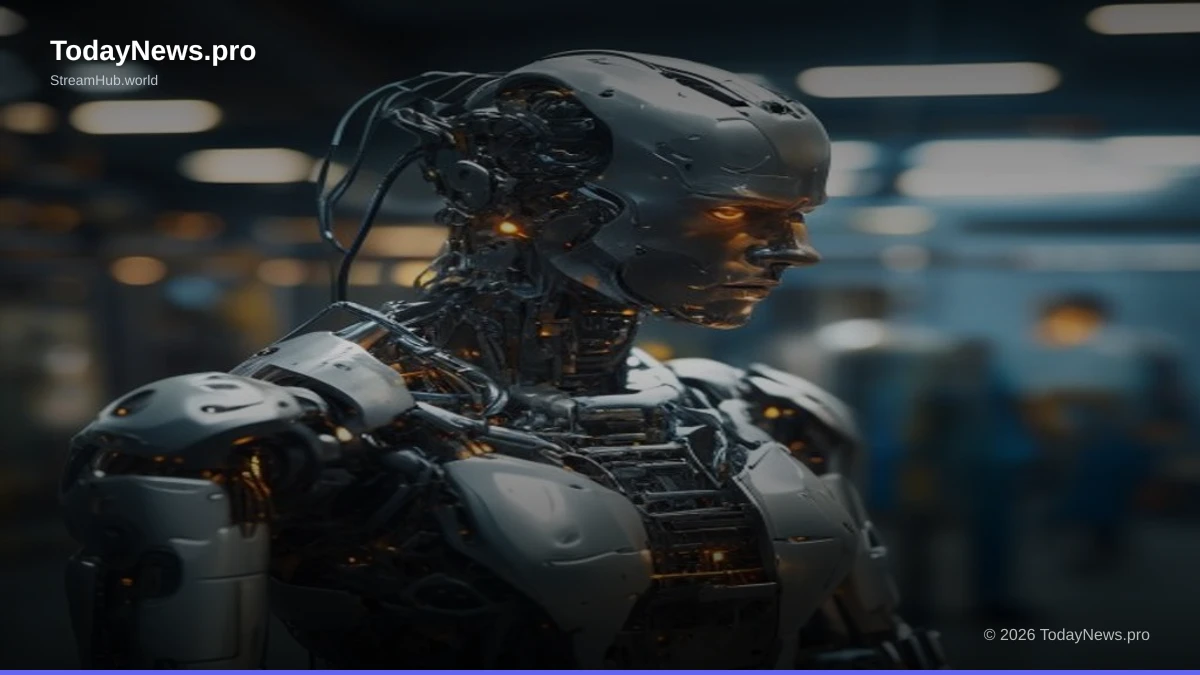
The global market for humanoid robots is projected to reach $24.9 billion by 2030, a staggering leap from $4.5 billion in 2021, signaling a profound shift in industrial and societal integration of advanced AI-powered machines.
The Dawn of Dexterous Machines: Beyond Assembly Lines
For decades, robots have been synonymous with repetitive, heavy-duty tasks in manufacturing plants. Their existence was largely confined to controlled environments, performing highly specialized functions with precision but lacking adaptability. However, the recent surge in humanoid robotics signifies a fundamental departure from this paradigm. These are not just mechanical arms on an assembly line; they are sophisticated machines designed to mimic human form and, increasingly, human capabilities, opening doors to applications far beyond the factory floor.
The impetus for this evolution stems from advancements in artificial intelligence, machine learning, sensor technology, and actuator design. Researchers and engineers are no longer solely focused on brute strength or repetitive accuracy. The emphasis has shifted towards dexterity, situational awareness, and the ability to interact with unstructured, dynamic environments – the very essence of human interaction.
This new generation of robots possesses the potential to navigate complex spaces, manipulate a wide array of objects, and even engage in collaborative tasks with human counterparts. The implications are vast, promising to reshape industries and redefine the nature of work itself.
Evolution of the Humanoid Form
The concept of artificial beings has captivated human imagination for centuries, from ancient myths to early science fiction. However, the practical realization of humanoid robots has been a gradual, arduous process. Early attempts were often clunky and limited, primarily serving as experimental platforms for basic locomotion and manipulation research.
The defining characteristic of a humanoid robot is its bipedal locomotion and its anthropomorphic design, featuring a torso, head, two arms, and two legs. This form factor is not merely aesthetic; it is designed for optimal interaction with a world built for humans. Corridors, doorways, staircases, and tools are all engineered with human dimensions in mind, making humanoid robots inherently suited for these environments.
Key breakthroughs have included the development of sophisticated balance algorithms, enabling robots to walk, run, and even recover from stumbles. Advances in artificial muscle technology and soft robotics are also contributing to more fluid and responsive movements, reducing the risk of damage to both the robot and its surroundings during interaction.
Locomotion and Balance
Achieving stable bipedal locomotion is one of the most significant engineering challenges in robotics. Unlike wheeled robots, which have a stable base of support, bipedal robots must constantly adjust their center of gravity to avoid falling. Modern humanoid robots employ complex sensor arrays, including gyroscopes, accelerometers, and pressure sensors in their feet, to continuously monitor their posture and make micro-adjustments in real-time.
Machine learning algorithms play a crucial role in this process. By analyzing vast datasets of human movement, these algorithms enable robots to learn and adapt to different terrains and unexpected disturbances. This allows for more natural and efficient gait patterns, making them capable of navigating uneven surfaces and even climbing stairs.
Dexterity and Manipulation
Beyond walking, the ability to interact with the physical world through manipulation is paramount. Humanoid robots are being equipped with increasingly sophisticated end-effectors, commonly known as hands. These hands are moving beyond simple grippers to feature multiple articulated fingers with a high degree of freedom, allowing them to grasp objects of various shapes, sizes, and textures.
Tactile sensors embedded in the fingertips provide crucial feedback, enabling robots to sense pressure, temperature, and even slippage. This allows for delicate manipulation, such as picking up an egg without crushing it, or performing intricate assembly tasks. Vision systems, often incorporating depth perception, further enhance their ability to locate and interact with objects precisely.
Key Players and Their Innovations
The race to develop advanced humanoid robots is a global endeavor, with several companies and research institutions at the forefront of innovation. These entities are pushing the boundaries of what is technically feasible and exploring the potential for widespread adoption.
One of the most prominent names is Boston Dynamics, renowned for its agile and dynamic robots like Atlas. Atlas has demonstrated remarkable capabilities in complex physical tasks, including parkour, backflips, and navigating highly challenging terrains. Their advancements in dynamic control and balance are considered industry-leading.
Another significant player is Tesla, with its Optimus robot. While still in its early stages, Optimus aims to be a mass-produced, general-purpose humanoid robot capable of performing a wide range of tasks. Tesla's ambitious vision includes leveraging their expertise in AI and automotive manufacturing to bring down costs and increase accessibility.
Other notable contributors include Agility Robotics, with their Digit robot designed for logistics and warehouse operations, and various research initiatives from companies like Honda (ASIMO, though now retired from public demonstrations, laid significant groundwork) and research universities globally. The collaborative nature of AI research means that breakthroughs in one lab often accelerate progress in others.
The development is not limited to hardware. Companies are investing heavily in the software and AI that will power these robots, focusing on intuitive programming interfaces, advanced task planning, and robust human-robot interaction protocols. The integration of sophisticated AI, including large language models and reinforcement learning, is key to enabling these robots to understand and respond to complex commands and adapt to unforeseen circumstances.
Agility Robotics and Digit
Agility Robotics has carved out a niche by focusing on the practical application of humanoid robots in dynamic environments like warehouses. Their Digit robot is designed for picking, sorting, and moving goods, tasks that are often challenging for traditional automation systems.
Digit's bipedal design allows it to navigate aisles, step over obstacles, and work alongside human employees. The company emphasizes the robot's ability to integrate seamlessly into existing workflows, offering a flexible solution for labor shortages and evolving e-commerce demands. Their approach highlights a pragmatic path to commercialization for humanoid robots.
Teslas Optimus Ambitions
Elon Musk's vision for Optimus is one of a universally applicable robot that can perform dangerous, repetitive, and boring tasks. The company aims to produce Optimus at a scale that could significantly impact the global labor market. While the current prototypes are still undergoing development, Tesla's track record in rapid prototyping and manufacturing suggests that significant progress could be made rapidly.
The potential for Optimus to be an affordable, general-purpose robot is a game-changer, moving beyond specialized industrial applications to potentially serve in homes, elder care facilities, and even in disaster relief scenarios. The integration of Tesla's Autopilot AI is a key component of this vision.
Applications: From Logistics to Healthcare
The versatility of advanced humanoid robots means their potential applications extend far beyond the manufacturing sector. As their capabilities mature, they are poised to become integral to a wide range of industries, addressing critical needs and creating new possibilities.
In logistics and warehousing, humanoid robots can handle the increasing demands of e-commerce. They can pick and pack orders, sort packages, and move inventory, operating tirelessly and efficiently in large distribution centers. This not only boosts productivity but also reduces the risk of injury to human workers from repetitive lifting and strenuous tasks.
The healthcare sector presents another significant area for humanoid robot deployment. Robots can assist nurses and doctors with patient care, such as fetching supplies, monitoring vital signs, and even providing physical assistance to patients with mobility issues. Their ability to navigate hospital corridors and interact with sensitive equipment makes them ideal candidates for these roles.
The retail industry could see humanoid robots assisting with inventory management, stocking shelves, and even interacting with customers. In agriculture, they could help with harvesting delicate crops, monitoring fields, and performing routine maintenance, especially in regions facing labor shortages. Furthermore, their ability to operate in hazardous environments makes them invaluable for disaster response, nuclear site clean-up, and deep-sea or space exploration.
Logistics and E-commerce Boom
The explosive growth of e-commerce has put immense pressure on supply chains worldwide. Humanoid robots offer a scalable solution to manage the complex and labor-intensive processes involved in order fulfillment. Their ability to work in tandem with humans, or even autonomously in certain areas, can significantly improve throughput and reduce delivery times.
Companies are exploring how robots can assist with tasks like depalletizing, bin picking, and moving items between different zones within a warehouse. This not only increases efficiency but also addresses the physical toll that these tasks can take on human workers, reducing workplace injuries.
Transforming Elder Care and Support
The aging global population presents a growing demand for care and support services. Humanoid robots have the potential to alleviate some of the burden on human caregivers and provide enhanced companionship and assistance to the elderly. Imagine robots that can help with daily routines, provide reminders for medication, assist with mobility, and even engage in conversation.
While the idea of robots replacing human connection is a sensitive one, the focus is on augmentation rather than replacement. Humanoid robots can perform the more physically demanding or repetitive tasks, freeing up human caregivers to provide the essential emotional and personal care that only humans can offer. This collaborative approach could lead to a higher quality of life for seniors and reduced burnout for care professionals.
Challenges and Ethical Considerations
Despite the rapid advancements, the widespread adoption of humanoid robots is not without its hurdles. Significant technical, economic, and ethical challenges remain to be addressed.
Technically, achieving true human-level dexterity, adaptability, and common-sense reasoning is still a distant goal. Robots often struggle with unpredictable situations, nuanced human communication, and tasks that require fine motor skills and intuitive problem-solving. The energy consumption of these complex machines also remains a practical concern, often requiring frequent recharging or tethered power sources.
Economically, the high cost of development and manufacturing currently makes advanced humanoid robots prohibitively expensive for many applications. For them to become truly ubiquitous, production costs must decrease significantly, likely through economies of scale and further technological maturation. The infrastructure required to support widespread robot deployment, such as charging stations and specialized maintenance facilities, also needs to be developed.
Ethically, questions surrounding job displacement are paramount. As robots become more capable of performing tasks previously done by humans, there is a legitimate concern about unemployment and the need for retraining and reskilling programs. The interaction between humans and robots also raises questions about safety, accountability, and the potential for misuse.
Job Displacement and Reskilling
One of the most discussed challenges is the potential for humanoid robots to displace human workers in various sectors. While automation has historically created new jobs, the broad applicability of humanoid robots could accelerate this transition, necessitating a significant societal shift in education and workforce development.
Governments and industries will need to invest heavily in reskilling and upskilling programs to equip the workforce with the competencies needed to work alongside or manage robotic systems. This includes skills in robotics maintenance, programming, AI oversight, and fields that require uniquely human attributes like creativity, critical thinking, and emotional intelligence.
Safety and Accountability
Ensuring the safety of both humans and robots is a critical concern. As robots become more integrated into our daily lives, robust safety protocols and fail-safe mechanisms are essential. This includes designing robots that can detect and avoid collisions, operate predictably, and respond safely to unexpected events.
The question of accountability also arises. If a humanoid robot causes harm or damage, who is responsible? Is it the manufacturer, the programmer, the owner, or the robot itself? Establishing clear legal frameworks and ethical guidelines for robot operation is crucial to ensure responsible deployment.
The Future Landscape of Humanoid Robotics
The trajectory of humanoid robotics points towards an increasingly integrated future. The coming decade is expected to see significant advancements, moving these machines from niche industrial applications to more pervasive roles in society.
Expect to see greater emphasis on collaborative robots (cobots) that can work safely alongside humans, augmenting rather than replacing human capabilities. The development of more intuitive user interfaces will allow individuals with less technical expertise to program and operate these robots, democratizing their use.
Advancements in AI, particularly in areas like natural language processing and reinforcement learning, will enable humanoid robots to understand and respond to complex, context-dependent commands. This will lead to more natural and fluid human-robot interactions, making them feel less like machines and more like capable assistants.
The development of standardized platforms and open-source software could also accelerate innovation by allowing developers to build upon existing frameworks. This would foster a more vibrant ecosystem of applications and specialized robots tailored to specific needs. The long-term vision includes robots that can adapt to new tasks and environments with minimal human intervention, truly becoming general-purpose assistants.
Towards General-Purpose AI in Robotics
The ultimate goal for many in the field is to create humanoid robots that possess general-purpose intelligence, capable of learning and performing a wide variety of tasks without being explicitly programmed for each one. This involves moving beyond narrow AI to more sophisticated forms of machine learning and reasoning.
Researchers are exploring how robots can learn from observation, imitation, and even through trial and error in simulated environments. The integration of large language models is expected to play a significant role, allowing robots to understand complex instructions, ask clarifying questions, and explain their actions in human-understandable terms.
The Symbiotic Human-Robot Future
Rather than a future where robots replace humans entirely, the most likely scenario is one of symbiosis. Humanoid robots will become partners, taking on tasks that are dangerous, tedious, or physically demanding, thereby enhancing human productivity and freeing up humans to focus on more creative, strategic, and interpersonal aspects of work.
This collaborative future requires careful design and implementation to ensure that robots are seen as tools that empower humans, not as replacements. The focus will be on creating systems that are intuitive, safe, and beneficial for all involved. The success of this symbiosis will hinge on our ability to adapt our educational systems, legal frameworks, and societal norms.
For more on the future of robotics, see reports from the Reuters Technology section and explore the foundational principles of robotics on Wikipedia.
Economic and Societal Impact
The rise of humanoid robotics promises to be a catalyst for profound economic and societal transformation. While the precise contours of this impact are still unfolding, early indicators suggest significant shifts in labor markets, productivity, and the very fabric of daily life.
Economically, increased automation driven by humanoid robots could lead to substantial gains in productivity and efficiency across various sectors. This could translate into lower production costs, potentially making goods and services more affordable and accessible. However, this also raises concerns about income inequality if the benefits of automation are not broadly shared.
Societally, the integration of humanoid robots could redefine the nature of work, leisure, and human interaction. As robots take over more routine and physically demanding tasks, humans may have more opportunities to engage in creative pursuits, lifelong learning, and activities that require higher-order cognitive skills and emotional intelligence.
The development of ethical guidelines and regulatory frameworks will be crucial to navigate these changes responsibly. Addressing potential job displacement through robust social safety nets and retraining initiatives will be paramount. Furthermore, public discourse and education will be vital to foster understanding and acceptance of humanoid robots as valuable partners in building a more prosperous and equitable future.