

 Robert Stark
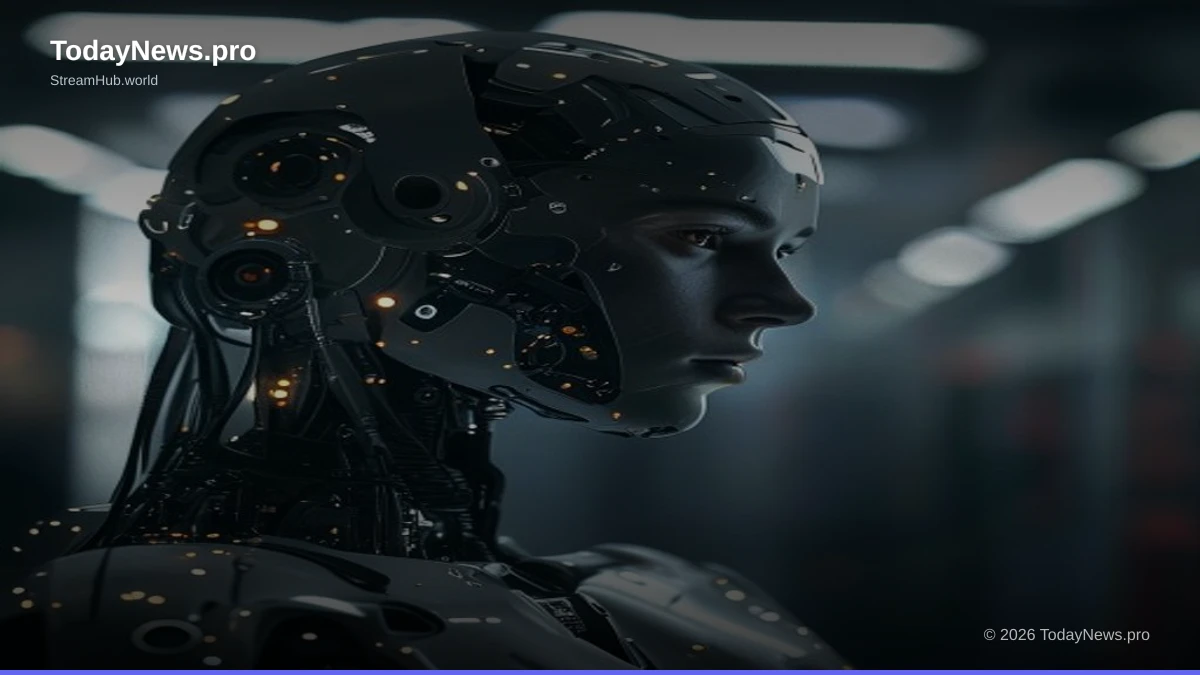
The global market for humanoid robots is projected to surpass $13.8 billion by 2030, signaling a monumental shift in how we interact with technology and, indeed, with each other.
The Dawn of the Humanoid Era: More Than Science Fiction
For decades, the image of a humanoid robot – a machine with a body resembling a human – resided firmly in the realm of science fiction. From Isaac Asimov's positronic brains to the sleek androids of Star Trek, these artificial beings captured our imaginations. Today, however, the lines between fiction and reality are blurring at an unprecedented pace. Advances in artificial intelligence, materials science, and robotics engineering are no longer just incremental; they represent a quantum leap, propelling humanoid robots from theoretical concepts to tangible entities poised to integrate into the fabric of our daily lives. This isn't just about creating machines that look human; it's about endowing them with the capabilities to perform complex tasks, understand nuanced social cues, and interact with the world in ways previously thought impossible.
The rapid development is fueled by a confluence of factors: falling component costs, increasingly sophisticated algorithms for machine learning and computer vision, and a growing demand for automated solutions across various sectors. We are witnessing the birth of a new technological era, one where artificial companions, dedicated caregivers, and versatile co-workers are not just possibilities but imminent realities. The implications are profound, touching upon economics, ethics, social structures, and our very definition of labor and companionship.
Defining the Humanoid
At its core, a humanoid robot is defined by its form factor: a body structure that mimics the human anatomy, typically featuring a torso, head, two arms, and two legs. This anthropomorphic design is not merely aesthetic; it is functional. It allows these robots to navigate environments designed for humans, utilize human tools, and interact with humans on a more intuitive level. Unlike industrial robots confined to assembly lines or service robots with specialized forms (like vacuum cleaners or delivery bots), humanoids are envisioned for their versatility and adaptability in dynamic, unpredictable human environments.
The key differentiator lies in their ability to move and interact with the same degree of freedom as humans. This includes bipedal locomotion, dexterous manipulation of objects with hands that possess a degree of fine motor control, and sophisticated sensory systems that allow them to perceive and interpret their surroundings. The pursuit of this human-like form is driven by the desire to create machines that can seamlessly integrate into our world, rather than forcing the world to adapt to them.
From Factory Floors to Living Rooms: Evolving Roles
Initially, the ambition for humanoid robots was largely centered on industrial applications. The idea was to create machines that could perform repetitive, dangerous, or physically demanding tasks in manufacturing and logistics. However, the sophistication and dexterity achieved by modern humanoids have opened doors to a much wider spectrum of roles. We are now seeing them transition from heavily controlled factory environments to more open-ended and socially interactive settings.
This evolution is driven by the realization that the human form is exceptionally well-suited for interacting with a world built by and for humans. From assisting with household chores to providing personalized services, the potential applications are expanding exponentially. This versatility means that the "robot of tomorrow" might be found not only assembling cars but also helping an elderly person in their home, tutoring a child, or even performing complex surgical procedures. The challenges lie in making these robots safe, reliable, and socially acceptable in these diverse contexts.
Early Industrial Pioneers
The early days of humanoid robotics were marked by significant research efforts, often funded by government agencies and academic institutions. Prototypes like Honda's ASIMO, first unveiled in 2000, demonstrated remarkable progress in bipedal locomotion, balance, and basic interaction. ASIMO could walk, run, climb stairs, and even perform simple gestures. While ASIMO was primarily a research platform, it laid crucial groundwork for understanding the complexities of human-robot interaction and dynamic movement.
Other initiatives, such as those from Boston Dynamics, focused on highly agile and robust robotic platforms, showcasing impressive feats of balance and navigation. While not always strictly humanoid in appearance, their achievements in dynamic control directly influenced the development of bipedal robots capable of traversing varied terrains and recovering from unexpected disturbances. These early pioneers, though limited in their practical deployment, were instrumental in proving the feasibility of complex robotic locomotion and control.
The Shift Towards Service and Social Robots
The true revolution in humanoid robotics is occurring in their transition from industrial tasks to service and social roles. Companies like Agility Robotics with its Digit robot, and Figure AI with its Figure 01, are developing humanoids designed for logistics, warehouse operations, and potentially even retail environments. These robots are equipped with advanced manipulation capabilities, allowing them to pick, sort, and move packages with increasing efficiency and precision.
Beyond the workplace, the potential for humanoids as companions and caregivers is immense. Imagine a robot that can assist with daily tasks for individuals with mobility issues, provide conversation for the lonely, or act as a personalized tutor for students. This shift requires not only physical dexterity but also advanced AI for natural language processing, emotional recognition, and adaptive learning. The development of these sophisticated social robots is a testament to the rapid progress in AI and robotics integration.
The Caregiving Revolution: Addressing a Global Need
One of the most compelling and rapidly developing applications for humanoid robots is in the field of elder care and general healthcare assistance. As global populations age and birth rates decline in many developed nations, the demand for caregiving services is outstripping the available human workforce. This presents a critical challenge, but also an opportunity for robotic solutions.
Humanoid robots, with their ability to perform a wide range of physical tasks and potentially offer companionship, are ideally positioned to help fill this gap. They could assist with tasks such as lifting and transferring patients, administering medication reminders, monitoring vital signs, and even engaging in conversation to combat loneliness. The goal is not to replace human caregivers but to augment their capabilities, allowing them to focus on more complex and empathetic aspects of care while robots handle the more physically demanding or routine tasks. This could lead to improved quality of life for both care recipients and human caregivers.
The potential benefits are substantial: 24/7 availability, reduced physical strain on human staff, and the ability to provide consistent, personalized care. Furthermore, for individuals who may feel embarrassed or uncomfortable receiving certain types of personal care from another human, a robotic caregiver might offer a more dignified alternative. The development in this sector is proceeding rapidly, with prototypes already undergoing trials in assisted living facilities and hospitals.
| Care Task | Humanoid Robot Potential | Current Status |
|---|---|---|
| Lifting and Transferring Patients | High (with appropriate safety mechanisms) | Under Development/Testing |
| Medication Reminders | High (integrated with smart home systems) | Partially Implemented (via smart devices) |
| Monitoring Vital Signs | High (using integrated sensors) | Under Development |
| Companionship and Conversation | Medium to High (dependent on AI sophistication) | Developing Rapidly |
| Personal Hygiene Assistance | Medium (complex manipulation challenges) | Early Stage Research |
| Meal Preparation/Assistance | Medium to High (dexterous manipulation) | Under Development |
Challenges and Ethical Considerations in Robotic Care
Despite the immense promise, the integration of humanoid robots into caregiving roles is fraught with significant challenges and ethical considerations. One of the primary concerns is safety. A robot designed to assist with physical tasks must possess incredibly precise motor control and robust fail-safe mechanisms to prevent accidental harm to vulnerable individuals. The complexity of human anatomy and the unpredictability of human movement make this a formidable engineering challenge.
Beyond physical safety, there are profound ethical questions surrounding the emotional and psychological impact of relying on robots for care. Will these robots foster genuine connection or a sense of alienation? What are the implications for human dignity and the fundamental human need for empathy and social interaction? Furthermore, issues of data privacy and security are paramount, as these robots will likely collect sensitive personal information. The development of robust ethical frameworks and regulatory oversight is crucial to ensure that robotic care enhances, rather than diminishes, the human experience.
Augmenting the Workforce: The Co-worker of Tomorrow
The fear that robots will simply take jobs is a recurring theme. However, the rise of humanoid robots suggests a more nuanced future: one of collaboration and augmentation. In many industries, humanoids are not being developed to entirely replace human workers but to work alongside them, taking on tasks that are either too dangerous, too repetitive, or too physically demanding for humans.
Consider warehouse operations, where humanoids can efficiently pick and pack items, reducing the risk of musculoskeletal injuries for human workers. In construction, they could perform hazardous tasks like working at heights or handling heavy materials. In laboratories, they could manage routine experiments, allowing scientists to focus on hypothesis generation and data analysis. This symbiotic relationship promises to increase productivity, improve safety, and unlock new levels of efficiency across various sectors.
The integration of humanoids as co-workers necessitates careful consideration of human-robot interaction design. Intuitive interfaces, clear communication protocols, and mutual understanding of roles and responsibilities will be key to successful collaboration. The future workforce might see humans directing teams of robots, or working in tandem with them on complex projects. The key will be to harness the strengths of both humans and machines.
Human-Robot Collaboration: A New Paradigm
The concept of human-robot collaboration (HRC) is central to the integration of humanoids into the modern workforce. Unlike traditional industrial robots that operate in segregated "cages," collaborative robots, or "cobots," are designed to work safely and effectively in close proximity to humans. Humanoid cobots, with their advanced sensing and AI, can further enhance this collaborative environment.
Imagine a scenario in a manufacturing plant where a human worker is responsible for intricate assembly tasks requiring fine motor skills and decision-making, while a humanoid co-worker handles the heavy lifting, precise placement of components, and repetitive motions. This division of labor leverages the unique strengths of each. The human provides the creativity, adaptability, and problem-solving abilities, while the robot offers tireless precision, strength, and consistency. This creates a more efficient, safer, and potentially more engaging work environment.
Examples in Action
Early examples of this collaborative future are already emerging. Companies are deploying humanoids in logistics centers to assist with order fulfillment. These robots can navigate aisles, identify products using computer vision, and safely transport goods. In manufacturing, they can work alongside human assemblers, providing tools, holding parts, or performing pre-assembly steps. The goal is to create a seamless workflow where the robot acts as an extension of the human's capabilities, rather than a standalone entity.
Beyond manufacturing and logistics, the potential extends to fields like healthcare, where robots could assist surgeons by holding instruments with unparalleled steadiness, or in retail, where they might manage inventory or assist customers with locating products. The continuous learning capabilities of these humanoids mean they can adapt to new tasks and workflows, making them increasingly valuable assets in a dynamic economic landscape.
The Quest for Sentience and Sophistication
The ultimate aspiration for many in the field of artificial intelligence and robotics is the creation of machines that not only perform tasks but also exhibit a degree of intelligence and awareness akin to humans. While true sentience—subjective consciousness—remains a distant philosophical and scientific frontier, the pursuit of more sophisticated AI in humanoid robots is rapidly advancing.
Current research focuses on developing robots that can learn from experience, adapt to new situations in real-time, understand and respond to complex human emotions, and engage in natural, context-aware conversations. This involves significant breakthroughs in areas such as deep learning, reinforcement learning, natural language processing (NLP), and affective computing. The aim is to create robots that can go beyond pre-programmed responses and exhibit a level of autonomy and understanding that allows for truly meaningful interaction.
Advanced AI and Learning Capabilities
Modern humanoid robots are being equipped with powerful onboard computing and sophisticated AI algorithms. These systems enable them to process vast amounts of sensory data—from cameras, microphones, and tactile sensors—to build a comprehensive understanding of their environment. Through machine learning, they can identify objects, recognize faces, understand spoken commands, and even predict human intentions to some degree.
The concept of "embodied AI" is crucial here. It suggests that intelligence is not just abstract computation but is deeply intertwined with physical interaction with the world. By allowing robots to physically engage with their surroundings, they can learn in a more holistic and intuitive way, much like human infants do. This hands-on learning is essential for developing the nuanced understanding required for complex social interactions and dexterous manipulation.
The Path to General Artificial Intelligence
While current humanoid robots are primarily designed for specific tasks or domains, the long-term vision for many researchers is the development of Artificial General Intelligence (AGI)—AI that possesses the ability to understand, learn, and apply knowledge across a wide range of tasks, much like a human. If achieved, an AGI embodied in a humanoid form could revolutionize virtually every aspect of society.
However, the path to AGI is complex and debated. Some believe it is an inevitable outcome of continued AI research, while others are more skeptical, pointing to fundamental challenges in replicating human consciousness and general problem-solving abilities. Regardless of the timeline, the progress in humanoid robotics is undeniably pushing the boundaries of what is possible with AI, forcing us to confront profound questions about the nature of intelligence itself.
Navigating the Future: Societal and Economic Impacts
The widespread adoption of humanoid robots will undoubtedly reshape our societies and economies in profound ways. This technological shift presents both immense opportunities and significant challenges that require careful consideration and proactive planning.
On the economic front, increased automation could lead to higher productivity and economic growth. However, it also raises concerns about job displacement, income inequality, and the need for workforce retraining and adaptation. Socially, the integration of robots into caregiving roles, as companions, and even as virtual assistants, could alter the nature of human relationships and community structures. The ethical, legal, and philosophical implications of creating increasingly intelligent and autonomous machines are vast and will require ongoing public discourse and robust regulatory frameworks.
The Economic Landscape Shift
The economic implications of humanoid robotics are multifaceted. While the creation and maintenance of these advanced machines will generate new industries and jobs in robotics engineering, AI development, and maintenance, there is also a palpable concern about job displacement in sectors where humanoids can perform tasks currently done by people. This is particularly true for roles involving repetitive physical labor, data entry, and even certain customer service functions.
Economists are debating the net effect on employment. Some argue that the productivity gains will lead to overall economic expansion, creating new jobs that we cannot yet imagine. Others emphasize the need for policies that support workers through this transition, such as universal basic income, robust retraining programs, and emphasis on uniquely human skills like creativity, critical thinking, and emotional intelligence. The potential for increased wealth generation is undeniable, but ensuring that this wealth is distributed equitably will be a critical societal challenge.
According to a recent report by the Reuters, automation could displace millions of workers globally in the coming decades, highlighting the urgency of addressing this economic shift.
Ethical Quandaries and Societal Integration
Beyond economics, the societal integration of humanoid robots raises profound ethical questions. As robots become more sophisticated, capable of learning and interacting in complex ways, we must grapple with issues of accountability when they err. If a caregiver robot makes a mistake, who is responsible: the manufacturer, the programmer, or the owner? The legal framework for such scenarios is largely undeveloped.
Furthermore, the potential for robots to develop relationships with humans, whether as companions or service providers, brings forth debates about the nature of consciousness, rights, and the very definition of personhood. Will we ever grant rights to advanced AI? How will our social interactions change when an increasing number of our interactions are with non-human entities? The long-term impact on human connection, empathy, and the social fabric of our communities remains a critical area of study and concern.
Looking Ahead: The Road to Ubiquitous Humanoids
The journey of humanoid robotics from nascent prototypes to ubiquitous presence is accelerating. While significant technological hurdles remain, the pace of innovation suggests that the robots of tomorrow will be more capable, versatile, and integrated into our lives than ever before. The challenges ahead are not just technical but also societal and ethical, requiring a proactive and thoughtful approach from researchers, policymakers, and the public alike.
The future envisioned is one where humanoids serve as invaluable assistants, companions, and colleagues, enhancing our capabilities and improving our quality of life. However, realizing this vision responsibly hinges on our ability to navigate the complex ethical landscapes, ensure equitable distribution of benefits, and foster a harmonious coexistence between humans and intelligent machines. The conversations and decisions we make today will shape the world of tomorrow.
The ongoing research into AI and robotics continues to be a fascinating area to observe. For a deeper understanding of the foundational principles, Wikipedia's entry on Robotics provides a comprehensive overview.