

 James Holloway
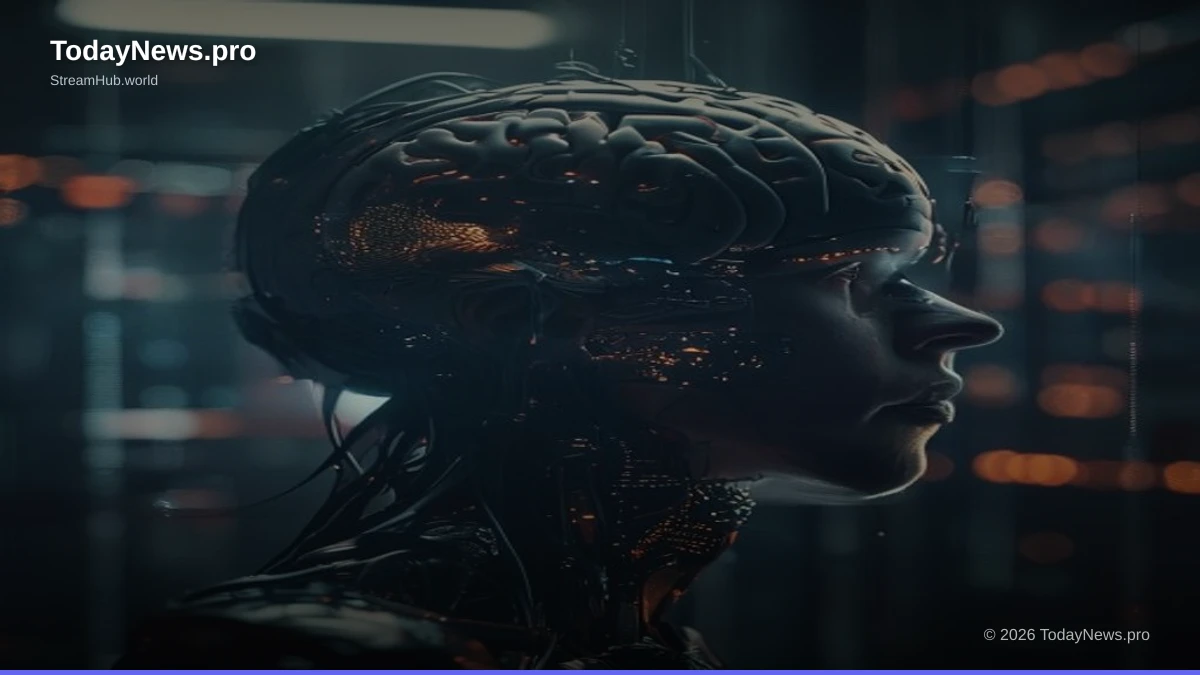
By 2030, the global market for brain-computer interface devices is projected to reach $7.1 billion, signaling a seismic shift in how humans interact with technology and each other.
The Dawn of Direct Neural Interaction
For millennia, human communication and control have relied on intermediaries: our hands manipulating tools, our voices conveying thoughts, our bodies performing actions. The advent of Brain-Computer Interfaces (BCIs) represents a paradigm shift, enabling a direct pipeline between the electrical activity of the brain and external devices. This nascent field, once confined to the realms of science fiction, is rapidly evolving into a tangible reality, promising to redefine human capabilities and address profound societal challenges.
At its core, a BCI system translates brain signals into commands that can operate computers, prosthetics, or other external hardware. This translation process typically involves sensing brain activity, processing these signals to extract meaningful patterns, and then translating those patterns into actionable commands. The potential implications are vast, ranging from restoring lost motor functions to augmenting human cognition and even enabling novel forms of communication.
The journey towards sophisticated BCI technology has been a long and arduous one, built upon decades of research in neuroscience, computer science, and engineering. Early experiments in the mid-20th century laid the groundwork, demonstrating the possibility of decoding neural signals. However, it is the recent convergence of advancements in sensing technology, machine learning algorithms, and miniaturization that has propelled BCIs from laboratory curiosities to technologies with real-world application potential.
Understanding the Neural Language
The brain is an extraordinarily complex organ, generating an estimated 86 billion neurons, each forming thousands of connections. The electrical and chemical signals exchanged between these neurons form the basis of our thoughts, emotions, and actions. BCIs aim to tap into this intricate network, deciphering specific patterns of neural activity associated with desired intentions.
For instance, when an individual intends to move their hand, specific neural pathways in the motor cortex become active. A BCI can be trained to recognize these unique electrical signatures and, in turn, trigger a command, such as moving a robotic arm or selecting a letter on a virtual keyboard. This intricate process requires sophisticated algorithms capable of filtering out noise and identifying the subtle, yet crucial, neural correlates of intent.
The Promise of Enhanced Agency
The primary allure of BCIs lies in their potential to restore agency to individuals who have lost it due to neurological conditions or injuries. For those with severe paralysis, ALS, or spinal cord injuries, traditional methods of communication and interaction are often impossible. BCIs offer a lifeline, providing a means to control devices and re-engage with the world, thereby improving quality of life and fostering independence.
Beyond restoration, BCIs also hold the promise of augmentation. Imagine controlling multiple devices simultaneously with just your thoughts, or accessing information with unprecedented speed and intuition. While still largely in the research phase, these possibilities highlight the transformative power of seamlessly merging human intent with machine capabilities.
Types of Brain-Computer Interfaces
The landscape of BCI technology is diverse, with different approaches offering varying degrees of invasiveness, resolution, and application. These interfaces can be broadly categorized based on how they acquire neural signals, ranging from non-invasive methods that sit on the scalp to highly invasive implants within the brain itself.
The choice of BCI technology often depends on the specific application, the desired level of precision, and the acceptable risk profile for the user. Each category presents its own set of advantages and disadvantages, influencing its suitability for different use cases and patient populations.
Non-Invasive BCIs
Non-invasive BCIs are the most accessible and widely researched category. They rely on external sensors placed on the scalp to detect brain activity. The most common technique is Electroencephalography (EEG), which measures electrical activity through electrodes embedded in a cap or headset.
EEG is relatively inexpensive and easy to deploy, making it suitable for a wide range of applications, from gaming and research to assistive communication for individuals with limited mobility. However, EEG signals are known to be noisy and have lower spatial resolution, meaning it can be challenging to pinpoint the exact origin of the signal within the brain. Other non-invasive techniques include magnetoencephalography (MEG) and functional near-infrared spectroscopy (fNIRS), each offering different strengths in signal detection and spatial localization.
Semi-Invasive BCIs
Semi-invasive BCIs involve placing electrodes on the surface of the brain, beneath the skull but not penetrating the brain tissue itself. Electrocorticography (ECoG) is a prime example, where electrodes are surgically placed on the dura mater or cerebral cortex.
ECoG offers higher signal-to-noise ratios and better spatial resolution compared to EEG, as the signals are not attenuated by the skull. This makes it more suitable for applications requiring greater precision, such as controlling advanced prosthetic limbs or enabling more nuanced communication interfaces. However, the surgical requirement for implantation makes it a more involved procedure than non-invasive methods.
Invasive BCIs
Invasive BCIs involve implanting electrodes directly into the brain tissue. This approach offers the highest signal resolution and the ability to record from individual neurons or small neuronal populations. Microelectrode arrays, such as the Utah Array, are examples of invasive BCI technology.
These implants can provide incredibly detailed neural data, enabling fine-grained control of external devices and offering a deeper understanding of brain function. Companies like Neuralink, founded by Elon Musk, are heavily invested in developing advanced invasive BCI systems with the goal of achieving unprecedented levels of brain-machine integration. However, invasive procedures carry significant risks, including infection, tissue damage, and the long-term biocompatibility of implanted devices.
| Method | Invasiveness | Spatial Resolution | Temporal Resolution | Typical Applications | Pros | Cons |
|---|---|---|---|---|---|---|
| EEG | Non-invasive | Low | High | Assistive communication, neurofeedback, gaming | Easy to use, low cost, portable | Noisy signals, poor spatial localization |
| ECoG | Semi-invasive | Medium | High | Advanced prosthetics control, epilepsy monitoring | Higher signal quality than EEG, better localization | Requires surgery, higher risk than EEG |
| Microelectrode Arrays (e.g., Utah Array) | Invasive | Very High | Very High | High-performance prosthetics, neural prosthetics research | Highest signal fidelity, single-neuron recording | Highest surgical risk, long-term biocompatibility concerns |
Revolutionizing Healthcare: BCIs as Therapeutic Tools
The most immediate and impactful applications of BCIs are emerging in the healthcare sector. For individuals suffering from severe neurological disorders and injuries, BCIs are not just assistive devices; they are gateways to regaining lost function and improving quality of life.
These technologies are transforming rehabilitation, providing new avenues for diagnosis, and offering hope for conditions previously considered intractable. The focus here is on restoring communication, mobility, and sensory perception, fundamentally altering the trajectory of patient care.
Restoring Communication
One of the most profound applications of BCIs is enabling communication for individuals who have lost the ability to speak or move their limbs due to conditions like ALS, stroke, or locked-in syndrome. BCIs can translate brain signals into text on a screen or even synthesize speech, allowing patients to express their needs, desires, and thoughts.
For example, a person who is completely paralyzed might use an EEG-based BCI to control a cursor on a computer screen, selecting letters and words to form sentences. While the communication speed may not match natural speech, it provides a vital link to the outside world, reducing isolation and improving psychological well-being. Advanced systems are continuously striving to increase typing speed and the naturalness of synthesized speech.
Motor Rehabilitation and Prosthetics
BCIs are revolutionizing motor rehabilitation for stroke survivors and individuals with spinal cord injuries. By detecting the intention to move a limb, BCIs can provide feedback or directly control assistive devices like robotic exoskeletons or advanced prosthetic limbs.
This not only aids in the physical recovery process by promoting neuroplasticity but also allows individuals to regain a degree of autonomy in their daily lives. Imagine a prosthetic arm that moves in sync with the user's thoughts, allowing them to grasp objects or perform complex tasks. The integration of BCIs with sophisticated robotic systems is opening up new frontiers in prosthetics, making them more intuitive and responsive.
Neuroprosthetics and Sensory Restoration
Beyond motor control, BCIs are being explored for sensory restoration. This includes developing visual prosthetics for the blind or auditory prosthetics for the deaf. By bypassing damaged sensory organs and directly stimulating the relevant brain areas, BCIs can reintroduce sensory experiences.
For example, retinal implants are already providing rudimentary vision to some individuals with certain forms of blindness. Future BCI-based visual prosthetics aim to offer higher resolution and more natural visual perception by directly interfacing with the visual cortex. Similarly, research is underway to create auditory BCIs that can restore the sense of hearing by stimulating the auditory cortex.
Beyond Medicine: The Expanding Horizons of BCI
While the medical applications of BCIs are the most immediate and compelling, the technology's potential extends far beyond therapeutic uses. As BCIs become more sophisticated, affordable, and user-friendly, they are poised to disrupt industries ranging from gaming and entertainment to education and even military operations.
The ability to interact with machines using only our thoughts opens up a universe of possibilities, promising to enhance human performance, create immersive experiences, and redefine how we work, play, and learn.
Gaming and Entertainment
The gaming industry is a natural frontier for BCIs. Imagine controlling game characters with unprecedented fluidity, performing complex maneuvers simply by thinking them. This could lead to more immersive and intuitive gaming experiences, blurring the lines between player and avatar.
Early prototypes have already demonstrated the feasibility of using EEG to control simple game actions. As BCI technology advances, we can expect to see more sophisticated integrations, allowing players to influence game narratives, character emotions, and even the game environment through their mental states. This could also extend to virtual reality (VR) and augmented reality (AR), creating truly mind-controlled immersive worlds.
Augmented Cognition and Productivity
BCIs hold the promise of augmenting human cognition, enhancing our ability to learn, remember, and process information. Imagine a BCI that could help you focus by detecting and counteracting distracting thoughts, or one that could assist in learning by optimizing information delivery based on your cognitive state.
In professional settings, BCIs could lead to increased productivity by allowing for faster data analysis, more intuitive software control, and seamless interaction with complex systems. For tasks requiring split-second decisions or complex multitasking, thought-controlled interfaces could provide a significant advantage.
Military and Defense Applications
The military sector is keenly interested in BCI technology for a variety of applications, including enhanced soldier performance, advanced control of unmanned systems, and improved situational awareness. For pilots or operators of complex machinery, BCIs could allow for more intuitive and rapid control, reducing cognitive load and reaction times.
The ability to control drones, robots, or even weapons systems with thought alone could offer significant tactical advantages. Furthermore, BCIs could be used to monitor the cognitive state of soldiers, detecting fatigue or stress, and providing interventions to maintain optimal performance in high-pressure situations.
Navigating the Ethical and Technical Labyrinths
As BCIs move from experimental labs into the hands of consumers, a complex web of ethical, privacy, and technical challenges emerges. The intimate nature of interfacing directly with the brain raises profound questions about autonomy, consent, and the very definition of human identity. Furthermore, the technology itself faces significant hurdles in terms of accuracy, reliability, and long-term safety.
Addressing these challenges proactively is crucial for the responsible development and deployment of BCI technology, ensuring that its benefits are realized while mitigating potential risks.
Privacy and Security Concerns
One of the most significant ethical considerations surrounding BCIs is the potential for misuse of neural data. Brain activity is deeply personal, revealing not only intentions but also potentially emotions, cognitive states, and even latent thoughts. Protecting this sensitive information from unauthorized access or exploitation is paramount.
Robust security protocols and clear regulations will be necessary to prevent "brain-hacking" or the unauthorized collection and analysis of neural data. The establishment of ethical guidelines for data ownership and usage is essential to build public trust and ensure responsible innovation.
Autonomy and Consent
The question of autonomy becomes particularly complex when an individual's thoughts can directly control external devices. Ensuring that users have full control over their BCI systems and can consciously consent to their operation is vital. For individuals with impaired cognitive abilities or those who are vulnerable, ensuring informed consent becomes even more critical.
There is also the philosophical debate about whether BCIs could, in the future, influence or alter a person's thoughts or decision-making processes. Maintaining the user's agency and ensuring that the BCI acts as a tool, rather than an arbiter of thought, is a core ethical imperative.
Technical Hurdles and Long-Term Effects
Despite rapid advancements, BCIs still face significant technical challenges. Achieving high accuracy and reliability in decoding brain signals, particularly in real-world, noisy environments, remains a major hurdle. The longevity and biocompatibility of implanted devices are also critical concerns for invasive BCIs.
Long-term studies are needed to understand the potential effects of continuous BCI use on brain health and function. Research into more robust, less invasive, and more intuitive BCI systems is ongoing, aiming to overcome these technical limitations and make the technology safer and more accessible.
The Future is Connected: Projections and Possibilities
The trajectory of Brain-Computer Interface technology points towards a future where the boundaries between human and machine become increasingly blurred. While current applications primarily focus on assistive and therapeutic uses, the long-term vision encompasses a more integrated and symbiotic relationship between our minds and the digital world.
Predicting the exact timeline for these advancements is challenging, but the underlying technological momentum suggests that transformative changes are not a distant dream but an approaching reality.
Ubiquitous Integration and Wearable BCIs
As BCIs become smaller, more power-efficient, and more aesthetically pleasing, we can anticipate their integration into everyday wearable devices. Imagine smartwatches or eyeglasses that can monitor your cognitive state, offer personalized feedback, or allow for discreet interaction with your digital environment.
This ubiquitous integration could lead to a constant, subtle enhancement of our daily lives, making technology more responsive to our needs and intentions without requiring conscious effort. The development of comfortable, non-invasive EEG headbands or even earbud-like devices could pave the way for widespread consumer adoption.
Direct Brain-to-Brain Communication?
The ultimate frontier of BCI research might be direct brain-to-brain communication. While this concept sounds like pure science fiction, preliminary research is exploring the possibility of transmitting simple cognitive states or information directly between individuals' brains.
This could revolutionize collaboration, learning, and social interaction, allowing for a level of understanding and empathy currently unimaginable. However, the ethical and technical challenges associated with such a capability are immense and would require extensive societal debate and technological breakthroughs.
Augmented Reality and Virtual Worlds
The synergy between BCIs and augmented reality (AR) and virtual reality (VR) is a particularly exciting area of development. BCIs can provide the ultimate control interface for these immersive environments, allowing users to manipulate virtual objects, navigate digital landscapes, and interact with virtual characters with unparalleled naturalness.
As AR and VR technologies mature, BCIs will be crucial in unlocking their full potential, creating truly seamless and intuitive experiences that blur the lines between the physical and digital realms. This could lead to new forms of entertainment, education, and even remote work that feel indistinguishable from real-world interactions.
Key Players and Innovations
The field of Brain-Computer Interfaces is a dynamic ecosystem comprising pioneering research institutions, innovative startups, and established technology giants. These entities are driving the rapid advancements that are shaping the future of human-machine interaction.
From groundbreaking surgical techniques to sophisticated machine learning algorithms, the collaborative efforts of these diverse players are accelerating the journey of BCIs from laboratory concepts to tangible realities.
Leading Research Institutions
Universities and research institutes worldwide are at the forefront of fundamental BCI research. Institutions like Stanford University, MIT, and the University of California, Berkeley, have established leading BCI labs that conduct pioneering work in signal processing, neuroscience, and neuroengineering. Their contributions are crucial for understanding brain function and developing novel BCI methodologies.
These academic hubs serve as incubators for new ideas and often train the next generation of BCI scientists and engineers, fostering a continuous cycle of innovation. Many of these institutions collaborate with industry partners to translate their research into practical applications.
Innovative Startups and Established Companies
The commercialization of BCI technology is being spearheaded by a growing number of startups and increasingly by established technology companies. Companies like Neuralink, founded by Elon Musk, are pushing the boundaries of invasive BCI technology with ambitious goals for human augmentation and medical treatment. Synchron is another notable company developing less invasive, stent-based electrode systems.
Beyond these highly invasive approaches, companies like CTRL-labs (acquired by Meta) have focused on non-invasive electromyography (EMG) for hand and arm control, while others are developing advanced EEG-based systems for consumer applications. Big tech companies like Meta (formerly Facebook) and Google are investing heavily in BCI research, recognizing its potential to revolutionize how we interact with their platforms and services.
Reuters has extensively covered the advancements and human trials in BCI technology. For a deeper dive into the neuroscience behind brain signals, you can explore resources on Wikipedia's Brain-Computer Interface page.
Emerging Technologies and Future Trends
The future of BCIs will likely be characterized by a convergence of several key technological trends. Miniaturization will lead to smaller, more discreet, and more comfortable devices. Advances in artificial intelligence and machine learning will enable more sophisticated and accurate decoding of brain signals, allowing for more nuanced control and richer interaction.
Furthermore, the development of novel sensing materials and methods will improve signal quality and reduce invasiveness. The integration of BCIs with other emerging technologies, such as advanced robotics, AI-powered prosthetics, and immersive virtual and augmented reality, will unlock entirely new applications and redefine the limits of human capability.