

 Diana Prince
⏱ 18 min
The global box office revenue for 2023 reached an estimated $31.9 billion, a significant rebound from pandemic lows, yet the fundamental question remains: what truly constitutes "cinema" in an era of rapidly evolving technology?
The Unseen Revolution: Cinemas Grand Reimagining
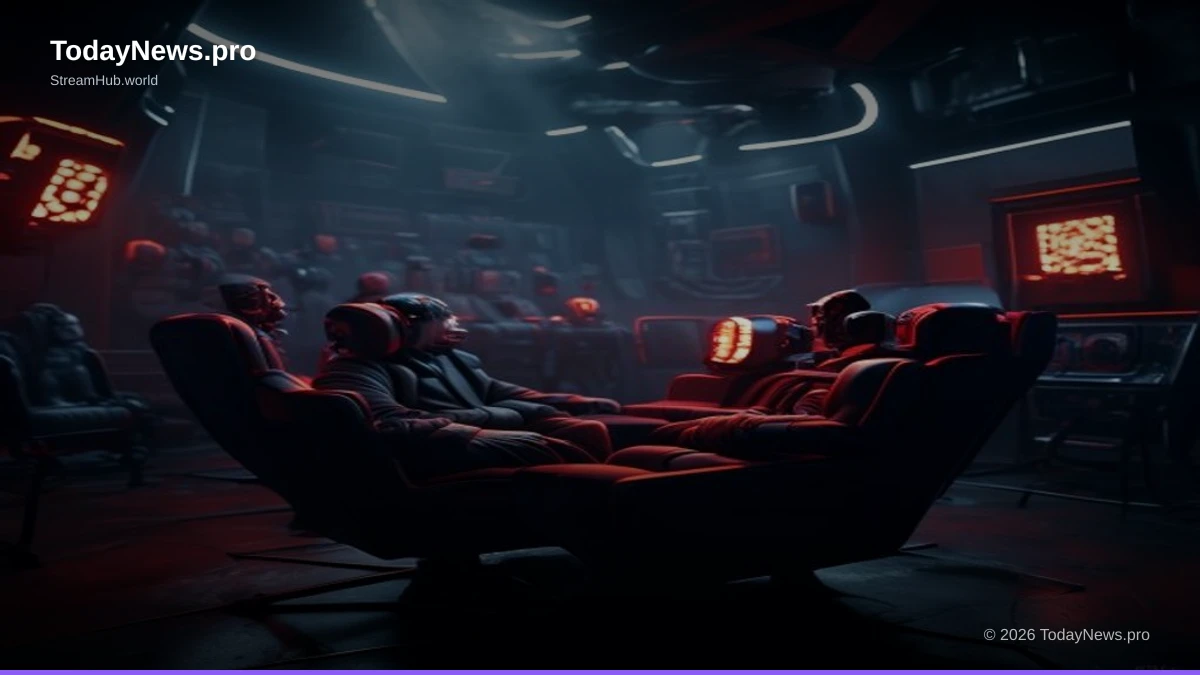
The silver screen, a hallowed institution for over a century, is undergoing a profound metamorphosis. The advent of Extended Reality (XR) – encompassing Virtual Reality (VR), Augmented Reality (AR), and Mixed Reality (MR) – coupled with the accelerating capabilities of Artificial Intelligence (AI), is not merely altering how films are consumed, but fundamentally reshaping the very fabric of cinematic storytelling. This isn't just about bigger screens or sharper pixels; it's about dissolving the fourth wall, inviting audiences into narratives, and empowering creators with tools that were once the realm of science fiction. The traditional passive viewing experience is giving way to an active, participatory engagement, blurring the lines between observer and participant. This paradigm shift promises to unlock unprecedented levels of emotional resonance and narrative depth, redefining what it means to be "transported" by a story. The industry, long reliant on established formulas, is now staring at a horizon brimming with both opportunity and disruption. Major studios are cautiously, yet increasingly, investing in XR content and AI-driven production tools. This strategic pivot is driven by a recognition that younger demographics, raised in interactive digital environments, demand more than just a linear narrative. They seek agency, personalization, and deeply immersive experiences that traditional cinema struggles to provide. The traditional film festival circuit, once the exclusive arbiter of cinematic quality, is now seeing the emergence of XR and interactive narrative showcases, signaling a broadening definition of what constitutes a cinematic achievement. This evolution is a testament to the enduring human desire for stories, amplified and reimagined through the lens of technological innovation. ### The Shifting Landscape of Storytelling For decades, cinema has operated within a well-defined framework: a director's vision, a screenwriter's script, actors' performances, all delivered through a fixed visual and auditory medium. While masterful storytelling has always transcended these limitations, the inherent nature of the medium imposed certain boundaries. XR, by its very definition, breaks these boundaries. It offers spatial immersion, allowing viewers to occupy the narrative world, interact with its elements, and even influence its progression. AI, on the other hand, acts as a powerful accelerant and amplifier, capable of generating content, personalizing experiences, and optimizing production pipelines in ways previously unimaginable. Together, these forces are creating a potent synergy, pushing the boundaries of what stories can be told and how they can be experienced. The very concept of "watching a movie" is evolving into "living a story." ### A New Grammar of Narrative The introduction of interactive elements necessitates a new grammar of storytelling. Linear progression, character arcs, and plot development must now accommodate branching narratives, player agency, and emergent storylines. This challenge is met by a new generation of creators, often with backgrounds in gaming, interactive art, and immersive theatre, who are adept at designing dynamic narrative systems. They understand that providing choices, even seemingly minor ones, can significantly deepen audience engagement and emotional investment. The focus shifts from simply delivering a story to co-creating an experience. This requires a sophisticated understanding of user psychology and narrative design, moving beyond traditional screenplay structures to embrace more fluid and responsive storytelling frameworks.XRs Embrace: Beyond the Screen
Extended Reality (XR) is not a single technology but a spectrum of immersive experiences. Virtual Reality (VR) places the user entirely within a digital environment, offering the most profound sense of presence. Augmented Reality (AR) overlays digital information and imagery onto the real world, enhancing perception. Mixed Reality (MR) blends these, allowing digital objects to interact with and be manipulated within the physical environment. Each offers unique avenues for cinematic exploration. VR films, often experienced through headsets, can plunge viewers into the heart of a scene, offering 360-degree perspectives and a palpable sense of being there. AR applications, accessible via smartphones or specialized glasses, can bring characters and story elements into our everyday lives, creating interactive narratives that unfold in our own surroundings. The potential for XR in cinema extends far beyond mere novelty. It can foster unprecedented empathy by allowing viewers to experience events from different perspectives, walk in another's shoes, or witness historical moments firsthand. Imagine experiencing the chaos of a battlefield from the perspective of a soldier, or the wonder of space exploration from the cockpit of a spacecraft. This direct sensory engagement can evoke emotions and understandings that are difficult to achieve through traditional cinematic techniques. The tactile nature of some XR experiences, where users can interact with virtual objects, further amplifies this immersion, making the story feel more tangible and consequential. The future of XR cinema lies in its ability to create deeply personal and emotionally resonant journeys. ### Virtual Reality: The Ultimate Immersion VR cinema represents the pinnacle of immersion, offering a total sensory escape. Unlike traditional films, VR narratives are not confined by a frame. The viewer's gaze dictates their perspective, making them an active participant in the unfolding events. This allows for intimate character interactions, where a whispered secret feels as though it's spoken directly to you, or a moment of intense action can be overwhelming in its immediacy. Developers are exploring various narrative structures, from fixed camera experiences that guide the viewer's attention to more open-ended explorations where freedom of movement is paramount. The challenge lies in balancing freedom with narrative coherence, ensuring that the story remains compelling without overwhelming the user with too many choices or too much undirected exploration.90%
of VR users report a greater sense of presence than in traditional media.
75%
of XR content creators believe it will revolutionize storytelling.
2028
projected market size for VR/AR content creation.
"XR is not just a new delivery mechanism; it's a new language. It allows us to tap into primal storytelling instincts, leveraging presence and interaction to create emotional bonds that are deeper and more enduring than passive viewing." — Sarah Chen, Lead Immersive Narrative Designer, Lumina Studios
### Mixed Reality: The Interplay of Worlds
MR represents the most sophisticated form of XR, allowing digital and physical elements to coexist and interact seamlessly. This opens up fascinating possibilities for cinema, where characters might step out of a screen to interact with the viewer's living room, or where the viewer can manipulate virtual props within their physical space to influence the narrative. MR experiences can offer a unique blend of presence and agency, allowing for complex storytelling that unfolds across both real and virtual dimensions. While still in its nascent stages, MR has the potential to unlock entirely new forms of cinematic expression, blurring the lines between the audience and the narrative world in unprecedented ways.
AI: The New Muse and Maestro
Artificial Intelligence is rapidly evolving from a tool for automation to a creative collaborator and indispensable element in modern filmmaking. Its applications in cinema are vast and continually expanding, impacting every stage of the production pipeline, from pre-production to post-production and even audience engagement. AI algorithms can analyze vast datasets of scripts, audience preferences, and cinematic trends to assist in story development, character creation, and even predict box office success. This data-driven approach offers creators valuable insights, helping them refine their narratives and target their audiences more effectively. The ability to process and synthesize information at scale allows AI to uncover patterns and possibilities that human analysts might miss. The generative capabilities of AI are particularly transformative. AI models can now create original artwork, compose music, write dialogue, and even generate realistic synthetic actors. This not only accelerates production timelines but also democratizes access to creative tools, allowing smaller studios and independent filmmakers to achieve results that were once the exclusive domain of large, well-funded productions. The ethical implications are profound, raising questions about authorship, copyright, and the very definition of creativity. However, the potential for AI to augment human creativity, to push artistic boundaries, and to unlock new forms of storytelling is undeniable. It is emerging as a powerful partner in the creative process. ### AI in Scriptwriting and Story Development AI-powered tools are beginning to assist screenwriters and story developers in novel ways. Large Language Models (LLMs) can generate plot ideas, suggest dialogue, and even draft entire scenes based on specific prompts and parameters. While AI is unlikely to replace human creativity entirely, it can serve as a powerful brainstorming partner, helping writers overcome creative blocks and explore narrative avenues they might not have considered. AI can also analyze existing scripts to identify common tropes, predict audience reactions to certain plot points, and even suggest ways to optimize pacing and character development. This data-driven approach to story crafting allows for more informed creative decisions.AI Applications in Film Production
"AI is not a threat to human creativity; it's an evolutionary leap. It's a powerful tool that, when wielded responsibly, can amplify our imaginations, democratize artistic expression, and allow us to tell stories in ways we've only dreamed of until now." — Dr. Anya Sharma, AI Ethics Researcher, Future of Media Institute
Case Studies: Pioneering Immersive Narratives
The theoretical potential of XR and AI in cinema is already being realized through groundbreaking projects that push the boundaries of storytelling. These early pioneers are demonstrating how these technologies can be leveraged to create deeply engaging and emotionally resonant experiences. From interactive VR documentaries that place viewers in the heart of critical events to AI-generated animated shorts that explore novel visual styles, these case studies offer tangible proof of the "rebirth of cinema." They serve as blueprints for future endeavors, inspiring a new generation of creators to explore the expansive possibilities that lie ahead. One notable example is "The Expanse: A Doors to the Universe," a VR experience that allows users to explore the science and technology behind the popular sci-fi series. While not a direct narrative continuation, it leverages the immersive power of VR to deepen audience connection to the show's universe, offering a tangible sense of scale and wonder. Another compelling case is "Notes on Blindness: Into Darkness," a VR film that uses spatial audio and haptic feedback to simulate the experience of blindness, offering a profound and empathetic journey into a different sensory world. These projects highlight how XR can transcend entertainment, offering unique avenues for education and empathy-building. ### Interactive VR Documentaries Documentaries have found a powerful new voice in VR. By placing viewers directly into the scene, these films foster an unparalleled sense of empathy and understanding. Projects like "Clouds Over Sidra," which documented the lives of Syrian refugees, allowed audiences to witness the resilience and humanity of individuals caught in conflict, fostering a direct emotional connection that traditional news reporting often struggles to achieve. The ability to look around, focus on individuals, and experience the environment firsthand creates a profound sense of presence and personal investment. This form of documentary storytelling can be a powerful tool for social change and raising awareness. ### AI-Generated Short Films The emergence of AI-powered content creation tools has led to a surge in experimental short films. These projects often showcase unique visual aesthetics and narrative concepts that would be difficult or impossible to achieve with traditional animation or filmmaking techniques. For instance, AI has been used to generate entirely novel visual styles, blending elements of existing art movements in unexpected ways. While these films can sometimes be criticized for lacking a human touch, they represent a vital exploration of the creative potential of AI, pushing the boundaries of visual storytelling and offering a glimpse into entirely new artistic paradigms.| Project Title | Year | Technology | Primary Impact |
|---|---|---|---|
| Clouds Over Sidra | 2015 | VR | Empathy & Awareness for refugees |
| The Great C | 2017 | VR | Interactive narrative exploration |
| Goliath: Playing with Reality | 2021 | VR/AR | Subjective experience of mental health |
| AI-generated short by Refik Anadol | Ongoing | AI | Novel visual aesthetics and data art |
| "The Day the Flowers Fell" (example AI script) | Hypothetical | AI (Scriptwriting) | Accelerated script development |
The Audience Shift: Expectations in the Digital Age
The contemporary audience, particularly younger generations, has grown up in an era defined by interactivity, personalization, and instant access to content. This has fundamentally reshaped their expectations of entertainment. They are no longer content with passive consumption; they crave agency, participation, and experiences that are tailored to their individual preferences. The success of platforms like TikTok, where users actively create and engage with short-form, personalized content, is a testament to this shift. Audiences now expect stories to be dynamic, responsive, and to offer more than just a linear plot. This demands a new approach from creators and distributors alike, moving beyond traditional models to embrace more engaging and participatory forms of storytelling. The rise of streaming services has accustomed audiences to on-demand access and the ability to binge-watch entire seasons. This has fostered a culture of immediate gratification and a higher tolerance for diverse content. However, it has also led to a sense of content fatigue, where the sheer volume of available material can be overwhelming. Immersive storytelling, whether through XR or AI-driven personalization, offers a way to cut through the noise, providing unique and memorable experiences that capture audience attention. The challenge for the industry is to leverage these technologies not just to create more content, but to create more meaningful and impactful content. ### The Demand for Personalization AI's ability to analyze vast amounts of user data allows for unprecedented levels of content personalization. Beyond recommending films, AI can potentially tailor aspects of the narrative itself to individual viewers. Imagine a thriller where the identity of the antagonist subtly shifts based on your perceived fears, or a romantic comedy where the dialogue adapts to your personal communication style. This level of customization, while still largely in its infancy, promises to create deeply resonant and uniquely individual viewing experiences, making audiences feel as though the story was made just for them. This moves beyond simple preference matching to actively shaping the narrative itself.60%
of consumers would pay more for personalized content experiences.
85%
of Gen Z prefer interactive entertainment over passive viewing.
50%
of streaming users report feeling overwhelmed by content choices.
Challenges and Ethical Frontiers
While the promise of XR and AI in cinema is immense, significant challenges and ethical considerations must be addressed. The development of immersive technologies requires substantial investment in hardware and infrastructure, creating a potential barrier to widespread adoption. The learning curve for both creators and consumers can be steep, and ensuring accessibility for all demographics remains a crucial concern. Furthermore, the ethical implications of AI in creative fields, including issues of authorship, bias in algorithms, and the potential displacement of human jobs, require careful consideration and proactive solutions. The digital divide remains a critical issue, as access to high-end VR headsets and powerful computing devices is not universal. This could lead to a bifurcated cinematic experience, where only a privileged few can access the most cutting-edge immersive content. Ensuring equitable access to these new forms of storytelling is paramount to realizing their full potential. Moreover, the development of ethical guidelines for AI in filmmaking is essential to prevent the perpetuation of biases and to ensure transparency in how AI is used. ### Accessibility and Cost Barriers The cost of VR headsets and the computational power required for high-fidelity XR experiences can be prohibitive for many consumers. This creates a significant barrier to entry, potentially limiting the audience for immersive cinema. Similarly, the development of complex XR content requires specialized skills and expensive software, posing a challenge for independent filmmakers and smaller studios. Bridging this gap through more affordable hardware, accessible software tools, and innovative distribution models will be crucial for widespread adoption. The goal is to make immersive storytelling a widely accessible art form, not a niche luxury.Will AI replace human filmmakers?
While AI can automate certain tasks and assist in creative processes, it is unlikely to fully replace human filmmakers. Creativity, emotional intelligence, and unique artistic vision are deeply human traits that AI currently cannot replicate. AI is best viewed as a powerful tool to augment human creativity.
Is VR cinema only for gamers?
No, VR cinema is for everyone. While VR technology originated in gaming, its applications in storytelling, education, and art are rapidly expanding. The immersive nature of VR offers unique experiences that appeal to a broad audience beyond the gaming community.
What are the ethical concerns with AI in filmmaking?
Key ethical concerns include potential biases in AI-generated content, issues of authorship and copyright for AI-created works, job displacement in creative industries, and the potential for misuse of AI for deepfakes or misinformation.
The Future is Now: A Glimpse into Tomorrows Cinema
The convergence of Extended Reality (XR) and Artificial Intelligence (AI) is not merely an evolution of filmmaking; it is a fundamental redefinition of cinematic possibility. We are witnessing the dawn of an era where stories are no longer confined to flat screens but unfold in three-dimensional, interactive spaces, where narratives can adapt and personalize to individual viewers, and where the very act of creation is augmented by intelligent machines. This "rebirth of cinema" signifies a shift from passive observation to active participation, from a one-size-fits-all experience to a deeply personal and profoundly engaging journey. The lines between observer and participant are dissolving, ushering in a new paradigm for storytelling that is more immersive, more resonant, and more impactful than ever before. The technological advancements are progressing at an exponential rate. Advancements in haptic feedback systems will allow viewers to "feel" the narrative, adding a visceral layer to the immersive experience. AI-powered dynamic soundtracks will adapt in real-time to the viewer's emotional state and choices, heightening the overall impact. Imagine a horror film where the music intensifies not just based on on-screen action, but on your own physiological responses, detected by wearable sensors. This level of personalized sensory engagement promises to create narratives that are not just seen and heard, but deeply felt. The future of cinema is not a single destination but a dynamic, ever-evolving landscape of possibilities. ### Symbiotic Creation: Human and AI Collaborators The most exciting frontier lies in the symbiotic relationship between human creativity and AI. Instead of AI replacing artists, we are seeing the emergence of AI as an indispensable collaborator. AI can handle the laborious aspects of content generation, freeing up human creators to focus on conceptualization, emotional nuance, and artistic direction. Imagine an AI that can generate hundreds of character variations for a filmmaker to choose from, or an AI that can instantly render complex visual effects based on a director's verbal commands. This synergy allows for the exploration of artistic territories previously inaccessible due to time or resource constraints. The artistic process becomes a dialogue between human intuition and machine intelligence."The next generation of filmmakers will be fluent in both cinematic language and the language of AI and XR. They will wield these tools to craft experiences that engage our senses, challenge our perspectives, and forge deeper connections with the human condition." — Kenji Tanaka, Director of Innovation, Global Media Labs
### Decentralized Storytelling and the Metaverse
The rise of decentralized platforms and the burgeoning metaverse offer fertile ground for the future of immersive cinema. Blockchain technology could enable new models of ownership and distribution for XR content, empowering creators and audiences alike. The metaverse, as a persistent, interconnected virtual world, presents an unparalleled canvas for interactive storytelling. Imagine film narratives that seamlessly blend into virtual social spaces, allowing audiences to explore the story world together, interact with characters, and even influence the ongoing narrative. This decentralization of storytelling holds the potential to democratize filmmaking and create a more collaborative and engaging cinematic ecosystem.
The journey from the flickering magic of the nickelodeon to the boundless potential of XR and AI has been one of constant reinvention. Today, cinema stands on the precipice of its most profound transformation yet. The "rebirth of cinema" is not a nostalgic return to the past, but a bold leap into a future where stories are not just told, but lived, experienced, and co-created. This new era promises to be more inclusive, more imaginative, and more deeply connected to the human experience than ever before. The magic of cinema, in its newest form, is set to captivate audiences for generations to come.