

 Peter Warren
As of late 2024, the global average latency for a competitive online gamer remains tethered to the physical limitations of fiber-optic glass, hovering between 30 and 80 milliseconds for cross-continental connections. While 5G and the nascent 6G standards aim to shave single digits off these figures, they are ultimately bound by the speed of light in a medium—a fundamental ceiling that prevents true instantaneous synchronization. Quantum networking, once a theoretical curiosity of particle physics, is now entering the prototyping phase, promising a world where "ping" is no longer a metric of distance, but a relic of a primitive digital age.
The Physics of Frustration: Why Light is Too Slow
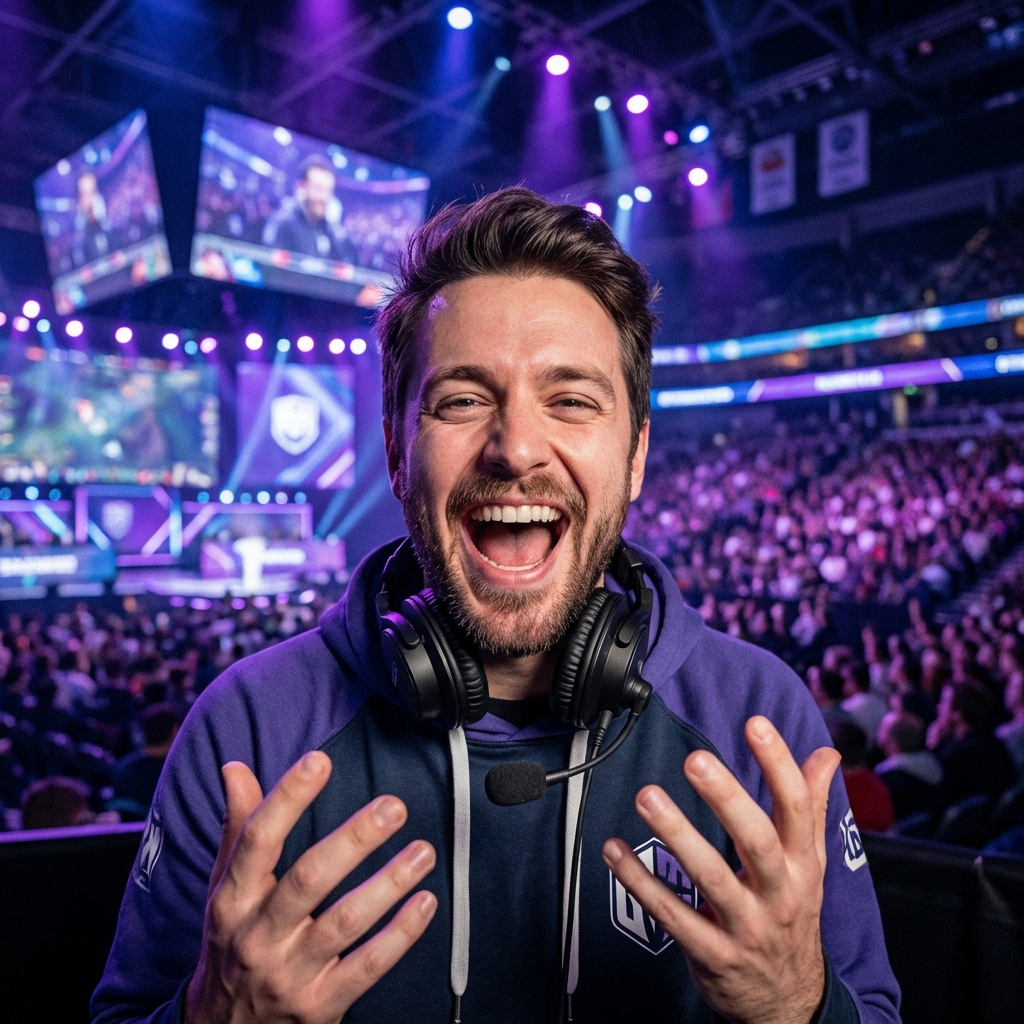
In the high-stakes world of competitive e-sports, a 50-millisecond delay is the difference between a championship and a defeat. Current internet infrastructure relies on photons traveling through silica glass. While light in a vacuum moves at approximately 300,000 kilometers per second, it slows down by nearly 30% when passing through fiber-optic cables. This "refractive delay," coupled with the hops through routers and switches, creates an unavoidable lag that has dictated game design for three decades.
Game developers currently spend millions of dollars on "netcode" and "lag compensation" algorithms. These systems essentially predict player movement, creating a simulated reality that attempts to hide the truth: no two players are seeing the same thing at the same time. This divergence of reality is what quantum networking seeks to eliminate by moving away from the transmission of packets and toward the synchronization of states.
The transition to quantum-enhanced gaming is not just an incremental upgrade; it is a fundamental shift in how information is defined. In a classical system, a bit is a zero or a one transmitted across a wire. In a quantum system, information is shared through entanglement, where the state of one particle instantly influences another, regardless of the physical distance between them. This is what Albert Einstein famously called "spooky action at a distance," and it is the key to killing latency forever.
The Bottleneck of Traditional Buffering
Traditional networking involves a series of handshakes. Data must be packaged, addressed, routed, and reassembled. Each of these steps adds microseconds that aggregate into milliseconds. In a world of 8K gaming and 240Hz refresh rates, the network has become the ultimate bottleneck, preventing the full realization of cloud-based rendering architectures.
| Technology | Avg. Latency (ms) | Physical Limit | Reliability |
|---|---|---|---|
| Fiber Optic (Global) | 40 - 120 ms | Speed of Light in Glass | High |
| 5G / 6G Mobile | 5 - 20 ms | Atmospheric Interference | Medium |
| Starlink / LEO Sat | 25 - 50 ms | Distance to Orbit | Variable |
| Quantum Entanglement | < 0.001 ms | Quantum Decoherence | Emerging |
Entanglement: The Zero-Latency Backbone
The core of the quantum leap lies in the phenomenon of entanglement. When two subatomic particles become entangled, their quantum states are linked. If you change the spin of one particle in London, its partner in Tokyo changes instantly. This is not "faster-than-light" communication in the sense of sending a physical object; rather, it is the instantaneous correlation of information. By 2030, integrated quantum circuits will allow gaming servers to maintain entangled states with local "edge nodes" in residential neighborhoods.
Researchers at institutions like Reuters have reported that the first multi-node quantum networks are already being tested in laboratory settings. These networks do not send data in the traditional sense. Instead, they use "Quantum Teleportation"—a process where the quantum state of a qubit is transferred from one location to another using a pre-shared pair of entangled particles. For a gamer, this means the inputs from their controller are synchronized with the server state at near-zero temporal offset.
However, the challenge remains in "decoherence." Quantum states are incredibly fragile and can be disrupted by the slightest heat or electromagnetic noise. To make this viable for gaming, scientists are developing "Topological Qubits," which are more robust and can maintain their entangled state for longer periods. This stability is the missing link between a lab experiment and a commercial PlayStation or Xbox quantum interface.
The Infrastructure Revolution: Quantum Repeaters and Cooling
To scale this technology, the world needs a new kind of internet. You cannot simply plug a quantum computer into a standard Ethernet port. The 2030 vision involves the deployment of Quantum Repeaters. Unlike traditional amplifiers that boost a signal (and thus destroy quantum states), repeaters use "entanglement swapping" to extend the range of a quantum connection across hundreds of miles.
By 2028, we expect to see the first "Quantum Hubs" in major metropolitan areas. These facilities will house the cryostat cooling systems necessary to keep quantum processors at near absolute zero temperatures. While your home console won't need to be frozen, the "Last Mile" of the connection will likely use specialized photonic chips that can translate quantum states into signals your hardware can understand without introducing lag.
The integration of these hubs into the existing fiber grid is the most significant civil engineering project of the late 2020s. Companies like Google and IBM are already competing to define the protocols for the "Quantum Internet." This infrastructure will not only serve gamers but will also provide the backbone for high-frequency trading and real-time remote robotic surgery, industries that share gaming's obsession with millisecond precision.
The Economic Shift: A $500 Billion Transformation
The elimination of latency is not just a technical victory; it is a massive economic catalyst. The gaming industry, currently valued at roughly $200 billion, is projected to more than double by 2030 as quantum networking unlocks new business models. When latency becomes a relic of the past, the "Metaverse"—a concept that largely failed in its 2021 iteration due to technical clunkiness—becomes a seamless reality.
With zero-latency connections, the need for expensive local hardware (GPUs and CPUs) vanishes. All processing can be done in the cloud. This shifts the consumer model from a hardware-purchase cycle to a high-margin subscription model. Sony, Microsoft, and NVIDIA are already positioning themselves as "Quantum Service Providers," where they own the centralized quantum supercomputers and stream the experience to low-power "thin clients" or even smart glasses.
Furthermore, the "Global Lobby" becomes possible. Currently, games are divided into regional servers (NA, EU, ASIA) to keep latency manageable. Quantum networking allows a player in New York to play with a player in Sydney with the same responsiveness as if they were in the same room. This unifies the global player base, creating unprecedented liquidity in in-game economies and e-sports viewership.
Cloud Gaming 2.0: The End of Local Hardware
The most visible casualty of the quantum leap will be the high-end gaming PC. For decades, enthusiasts have spent thousands of dollars on local cooling, massive power supplies, and the latest silicon. Quantum networking makes this obsolete. When the round-trip time for a command is less than the refresh rate of a monitor, there is no longer a "feel" difference between a local machine and a server 3,000 miles away.
This "Cloud Gaming 2.0" will utilize Photonic Computing. By combining quantum networking with light-based processing, servers can render photorealistic worlds in real-time and stream them without a single dropped frame. This democratizes high-end gaming, allowing anyone with a basic screen and a quantum-ready connection to experience the pinnacle of interactive entertainment.
The Death of Netcode
In today's games, developers use "rollback netcode" to predict what you might do. If the prediction is wrong, the game "snaps" you back to the correct position. This is jarring and breaks immersion. In the quantum era, netcode as we know it will cease to exist. The game state will be perfectly synchronized across all clients simultaneously. The concept of "lagging out" will become a historical footnote, much like the sound of a dial-up modem.
Security and the Quantum Key Distribution (QKD)
Cheating and hacking have plagued online gaming since its inception. From wall-hacks to aim-bots, the vulnerability often lies in the way data is sent and received. Quantum networking introduces Quantum Key Distribution (QKD). This technology uses the laws of physics to ensure that if any third party attempts to intercept the data, the quantum state is disturbed, and the connection is instantly severed.
This creates a "Physics-Hardened" gaming environment. In-game assets, which are increasingly taking the form of high-value digital items, will be secured by the same protocols used to protect national secrets. This level of security is essential for the transition to a digital-first economy where virtual real estate and items have real-world value. According to Wikipedia's entry on QKD, this technology is already being used for secure banking and is the natural successor to current encryption standards.
Moreover, the centralized nature of quantum-rendered games means that the "client" (the player's device) never actually possesses the game logic or the map data. It only receives a video stream and sends inputs. This makes traditional "memory hacking" or "client-side modding" impossible, ensuring a level playing field for the first time in history.
The Roadmap to 2030: From Lab to Living Room
The journey to 2030 is divided into three distinct phases. We are currently in Phase One (2024-2026), characterized by small-scale "Quantum LANs" in university towns and tech hubs. These are proof-of-concept environments where researchers are testing the limits of entanglement over short distances (10-50 km).
Phase Two (2027-2029) will see the "Quantum Backbone" deployment. Major internet service providers (ISPs) will begin replacing traditional optical amplifiers with quantum repeaters. During this time, we expect the first "Quantum Gaming Consoles" to be announced—devices that are essentially glorified network cards designed to interface with the new grid.
Phase Three (2030 and beyond) is the "Global Entanglement." By this point, the major population centers of the world will be linked via a quantum mesh. Latency will be effectively zeroed out for the majority of the world's 3 billion gamers. The "leap" will be complete, and the very concept of "online" vs "offline" will vanish, as every digital interaction becomes as instantaneous as a thought.
| Year | Milestone | Impact on Gaming |
|---|---|---|
| 2025 | First 100km Entanglement Swap | Low-latency "Pro-Only" regional servers |
| 2027 | Commercial Quantum Repeaters | Elimination of regional "lag spikes" |
| 2029 | Integrated Photonic Consoles | End of the traditional 5-year console cycle |
| 2030 | The Global Quantum Mesh | Instantaneous global multiplayer gaming |
In conclusion, the "Quantum Leap" is not a matter of *if*, but *when*. The physical limitations of our current world have served us well, but they are no longer sufficient for the level of immersion and connectivity we demand. By 2030, the frustration of a "laggy" connection will be a story we tell to the next generation, explaining a world where time and distance once mattered.