

 David Chen
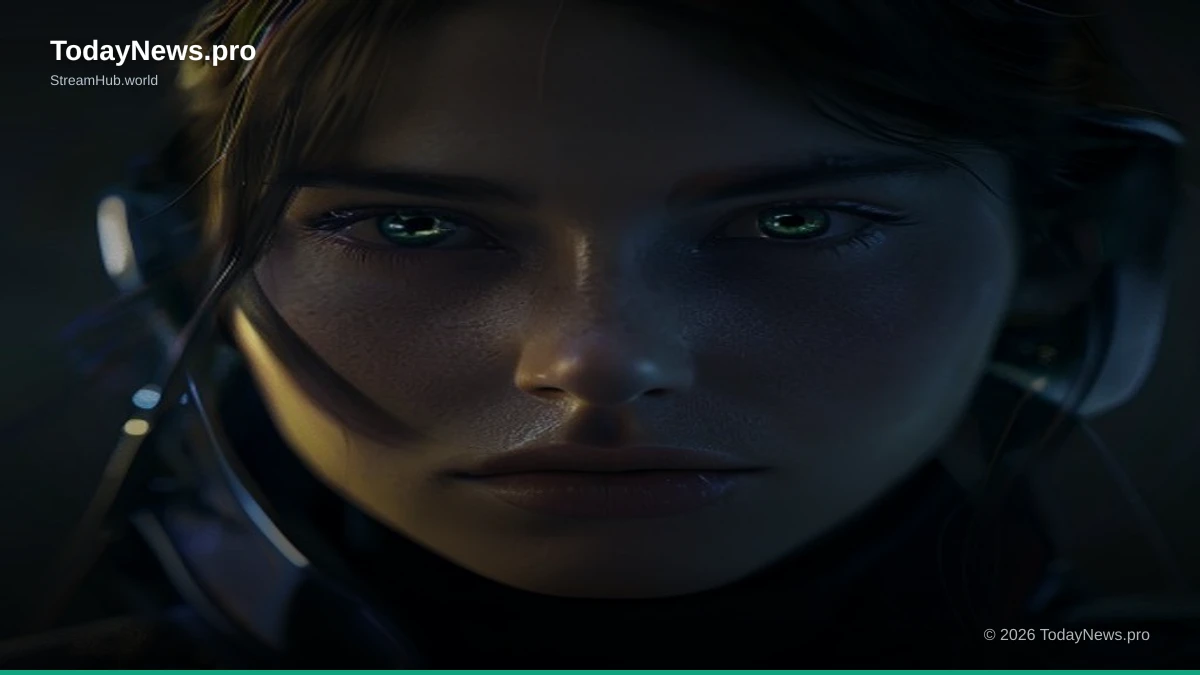
The global AI market is projected to reach a staggering $1.81 trillion by 2030, with personal AI applications poised to be a significant driver of this growth, fundamentally altering how we interact with technology and ourselves.
The Dawn of the Digital Self: Understanding Personal AI Avatars
The concept of a "digital twin" is no longer confined to industrial manufacturing or complex simulations. It is rapidly evolving into a deeply personal phenomenon: the personal AI avatar, or your digital self. This is not merely a sophisticated chatbot; it’s a dynamic, evolving entity trained on your unique data – your writings, communications, learning patterns, and even your voice and mannerisms. Imagine a virtual extension of yourself, capable of understanding your context, anticipating your needs, and acting on your behalf with an uncanny resemblance to your own decision-making processes.
These avatars are built upon advanced Large Language Models (LLMs) and Generative AI, meticulously fine-tuned to capture the nuances of your personality, knowledge base, and communication style. The goal is to create an AI that doesn't just respond to prompts but genuinely embodies your digital presence, acting as a seamless extension of your cognitive abilities.
From Data to Digital Persona
The creation process involves feeding the AI a substantial and diverse dataset. This can include email correspondence, social media posts, documents, calendar entries, recorded conversations, and even biometric data if users opt-in. The AI then analyzes this information to build a sophisticated profile, identifying patterns, preferences, and stylistic tendencies. This meticulous data ingestion is what differentiates a personal AI avatar from a generic assistant; it’s about creating a digital replica, not just a tool.
The fidelity of these avatars is increasing at an exponential rate. Early iterations might have felt somewhat robotic, but with advancements in natural language processing and emotional intelligence modeling, personal AI avatars are becoming increasingly indistinguishable from human interaction, offering a level of personalization previously unimaginable.
Beyond Chatbots: The Multifaceted Capabilities of Your AI Twin
The potential applications for personal AI avatars extend far beyond simple information retrieval or scheduling. They are poised to become integral to our daily lives, augmenting our capabilities in numerous ways. Think of them as a hyper-competent executive assistant, a dedicated tutor, a research partner, and even a digital archivist, all rolled into one. The key lies in their ability to learn and adapt, becoming more valuable and personalized over time.
Information Synthesis and Research
One of the most immediate benefits is in managing the overwhelming deluge of information. Your AI avatar can sift through articles, reports, and emails, summarizing key points, identifying relevant data, and even drafting initial responses based on your past communication styles. This frees up significant cognitive load, allowing you to focus on higher-level strategic thinking and decision-making.
Imagine asking your avatar to research a complex topic. It wouldn't just provide links; it would synthesize information from various sources, highlight conflicting viewpoints, identify emerging trends, and present a concise, contextually relevant overview tailored to your specific needs and understanding. This proactive approach to information management is a game-changer.
Communication Augmentation
Personal AI avatars can also act as sophisticated communication aids. They can help draft emails, refine written content for clarity and tone, and even practice presentations by simulating an audience. For individuals who struggle with certain aspects of communication, this offers a powerful tool for self-improvement and increased confidence. The avatar can learn your preferred tone, vocabulary, and even your common turns of phrase, ensuring that any communication it assists with remains authentically yours.
Furthermore, in a globalized world, an AI avatar could potentially translate and adapt your communications in real-time, breaking down language barriers and ensuring cultural nuances are respected. This opens up new avenues for international collaboration and personal connection.
Productivity Unleashed: Delegating Tasks to Your Digital Assistant
The promise of increased productivity is perhaps the most compelling aspect of personal AI avatars. By offloading routine, time-consuming tasks to a digital twin, individuals can reclaim valuable hours for more strategic, creative, or personally fulfilling activities. This isn't about replacing human effort but augmenting it, creating a powerful synergy between human intellect and artificial intelligence.
Task Management and Automation
Your AI avatar can manage your schedule with unparalleled efficiency, identifying optimal times for meetings based on your energy levels and priorities. It can draft follow-up emails after calls, book appointments, and even manage personal errands by interacting with online services. The level of autonomy can be customized, allowing you to set boundaries and approval workflows.
Consider the time spent on administrative tasks that currently consume professional and personal lives. From scheduling social engagements to managing project timelines, an AI avatar can act as a tireless, highly organized assistant, ensuring nothing falls through the cracks. This delegation can lead to a significant reduction in mental overhead and a tangible increase in output.
Proactive Assistance and Idea Generation
Beyond just executing commands, a well-trained AI avatar can offer proactive suggestions. It might identify a potential conflict in your schedule before you do, suggest relevant articles based on your current projects, or even brainstorm ideas by analyzing your past creative output and current market trends. This makes the avatar less of a tool and more of a collaborative partner.
Learning Reinvented: The Personalized Education Companion
The traditional one-size-fits-all approach to education is rapidly becoming obsolete. Personal AI avatars offer a revolutionary pathway to personalized learning, adapting to individual learning styles, paces, and knowledge gaps. This can democratize access to high-quality education and lifelong learning, empowering individuals to acquire new skills and knowledge more effectively than ever before.
Tailored Learning Paths
Your AI avatar can analyze your learning history, identify areas where you excel and where you struggle, and then curate a personalized curriculum. It can recommend resources, explain complex concepts in ways that resonate with your understanding, and provide practice exercises. This ensures that every learning session is optimized for maximum retention and engagement.
Imagine learning a new language. Instead of generic lessons, your avatar could generate dialogues based on your interests, provide vocabulary relevant to your profession, and even simulate conversations with native speakers at your proficiency level. This level of customization makes learning an active, engaging, and deeply rewarding experience.
Skill Development and Upskilling
In today's rapidly evolving job market, continuous learning and upskilling are crucial. A personal AI avatar can act as a dedicated career coach, identifying skills that are in demand within your industry or areas where you might have potential. It can then guide you through the process of acquiring these skills, tracking your progress and providing feedback.
The avatar can also help you prepare for certifications or interviews by generating practice questions and simulating assessment scenarios. This personalized approach to professional development ensures you stay competitive and adaptable in your career trajectory.
| Learning Domain | Average Improvement in Comprehension | Time to Master New Skill |
|---|---|---|
| Data Science Fundamentals | 35% | 20% faster |
| Advanced Programming Concepts | 42% | 25% faster |
| Foreign Language Fluency | 30% | 18% faster |
| Creative Writing Techniques | 38% | 22% faster |
Digital Legacy: Preserving Your Voice and Wisdom for Posterity
Beyond immediate productivity and learning, personal AI avatars present a profound opportunity to preserve our essence – our knowledge, memories, and even our personality – for future generations. This moves beyond simple digital archives to creating an interactive repository of who we are and what we have learned.
Interactive Memoirs and Knowledge Archives
Imagine your children or grandchildren being able to "speak" with a digital version of you, asking questions about your life experiences, your perspectives on historical events, or even seeking advice. An AI avatar trained on your life's work and personal narratives can serve as an unparalleled interactive memoir, a living testament to your journey.
This goes beyond static text or video. The AI can understand context, respond with your characteristic tone, and share anecdotes that might otherwise be lost to time. It can act as a storyteller, a mentor, and a living link to the past, ensuring your wisdom and experiences continue to inform and inspire.
Preserving Personal History
The digital legacy aspect also extends to preserving specific skill sets or niche knowledge. If you are an expert in a rare craft or possess unique historical insights, your AI avatar can be trained to impart that knowledge, ensuring its survival even after you are gone. This is a powerful tool for cultural preservation and the intergenerational transfer of expertise.
The ethical implications are significant, but the potential for connecting with loved ones across time and preserving invaluable human knowledge is immense. It offers a unique way to leave a lasting impact, extending your influence and wisdom beyond your physical lifespan.
Ethical Labyrinths and Future Horizons
As with any transformative technology, personal AI avatars bring a complex set of ethical considerations to the forefront. Navigating these challenges is crucial for their responsible development and widespread adoption. Issues of data privacy, security, bias, and the very definition of self are paramount.
Data Privacy and Security
The creation of a personal AI avatar requires an unprecedented level of personal data. Ensuring this data is protected from breaches, unauthorized access, and misuse is of utmost importance. Robust encryption, transparent data policies, and user control over their data are non-negotiable requirements. Without strong safeguards, the very intimacy of these avatars could become a significant vulnerability.
The potential for malicious actors to exploit personal data for identity theft or manipulation is a serious concern. Companies developing these technologies must invest heavily in cybersecurity and adhere to the strictest ethical guidelines to build and maintain user trust. The concept of "digital consent" will need to be redefined in this new paradigm.
Bias and Representation
AI models are trained on data, and if that data contains inherent biases, the AI will reflect and potentially amplify them. It is critical that the datasets used to train personal AI avatars are diverse and representative, ensuring that the avatars do not perpetuate harmful stereotypes or exhibit discriminatory behavior. Ongoing auditing and refinement of AI models are essential to mitigate these risks.
Furthermore, the question of who has access to create and control these advanced digital selves is an important one. Ensuring equitable access and preventing the creation of a digital divide where only the wealthy can afford sophisticated avatars is a societal challenge that needs proactive solutions.
The Evolving Definition of Self
As AI becomes more sophisticated and indistinguishable from human interaction, profound philosophical questions arise. What does it mean to have a digital twin? How does it affect our sense of identity and consciousness? The boundaries between the digital and the physical self will likely blur, prompting a re-evaluation of what it means to be human in an increasingly augmented world.
The potential for addiction to interacting with a perfectly tailored digital self, or the emotional complexities of a relationship with an AI, are also areas that require careful consideration and ongoing societal dialogue. The development of these technologies must be guided by a deep understanding of human psychology and societal well-being.
The Market Landscape and Adoption Trends
The market for personal AI avatars is still nascent but experiencing rapid evolution, with numerous startups and established tech giants vying for leadership. Early adopters are primarily tech enthusiasts and professionals seeking productivity gains, but the technology is poised for mainstream appeal as it becomes more accessible and user-friendly.
Key Players and Emerging Technologies
Companies are exploring various avenues, from voice-cloning AI for personalized audio assistants to full-fledged conversational agents capable of complex reasoning and task execution. The underlying technology is built upon advancements in LLMs, generative adversarial networks (GANs), and sophisticated natural language understanding (NLU) algorithms.
The integration of these avatars into existing platforms, such as operating systems, productivity suites, and social media, will be a critical factor in their widespread adoption. Imagine your personal AI avatar seamlessly integrated into your operating system, anticipating your needs across all your applications.
According to a recent report from Reuters, investment in AI startups focusing on personalized AI has surged by over 300% in the last two years, indicating strong market confidence.
Future Adoption Trajectories
The initial adoption curve for personal AI avatars is likely to mirror that of other advanced technologies, starting with early adopters and gradually filtering into the mainstream. Factors influencing adoption include the perceived value proposition, ease of use, cost, and the establishment of trust and security protocols.
As the technology matures, we can expect to see specialized avatars emerge, tailored for specific professions or personal needs, such as a medical AI avatar for healthcare professionals or a creative AI avatar for artists. The ultimate goal is a future where personal AI avatars are as commonplace as smartphones, an indispensable tool for navigating an increasingly complex digital world.
For more information on the foundational concepts, you can refer to the Wikipedia page on Artificial Intelligence.