

 Maria Gonzalez
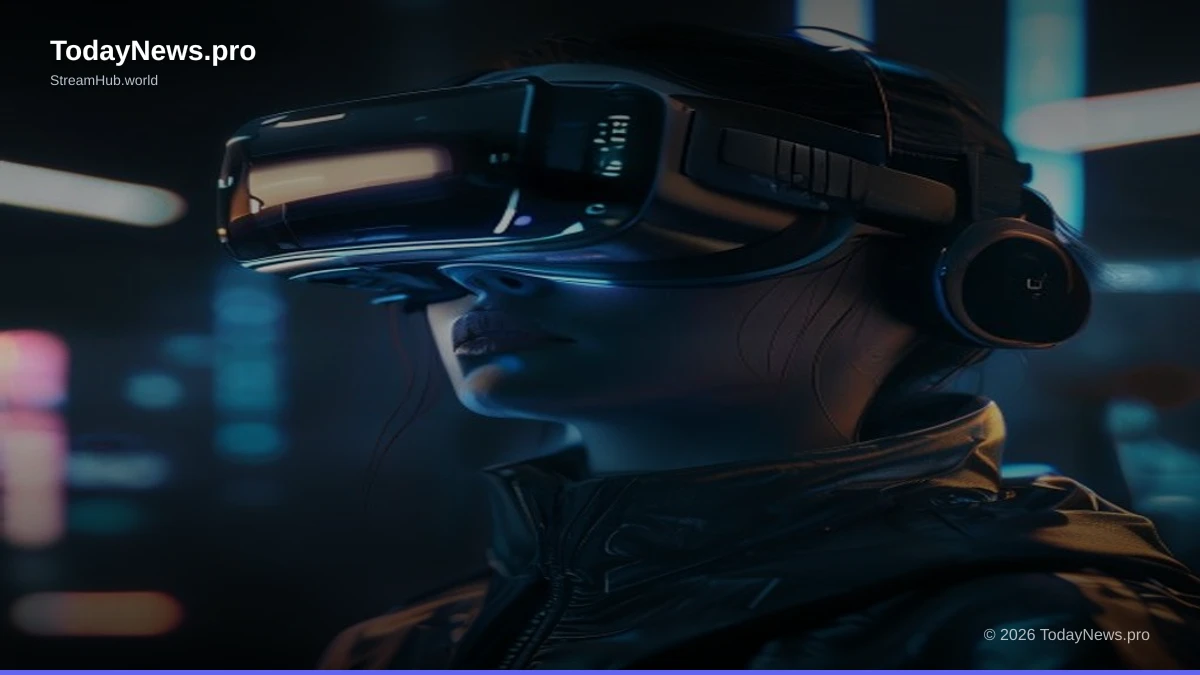
By 2027, the global metaverse market is projected to reach over $600 billion, a staggering figure that underscores a fundamental shift in how we perceive and interact with digital spaces, moving far beyond the confines of niche gaming or early-stage virtual reality experiments.
The Persistent Metaverse: Beyond VR Goggles to a New Digital Reality
The term "metaverse" has been bandied about with varying degrees of accuracy and expectation. Initially, it conjured images of individuals clad in bulky VR headsets, immersed in fantastical, isolated digital worlds. However, the true potential of the metaverse lies not just in its immersive capabilities but in its persistent, interconnected, and increasingly accessible nature. It represents a convergence of physical and digital realities, a seamless evolution of the internet that promises to redefine social interaction, commerce, work, and entertainment. This is not a fleeting trend; it is the next iteration of our digital existence.
The early iterations of virtual worlds, while foundational, often operated in silos. Think of distinct online games or social platforms, each with its own rules, avatars, and economies. The persistent metaverse aims to break down these barriers. It's about creating a continuous, shared digital space where your digital identity, assets, and experiences can theoretically transition between different platforms and environments. This fluidity is key to its long-term viability and its ability to truly become an extension of our lives.
The evolution is driven by advancements in several key technological domains: more sophisticated virtual and augmented reality hardware, increased processing power, faster network speeds (5G and beyond), and robust blockchain technologies for digital ownership and interoperability. These elements combine to create an environment that is not just visually engaging but also functional and economically viable.
Defining the Core Pillars
At its heart, the persistent metaverse is characterized by several core pillars:
- Persistence: The digital world continues to exist and evolve even when individual users are offline.
- Interoperability: Users and their digital assets can move seamlessly between different metaverse experiences.
- Synchronicity: All users experience the metaverse in real-time, together.
- Economy: A functioning digital economy exists, where users can create, own, invest, and trade digital goods and services.
- Social Experience: The metaverse is inherently social, fostering new forms of community and interaction.
These pillars are not mutually exclusive but rather interdependent, forming the bedrock of a truly realized metaverse. Without persistence, the digital world would feel ephemeral. Without interoperability, it would remain fragmented. Without synchronicity, shared experiences would be impossible. And without a robust economy and social fabric, it would lack meaningful purpose.
The Shifting Landscape of Digital Presence
The concept of a "digital presence" is undergoing a radical transformation. No longer is it confined to a profile picture on social media or a username in a chat room. In the persistent metaverse, your digital presence becomes an embodied, interactive persona – an avatar that can navigate 3D spaces, engage in conversations, and participate in activities alongside others. This shift from passive consumption to active participation is a defining feature.
Consider the evolution of online communication. We moved from text-based forums to instant messaging, then to video calls. The metaverse represents the next logical leap: embodied communication. Instead of seeing a face on a screen, you can interact with a digital representation of yourself and others in a shared environment, fostering a greater sense of presence and connection. This has profound implications for remote work, education, and social gatherings.
This embodied presence also extends to digital ownership. In traditional online environments, you might "own" a digital item within a game, but it's tied to that specific platform. The metaverse envisions a future where digital assets, from virtual clothing to land, are owned in a more tangible, transferable way, often powered by blockchain technology and NFTs (Non-Fungible Tokens). This creates a sense of true digital scarcity and value, mirroring the physical world.
The Rise of Decentralized Identity
A crucial component of this evolving digital presence is the concept of decentralized identity. Instead of relying on a single company to manage your online persona (think logging in with Google or Facebook), decentralized identity solutions aim to give users more control over their digital selves. This means your avatar, your reputation, and your data could be portable and verifiable across different metaverse platforms.
"The current model of digital identity is fragmented and often controlled by large corporations," notes Dr. Anya Sharma, a leading researcher in digital ethics. "The persistent metaverse has the potential to empower individuals with self-sovereign identity, where they own and manage their digital credentials, fostering greater privacy and security."
Impact on Social Interaction and Community Building
The implications for social interaction are vast. Imagine attending a virtual concert with thousands of other avatars, each expressing themselves through their chosen persona. Or collaborating with colleagues in a virtual office space, complete with whiteboards and interactive displays. The metaverse offers new avenues for building communities around shared interests, hobbies, and professional endeavors, transcending geographical limitations.
This new form of digital interaction can foster deeper connections than current social media platforms, which often rely on curated content and asynchronous communication. The real-time, embodied nature of metaverse interactions can lead to more spontaneous, authentic, and memorable experiences. It's about building shared memories and relationships in a persistent digital realm.
Beyond the Headset: Evolving Access Points
While virtual reality (VR) headsets are often synonymous with the metaverse, they are far from the only, or even the primary, gateway. The vision of a persistent metaverse is one of broad accessibility, catering to a diverse range of users with varying technological capabilities and preferences. The continued development of augmented reality (AR), mobile devices, and even traditional desktop computers will all play crucial roles in onboarding the masses.
Augmented reality, in particular, holds immense promise for blending the digital and physical worlds in everyday life. Imagine overlaying digital information onto your surroundings, interacting with virtual objects in your physical space, or having virtual characters appear in your living room. This "mixed reality" offers a less immersive, more integrated approach to experiencing metaverse elements without requiring a complete disengagement from the physical world.
Furthermore, the increasing power and ubiquity of smartphones mean that a significant portion of the global population can already access rudimentary metaverse-like experiences. Games like Fortnite and Roblox, while not fully realized metaverses, demonstrate the potential of mobile-first engagement with 3D digital worlds. As these platforms evolve and become more interconnected, they will serve as vital on-ramps for many users.
The Role of Augmented Reality
AR glasses, though still in their nascent stages of widespread adoption, represent a significant stepping stone. Unlike VR headsets that completely enclose the user's vision, AR devices allow users to see their physical environment while superimposing digital content. This could range from navigational overlays and virtual product try-ons to interactive educational experiences and immersive gaming that blends with reality.
The goal is to make digital interactions feel as natural and intuitive as possible, seamlessly integrating them into our daily routines. This approach democratizes access by not requiring users to retreat into a fully virtual space. It allows for a more gradual and less intimidating introduction to metaverse concepts.
Mobile and Desktop as Primary Access
It's a critical misstep to assume the metaverse will only be experienced through dedicated VR hardware. For the vast majority of users, particularly in emerging markets, smartphones and personal computers will remain the primary means of access. Developers are increasingly designing metaverse experiences with these platforms in mind, ensuring broad reach and inclusivity. This means that you might be able to attend a virtual meeting, browse a digital marketplace, or play a metaverse game on your laptop or phone.
The development of web-based 3D technologies (like WebGL) and more powerful mobile processors are making this increasingly feasible. The metaverse will not be a singular destination but a network of interconnected digital spaces accessible through a multitude of devices.
| Device Type | Projected Share (%) |
|---|---|
| Smartphones & Tablets | 65 |
| PCs & Laptops | 25 |
| VR Headsets | 7 |
| AR Glasses | 3 |
The Economic Undercurrents of the Persistent Metaverse
The persistent metaverse is not merely a technological playground; it is rapidly evolving into a significant economic engine. The creation, ownership, and exchange of digital assets and services are forming the backbone of a new digital economy, offering unprecedented opportunities for creators, businesses, and consumers alike.
This digital economy is characterized by concepts like virtual real estate, digital art markets powered by NFTs, in-world advertising, and the creation of virtual goods and services. Businesses are exploring new models of customer engagement, brand building, and even virtual product development within these immersive environments. The ability to conduct transactions, earn income, and invest in digital assets is what truly distinguishes the metaverse from previous iterations of the internet.
The rise of cryptocurrencies and blockchain technology has been instrumental in enabling this digital economy. These technologies provide the infrastructure for secure, transparent, and decentralized transactions, as well as for proving ownership of unique digital assets. This creates a level of trust and verifiable scarcity that is essential for a thriving digital marketplace.
The Creator Economy and Digital Ownership
One of the most exciting aspects of the metaverse's economy is the empowerment of creators. Artists, designers, developers, and entrepreneurs can now build and monetize their creations directly within these digital worlds. NFTs have revolutionized the concept of digital ownership, allowing creators to sell unique digital items like virtual art, fashion, and even virtual land, with verifiable provenance and the potential for ongoing royalties on resales.
This "creator economy" within the metaverse allows individuals to bypass traditional gatekeepers and establish direct relationships with their audience and customers. It fosters a more distributed and equitable economic model, where talent and innovation can be directly rewarded. The potential for income generation is vast, from selling virtual goods to offering services within metaverse platforms.
New Avenues for Business and Commerce
Businesses are increasingly recognizing the metaverse as a new frontier for commerce. This includes setting up virtual storefronts to sell digital and even physical goods, creating immersive brand experiences, hosting virtual events and product launches, and engaging with customers in novel ways. The ability to offer personalized, interactive shopping experiences within a 3D environment can significantly enhance customer engagement and brand loyalty.
Furthermore, the metaverse opens up opportunities for entirely new business models. Companies can develop and sell virtual assets, offer virtual services (like design or event planning), or even build entire virtual environments for other businesses. The lines between the physical and digital economy are becoming increasingly blurred, with metaverse ventures often having direct ties to real-world commerce.
| Activity | Estimated Market Value (USD Billions) |
|---|---|
| Virtual Goods & Services | 120 |
| Advertising & Marketing | 80 |
| Virtual Real Estate | 65 |
| Digital Art & Collectibles (NFTs) | 55 |
| Gaming & Entertainment | 200 |
Building the Infrastructure: The Unseen Pillars
The dazzling user-facing experiences of the metaverse are underpinned by a complex and rapidly evolving technological infrastructure. This includes advancements in cloud computing, edge computing, high-speed networking, graphics rendering, and the fundamental protocols that enable interoperability and decentralization. Without these foundational elements, the persistent metaverse would remain a theoretical concept.
The sheer scale and real-time nature of metaverse interactions demand unprecedented processing power and low-latency communication. Cloud and edge computing are essential for rendering complex 3D environments, managing vast amounts of user data, and ensuring that experiences are smooth and responsive for millions of concurrent users. The ongoing rollout of 5G and future wireless technologies is critical for providing the bandwidth and speed required for seamless immersion.
Furthermore, the development of open standards and protocols is paramount for achieving true interoperability. This involves creating shared languages and frameworks that allow different metaverse platforms to communicate and exchange data, enabling users to move their avatars and assets freely between them. Without this, the metaverse risks fragmenting into a collection of isolated digital worlds, much like the early internet.
The Role of High-Speed Networking
The responsiveness of any metaverse experience is directly tied to network performance. Lag and latency can quickly break immersion and render interactions frustrating. The widespread deployment of 5G technology is a game-changer, offering significantly higher bandwidth and lower latency compared to previous generations. This allows for more complex graphics, more realistic physics simulations, and a greater number of simultaneous users without performance degradation.
Looking ahead, the development of 6G and beyond promises even greater capabilities, potentially enabling real-time, photorealistic rendering and incredibly sophisticated interactive experiences that are currently unimaginable. The infrastructure must keep pace with the ambition of the metaverse.
Decentralization and Interoperability Standards
A truly persistent and open metaverse cannot be built on proprietary, centralized systems alone. Decentralization, often powered by blockchain, plays a crucial role in enabling user ownership of digital assets and fostering trust. This allows for verifiable digital scarcity and prevents single entities from having absolute control over the entire ecosystem.
The challenge of interoperability is significant. It requires collaboration across the industry to establish common standards for avatar creation, asset formats, and communication protocols. Initiatives like the Metaverse Standards Forum are working towards this goal, aiming to prevent a fragmented metaverse where users are locked into specific ecosystems. Wikipedia, for example, provides a wealth of information on the concept of interoperability and its importance across various digital systems. Learn more about interoperability on Wikipedia.
Challenges and Ethical Considerations
As the metaverse expands, it brings with it a host of complex challenges and ethical considerations that require careful attention and proactive solutions. Issues such as data privacy, digital safety, accessibility, and the potential for increased digital inequality are paramount and demand thoughtful discussion and robust governance frameworks.
The vast amounts of data that will be collected within metaverse environments – from user interactions and biometric data (in VR/AR) to economic transactions – raise significant privacy concerns. Ensuring that this data is protected, used responsibly, and that users have control over their personal information is a critical ethical imperative. Without strong data protection measures, the metaverse could become an unprecedented surveillance tool.
Furthermore, the potential for harassment, misinformation, and digital crime within these immersive spaces is a serious concern. Developing effective moderation tools, clear community guidelines, and robust enforcement mechanisms will be essential for creating safe and welcoming digital environments. The lines between real-world and virtual-world consequences will need to be navigated carefully.
Privacy and Data Security
The metaverse's ability to collect detailed user data presents a significant privacy challenge. Unlike traditional websites, metaverse experiences can gather information about user behavior, preferences, physical movements (in VR/AR), and even emotional responses. Establishing clear consent mechanisms, transparent data usage policies, and strong encryption protocols will be vital for building user trust and complying with evolving privacy regulations. The potential for mass surveillance is a very real concern if not addressed proactively.
Reuters has reported extensively on the growing concerns around data privacy in the digital realm, a trend that will only intensify with the advent of more immersive technologies. Read more about data privacy on Reuters.
Digital Safety, Harassment, and Governance
Creating safe and inclusive digital spaces is a fundamental challenge for the metaverse. The anonymity or semi-anonymity afforded by avatars can embolden malicious actors, leading to increased risks of harassment, bullying, and even forms of digital assault. Developing sophisticated AI-powered moderation tools, robust reporting systems, and clear consequences for bad behavior will be crucial. Establishing a form of digital governance that balances freedom of expression with the need for safety is a complex undertaking.
The question of who governs the metaverse is also a significant one. Will it be decentralized autonomous organizations (DAOs), platform operators, or a new form of digital legislature? The decisions made now will shape the future of digital interaction and societal norms within these virtual realms.
Accessibility and Digital Divide
A truly persistent metaverse should strive for inclusivity, but there's a significant risk of exacerbating existing digital divides. The cost of high-end VR/AR hardware, the need for high-speed internet access, and the digital literacy required to navigate these complex environments could exclude large segments of the global population. Ensuring that the metaverse is accessible to everyone, regardless of their socioeconomic background or geographical location, is a critical ethical imperative.
The Future is Interoperable
The ultimate success and widespread adoption of the persistent metaverse hinge on its ability to become truly interoperable. This means that users should be able to seamlessly move their digital identity, assets, and experiences between different metaverse platforms and worlds. A fragmented metaverse, where each platform operates as a walled garden, will limit its potential and likely lead to user fatigue.
Imagine being able to take an avatar you've customized in one metaverse platform and use it to attend a virtual concert in another, or to transfer a digital item you purchased from one virtual store to another. This level of fluidity is what will transform the metaverse from a collection of disconnected experiences into a unified, persistent digital reality that complements and extends our physical lives. The technology is evolving, but the commitment to open standards and collaboration will be the true determinants of this future.
The journey towards a fully realized, persistent, and interoperable metaverse is ongoing. It is a complex undertaking that requires continuous innovation in technology, careful consideration of ethical implications, and a commitment to open standards and user empowerment. While VR goggles may have been an early symbol, the true metaverse will be accessible, interconnected, and deeply integrated into the fabric of our digital and physical lives.