

 Max Speed

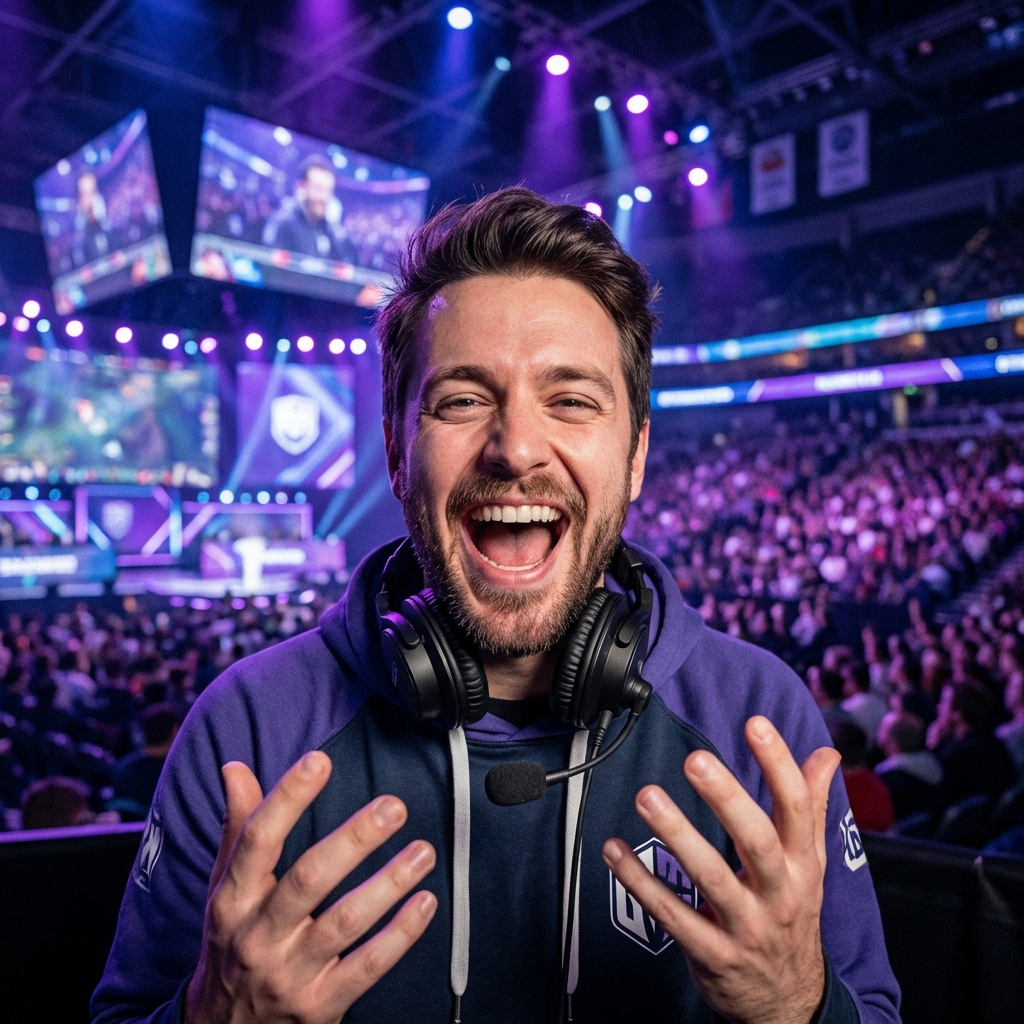
In 2023, global audiences spent over 1.3 trillion minutes watching gaming content on Twitch alone, a figure that dwarfs the actual play-time of most AAA titles released in the same period. This seismic shift indicates that the traditional definition of a "gamer" is undergoing a radical transformation, moving away from active input toward passive observation.
The Spectator-First Paradigm: A Statistical Reality
For decades, the video game industry was built on the foundation of agency. The core value proposition was the player's ability to influence the outcome of the narrative or the competitive environment through skill and decision-making. However, the data now suggests that a massive segment of the audience prefers to experience these worlds without touching a controller.
According to reports from market analysts at Newzoo, nearly 40% of Gen Z and Millennial gamers identify as "spectators"—individuals who regularly watch gaming content but rarely play the games themselves. This represents a fundamental shift in the media landscape, placing gaming in direct competition with traditional television and film for "lean-back" entertainment time.
The rise of the "no-commentary" walkthrough and high-fidelity cinematic playthroughs has turned complex games like The Last of Us Part II or God of War Ragnarök into serialized dramas for millions. These viewers are not looking for a challenge; they are looking for a story, an atmosphere, and a community experience that requires zero mechanical skill.
The Psychology of the Lean-Back Experience
Why would someone choose to watch a game rather than play it? The answer lies in the reduction of cognitive load. Modern AAA games have become increasingly complex, requiring hundreds of hours to master intricate mechanics and navigation. For a workforce that is increasingly burnt out and suffering from "decision fatigue," the prospect of failing a difficult boss fight 50 times is less appealing than watching a professional navigate it with grace.
Reducing Cognitive Friction
Passive gaming experiences provide the dopamine hits of discovery and narrative progression without the stress of performance. Behavioral psychologists note that watching a skilled player achieve a goal triggers "mirror neurons," providing a sense of vicarious achievement. This allows the viewer to participate in the cultural zeitgeist of a game without the barrier of entry represented by high-cost hardware or steep learning curves.
Furthermore, the "ambient" nature of gaming streams allows them to serve as background companionship. Unlike a movie, which often demands undivided attention, a Twitch stream or a 10-hour "Longplay" video functions as a digital fireplace, providing a sense of presence and social connection through chat interactions and the streamer's personality.
The Economics of Attention Over Input
The monetization of the gaming industry is pivoting to reflect this passive trend. Developers are no longer just designing games for players; they are designing them for "watchability." This includes the implementation of "Streamer Modes," dynamic camera angles, and visual clarity that allows a viewer to understand the state of play at a glance.
| Metric | Active Players (2019) | Active Players (2024) | Spectator Growth |
|---|---|---|---|
| Esports Engagement | 450M | 640M | +42% |
| Idle Game Revenue | $1.2B | $3.8B | +216% |
| Livestream Viewership | 12B Hours | 28B Hours | +133% |
The rise of the "Creator Economy" means that a game's success is often determined by its performance on social platforms rather than its initial sales. Publishers now allocate massive portions of their marketing budgets to influencers who can showcase the game to millions of passive viewers. This has led to the emergence of "stream-friendly" mechanics—elements designed specifically to create "clip-worthy" moments that go viral on TikTok or YouTube Shorts.
The Rise of Idle Games and AFK Mechanics
While some "passive" gaming involves watching others, another significant branch involves games that play themselves. "Idle" or "Incremental" games (such as Cookie Clicker or AFK Arena) have exploded in popularity. These titles require minimal input—usually limited to periodic management decisions—while the game continues to progress in the background.
This genre capitalizes on the human desire for progression. By removing the "work" of gameplay but keeping the "reward" of leveling up and resource accumulation, idle games fit perfectly into the lifestyle of a multitasking professional. You can "play" a game while working, eating, or even sleeping. The game becomes a status tracker, a slow-burn achievement engine that lives in the periphery of daily life.
Cloud Infrastructure and Passive Participation
Technology is the primary enabler of the passive revolution. The maturation of cloud gaming services has lowered the barrier to entry, but it has also introduced new ways to participate. Platforms like Cloud Gaming providers are experimenting with "interactive overlays" that allow viewers to vote on in-game events or trigger obstacles for the player they are watching.
This creates a hybrid experience: part spectator sport, part democratic control. The viewer isn't playing the game in the traditional sense, but their presence and input shape the outcome. This "crowd-play" mechanic was famously pioneered by "Twitch Plays Pokémon" and has since been refined into sophisticated tools integrated directly into game engines like Unity and Unreal.
The Cinematic Convergence: Gaming as Prestige TV
The success of adaptations like The Last of Us on HBO or Arcane on Netflix has blurred the lines between gaming and cinema. We are entering an era where the "game" is simply the first iteration of an intellectual property (IP) designed for multi-modal consumption. A user might play the game, then watch a streamer play it for a different perspective, then watch a TV adaptation for deeper lore.
Interactive Narrative as the New Media Standard
Developers are leaning into this by creating "Cinematic Modes" that automate gameplay entirely, allowing players to simply watch the cutscenes and narrative beats unfold. This essentially turns a $70 game into a high-budget interactive movie. For many, this is the preferred way to consume high-fidelity narratives without the frustration of repeated failure or navigation hurdles.
This trend is also visible in the "Virtual Tourism" movement. Games like Assassin’s Creed now include "Discovery Tours" where combat and quests are removed, allowing the user to simply wander through historically accurate recreations of ancient civilizations. This is gaming as education and relaxation, a far cry from the high-octane "twitch-reflex" gameplay of the past.
Future Outlook: AI-Generated Infinite Consumption
The next frontier of passive gaming involves Artificial Intelligence. We are already seeing the emergence of AI streamers, such as "Neuro-sama," who can interact with audiences and play games 24/7 without human intervention. In the near future, we may see personalized, AI-generated game streams tailored to an individual's specific tastes.
Imagine a "game" that builds its own narrative, generates its own visuals, and plays itself for your entertainment, adapting the plot based on your biometric feedback or chat inputs. This represents the ultimate evolution of the passive experience: a never-ending, personalized entertainment stream that requires zero input from the consumer.
Ethical Implications and Industry Shifts
As gaming becomes more passive, questions arise regarding the health and psychological impact of this consumption. Is the "active" brain engagement of gaming being lost to the "passive" trance of television? Investigative reports from Reuters and other outlets have begun to explore the addictive nature of "infinite scroll" gaming content and the parasocial relationships formed with streamers.
Furthermore, the industry's labor force is feeling the pressure. If games must be "watchable" first and "playable" second, designers may prioritize visual spectacle over mechanical depth. This could lead to a homogenization of game design, where unique but "unwatchable" mechanics are discarded in favor of established, visually striking tropes.
However, the democratization of gaming through passivity cannot be ignored. It allows people with physical disabilities, limited time, or lack of expensive hardware to participate in the most significant cultural medium of the 21st century. The "Passive Gaming Revolution" is not just a trend; it is a broadening of the tent, ensuring that the worlds developers build can be enjoyed by everyone, regardless of how they choose to engage.