

 Jessica 'Jinx' Lee
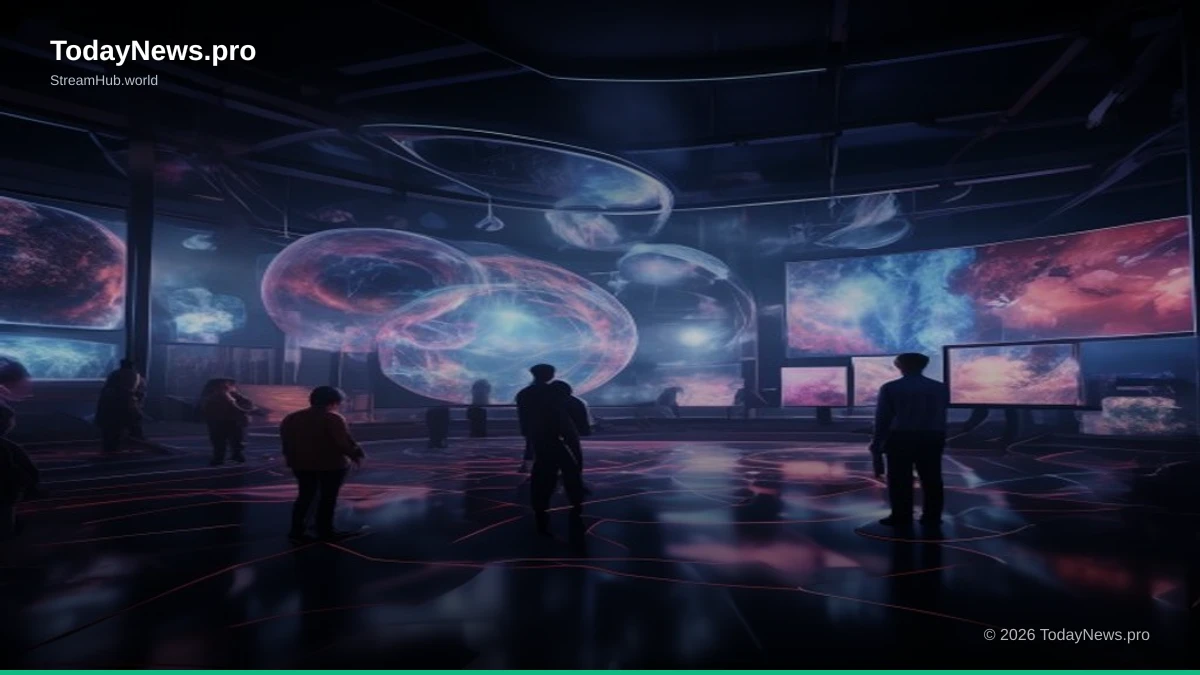
The global gaming market is projected to surpass $321 billion by 2025, a testament to our insatiable appetite for interactive entertainment. This exponential growth is not merely driven by more players, but by increasingly sophisticated and enveloping experiences, fundamentally reshaped by the synergistic evolution of artificial intelligence (AI), cloud computing, and haptic feedback.
The Symbiotic Symphony: AI, Cloud, and Haptics in Modern Play
We are living in an era where the lines between the physical and digital worlds are increasingly blurred. This transformation is most palpable in our pursuit of entertainment, particularly within the realm of gaming and immersive experiences. The unassuming "playgrounds" of yesteryear, defined by simple sprites on a screen or board games around a table, have evolved into vast, dynamic digital universes. This metamorphosis is orchestrated by a powerful triad: Artificial Intelligence (AI), Cloud Computing, and Haptic Feedback. Each plays a crucial, yet distinct, role, but it is their seamless integration, their symbiotic symphony, that truly crafts the omnipresent, deeply engaging immersive environments we increasingly inhabit.
AI, the intelligent engine, imbues these digital worlds with life and responsiveness. The cloud, the ubiquitous infrastructure, ensures these worlds are accessible, scalable, and constantly evolving. Haptics, the tangible interface, grounds these experiences in our physical reality, translating digital actions into visceral sensations. Together, they are not just enhancing existing forms of play; they are actively redefining what "play" itself means, pushing the boundaries of imagination and interaction.
This article delves into the intricate ways these three pillars are interwoven, exploring how their combined prowess is not only shaping our current immersive playgrounds but also charting a course for an even more profound future of digital interaction and entertainment.
Artificial Intelligence: The Brains of the Immersive Operation
At the core of any convincing immersive experience lies intelligence. Artificial Intelligence is the architect and the animateur of these digital realms, breathing life into characters, dynamically shaping environments, and personalizing the player's journey. Gone are the days of predictable, scripted enemy patrols. Modern AI can generate complex behaviors, adapt to player strategies in real-time, and even create emergent narratives. This level of sophistication transforms static digital landscapes into vibrant, reactive ecosystems.
NPCs Evolved: Beyond Scripted Encounters
Non-player characters (NPCs) are no longer mere pawns on a chessboard. AI-driven NPCs can learn from player interactions, develop distinct personalities, and engage in complex dialogue. Imagine a virtual companion who remembers your past conversations, anticipates your needs, and even develops an emotional connection. This is the power of modern AI, transforming NPCs from static elements into dynamic participants in the narrative. Machine learning algorithms analyze player behavior, allowing NPCs to adapt their tactics, responses, and even their understanding of the game world, creating a truly organic and unpredictable experience.
Procedural Content Generation: Infinite Worlds at Our Fingertips
The concept of procedurally generated content, once a novelty, has been revolutionized by AI. Instead of manually crafting every mountain, every forest, and every dungeon, AI algorithms can generate vast, unique, and believable game worlds on the fly. This not only reduces development costs but also offers players virtually infinite replayability. AI can ensure that these generated worlds are not just large, but also coherent, artistically consistent, and filled with interesting challenges and discoveries. This allows for experiences that feel both expansive and intimately tailored to the player's exploration.
Dynamic Difficulty and Personalization: A Tailored Experience
AI excels at understanding individual player capabilities and preferences. It can dynamically adjust the difficulty of a game, ensuring that it remains challenging but not insurmountable. Furthermore, AI can personalize the gameplay experience, suggesting new activities, tailoring challenges, or even subtly altering the narrative based on a player's choices and playstyle. This creates a deeply personal connection, making each player's journey unique and engaging. This adaptive approach ensures that players remain within their optimal challenge zone, maximizing engagement and minimizing frustration. The ability to learn and adapt extends to the very fabric of the game, ensuring a consistently rewarding experience.
The Cloud: The Universal Stage for Digital Experiences
If AI provides the intelligence, the cloud provides the stage, the infrastructure, and the connective tissue that allows these intelligent worlds to be accessed, scaled, and experienced by millions simultaneously. Cloud computing has fundamentally democratized access to high-fidelity digital experiences, removing the need for expensive, high-end hardware for many applications. It's the invisible backbone that supports our most ambitious immersive endeavors.
Cloud Gaming: Play Anywhere, On Anything
Cloud gaming services, such as Xbox Cloud Gaming, NVIDIA GeForce Now, and PlayStation Plus Premium, have shifted the paradigm of game accessibility. Instead of downloading and installing massive game files, or relying on powerful local hardware, games are streamed directly to the player's device, whether it's a smartphone, a tablet, a smart TV, or a low-spec laptop. The processing power resides in vast data centers, making high-end gaming accessible to a much broader audience. This also means instant access to new games and updates without lengthy download times, truly enabling an "on-demand" gaming culture.
Scalability and Persistence: Worlds That Never Sleep
Massively multiplayer online (MMO) games and persistent virtual worlds rely heavily on cloud infrastructure for their scalability and persistence. The cloud allows these worlds to accommodate millions of concurrent players, ensuring a stable and responsive experience regardless of player load. Furthermore, the cloud ensures that these worlds are always "on," saving player progress and maintaining the continuity of the game environment even when players are offline. This constant availability and capacity for growth are essential for building truly living, breathing digital societies.
Cross-Platform Play and Interoperability: Breaking Down Barriers
The cloud facilitates cross-platform play, allowing players on different devices and operating systems to connect and compete together. This breaks down traditional barriers, fostering larger and more diverse gaming communities. It also enables a more seamless experience as players can often pick up their game progress on one device and continue on another. This interoperability is a key driver of community growth and sustained engagement in the digital entertainment space.
| Cloud Gaming Service | Primary Cloud Provider | Estimated User Base (Millions) | Key Features |
|---|---|---|---|
| Xbox Cloud Gaming | Microsoft Azure | Over 10 | Game Pass integration, PC and console titles, mobile access |
| NVIDIA GeForce Now | Proprietary (utilizes various data centers) | Over 15 | Access to owned PC games, free and premium tiers, broad device support |
| PlayStation Plus Premium | Sony (proprietary infrastructure) | Estimated 5-8 (for cloud streaming tier) | Console and PC titles, no download required for streaming |
Haptics: Bridging the Digital Divide with Tactile Feedback
While AI and the cloud provide the intelligence and the stage, haptics are the sensory bridge, connecting the abstract digital world to our physical perception. Haptic technology translates digital events into tactile sensations – vibrations, textures, resistance, and even temperature changes – that players can feel. This adds a crucial layer of immersion, making interactions feel more real and impactful.
Beyond Simple Vibrations: The Nuances of Tactile Feedback
Early haptics in gaming were often limited to basic rumble feedback. Today, advanced haptic systems, like those found in the PlayStation 5's DualSense controller or sophisticated VR gloves, offer a far richer palette of sensations. Imagine feeling the subtle "click" of a trigger being pulled, the distinct texture of different surfaces underfoot, or the jarring impact of a virtual explosion. These nuanced sensations create a deeper connection to the game world, enhancing realism and providing critical gameplay cues.
Applications in VR and AR: Enhanced Presence
In Virtual Reality (VR) and Augmented Reality (AR), haptics are not just beneficial; they are often essential for a truly believable experience. Feeling the virtual weight of an object, the resistance of a virtual bowstring, or the texture of a virtual wall significantly increases the sense of "presence" – the feeling of actually being in the virtual environment. This makes VR and AR experiences far more compelling and less disorienting.
The ability to feel the virtual world makes it more tangible and impactful. This tactile feedback can convey information that visual or auditory cues alone might miss, such as the subtle strain on a virtual tool or the tremor of an approaching enemy. This layered sensory input creates a more holistic and convincing simulation.
The Future of Tactile Immersion
The evolution of haptics is moving beyond controllers and gloves. Researchers are exploring full-body haptic suits that can simulate everything from a gentle breeze to the impact of a virtual punch. We are also seeing the development of advanced haptic displays that can render complex textures and surfaces, allowing users to "feel" digital objects in unprecedented ways. This continuous innovation promises to make our digital interactions feel even more grounded in physical reality.
The Convergence: Crafting Unprecedented Immersive Playgrounds
The true magic happens when AI, cloud, and haptics are not just present but are deeply intertwined. This convergence is what elevates digital experiences from mere simulations to truly immersive playgrounds. Imagine an AI-driven character in a cloud-streamed world, whose emotional state is conveyed not just through dialogue or animation, but also through subtle changes in controller feedback and even localized haptic vibrations on your skin. This is the power of integration.
AI-Powered Dynamic Worlds with Tactile Realism
Consider a virtual reality experience where AI constantly generates new scenarios and challenges. As you interact with these AI-generated elements, advanced haptics provide realistic tactile feedback. If you grab a virtual object, you feel its weight and texture. If you encounter an AI-controlled creature, its movements and impacts are translated into physical sensations through your haptic devices. The cloud ensures this experience is accessible and shared, allowing for multiplayer interactions within these dynamic, tactile worlds.
Personalized Sensory Journeys
AI can analyze your physiological responses (through sensors) and tailor the haptic feedback and environmental dynamics delivered via the cloud. If you're feeling stressed, the system might subtly adjust the haptics to be more soothing, or if you're seeking thrill, it can amplify the intensity. This creates a deeply personalized sensory journey, making the immersive experience uniquely yours. The cloud infrastructure manages the real-time delivery of these personalized stimuli across various devices.
This interconnectedness fosters a feedback loop that is crucial for deep immersion. Player actions, interpreted by AI, are translated into sensory outputs via haptics, and this sensory input, in turn, influences future AI decisions and world generation. The cloud acts as the conduit, ensuring this complex dance of data and sensation is synchronized and delivered seamlessly.
Examples of Convergence in Action
Current examples, though nascent, showcase this potential. Games like "Half-Life: Alyx" on VR platforms demonstrate incredible AI-driven enemy behavior coupled with sophisticated haptic feedback for object interaction and weapon handling. Cloud gaming platforms are beginning to explore how AI can personalize streaming quality and game pacing based on user input and network conditions, further enhancing the seamlessness of the experience.
Economic Ripples and Future Trajectories
The integration of AI, cloud, and haptics is not just transforming the user experience; it's also a powerful economic engine. The industries surrounding these technologies are experiencing significant growth, driving innovation and creating new market opportunities. The increasing demand for immersive experiences fuels investment in R&D, hardware manufacturing, and software development.
Market Growth and Investment
The combined market for AI in gaming, cloud gaming, and haptic technology is expanding rapidly. Venture capital is pouring into startups specializing in AI-driven game design, cloud infrastructure for gaming, and advanced haptic hardware. This influx of capital accelerates development and brings new, innovative products to market faster. The economic potential is vast, extending beyond gaming to training, simulation, and even remote collaboration.
Job Creation and Skill Demands
This technological evolution is also creating new job roles and demanding new skill sets. We see increased demand for AI engineers specializing in game AI, cloud architects for gaming platforms, and haptic designers who understand the nuances of tactile perception. The workforce is adapting, with educational institutions and training programs beginning to offer courses and certifications in these emerging fields.
The growth of the metaverse concept, heavily reliant on these three pillars, further amplifies this economic impact. The creation of persistent, interconnected virtual worlds necessitates robust cloud infrastructure, intelligent AI agents, and compelling sensory feedback to make these environments truly engaging. This interconnectedness suggests a future where work, play, and social interaction are increasingly mediated by these advanced technologies.
The continued refinement of AI algorithms for procedural content generation, coupled with more efficient cloud streaming technologies, will lead to even larger and more complex virtual worlds. Haptic advancements will continue to push the boundaries of tactile realism, making digital interactions indistinguishable from physical ones for many purposes. The interplay between these technologies will continue to drive innovation, leading to an ever-expanding array of immersive applications.
Challenges and Ethical Considerations
Despite the immense promise, the widespread adoption and integration of AI, cloud, and haptics are not without their challenges and ethical quandaries. As these technologies become more pervasive, it is crucial to address potential downsides and ensure responsible development and deployment.
Data Privacy and Security
AI systems, particularly those that personalize experiences, often require vast amounts of user data. Ensuring the privacy and security of this data is paramount. Cloud-based services also present vulnerabilities, and robust cybersecurity measures are essential to protect against breaches and unauthorized access. The collection of biometric data through haptic devices also raises significant privacy concerns that need to be addressed proactively.
Digital Divide and Accessibility
While cloud gaming aims to democratize access, the initial cost of high-end VR/AR hardware and advanced haptic peripherals can still create a digital divide. Ensuring that these immersive experiences are accessible to everyone, regardless of socioeconomic status or geographical location, is a critical challenge. Efforts to develop more affordable and inclusive hardware solutions are ongoing.
Potential for Addiction and Disconnection from Reality
The increasing realism and immersiveness of these digital playgrounds raise concerns about potential addiction and the erosion of real-world social connections. As virtual experiences become more compelling, it is important to promote healthy usage patterns and ensure that digital engagement complements, rather than replaces, real-world interaction. The ethical implications of creating hyper-realistic, addictive environments require careful consideration by developers and policymakers.
The ethical considerations extend to the very nature of AI behavior. As AI becomes more sophisticated, questions arise about accountability for AI-driven actions within virtual environments and the potential for AI to perpetuate biases or engage in harmful behaviors. Transparent development practices and robust ethical guidelines are essential to navigate these complex issues. The societal impact of deeply immersive, persistent virtual realities needs ongoing study and public discourse.
Furthermore, the increasing sophistication of AI in generating realistic content and interactions could blur the lines between reality and simulation, leading to potential misinformation or manipulation. Robust detection mechanisms and user education will be crucial to combat these emerging threats. The long-term psychological effects of prolonged immersion in highly realistic virtual environments also warrant continued research.
The journey towards truly immersive, omnipresent playgrounds is an exciting one, driven by the relentless innovation in AI, cloud computing, and haptic technology. As these fields continue to mature and converge, they promise to redefine not just how we play, but how we learn, connect, and experience the world around us. The future of interaction is tactile, intelligent, and boundless.