

 Robert Stark
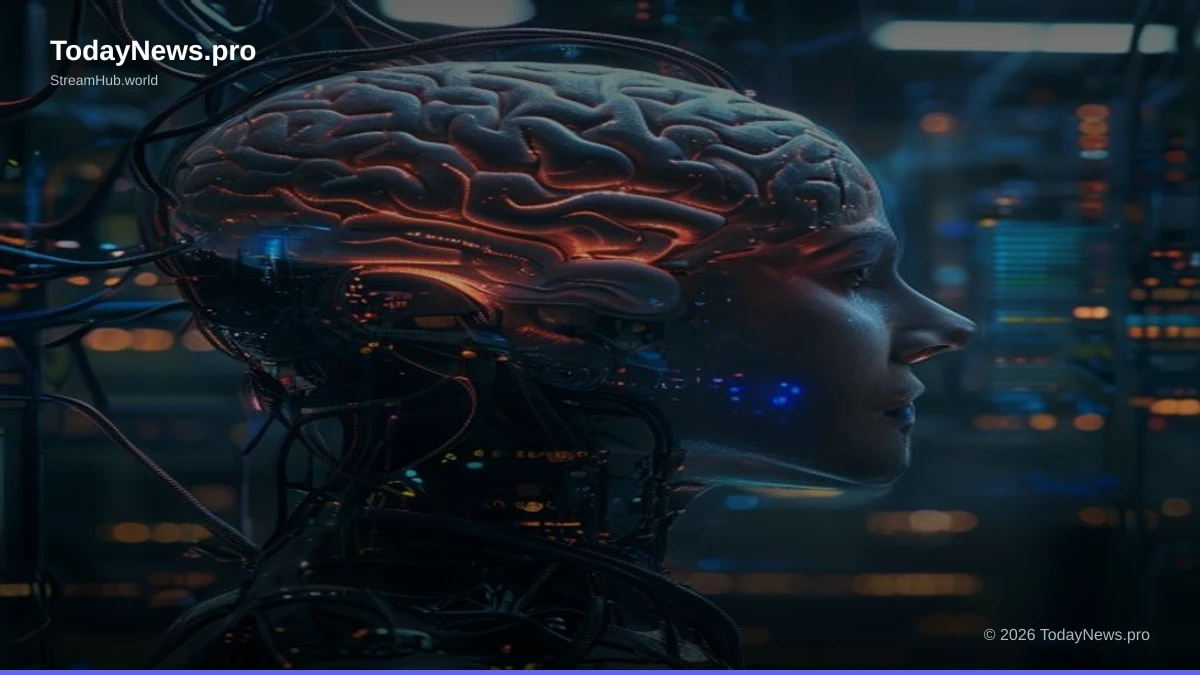
By 2030, the global market for brain-computer interface (BCI) devices is projected to reach a staggering $6.7 billion, a testament to the rapid evolution and burgeoning applications of this transformative technology.
Neurotech Unlocked: Brain-Computer Interfaces Moving Beyond the Lab
For decades, the concept of directly interfacing human brains with computers remained largely within the realm of science fiction and highly specialized laboratory research. However, a paradigm shift is underway. Brain-Computer Interfaces (BCIs), once confined to academic institutions and the treatment of severe neurological conditions, are now rapidly advancing, showing immense promise for a wide array of applications that extend far beyond the traditional medical sphere. This evolution marks a pivotal moment in human-technology interaction, offering unprecedented possibilities for communication, control, and even cognitive augmentation.
The core principle of BCIs involves establishing a direct communication pathway between the brain and an external device. This is achieved by detecting, analyzing, and translating brain signals into commands that can operate computers, prosthetics, or other technologies. As the technology matures, it is becoming more accessible, more sophisticated, and more integrated into our daily lives, prompting both excitement and critical discussions about its future.
The Dawn of Direct Neural Communication
The fundamental aspiration of BCI research is to enable individuals to interact with their environment and digital world using only their thoughts. This is particularly life-changing for those with severe motor impairments, such as paralysis from spinal cord injuries, amyotrophic lateral sclerosis (ALS), or stroke. By bypassing damaged neural pathways, BCIs offer a pathway to regain lost functionality, empowering individuals with a sense of agency and independence.
Beyond restoring lost capabilities, BCIs are also being explored for their potential to enhance existing human abilities. Imagine a future where learning can be accelerated, where complex tasks can be performed with greater speed and precision, or where individuals can communicate complex ideas instantaneously through thought alone. While these scenarios might sound futuristic, the foundational research and early prototypes are already paving the way for such advancements.
The journey of BCI development has been a long and arduous one, marked by incremental progress and significant breakthroughs. Early research focused on understanding brain activity and developing methods to decode it. The advent of advanced neuroimaging techniques and sophisticated machine learning algorithms has significantly accelerated this process, allowing for more accurate and nuanced interpretation of neural signals.
Decoding Neural Signals: The Core Challenge
At the heart of any BCI is the ability to accurately read and interpret electrical or metabolic activity from the brain. This activity, often in the form of electrical impulses (action potentials) or changes in blood flow, carries information about a person's intentions, thoughts, and emotions. The challenge lies in the sheer complexity and subtlety of these signals.
Different types of brain signals are targeted, including electroencephalography (EEG), which measures electrical activity on the scalp; electrocorticography (ECoG), which involves placing electrodes directly on the surface of the brain; and intracortical microelectrode arrays, which are implanted directly into brain tissue for the highest resolution data. Each method has its own trade-offs in terms of invasiveness, signal quality, and spatial resolution.
Machine Learning: The Translator of Thought
Once raw brain signals are acquired, they must be translated into actionable commands. This is where the power of machine learning and artificial intelligence becomes indispensable. Sophisticated algorithms are trained to recognize patterns in brain activity that correspond to specific intentions, such as moving a cursor, selecting a letter, or controlling a robotic limb. The more data these algorithms receive, the better they become at decoding user intent with increasing speed and accuracy.
This training process can be iterative and personalized. A user might think about moving their arm to the right, and the BCI system, through machine learning, learns to associate that mental imagery with the corresponding brain signal pattern. Over time, with practice and algorithmic refinement, the system can achieve remarkable levels of performance, enabling fluid and intuitive control.
Key Players and Emerging Technologies
The BCI landscape is dynamic and competitive, with a mix of established research institutions, agile startups, and even tech giants investing heavily in the field. These entities are pushing the boundaries of what's possible across various technological approaches.
Invasive vs. Non-Invasive Approaches
A primary distinction in BCI technology lies in its invasiveness. Non-invasive BCIs, such as those using EEG caps, are the most accessible and widely researched. They are safe, relatively inexpensive, and can be used outside of clinical settings. However, they suffer from lower signal-to-noise ratios and limited spatial resolution, meaning they can only capture broad patterns of brain activity.
Invasive BCIs, which involve surgically implanting electrodes directly into the brain, offer significantly higher signal fidelity and resolution. This allows for more precise decoding of neural signals and finer control over external devices. Companies like Neuralink, founded by Elon Musk, are at the forefront of developing high-density, implantable electrode arrays designed for widespread neural interaction.
The Rise of Semi-Invasive Solutions
A middle ground is emerging with semi-invasive BCIs, primarily utilizing electrocorticography (ECoG). These systems involve placing electrodes on the surface of the brain, beneath the skull but without penetrating brain tissue. ECoG offers a better signal quality than scalp EEG while being less invasive than intracortical implants. This approach is gaining traction for applications where a balance between performance and risk is desired.
Companies like Synchron are developing ultra-thin, flexible electrode arrays that can be delivered via blood vessels to the brain, bypassing the need for open brain surgery. This "endovascular" approach aims to make invasive BCI implantation significantly safer and more accessible, potentially paving the way for broader clinical adoption.
The technological race is also on for miniaturization and wireless capabilities. Future BCIs will likely be small, unobtrusive, and capable of long-term, wireless data transmission, making them more practical for everyday use. Powering these devices and ensuring their longevity within the body also remain critical areas of innovation.
| BCI Type | Invasiveness | Signal Quality | Typical Applications | Key Players/Examples |
|---|---|---|---|---|
| EEG (Electroencephalography) | Non-Invasive | Low | Gaming, basic control, sleep monitoring, research | Emotiv, NeuroSky, OpenBCI |
| ECoG (Electrocorticography) | Semi-Invasive | Medium | Seizure prediction, stroke rehabilitation, advanced motor control | Synchron, Paradigm BCI |
| Intracortical Microelectrode Arrays | Invasive | High | Restoring fine motor control, sensory feedback, communication for severe paralysis | Neuralink, Blackrock Neurotech, Cerebrus |
Transforming Healthcare: Restoring Function and Enhancing Lives
The most immediate and impactful applications of BCIs are in the medical field, offering hope for individuals with debilitating neurological conditions and injuries. These technologies are not just about providing a workaround; they are about restoring lost capabilities and improving quality of life.
Restoring Motor Function
For individuals paralyzed due to spinal cord injury, stroke, or neurodegenerative diseases, BCIs can be a lifeline. By translating intended movements into signals that control prosthetic limbs or exoskeletons, people can regain the ability to walk, grasp objects, or perform other physical tasks. For instance, studies have shown that paralyzed individuals can learn to control robotic arms with remarkable dexterity using implanted BCI systems.
Beyond controlling external devices, some BCIs aim to stimulate the nervous system directly. Functional electrical stimulation (FES) can be combined with BCI control to reanimate paralyzed muscles, allowing for more natural and integrated movement. This approach has shown promise in helping patients regain some voluntary control over their limbs.
Treating Neurological Disorders
BCIs are also being developed as therapeutic tools for a range of neurological conditions. For epilepsy, BCIs can be used to detect the onset of a seizure and deliver targeted electrical stimulation to prevent or mitigate it. This offers a more precise and personalized approach compared to current medication-based treatments.
Similarly, for conditions like Parkinson's disease, BCIs could potentially be used to provide more nuanced and responsive deep brain stimulation (DBS), adapting to the patient's real-time neural activity. Research is also exploring BCIs for treating depression, ADHD, and other brain-related disorders, aiming to modulate neural circuits associated with these conditions.
Cognitive Enhancement and Beyond
While the immediate focus is on restoration, the long-term potential for cognitive enhancement is a subject of intense discussion and research. BCIs could theoretically be used to improve memory, attention, learning speed, and even enable new forms of sensory perception. This area, however, treads into more speculative and ethically complex territory.
Some early non-invasive BCIs are already being explored in consumer applications like gaming, where users can control elements of a game with their thoughts, or in focus training applications designed to help individuals improve their concentration. These applications, while less critical than medical ones, are crucial for driving down costs and increasing public familiarity with BCI technology.
Ethical and Societal Frontiers
As BCIs become more powerful and widespread, they raise profound ethical, legal, and social questions that demand careful consideration. The ability to read and potentially influence brain activity brings with it significant responsibilities.
Privacy and Data Security
Perhaps the most immediate concern is the privacy of our thoughts. Brain data is inherently personal and sensitive. Who owns this data? How will it be stored and protected? The risk of unauthorized access, misuse, or even "brain hacking" is a significant concern. Robust cybersecurity measures and clear data governance policies will be crucial to building public trust.
The development of "neural privacy" standards is becoming increasingly important. Unlike other personal data, brain data could reveal deeply intimate aspects of an individual's cognitive state, emotional well-being, and even predispositions. Legislation and ethical guidelines must evolve to address these unique vulnerabilities. For more on the ethical implications of emerging technologies, see Reuters' coverage of AI and Tech Ethics.
Equity and Access
Ensuring equitable access to BCI technology is another critical challenge. If advanced BCIs are prohibitively expensive, they could exacerbate existing societal inequalities, creating a divide between those who can afford to enhance their capabilities and those who cannot. This could lead to a new form of social stratification based on neurotechnology access.
The development and deployment of BCI technologies must prioritize affordability and accessibility, particularly for medical applications. International collaborations and public-private partnerships may be necessary to ensure that these life-changing tools are available to all who need them, regardless of their socioeconomic status.
The Future of Human Augmentation
Beyond restoring function, BCIs open the door to human augmentation—enhancing human capabilities beyond their natural limits. This could range from improved learning and memory to direct brain-to-brain communication or even merging consciousness with artificial intelligence. While these possibilities are exciting, they also provoke debates about what it means to be human and the potential unintended consequences of such profound alterations.
Philosophical questions arise about the potential for altered human identities and the implications for social interaction and societal structures. The pace of development necessitates proactive societal dialogue to navigate these complex issues before they become widespread realities. Understanding the fundamental nature of consciousness and cognition is key to navigating this path responsibly. You can explore the concept of consciousness further on Wikipedia.
The Road Ahead: Challenges and Opportunities
Despite the rapid progress, significant challenges remain before BCIs become commonplace. These include improving signal reliability and longevity, reducing invasiveness, ensuring long-term biocompatibility of implants, and further refining the accuracy and speed of neural decoding algorithms.
The regulatory pathway for BCI devices, especially for medical applications, is complex and evolving. Clinical trials are essential to demonstrate safety and efficacy, a process that can be lengthy and resource-intensive. Public perception and acceptance are also crucial factors; overcoming skepticism and building trust will be vital for widespread adoption.
However, the opportunities are immense. Continued advancements in neuroscience, materials science, artificial intelligence, and miniaturization engineering will undoubtedly accelerate BCI development. The collaborative efforts between researchers, clinicians, engineers, and ethicists will be key to unlocking the full potential of BCIs while mitigating risks. The journey from the lab to widespread application is complex, but the trajectory is clear: neurotechnology is poised to redefine human interaction with the world.