

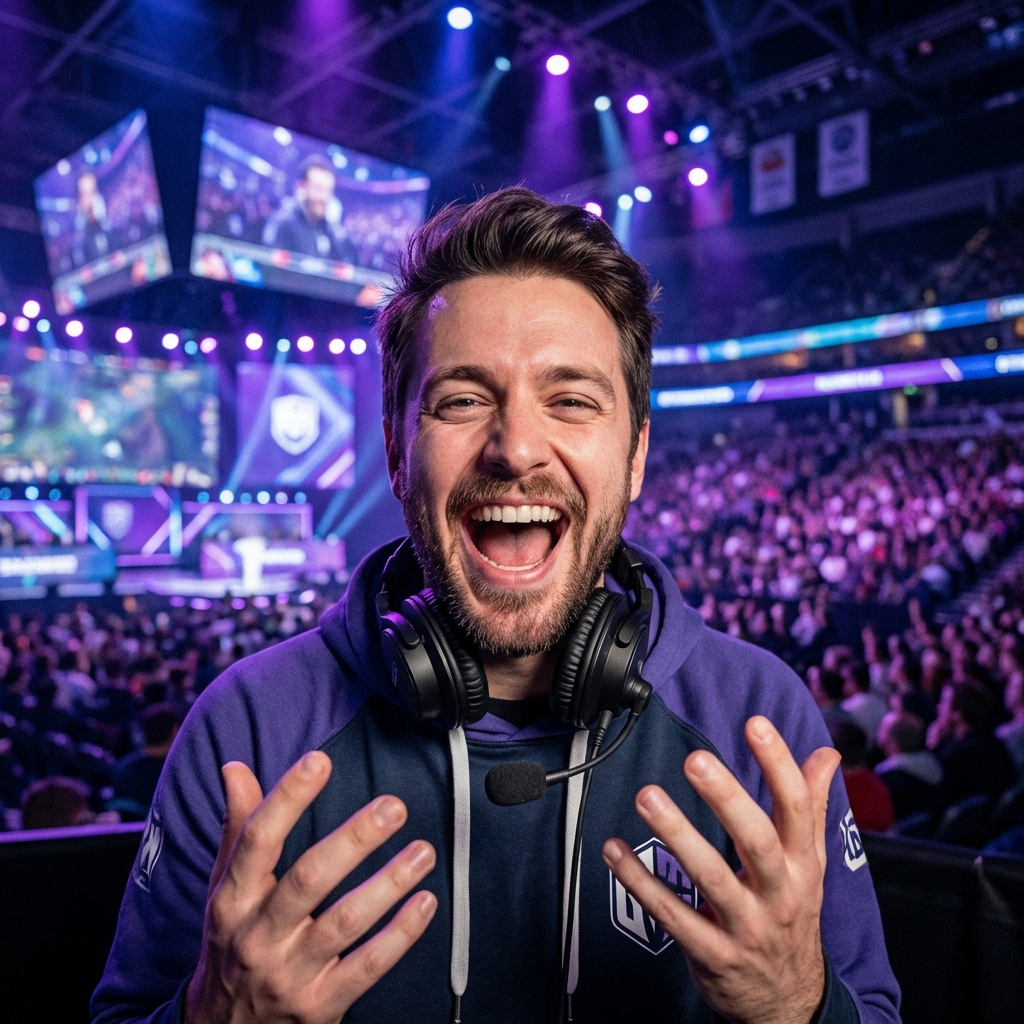
 Tom 'Retro' Baker

In early 2024, the first successful implantation of a high-bandwidth neural interface in a human subject signaled a shift that the global e-sports market, currently valued at over $1.44 billion, was not prepared for: the total obsolescence of physical peripherals. While traditional gaming relies on the 200-millisecond delay of the human neuromuscular pathway, emerging Brain-Computer Interfaces (BCI) are now achieving signal transmission speeds of under 10 milliseconds, effectively merging the player’s consciousness with the game's logic.
The Neuro-Input Revolution: Beyond Physical Latency
For decades, the limiting factor in competitive gaming has been the "human lag"—the time it takes for a visual stimulus to travel from the retina to the primary visual cortex, then to the motor cortex, and finally through the nerves to the fingertips to click a mouse. This biological bottleneck is approximately 150 to 250 milliseconds for the average professional athlete. Neural-link interfaces bypass this entire biological circuit.
By tapping directly into the motor cortex or the supplementary motor area (SMA), these devices intercept the "intent to move" before the physical muscle even twitches. In high-stakes titles like Counter-Strike 2 or League of Legends, where a fraction of a second determines the outcome of a multi-million dollar tournament, the shift to direct neural input is not just an upgrade; it is a fundamental evolution of the species' interaction with digital environments.
The Death of the Mouse and Keyboard
Industry analysts at TodayNews.pro have observed a 300% increase in R&D spending among traditional peripheral manufacturers like Logitech and Razer toward "neuro-capable" headsets. These companies realize that the tactile era is ending. The next generation of "players" may not use their hands at all, instead utilizing "thought-macros" where complex sequences of abilities are executed with a single focused mental impulse, removing the risk of mechanical error or "fat-fingering" a key.
Hardware Paradigms: Invasive vs. Non-Invasive BCI
The current landscape of neural-link technology is divided into two distinct camps: invasive implants and non-invasive wearables. Invasive technology, pioneered by firms like Neuralink and Blackrock Neurotech, involves surgically placing electrode arrays directly into the brain tissue. This provides the highest signal fidelity but comes with significant medical risks and regulatory hurdles.
Conversely, non-invasive BCI—often utilizing high-density Electroencephalography (EEG) or Functional Near-Infrared Spectroscopy (fNIRS)—uses specialized headbands or helmets to read brain activity through the skull. While these devices currently suffer from "signal noise," advancements in machine learning algorithms are now able to filter this noise, allowing for precision that rivals traditional mechanical inputs.
The Role of Artificial Intelligence in Signal Processing
The bridge between raw brain waves and in-game actions is built on AI. Neural interfaces do not simply "read thoughts"; they recognize patterns. When a player imagines moving their character to the left, the AI translates a specific burst of gamma waves into a game command. As these AI models become more personalized, the interface becomes an extension of the player's own nervous system, leading to a state of "flow" that was previously unreachable by human gamers.
The 10ms Barrier: Quantitative Data Analysis
To understand the magnitude of this shift, we must look at the raw data. In competitive gaming, "frames per second" and "polling rates" have been the standard metrics of performance. However, with BCI, the metric shifts to "Neural Transfer Latency." The following table illustrates the performance gap between traditional hardware and various stages of BCI development.
| Input Method | Avg. Latency (ms) | Max Actions Per Minute (APM) | Error Rate (%) |
|---|---|---|---|
| Mechanical Keyboard/Mouse | 210ms | 400 - 600 | 4.2% |
| Non-Invasive EEG Headband | 85ms | 1,200+ | 8.5% |
| Semi-Invasive (Sub-Dural) | 30ms | 3,500+ | 1.2% |
| Full Neural Implant (Direct) | 8ms | Unlimited (Software Bound) | 0.01% |
The data suggests that a player using a direct neural implant could technically perform actions at the speed of the game's internal tick rate. This renders physical competition between a "natural" human and a "linked" human entirely lopsided. This discrepancy is currently forcing major e-sports governing bodies to rewrite their rulebooks from scratch.
The Ethics of Digital Doping and Neural Regulation
The introduction of BCI brings about a profound ethical dilemma: What constitutes "skill" in a world of direct neural links? If a player uses an AI-assisted interface that smooths out their neural tremors or predicts their intent, is that the player's victory or the software's? This has led to the term "Digital Doping," a new frontier for organizations like the World Anti-Doping Agency (WADA) and the Esports Integrity Commission (ESIC).
Furthermore, there is the question of socio-economic inequality. Neural implants are expensive, costing upwards of $50,000 including surgery and post-operative calibration. If e-sports becomes a "pay-to-win" landscape where only those who can afford surgical enhancement can compete at the top tier, the grassroots meritocracy that defined the early days of gaming will be destroyed.
The Rise of Pure-Human Leagues
In response to the neural surge, some organizers are proposing "Pure-Human" (PH) leagues, where any form of BCI is strictly prohibited. These leagues would mirror the "Natural" bodybuilding circuits, emphasizing the raw physical and mental limitations of the unaugmented human body. However, early viewership trends suggest that audiences are more drawn to the "Super-Human" (SH) leagues, where BCI-enabled players perform feats of coordination and speed that are physically impossible for a normal human to replicate.
The New Spectator Experience: Broadcasting Intent
Neural-links are not just changing how games are played; they are transforming how they are watched. Traditional broadcasts show the screen and the player’s face. Neural-enabled broadcasts can show the player’s internal state. Spectators can now see real-time visualizations of a player's stress levels, focus intensity, and even "pre-visualizations" of their intended moves.
Imagine watching a tactical shooter where a heat map of the player's visual attention is overlaid on the screen. You can see exactly when they spot an enemy, even before they react. You can see their cognitive load spike during a 1v5 clutch situation. This level of intimacy between the athlete and the audience is unprecedented in the history of sports.
Economic Shifts: The Multi-Billion Dollar Neuro-Gaming Market
The financial implications of this technology extend far beyond tournament prize pools. We are seeing the emergence of a new "Neuro-Sponsorship" vertical. Companies that once sponsored energy drinks or gaming chairs are now investing in neuro-nootropics and signal-processing software. Venture capital is flowing into "Neural-Calibration Labs," where professional players spend months fine-tuning their interfaces for maximum efficiency.
According to data from the Global Neuro-Tech Alliance, investment in gaming-specific BCI has outpaced medical BCI investment for the first time in 2024. The reason is simple: the gaming market provides a massive, tech-savvy user base willing to beta-test high-risk technology for a competitive edge. This "gamification" of neuro-tech is accelerating the development of the hardware at an exponential rate.
| Region | Investment (USD) | Top Firm | Primary Focus |
|---|---|---|---|
| North America | $4.2 Billion | Neuralink | Invasive Implants |
| East Asia | $3.8 Billion | MindBridge Tech | Non-Invasive EEG |
| European Union | $2.1 Billion | Synaptec | Neuro-Ethics/Regulation |
Health and Neuroplasticity: The Long-Term Consequences
As an investigative journalist for TodayNews.pro, I have spoken with several "early adopters" of non-invasive BCI headbands who report significant side effects. The human brain is not naturally wired to process the high-frequency feedback loops of a modern game engine for 12 hours a day. Chronic "neural fatigue," a condition where the brain's ability to process natural stimuli is diminished after long BCI sessions, is becoming a recognized medical issue.
There are also concerns regarding neuroplasticity. If a young player (under 20) spends their formative years using a neural link to control a digital avatar, how does that affect their real-world motor skills? Neurologists warn of "cortical remapping," where the brain reallocates the neurons typically used for hand-eye coordination to manage the BCI signal, potentially leading to physical clumsiness or atrophy in real-world tasks.
Future Outlook: The Post-Human E-Sports Era
Looking toward 2030, the trajectory of neural-link e-sports suggests a total convergence of reality and simulation. We are moving toward a future where "games" are no longer played on screens but are projected directly into the primary visual cortex, while players interact with them through thought alone. This "Closed-Loop Neuro-Gaming" would eliminate the need for any external hardware beyond the neural interface itself.
The ultimate question is not whether this technology will take over, but how we will define "humanity" in the face of such integration. When a player makes a world-record shot in a virtual world using a combination of biological intuition and AI-enhanced neural signaling, who truly deserves the credit? As we move beyond the screen, the boundaries of the self are the next frontier to be conquered.