

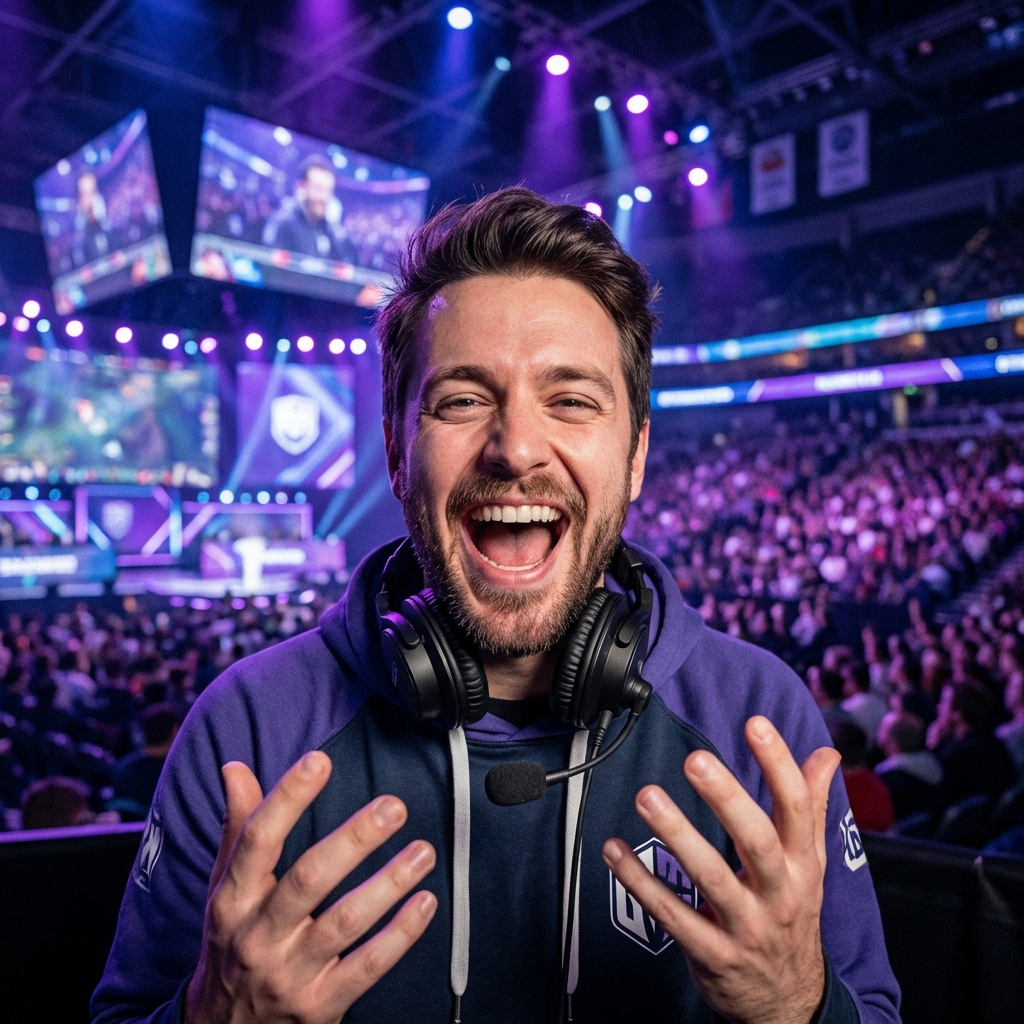
 Peter Warren

In late 2023, empirical testing at the Human-Computer Interaction Lab revealed that the average elite FPS professional possesses a reaction time of 135 milliseconds; however, preliminary trials using non-invasive Brain-Computer Interfaces (BCI) have demonstrated "thought-to-trigger" execution in as little as 8 to 12 milliseconds. This shift represents more than just a faster mouse click; it marks the beginning of an era where the human motor cortex is no longer the bottleneck for digital performance, effectively merging human intent with machine execution at the speed of thought.
The End of Physical Latency: The 12ms Revolution
For three decades, the evolution of competitive gaming has been a race toward zero. We have optimized monitor refresh rates to 500Hz, engineered optical mouse switches that actuate in 0.2ms, and built fiber-optic networks to minimize ping. Yet, the most significant source of latency has remained the human body itself. The process of seeing an enemy, processing the image, sending a signal from the brain to the hand, and physically depressing a button takes a minimum of 100-150ms for the most gifted humans on Earth.
Neural interface controllers (NICs) bypass the peripheral nervous system entirely. By utilizing electroencephalography (EEG) sensors to detect specific neural firing patterns associated with "intent to act," these devices can trigger in-game actions before the user's muscles even begin to contract. This technology, once relegated to medical rehabilitation for paralyzed patients, is now being miniaturized into sleek headsets and "neural-integrated" gaming chairs by startups such as Neurable and Emotiv.
The Technology Stack: From EEG to Neural Lace
The current landscape of neural gaming is divided into two primary camps: non-invasive and invasive interfaces. Non-invasive technology, which uses dry-electrode EEG sensors embedded in headbands or headphone earcups, is the current market leader for consumer adoption. These devices measure voltage fluctuations resulting from ionic current within the neurons of the brain. While "noise" from hair and skin remains a challenge, machine learning algorithms are now capable of filtering these signals with 98% accuracy.
The Rise of Dry Electrode Systems
Earlier iterations of BCI required messy conductive gels and a cap full of wires. Modern gaming-grade NICs use proprietary dry-contact sensors that require zero setup. These sensors focus on the motor cortex and the parietal lobe, translating spatial focus and motor imagery into digital inputs. If a player "imagines" a flick to the left, the software interprets the spike in specific neural clusters and executes the movement instantly.
The Invasive Frontier: Neuralink and Beyond
While consumer-grade headsets are non-invasive, the "hardcore" esports scene is watching companies like Reuters-reported Neuralink with both fascination and dread. Sub-cranial implants offer a signal-to-noise ratio that no external headset can match. The possibility of professional "cyber-athletes" undergoing elective surgery to gain a millisecond advantage is no longer a plot point for science fiction; it is a pending regulatory nightmare for esports commissions worldwide.
| Input Method | Avg. Latency (ms) | Signal Type | Accessibility |
|---|---|---|---|
| Mechanical Keyboard | 150 - 220 | Physical/Motor | Universal |
| Optical Mouse | 130 - 190 | Physical/Motor | Universal |
| Non-Invasive BCI | 30 - 60 | Neural (EEG) | High (Headset) |
| Direct Neural Link | 8 - 15 | Direct Cortical | Experimental/Low |
The Competitive Integrity Crisis: Defining Neuro-Doping
As neural interfaces become more prevalent, the definition of "skill" in esports is undergoing a radical transformation. Traditional esports talent is defined by "hand-eye coordination." In a neural-driven meta, that definition shifts toward "cognitive focus and mental clarity." This has led to the emergence of "neuro-doping," where players use Transcranial Direct Current Stimulation (tDCS) to prime their brains for faster neural firing before a match.
The Esports Integrity Commission (ESIC) is currently drafting guidelines to address the use of neural amplifiers. The challenge lies in detection. Unlike chemical substances that can be found in blood or urine, a neural interface's "boost" can be coded directly into the hardware's firmware, subtly enhancing the player's natural neural output. This creates an invisible "aim-bot" that is indistinguishable from high-level human performance.
Economic Transformation: The $15 Billion Peripheral Pivot
The traditional gaming peripheral market—dominated by companies like Razer, Logitech, and SteelSeries—is facing a "Nokia moment." As the demand for mechanical keyboards and high-DPI mice peaks, the industry is pivoting toward "Bio-Peripherals." Analysts at Wikipedia-cited market research firms suggest that the neural interface segment will account for 30% of all high-end gaming hardware sales by 2028.
We are seeing strategic acquisitions of neuroscience startups by tech giants. The goal is to integrate these sensors into existing devices. Imagine a VR headset that doesn't just track your eyes, but knows which object you intend to pick up before your hand moves. This economic shift is also creating new roles within esports organizations, such as "Neuro-Performance Coaches," who replace traditional physical therapists to manage a player's brain health and synaptic efficiency.
Training the Modern Glitch: Cognitive Loads and Neural Fatigue
While NICs eliminate physical fatigue like carpal tunnel syndrome, they introduce a new, more dangerous adversary: neural burnout. Controlling a game via direct thought requires a level of concentrated focus that is biologically taxing. In traditional gaming, the mechanical "muscle memory" allows the brain to take shortcuts. In neural gaming, the brain must maintain a high-voltage state of "active intent" for hours at a time.
The Ghost Input Problem
One of the biggest hurdles in BCI training is the "Ghost Input." This occurs when a player's stray thoughts—such as thinking about a mistake from the previous round—are interpreted by the interface as a command. Professional players are now training in "Cognitive Isolation," a technique used by fighter pilots to wall off emotions and maintain a "clean" neural stream. The mental discipline required is closer to Zen meditation than traditional "grinding."
Neuro-Feedback Loops
Training facilities like the Team Liquid Alienware Training Center are reportedly experimenting with neuro-feedback loops. These systems monitor a player's alpha and beta waves in real-time, providing haptic feedback when their focus dips. This allows players to "tune" their brains like an instrument, finding the exact frequency where their reaction time is optimized without causing long-term synaptic degradation.
Accessibility and Inclusion: The Ultimate Level Playing Field
Perhaps the most noble impact of neural interface controllers is the total demolition of physical barriers to entry. For decades, competitive gaming was restricted to those with the manual dexterity to operate complex controllers or mice. A player with quadriplegia or advanced muscular dystrophy was fundamentally excluded from the highest levels of play. Neural interfaces change that overnight.
In 2024, we saw the first "Mixed-Ability" tournament where players with physical disabilities competed using BCI against able-bodied players using traditional peripherals. The results were staggering: the BCI users held a slight advantage in reaction-based tasks. This transition moves esports from a test of physical endowment to a pure test of strategic mind-power, fulfilling the original promise of the digital frontier as a place where the body's limitations no longer define the individual's potential.
The Future: Full-Dive Integration and Beyond
The trajectory of neural interfaces points toward a concept known as "Full-Dive" VR—a state where the brain's sensory inputs are completely replaced by digital signals. While we are still decades away from the "Matrix-style" experience, the current "Read-Only" interfaces are rapidly becoming "Read-Write." This means the game could potentially send sensory feedback directly to the brain, allowing a player to "feel" the recoil of a gun or the wind on their face without any physical stimulus.
As we move "beyond the screen," the very nature of what it means to be a "gamer" is being rewritten. We are entering an era of transhumanist competition, where the interface is invisible, the latency is negligible, and the only limit is the speed of human thought itself. The keyboard and mouse will eventually find their place in museums, alongside the joystick and the trackball, as relics of a time when we were still tethered to our bodies.