

 Linda Wu
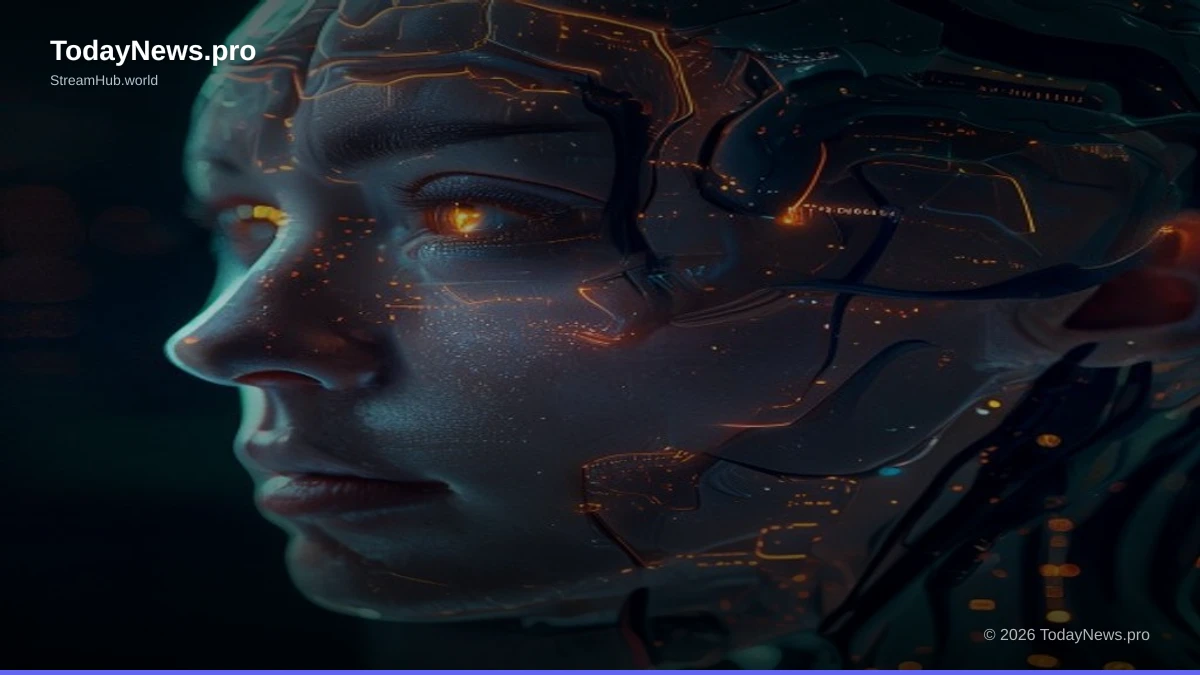
⏱ 15 min
The global brain-computer interface market is projected to reach an astounding $6.9 billion by 2027, a stark indicator of the seismic shifts BCI technology is poised to bring. This isn't science fiction anymore; it's the tangible frontier of human-computer interaction, promising to fundamentally alter how we perceive and interact with our world, our health, and each other.
The Dawn of Direct Neural Connection
For decades, our interaction with technology has been mediated by physical interfaces: keyboards, mice, touchscreens. These require deliberate physical actions, translating our intentions into signals. Brain-Computer Interfaces (BCIs) shatter this paradigm by establishing a direct communication pathway between the brain and an external device. This is achieved by detecting and analyzing neural signals, which are then decoded into commands. The implications are profound, moving us from indirect control to direct thought-driven interaction.Invasive vs. Non-Invasive Approaches
The spectrum of BCI technology ranges from highly invasive to entirely non-invasive. Invasive BCIs, like the Utah Array or the Neuralink implant, involve surgically placing electrodes directly onto or into the brain tissue. This offers the highest signal fidelity and resolution, enabling intricate control over prosthetics or communication devices. However, it carries significant surgical risks and potential for immune rejection. Non-invasive BCIs, such as electroencephalography (EEG) caps or functional near-infrared spectroscopy (fNIRS) devices, measure brain activity from the scalp. While they are safer and more accessible, the signals are weaker and more prone to noise, limiting the complexity of tasks they can reliably perform. Research continues to push the boundaries of both, seeking to balance efficacy with safety and user experience.Decoding the Brains Language
The core challenge for BCI development lies in accurately decoding the brain's complex electrical and chemical signals. Our thoughts, intentions, and emotions manifest as intricate patterns of neural activity. Sophisticated algorithms, powered by machine learning and artificial intelligence, are crucial for deciphering these patterns. These algorithms learn to associate specific neural signatures with intended actions, constantly adapting and improving over time. The speed and accuracy of this decoding process are paramount. Early BCIs were often slow and prone to errors, requiring significant user training and patience. However, advancements in signal processing and AI are rapidly accelerating this learning curve, making BCIs more intuitive and practical for everyday use.Revolutionizing Healthcare: Beyond the Obvious
The most immediate and impactful applications of BCIs are emerging in the medical field, offering hope and new avenues for individuals with severe disabilities. Beyond restoring lost function, BCIs are poised to transform diagnosis, rehabilitation, and even our understanding of neurological disorders.Restoring Mobility and Communication
For individuals with paralysis, spinal cord injuries, or neurodegenerative diseases like ALS, BCIs represent a lifeline. Imagine a person who cannot move their limbs or speak being able to control a robotic arm with their thoughts, or to type messages by simply thinking about the letters. Companies like Synchron are developing minimally invasive implants that allow individuals to control computers and smartphones through thought alone. Neuralink, though still in early stages, has ambitious goals of creating high-bandwidth interfaces for controlling external devices and potentially restoring sensory functions.90%
of potential BCI users are those with severe motor impairments.
70%
of current BCI research is focused on medical applications.
50%
increase in communication speed for some ALS patients using BCIs.
Neurological Rehabilitation and Mental Health
BCIs are also proving invaluable in rehabilitation. By providing real-time feedback on brain activity, they can help patients relearn motor skills after a stroke or brain injury. This neurofeedback approach allows individuals to actively participate in their recovery by consciously modulating their brain patterns. Furthermore, BCIs are being explored for their potential in treating mental health conditions, such as depression, anxiety, and PTSD, by allowing for targeted neuromodulation and monitoring of neural states.Diagnostic and Monitoring Tools
The ability to monitor brain activity with unprecedented detail opens doors for advanced diagnostics. BCIs could potentially detect early signs of neurological diseases like Alzheimer's or Parkinson's, long before clinical symptoms manifest. Continuous, unobtrusive monitoring could provide physicians with a richer dataset for understanding disease progression and tailoring treatment plans. The potential for personalized medicine, driven by individual brain data, is immense.Enhancing Human Capabilities: Augmenting the Mind
While the medical applications are the most pressing, the long-term vision for BCIs extends far beyond restoring lost functions. The technology holds the promise of augmenting human capabilities, blurring the lines between biology and technology, and ushering in an era of cognitive enhancement.Cognitive Augmentation and Learning
Imagine being able to learn new skills faster, access information instantaneously, or even enhance your memory. BCIs could facilitate direct knowledge transfer, allowing individuals to download complex information or skills directly into their minds. This could revolutionize education, professional training, and lifelong learning, making us more adaptable and capable in an ever-changing world.Improved Focus and Productivity
For professionals in demanding fields, BCIs could offer tools to optimize cognitive performance. By monitoring attention levels and cognitive load, BCIs could provide real-time adjustments to working environments or offer personalized strategies to maintain focus and prevent burnout. This could lead to significant increases in productivity and reduced errors across various industries.Projected BCI Market Growth by Application (USD Billions)
Seamless Human-Machine Teaming
In complex environments, such as military operations, space exploration, or intricate surgical procedures, BCIs could enable unprecedented levels of collaboration between humans and machines. Imagine a pilot flying an aircraft or a surgeon performing a delicate operation with intuitive, thought-based control, allowing for faster reactions and more precise execution. This symbiotic relationship between human intellect and machine capability could unlock new frontiers of performance.The Entertainment and Communication Frontier
Beyond practical applications, BCIs are poised to transform how we experience entertainment and connect with one another, offering more immersive and intuitive forms of interaction.Immersive Gaming and Virtual Realities
The gaming industry is a natural fit for BCI technology. Imagine playing a video game where your character's actions are dictated by your thoughts, or where the game's environment adapts to your emotional state. BCIs can create truly immersive virtual reality experiences, allowing users to interact with digital worlds in ways previously unimaginable. This could extend to augmented reality, overlaying digital information seamlessly onto our perception of the real world.New Forms of Social Interaction
BCIs could lead to entirely new modes of communication, transcending the limitations of spoken or written language. Imagine sharing emotions, sensory experiences, or even abstract concepts directly with another person through a BCI. This could foster deeper empathy and understanding, while also opening up possibilities for entirely novel forms of social connection and shared consciousness."The potential for BCIs to democratize experience and connection is immense. We're moving towards a future where shared consciousness isn't just a philosophical concept, but a technological reality."
— Dr. Anya Sharma, Cognitive Neuroscientist
Creative Expression and Art
Artists and creators could leverage BCIs to translate their mental visions directly into digital art, music, or other forms of expression. This could democratize creativity, allowing individuals without traditional artistic training to bring their ideas to life. The ability to directly channel thoughts and emotions into tangible creations could lead to entirely new artistic movements and forms of human expression.Ethical Labyrinths and Societal Shifts
As with any transformative technology, BCIs bring a host of ethical considerations and potential societal disruptions that demand careful examination and proactive planning.Privacy and Data Security
The intimate nature of brain data raises significant privacy concerns. Who owns this data? How will it be protected from misuse or hacking? The potential for unauthorized access to our thoughts and intentions presents an unprecedented challenge to individual privacy. Robust legal frameworks and advanced security protocols will be essential to safeguard this most personal of information."The data generated by BCIs is arguably the most sensitive personal information imaginable. We must establish robust ethical guidelines and legal protections before widespread adoption, ensuring that individual autonomy and privacy are paramount."
— Professor Jian Li, AI Ethicist
Equity and Access
As BCI technology advances, ensuring equitable access will be crucial. Will these powerful augmentation tools be available to everyone, or will they exacerbate existing societal inequalities, creating a divide between the cognitively enhanced and the rest? Addressing issues of cost, availability, and inclusivity will be vital to prevent a future where only the privileged benefit.The Nature of Consciousness and Identity
The prospect of directly interfacing with our brains raises fundamental questions about the nature of consciousness, identity, and what it means to be human. If our thoughts can be directly manipulated or augmented, where does our individual agency truly lie? The philosophical and psychological implications of such technology will require deep societal reflection.| Concern | Description | Mitigation Strategies |
|---|---|---|
| Data Privacy | Unauthorized access to or misuse of neural data. | Robust encryption, anonymization techniques, strict access controls, clear data ownership policies. |
| Autonomy & Agency | Potential for external influence or manipulation of thoughts/decisions. | Transparency in BCI operation, user control over data sharing, ethical design principles prioritizing user intent. |
| Equity & Access | Disparities in access leading to social stratification. | Government subsidies, open-source development, ethical pricing models, public awareness campaigns. |
| Security Vulnerabilities | Hacking or malicious interference with BCI devices. | Rigorous cybersecurity testing, secure firmware updates, fail-safe mechanisms. |
| Cognitive Inequality | Creation of a gap between enhanced and non-enhanced individuals. | Focus on restorative and assistive technologies, policies promoting broad access to beneficial enhancements. |
The Role of Regulation
Governments and international bodies will play a critical role in shaping the future of BCIs. Establishing clear regulatory frameworks for development, deployment, and ethical use will be essential to harness the technology's benefits while mitigating its risks. This will require a multidisciplinary approach, involving scientists, ethicists, policymakers, and the public.The Future is Now: A Glimpse into Tomorrow
The journey of BCIs is still in its nascent stages, but the trajectory is clear. We are moving towards a future where the boundary between our minds and the digital world becomes increasingly fluid. The innovations emerging today are not merely incremental improvements; they represent a fundamental shift in human-computer interaction that will reshape nearly every aspect of our lives.Integration into Everyday Devices
As BCIs become more sophisticated and less invasive, they will likely be integrated into a wide array of everyday devices. Imagine smartwatches that monitor your cognitive state, vehicles that respond to your intentions, or home appliances that anticipate your needs. This seamless integration will make technology more intuitive and responsive, fading into the background of our daily lives.The Extended Human Experience
The ultimate promise of BCIs lies in their potential to extend the human experience, enabling us to achieve feats and understand the world in ways currently beyond our grasp. From exploring the cosmos with enhanced cognitive abilities to delving into the complexities of our own consciousness, BCIs offer a pathway to a future of unprecedented human potential. The ethical, societal, and technological challenges are significant, but the rewards of unlocking the mind's direct connection to the world are immeasurable. External links: Reuters: Brain-computer interfaces transform lives of patients with paralysis Wikipedia: Brain-Computer InterfaceWhat are the main types of BCIs?
The main types of BCIs are invasive (electrodes implanted in the brain), semi-invasive (placed under the skull but not in brain tissue), and non-invasive (measured from the scalp, like EEG).
Are BCIs safe for general use?
Non-invasive BCIs are generally considered safe, with minimal risks. Invasive BCIs carry surgical risks and potential for complications, and are currently primarily used in clinical settings for severe medical conditions.
When will BCIs be widely available for consumers?
While some non-invasive BCIs are already available for niche applications, widespread consumer adoption of advanced BCIs is likely still several years away, with medical applications taking precedence in development and regulatory approval.
Can BCIs read my thoughts?
Current BCIs can decode specific intentions or commands based on brain activity patterns, not read complex, private thoughts or memories in their entirety. The technology is focused on translating neural signals into actionable commands for external devices.