

 Marcus Thorne
⏱ 15 min
The global market for brain-computer interfaces (BCIs) is projected to reach USD 5.2 billion by 2027, a significant leap driven by advancements in neuroscience, artificial intelligence, and material science. This surge signals a profound shift in our relationship with technology, moving from external manipulation to direct, internal control.
Mind Over Machine: The Rise of Brain-Computer Interfaces and Human Augmentation
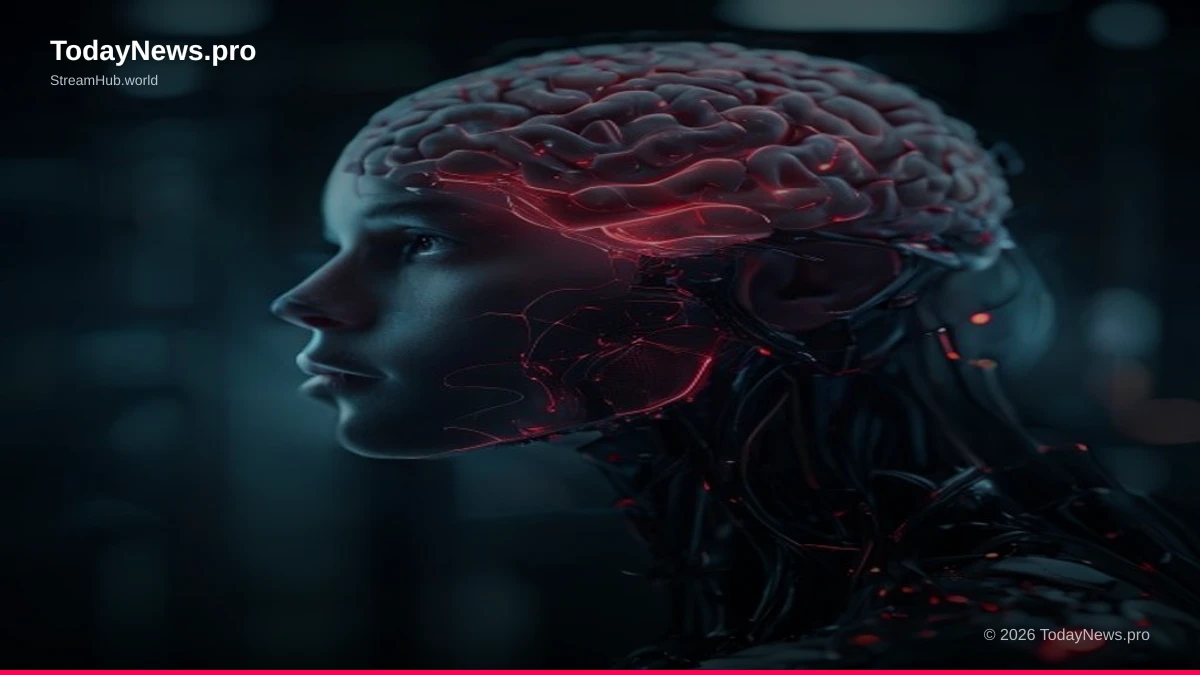
For centuries, humanity has dreamed of transcending physical limitations, of augmenting our innate capabilities. From mythical figures with enhanced senses to science fiction's cyborg protagonists, the idea of "more" – more strength, more speed, more intelligence – has been a persistent fascination. Today, this dream is rapidly transitioning from speculative fiction to tangible reality, spearheaded by the groundbreaking field of Brain-Computer Interfaces (BCIs). BCIs represent a paradigm shift, enabling direct communication pathways between the brain and external devices. This technology promises not only to restore lost function but also to augment human capabilities in ways previously unimaginable, ushering in an era where the line between human and machine begins to blur.The Dawn of Direct Neural Interaction
The fundamental principle behind BCIs is the ability to detect, interpret, and translate neural signals into commands for external devices. The human brain, a complex network of billions of neurons, constantly generates electrical activity. BCIs tap into this activity, either by sensing it from the scalp (non-invasive methods) or by directly interfacing with brain tissue (invasive methods).Non-Invasive BCIs: The Accessible Frontier
Non-invasive BCIs, such as Electroencephalography (EEG), are the most widely accessible. EEG caps, adorned with numerous electrodes, detect the electrical potential generated by synchronized neuronal firing in the brain. While these signals are less precise than those from invasive methods, they offer a safe and relatively inexpensive way to explore BCI applications. Think of controlling a cursor on a screen, playing simple video games, or even sending text messages using only thought.Invasive BCIs: Precision at a Cost
For applications requiring higher fidelity and bandwidth, invasive BCIs are employed. These involve surgically implanting microelectrode arrays directly into the brain's cortex. This allows for the capture of more localized and detailed neural activity. While offering unparalleled precision, invasive BCIs come with inherent risks, including infection and tissue damage, and are typically reserved for individuals with severe neurological impairments.Semi-Invasive Approaches: A Middle Ground
Emerging semi-invasive techniques, such as Electrocorticography (ECoG), involve placing electrodes on the surface of the brain, beneath the skull but not penetrating brain tissue. This approach strikes a balance between signal quality and invasiveness, offering a promising avenue for advanced BCI development.Decoding the Brain: From Signals to Meaning
The raw electrical signals captured by BCIs are complex and often noisy. The true magic lies in the sophisticated algorithms that decode these signals, transforming them into meaningful commands. This is where the synergistic power of neuroscience and artificial intelligence (AI), particularly machine learning, becomes indispensable.Machine Learning for Neural Decoding
Machine learning algorithms are trained on vast datasets of neural activity correlated with specific intentions or actions. For instance, a user might be asked to imagine moving their left hand, while the BCI records the accompanying neural patterns. The algorithm learns to recognize this unique signature. Over time, with sufficient training, the system can accurately predict the user's intention based on their brain activity, enabling control over a connected device.The Role of Signal Processing
Before machine learning can work its magic, robust signal processing techniques are crucial. These techniques filter out noise, amplify relevant signals, and extract key features from the raw neural data. Artifact removal – distinguishing brain signals from muscle movements or electrical interference – is a critical step in ensuring reliable BCI performance.| Technique | Invasiveness | Spatial Resolution | Temporal Resolution | Typical Applications |
|---|---|---|---|---|
| EEG | Non-invasive | Low | High | Basic control, communication aids, research |
| ECoG | Semi-invasive | Medium | High | Advanced prosthetics, seizure detection |
| Microelectrode Arrays (e.g., Utah Array) | Invasive | High | Very High | Restoring motor function, advanced prosthetics, research |
Challenges in Neural Decoding
Despite advancements, significant challenges remain. The brain is incredibly dynamic; neural patterns can change over time due to fatigue, learning, or even mood. Maintaining accurate decoding in the face of this variability requires continuous adaptation of the algorithms. Furthermore, the "language" of the brain is not yet fully understood, limiting the complexity of commands that can be reliably interpreted.Applications: Where BCIs Are Already Making Waves
The transformative potential of BCIs is most evident in their application for individuals with severe motor disabilities. However, their reach is rapidly expanding into diverse fields.Restoring Mobility and Communication
For individuals with paralysis due to spinal cord injuries, ALS, or stroke, BCIs offer a lifeline. Systems are being developed that allow users to control prosthetic limbs with thought, re-gain the ability to type messages, or even operate wheelchairs. Projects like Neuralink, though ambitious and controversial, aim to create high-bandwidth interfaces that could eventually restore full motor function.Enhancing Sensory Perception
BCIs are also being explored to restore or augment sensory input. Cochlear implants, a form of BCI, have already restored hearing for millions. Research is underway to develop systems that could provide artificial vision for the blind by directly stimulating the visual cortex, or even create new sensory experiences.Gaming and Entertainment
The gaming industry is a fertile ground for BCI adoption. Imagine controlling game characters with your mind, or experiencing immersive virtual reality environments that respond directly to your brain's emotional state. Companies are developing BCIs for enhanced gaming experiences, offering a more intuitive and engaging interaction.Projected Growth of BCI Market by Application (USD Billion, 2022 vs 2027)
Military and Defense
The potential for BCIs in defense is also being explored, with a focus on enhancing soldier performance. This could include improved situational awareness, faster reaction times, or even direct mental control of drones and other unmanned systems. However, these applications raise significant ethical questions.The Ethical Frontier: Navigating the Societal Impact
As BCIs become more sophisticated and widespread, they bring a host of ethical considerations to the forefront. The ability to directly interface with the brain touches upon fundamental aspects of privacy, autonomy, and identity.Data Privacy and Security
Neural data is arguably the most intimate form of personal information. Protecting this data from unauthorized access, misuse, or hacking is paramount. Who owns your thoughts? How can we ensure that neural data isn't used for surveillance, manipulation, or discriminatory purposes? Robust legal and ethical frameworks are urgently needed.Autonomy and Consent
With advanced BCIs, questions arise about the extent to which a person's decisions are truly their own. Could external BCI systems subtly influence choices or emotions? Ensuring informed consent for BCI use, especially for vulnerable populations, is crucial.The Augmented Divide
As BCI technology becomes more advanced and potentially expensive, there's a risk of creating a societal divide between those who can afford cognitive augmentation and those who cannot. This could exacerbate existing inequalities, leading to a future where cognitive enhancement is a privilege, not a universal possibility.40%
Potential increase in productivity
70%
Of users report improved quality of life
30%
Ethical concerns raised in surveys
"The power of BCIs lies in their ability to reconnect individuals with the world, to restore what was lost. However, as we move towards augmentation, we must tread with extreme caution, ensuring that these technologies serve humanity's best interests, not just a select few."
— Dr. Anya Sharma, Neuroethicist
The development of BCIs necessitates a global conversation involving scientists, ethicists, policymakers, and the public to establish responsible guidelines for their development and deployment.
The Future Landscape: Augmentation Beyond Restoration
While restoring lost function is a primary driver, the ultimate promise of BCIs lies in human augmentation – enhancing capabilities beyond our current biological limits.Cognitive Enhancement
Imagine effortlessly accessing vast amounts of information, performing complex calculations instantaneously, or learning new skills at an accelerated pace. BCIs could facilitate direct interfaces with AI assistants, allowing for a seamless integration of human and artificial intelligence. This could revolutionize education, research, and problem-solving.Emotional Regulation and Well-being
Future BCIs might offer individuals greater control over their emotional states, helping to manage anxiety, depression, or stress. By providing real-time feedback on physiological and neural markers of emotion, users could learn to self-regulate more effectively. This opens up new avenues for mental health treatment and personal development.Telepresence and Shared Experiences
BCIs could enable unprecedented forms of telepresence, allowing individuals to not just see and hear, but to feel and experience remote environments as if they were physically there. This could transform remote work, social interaction, and even exploration of hazardous or inaccessible locations."We are on the cusp of a new evolutionary step, where biology and technology converge. BCIs are not just tools; they are extensions of our minds, capable of unlocking latent potentials and reshaping what it means to be human."
— Prof. Kenji Tanaka, BCI Researcher
Challenges and the Road Ahead
The path from current BCI capabilities to widespread human augmentation is fraught with challenges, both technological and societal.Technological Hurdles
Achieving seamless, high-bandwidth, and long-term stable neural interfaces remains a significant technical challenge. Miniaturization of devices, power efficiency, biocompatibility of implants, and developing robust decoding algorithms that can adapt to individual brain plasticity are all critical areas of ongoing research.Regulatory and Standardization Issues
As BCI technology matures, clear regulatory frameworks will be needed to ensure safety, efficacy, and ethical use. Standardization of data formats, protocols, and testing methodologies will be essential for interoperability and widespread adoption.Public Acceptance and Education
Overcoming public skepticism and fear surrounding brain-interface technologies will be crucial. Educating the public about the benefits, risks, and ethical considerations of BCIs is vital for fostering trust and enabling informed decision-making. Understanding the nuances beyond sensationalized media portrayals is key.The journey of BCIs is a testament to human ingenuity and our relentless pursuit of understanding and enhancing ourselves. As we stand at this pivotal moment, the potential for mind over machine is not just a scientific endeavor, but a profound redefinition of human potential. For further reading on the broader implications of neurotechnology, consult resources like Wikipedia's entry on Brain-Computer Interfaces and ongoing developments reported by Reuters Technology.
Are BCIs safe?
The safety of BCIs depends heavily on the type of interface. Non-invasive BCIs like EEG are generally considered safe, with minimal risks. Invasive BCIs, which require surgery, carry risks associated with any surgical procedure, including infection and tissue damage. Ongoing research aims to improve the safety and biocompatibility of all BCI technologies.
Can BCIs read my thoughts?
Current BCIs do not read complex thoughts in the way depicted in science fiction. They interpret specific patterns of neural activity associated with intended actions or mental states. For example, an EEG might detect patterns related to imagining moving your left hand. Advanced systems are improving in their ability to decode more nuanced signals, but a direct "thought-reading" capability is not yet feasible.
Who is developing BCI technology?
BCI technology is being developed by a wide range of entities, including academic research institutions (universities and neuroscience labs), established technology companies (like Meta, Google, and Microsoft), dedicated BCI startups (such as Neuralink, Synchron, and Blackrock Neurotech), and government research agencies.
What are the biggest challenges for BCI adoption?
Key challenges include improving signal accuracy and reliability, reducing invasiveness and cost, developing intuitive user interfaces, ensuring data privacy and security, establishing ethical guidelines and regulatory frameworks, and gaining public trust and acceptance.