

 Maria Gonzalez
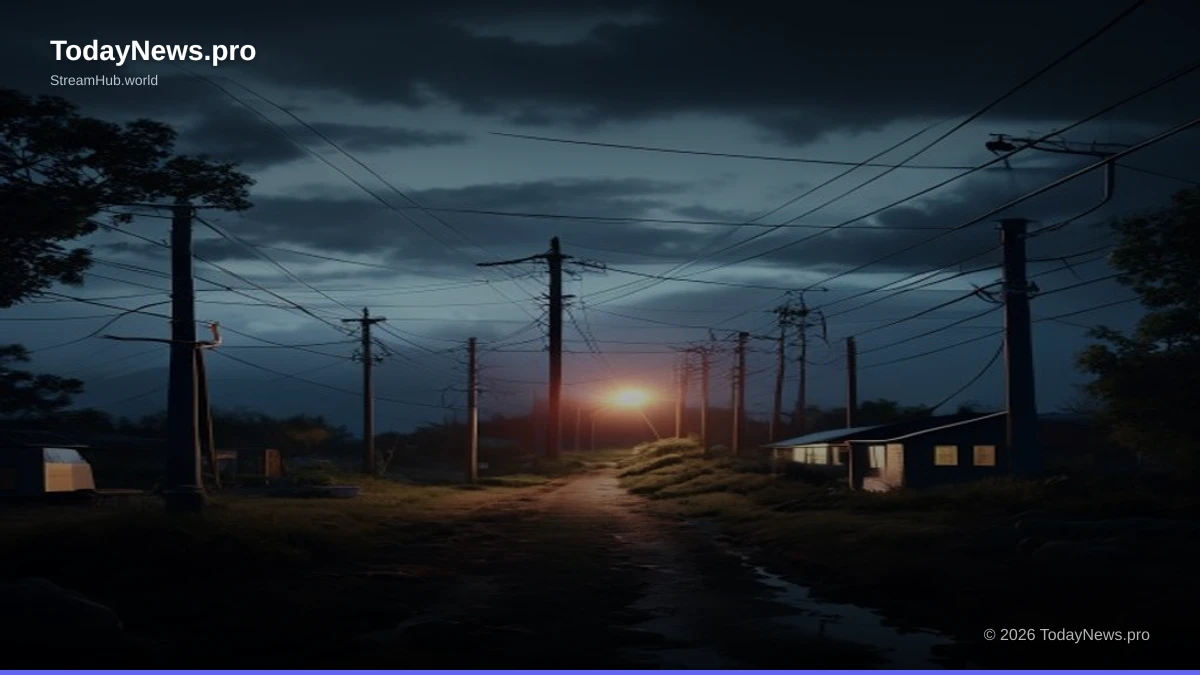
In 2023, over 1,500 major power outages occurred across the United States, affecting more than 41 million people, a stark indicator of the fragility inherent in our aging, centralized electricity infrastructure.
The Centralized Grids Vulnerabilities: A Foundation Under Strain
For decades, the concept of a centralized electricity grid has been the backbone of modern civilization. This vast network, characterized by large, remote power plants feeding electricity through extensive transmission and distribution lines, has powered industrial revolutions and enabled unprecedented levels of comfort and connectivity. However, this monolithic structure, while historically effective, is increasingly revealing its inherent vulnerabilities. Extreme weather events, such as hurricanes, wildfires, and severe storms, are becoming more frequent and intense, directly impacting the grid's stability. Aging infrastructure, often decades past its designed lifespan, is susceptible to physical damage and technical failures, leading to widespread and prolonged power disruptions.
The interconnectedness that makes the grid efficient also makes it susceptible to cascading failures. A single point of failure, whether a downed transmission line or a malfunctioning substation, can trigger a domino effect, plunging vast regions into darkness. Geopolitical tensions and the threat of cyberattacks add another layer of risk to this centralized model. The reliance on fossil fuels for a significant portion of electricity generation also contributes to environmental concerns, including greenhouse gas emissions and air pollution, further pressuring the existing system to evolve.
The limitations of the centralized grid are not merely theoretical. Recent years have seen a disturbing trend of increasingly frequent and severe power outages across the globe. These events are not just inconvenient; they have profound economic and social consequences. Businesses lose productivity, supply chains are disrupted, and critical services like healthcare and emergency response are compromised. For individuals, power outages can mean spoiled food, loss of heating or cooling, and a disruption to daily life. The economic cost of these outages is staggering, estimated to be in the billions of dollars annually.
Aging Infrastructure and the Maintenance Gap
Much of the physical infrastructure underpinning the current electrical grid was built in the mid-20th century. While robust for its time, it is now showing its age. Substations, transformers, and transmission towers require constant maintenance and eventual replacement. However, the sheer scale of the network and the significant capital investment required for upgrades mean that maintenance often lags behind the pace of deterioration. This creates a ticking time bomb, where aging components are increasingly prone to failure, especially under the duress of extreme weather conditions.
The financial models that support grid upgrades are also under scrutiny. Regulated utilities often face complex approval processes and rate-setting mechanisms that can slow down the implementation of necessary improvements. This can create a disincentive for proactive investment, leading to a cycle of reactive repairs rather than systematic modernization. The challenge is compounded by the increasing demand for electricity driven by trends like electric vehicle adoption and the proliferation of smart devices.
The Impact of Extreme Weather Events
Climate change has unequivocally amplified the threat posed by extreme weather. Heatwaves strain the grid as air conditioning demand spikes, while ice storms and high winds can bring down power lines with alarming regularity. Wildfires, often exacerbated by dry conditions and high winds, have led utility companies to implement pre-emptive power shutoffs, known as Public Safety Power Shutoffs (PSPS), to prevent their equipment from igniting dry vegetation. While intended to mitigate risk, these PSPS events themselves cause significant hardship and economic disruption for communities, highlighting the complex trade-offs inherent in managing a vulnerable grid.
The unpredictability of these events makes grid management a constant challenge. Forecasting demand and supply becomes more difficult, and the capacity to reroute power effectively can be overwhelmed. This forces a reconsideration of how electricity is generated, transmitted, and consumed, moving beyond the assumption of constant, reliable power delivery from a single source.
Micro-Grids: The Distributed Power Revolution
In response to the limitations of the centralized grid, a paradigm shift is quietly underway: the rise of micro-grids. A micro-grid is a localized energy network that can operate independently from the main grid, or in conjunction with it. These systems typically consist of distributed energy resources (DERs) such as solar panels, wind turbines, and battery storage systems, coupled with intelligent control systems. The key innovation of a micro-grid lies in its ability to "island" itself, meaning it can disconnect from the main grid during an outage and continue to supply power to its connected loads. This capability is transformative, offering a significant boost in resilience for critical facilities, communities, and even individual homes.
The concept of micro-grids is not entirely new; they have been employed for decades in remote military bases, islands, and industrial complexes where reliable power is paramount. However, recent advancements in technology, coupled with a growing recognition of the vulnerabilities of the traditional grid, have propelled micro-grids into the mainstream. They represent a fundamental move towards a more distributed and resilient energy future, where power generation is closer to the point of consumption.
Micro-grids offer a compelling solution to the increasing frequency of power outages. By having localized generation and storage, they can maintain power supply even when the larger grid fails. This is particularly crucial for essential services like hospitals, emergency response centers, and data centers, where even short interruptions can have catastrophic consequences. Furthermore, micro-grids can improve the overall efficiency of the energy system by reducing transmission losses, as power travels shorter distances from generation to consumption.
Defining the Micro-Grid Ecosystem
At its core, a micro-grid is defined by its ability to control the flow of energy within its boundaries and to connect and disconnect from the main utility grid. This involves a sophisticated interplay of generation sources, energy storage, and intelligent control software. The generation sources can be diverse, ranging from rooftop solar panels and small wind turbines to more substantial renewable energy installations. Energy storage, primarily in the form of batteries, is a critical component, allowing for the storage of excess energy generated during peak production times and its release during periods of high demand or when renewable generation is low.
The intelligence of the micro-grid lies in its "Energy Management System" (EMS). This sophisticated software monitors energy production, consumption, and storage levels, making real-time decisions to optimize energy use, ensure grid stability, and manage the transition to and from islanded operation. The EMS is the brain of the micro-grid, orchestrating the complex dance of energy flow to maximize efficiency and reliability.
Types and Applications of Micro-Grids
Micro-grids can be categorized by their size and application. Community micro-grids serve a neighborhood or a group of buildings, offering enhanced reliability and potentially lower energy costs for residents. Campus micro-grids are common in universities and large corporate facilities, consolidating energy needs and improving operational continuity. Industrial micro-grids are designed for manufacturing plants and other energy-intensive facilities, ensuring uninterrupted operations. Critically, micro-grids are increasingly being deployed for "resilience hubs" – locations designated to provide essential services during emergencies, such as charging stations for electric vehicles, communication centers, and safe havens for the public.
The economic benefits of micro-grids are also becoming more apparent. By reducing reliance on the main grid, they can help to mitigate the impact of fluctuating energy prices. Furthermore, by optimizing the use of renewable energy sources, they contribute to environmental sustainability goals. The ability to sell excess energy back to the main grid, known as "grid services," can also create revenue streams, further enhancing the economic viability of micro-grid projects.
Home Energy Independence: Beyond the Utility Meter
While micro-grids often conjure images of community-level solutions, a parallel and equally significant trend is the increasing pursuit of home energy independence. This movement is driven by a desire for greater control over energy costs, a commitment to sustainability, and the growing realization that individual homes can become active participants in the energy ecosystem. Rooftop solar panels have become a familiar sight on homes, but the true potential for energy independence extends far beyond simply generating solar power. It involves integrating solar generation with battery storage, smart home energy management systems, and even electric vehicles to create a highly resilient and self-sufficient energy unit.
The traditional model of a home consuming electricity from a distant utility is being challenged. Homeowners are increasingly empowered to become "prosumers" – producers and consumers of energy. This shift is not just about saving money; it's about building resilience against grid outages and reducing one's carbon footprint. As the cost of solar panels and batteries continues to decline, and as smart home technology becomes more sophisticated, achieving a significant degree of energy independence is becoming an attainable goal for a growing number of households.
The appeal of home energy independence is multifaceted. For many, it's about financial savings. By generating their own electricity and storing it for later use, homeowners can significantly reduce their monthly utility bills. For those in areas prone to frequent power outages, it offers a crucial layer of security and comfort, ensuring that essential appliances, lighting, and communication systems remain operational. Beyond personal benefits, it aligns with a broader desire to contribute to a cleaner, more sustainable energy future.
The Role of Solar and Battery Storage in Homes
Rooftop solar photovoltaic (PV) systems are the cornerstone of home energy independence. These systems convert sunlight directly into electricity, providing a clean and renewable source of power. However, solar power is intermittent; it only generates electricity when the sun is shining. This is where battery storage systems become indispensable. Home batteries, often installed alongside solar panels, store excess solar energy generated during the day for use at night or during cloudy periods. This stored energy can also serve as a backup power source during grid outages, allowing homeowners to maintain essential electricity supply.
The capacity of home battery systems varies widely, from small units that can power essential circuits to larger systems capable of running an entire household for several days. The integration of solar and battery storage creates a powerful synergy, enabling homeowners to maximize their self-consumption of solar energy and minimize their reliance on the grid. This combination represents a significant step towards true energy autonomy.
Smart Home Energy Management Systems
To truly unlock the potential of home energy independence, smart home energy management systems are essential. These intelligent platforms act as the central nervous system for a home's energy ecosystem. They monitor electricity generation from solar panels, the charge level of batteries, and household energy consumption in real-time. Based on this data, the system can make automated decisions to optimize energy usage. For example, it can prioritize charging the battery with solar power, automatically switch to battery power during peak grid pricing, or even intelligently manage the charging of electric vehicles to take advantage of lower-cost electricity or excess solar generation.
These systems can be programmed with user preferences, such as ensuring a certain level of backup power is always maintained or prioritizing the operation of specific appliances. The advent of smart meters and advanced metering infrastructure (AMI) from utilities further enhances the capabilities of these systems, providing more granular data on grid conditions and pricing. This level of control and automation allows homeowners to achieve a higher degree of energy efficiency and self-sufficiency.
The Technology Driving the Shift: Batteries, Solar, and Smart Controls
The quiet revolution in energy resilience is not happening in a vacuum. It is underpinned by rapid advancements in several key technological domains. The cost of solar photovoltaic (PV) technology has plummeted over the past decade, making it increasingly accessible for both large-scale projects and individual homeowners. Simultaneously, battery energy storage systems have seen remarkable improvements in energy density, lifespan, and cost-effectiveness. These two technologies, when combined with sophisticated intelligent control systems, form the bedrock of modern micro-grids and home energy independence.
The integration of these technologies allows for a level of energy management that was previously unimaginable. Solar panels capture clean energy from the sun, batteries store it for later use, and smart controls orchestrate the entire process, ensuring optimal efficiency, reliability, and cost savings. The interplay between these components is creating a more dynamic and responsive energy landscape.
Beyond solar and batteries, the development of advanced inverters, grid-forming capabilities, and sophisticated software algorithms are further enhancing the performance and reliability of distributed energy resources. These innovations are enabling micro-grids to not only operate independently but also to provide valuable services back to the main grid, such as frequency regulation and voltage support. This creates a more robust and flexible grid infrastructure overall.
The Evolution of Battery Storage
Lithium-ion battery technology has been a primary driver of progress. Initially popularized in consumer electronics, its application in grid-scale and residential energy storage has exploded. Improvements in chemistry and manufacturing processes have led to batteries that are safer, more durable, and capable of storing more energy for longer periods. Companies are continuously investing in research and development to further enhance battery performance, exploring chemistries like solid-state batteries that promise even greater safety and energy density.
The lifespan of modern batteries is also a critical factor. Residential battery systems are now designed to withstand thousands of charge-discharge cycles, often offering warranties of 10 to 15 years, or even longer. This longevity, combined with declining costs, makes battery storage a financially attractive investment for homeowners and micro-grid operators alike. The ability to cycle batteries daily without significant degradation is what enables them to effectively store solar energy and provide backup power.
Smart Inverters and Grid Interconnection
Inverters are crucial components that convert the direct current (DC) electricity generated by solar panels and stored in batteries into the alternating current (AC) electricity used by homes and businesses. Modern inverters, particularly "smart inverters," are far more than simple converters. They incorporate advanced control capabilities, including "grid-forming" functionalities. Grid-forming inverters can effectively establish and maintain voltage and frequency, which is essential for a micro-grid to operate independently and to seamlessly integrate with or disconnect from the main grid.
These smart inverters enable a micro-grid or home energy system to participate in grid services. They can respond to signals from the utility to adjust power output, thereby helping to stabilize the main grid. This capability not only enhances the value of distributed energy resources but also fosters a more collaborative relationship between distributed energy systems and the traditional utility infrastructure, moving towards a hybrid model rather than a complete replacement.
Economic and Environmental Imperatives for Micro-Grids
The impetus for adopting micro-grids and home energy independence is increasingly driven by compelling economic and environmental factors. Economically, the rising costs associated with grid outages, the increasing price volatility of traditional energy sources, and the potential for new revenue streams through grid services all contribute to the financial viability of distributed energy solutions. Environmentally, these systems offer a direct pathway to reducing carbon emissions, increasing reliance on renewable energy, and improving local air quality.
The long-term economic case for micro-grids is strengthening. While the upfront investment can be substantial, the total cost of ownership is becoming more competitive when factoring in avoided outage costs, reduced energy bills, and potential revenue from grid services. Furthermore, government incentives, tax credits, and evolving regulatory frameworks are making these investments more attractive. The transition to cleaner energy sources also aligns with global efforts to combat climate change, creating a powerful dual benefit.
From an environmental perspective, micro-grids and home energy independence are crucial for decarbonization. By prioritizing solar, wind, and other renewable sources, they displace fossil fuel-based electricity generation. This leads to a reduction in greenhouse gas emissions, contributing to climate mitigation goals. Moreover, localized generation reduces the need for long-distance transmission, which can have its own environmental impacts. The cumulative effect of widespread adoption could significantly accelerate the transition to a low-carbon economy.
Cost Savings and Revenue Generation
For homeowners, the immediate economic benefit of solar and battery storage is often a significant reduction in monthly electricity bills. By generating and consuming their own power, they pay less to their utility. In many regions, net metering policies allow homeowners to receive credit for excess solar energy sent back to the grid, further enhancing savings. For micro-grids, the economic benefits are multifaceted: reduced operational costs, avoidance of peak demand charges, and the ability to participate in ancillary grid services markets, such as providing frequency regulation or demand response, can generate substantial revenue.
These revenue streams can help to offset the initial capital costs of micro-grid development, making them more economically attractive for businesses, municipalities, and communities. As battery technology continues to advance and grid services markets mature, the economic case for distributed energy resources will only grow stronger.
Environmental Benefits and Sustainability Goals
The environmental advantages of micro-grids and home energy independence are profound. Shifting away from fossil fuels towards renewable energy sources directly reduces greenhouse gas emissions, a key factor in mitigating climate change. This transition also leads to improved local air quality by reducing emissions of pollutants like sulfur dioxide and nitrogen oxides, which can have significant public health benefits. Furthermore, many micro-grids are designed to integrate a diverse mix of renewable energy sources, enhancing their overall sustainability profile.
The distributed nature of these systems also fosters greater energy efficiency by minimizing transmission and distribution losses, which can account for a significant percentage of energy lost in traditional centralized grids. This contributes to a more resource-efficient energy system overall, aligning with broader sustainability objectives.
Challenges and the Road Ahead for Energy Autonomy
Despite the compelling advantages, the widespread adoption of micro-grids and home energy independence is not without its challenges. Regulatory hurdles, interconnection complexities, upfront costs, and public perception are all significant factors that need to be addressed. Navigating the intricate web of local, state, and federal regulations can be a daunting task for developers and homeowners alike. Ensuring seamless and safe interconnection with the existing grid requires clear standards and streamlined processes.
The initial capital investment for micro-grid systems and comprehensive home energy independence solutions can be substantial, posing a barrier for some individuals and communities. Education and awareness are also crucial; many people are still unfamiliar with the benefits and technical aspects of these technologies. Overcoming these obstacles will require a concerted effort from policymakers, utilities, technology providers, and consumers.
The evolution of the energy landscape is a complex undertaking. While the benefits of distributed energy are clear, the transition requires careful planning and execution. Addressing issues like grid modernization, cybersecurity for distributed systems, and ensuring equitable access to these technologies will be critical for a successful and inclusive energy future. Collaboration between traditional utilities and distributed energy resource providers will be essential to unlock the full potential of this evolving ecosystem.
Regulatory and Interconnection Hurdles
One of the most significant challenges is the complex and often fragmented regulatory environment. Different jurisdictions have varying rules regarding micro-grid deployment, interconnection standards, and compensation mechanisms for distributed energy resources. Utilities, historically operating under a centralized model, may also be hesitant to fully embrace distributed generation due to concerns about grid stability and revenue impacts. Developing clear, consistent, and forward-thinking regulations is essential to accelerate adoption.
Interconnection agreements, the formal process by which distributed energy systems are connected to the main grid, can be lengthy and complex. Streamlining these processes and establishing standardized technical requirements can significantly reduce project timelines and costs. The development of advanced grid management tools and communication protocols is also crucial for utilities to effectively manage a grid with a high penetration of distributed resources.
Cost, Education, and Public Perception
While the cost of solar panels and batteries has decreased dramatically, the upfront investment for a fully integrated home energy independence system or a community micro-grid can still be a barrier. Innovative financing models, such as Power Purchase Agreements (PPAs), leasing options, and community solar programs, are helping to make these solutions more accessible. However, continued cost reductions and robust incentive programs are vital.
Public education and awareness campaigns are also critical. Many consumers are not fully aware of the benefits of micro-grids and home energy independence, or they may have misconceptions about the technology. Clear communication about the reliability, cost savings, and environmental benefits can help to build trust and drive adoption. Overcoming inertia and fostering a greater understanding of the evolving energy landscape is key to unlocking the full potential of these technologies.
| Technology | 2023 (Estimated) | 2030 (Projected) | Annual Growth Rate |
|---|---|---|---|
| Solar PV (Residential) | 45 | 120 | 14% |
| Battery Storage (Residential) | 15 | 65 | 23% |
| Micro-Grids (Commercial/Industrial) | 10 | 35 | 18% |
The Future is Localized: A Resilient Energy Landscape
The trajectory of the energy sector is undeniably shifting towards a more decentralized, resilient, and intelligent model. The days of relying solely on a monolithic, centralized grid are numbered. Micro-grids and home energy independence are not just emerging trends; they represent a fundamental evolution in how we generate, distribute, and consume electricity. This transformation promises a future where energy is not only cleaner and more sustainable but also more reliable and accessible to all.
As technology continues to advance and regulatory frameworks adapt, the barriers to entry will diminish, making these solutions more widespread. The concept of energy resilience will move from a niche concern for critical infrastructure to a standard expectation for homes and communities. This will lead to a more robust and adaptable energy system, better equipped to withstand the challenges of the 21st century. The quiet rise of micro-grids and home energy independence is, in essence, the dawn of a new era in energy, one characterized by local control and unwavering resilience.