

 Sophie Turner
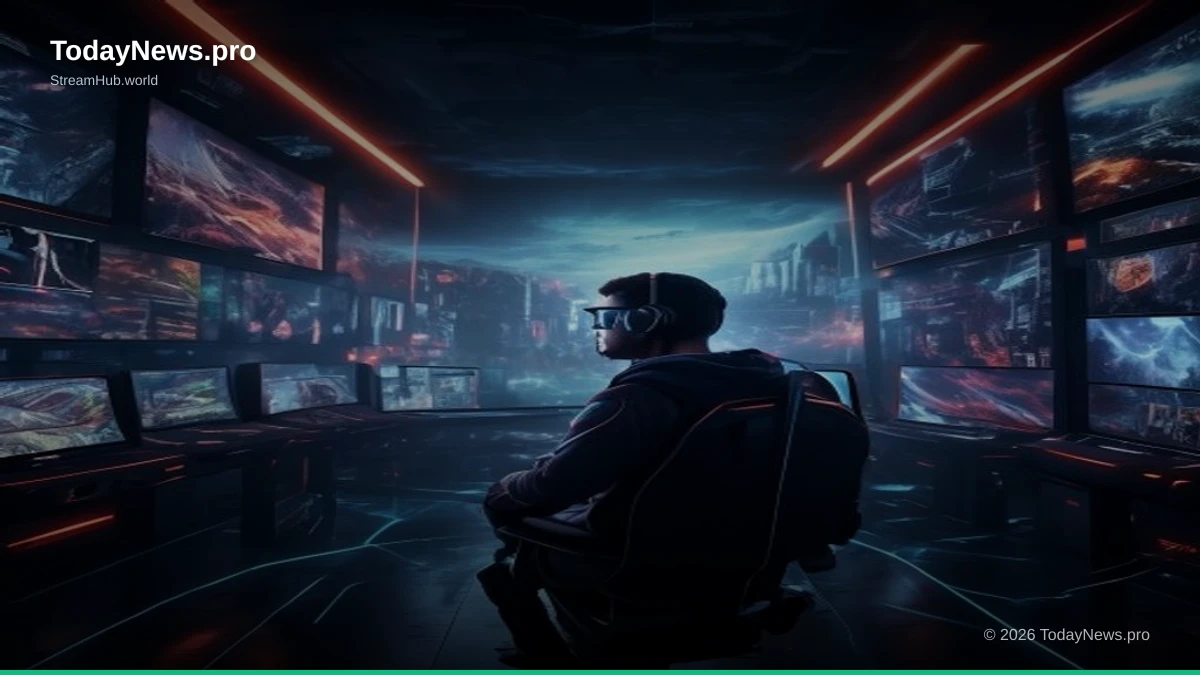
Global spending on virtual goods and services within gaming is projected to surpass $200 billion by 2025, signaling a monumental shift towards persistent, interconnected digital worlds where gaming is not just an activity, but a lifestyle.
The Immersive Frontier: What is Metaverse Gaming?
The metaverse, a portmanteau of "meta" (beyond) and "universe," represents a persistent, interconnected set of virtual spaces where users can interact with each other, digital objects, and AI-driven entities. When applied to gaming, this concept transcends the traditional boundaries of individual games or platforms. Metaverse gaming envisions a future where players inhabit expansive, often persistent, digital worlds that offer a multitude of experiences, blurring the lines between entertainment, social interaction, and even economic activity. Unlike standalone games, metaverse gaming is characterized by its interconnectedness, allowing for seamless transitions between different experiences and a sense of shared, evolving digital reality.
At its core, metaverse gaming is about immersion and agency. Players are no longer just controlling avatars on a screen; they are *inhabiting* these virtual worlds, shaping them through their actions and interactions. This can manifest in various forms, from massive multiplayer online role-playing games (MMORPGs) with persistent worlds and player-driven economies to social virtual reality (VR) platforms where gaming is one of many activities. The emphasis is on a sense of presence, a feeling of being truly "there," and the ability to engage in a wide spectrum of activities beyond the confines of a single game's narrative or mechanics.
Defining the Digital Realm
A key differentiator of metaverse gaming is its persistent nature. These worlds don't reset or disappear when a player logs off. Instead, they continue to exist and evolve, influenced by the collective actions of all participants. This persistence fosters a deeper sense of community and investment, as players contribute to the ongoing development and narrative of their chosen digital spaces. Imagine a virtual city that grows and changes based on player-built structures, economic transactions, and social events – this is the essence of metaverse persistence.
Interoperability is another crucial, though often aspirational, component. The ideal metaverse would allow assets and identities to transcend individual platforms. While true interoperability remains a significant technical and business challenge, the concept is central to the metaverse gaming vision. It suggests a future where an item purchased in one metaverse game could potentially be used or recognized in another, fostering a more cohesive and valuable digital ecosystem.
The Player as Creator and Citizen
Metaverse gaming empowers players to be more than just consumers. It embraces the idea of user-generated content, allowing individuals to build, design, and even monetize their creations within the virtual worlds. This democratizes game development and fosters vibrant, self-sustaining communities. From designing custom avatars and virtual homes to developing entirely new game modes or experiences, players become active participants in shaping the metaverse itself.
This shift also introduces the concept of digital citizenship. As players spend more time and invest more resources into these virtual worlds, they develop a sense of belonging and responsibility. This can lead to the formation of virtual communities with their own social norms, economies, and governance structures, mirroring aspects of real-world societies.
Beyond Pixels: The Technological Pillars of Metaverse Gaming
The realization of the metaverse gaming revolution is underpinned by a confluence of advanced technologies. These are not just incremental improvements; they represent fundamental shifts in how we interact with digital information and entertainment. Without these foundational elements, the ambitious vision of immersive, interconnected worlds would remain firmly in the realm of science fiction.
The development of the metaverse is a testament to the rapid advancements in several key technological areas. These innovations are not happening in isolation; their convergence is what unlocks the potential for truly immersive and interactive digital experiences. From the hardware that allows us to perceive these worlds to the software that creates and manages them, a complex ecosystem is rapidly taking shape.
Virtual and Augmented Reality: The Gateway Experiences
Virtual Reality (VR) and Augmented Reality (AR) are often hailed as the primary gateways to the metaverse. VR immerses users in entirely digital environments, replacing their physical surroundings with a computer-generated world. This technology is crucial for delivering the deep sense of presence and immersion that defines metaverse gaming. Headsets like the Meta Quest series and Sony's PlayStation VR offer increasingly sophisticated sensory experiences, from high-resolution displays to haptic feedback.
Augmented Reality, on the other hand, overlays digital information and objects onto the real world. While less immersive than VR, AR offers unique possibilities for metaverse gaming by blending the digital and physical. Imagine playing a game where digital creatures appear in your living room or engaging in a scavenger hunt that uses real-world locations as triggers for virtual events. The widespread adoption of AR through smartphones, and eventually AR glasses, promises to make metaverse experiences more accessible and integrated into daily life.
Blockchain and NFTs: Ownership and Economy
Blockchain technology and Non-Fungible Tokens (NFTs) are foundational to the economic underpinnings of many metaverse concepts. Blockchain provides a decentralized, transparent, and immutable ledger for recording transactions and ownership of digital assets. NFTs, unique digital tokens on a blockchain, allow for verifiable ownership of in-game items, virtual land, and other digital collectibles. This enables true ownership and scarcity, transforming digital assets from ephemeral in-game items into valuable, tradable commodities.
This has led to the rise of "play-to-earn" (P2E) gaming models, where players can earn cryptocurrency or NFTs through their gameplay, which can then be sold for real-world value. This paradigm shift moves gaming from a purely entertainment-based activity to one that can also be a source of income, albeit with significant volatility and risks. The ability to own and trade digital assets with verifiable provenance is a game-changer for digital economies.
Artificial Intelligence and Machine Learning: Dynamic Worlds
Artificial Intelligence (AI) and Machine Learning (ML) are essential for creating dynamic, believable, and responsive metaverse environments. AI can power sophisticated Non-Player Characters (NPCs) with emergent behaviors, generate vast and detailed virtual landscapes, and personalize user experiences. ML algorithms can analyze player behavior to optimize game difficulty, recommend content, and even detect and prevent malicious activities, ensuring a more engaging and secure environment.
The ability of AI to generate content procedurally means that metaverse worlds can be virtually limitless and constantly evolving. This reduces the burden on human developers and allows for a scale of content creation previously unimaginable. Furthermore, AI-driven NPCs can contribute to emergent narratives and create more complex social dynamics within the virtual spaces, making the metaverse feel more alive and unpredictable.
The Evolution of Play: From Arcades to Augmented Reality
The journey to metaverse gaming is not a sudden leap but a gradual evolution, marked by significant milestones in how humans have engaged with interactive digital entertainment. Each era has built upon the last, pushing the boundaries of immersion, social interaction, and complexity. Understanding this historical trajectory provides crucial context for the current metaverse revolution.
From the earliest blinking lights of arcade machines to the hyper-realistic simulations of today, the way we play has been in constant flux. This progression reflects not only technological advancements but also evolving cultural expectations and desires for digital experiences.
The Golden Age of Arcades and Early Consoles
The 1970s and 1980s witnessed the dawn of video gaming with the rise of arcade machines like Pong and Space Invaders, followed by home consoles such as the Atari 2600. These early experiences were simple but revolutionary, introducing millions to interactive digital entertainment. Gameplay was often single-player or local multiplayer, focused on high scores and basic reflexes. The communal aspect was limited to arcades themselves, where players gathered to watch and compete.
The introduction of more sophisticated consoles like the Nintendo Entertainment System (NES) and Sega Genesis in the late 1980s and early 1990s brought more complex narratives and diverse genres into homes. This era laid the groundwork for many game mechanics and design principles still in use today, but the concept of a persistent, shared digital world remained a distant dream.
The Dawn of Online Multiplayer and Persistent Worlds
The advent of the internet and advancements in computing power in the late 1990s and early 2000s ushered in the era of online multiplayer gaming. Games like Ultima Online and EverQuest pioneered persistent online worlds, where thousands of players could inhabit the same digital space simultaneously. These MMORPGs introduced concepts like player-driven economies, social guilds, and emergent narratives, offering a glimpse into the potential of shared digital realities. The social interaction, though text-based or via rudimentary voice chat, became a core component of the gaming experience.
This period also saw the rise of competitive online gaming with titles like Quake and StarCraft, fostering esports communities and demonstrating the addictive nature of real-time interaction with other players. These games, while not fully immersive in the metaverse sense, established the fundamental principles of large-scale, persistent online interaction.
The Mobile and Social Gaming Explosion
The proliferation of smartphones and the rise of social media platforms in the late 2000s and 2010s democratized gaming further. Casual mobile games like Angry Birds and Candy Crush became global phenomena, while social games on platforms like Facebook fostered massive player bases. This era emphasized accessibility, ease of play, and often, free-to-play models with in-app purchases. While these games were often isolated experiences, they demonstrated the enormous appetite for accessible digital entertainment and the power of social sharing.
The casualization of gaming brought in a new demographic of players and highlighted the potential for gaming to be a ubiquitous part of daily life, paving the way for more integrated and persistent digital experiences that blur the lines between gaming and social interaction. The infrastructure built for mobile gaming, including robust server networks and digital distribution platforms, also proved vital for the subsequent development of more complex online games.
| Era | Key Innovations | Primary Interaction | Example Games |
|---|---|---|---|
| 1970s-1980s | Arcade Machines, Home Consoles | Local Multiplayer, Single Player | Pong, Space Invaders, Pac-Man, Atari 2600 |
| 1990s-Early 2000s | Early Internet, 3D Graphics, MMORPGs | Online Multiplayer, Persistent Worlds | Doom, Ultima Online, EverQuest, World of Warcraft |
| Late 2000s-2010s | Smartphones, Social Media, Free-to-Play | Mobile Gaming, Social Integration | Angry Birds, Candy Crush Saga, FarmVille |
| 2020s-Present | VR/AR, Blockchain, AI, Cloud Gaming | Immersive Metaverse, P2E, User-Generated Content | Roblox, Fortnite (as a platform), Decentraland, The Sandbox |
Economic Undercurrents: Play-to-Earn and Digital Economies
One of the most disruptive aspects of the metaverse gaming revolution is the emergence of robust digital economies, often powered by blockchain technology and cryptocurrency. This has given rise to the "play-to-earn" (P2E) model, transforming gaming from a purely leisure activity into a potential source of income and investment for players worldwide.
The traditional gaming industry has long been fueled by player spending on virtual items and content. However, metaverse economies aim to take this a step further by enabling players to truly own and monetize their digital assets, creating new avenues for value creation and economic participation within virtual worlds.
The Rise of Play-to-Earn (P2E)
Play-to-Earn games empower players to earn real-world value through their gameplay. This is typically achieved by rewarding players with cryptocurrencies or NFTs for completing tasks, winning battles, or engaging in other in-game activities. These digital assets can then be traded on open marketplaces, sold for fiat currency, or reinvested back into the game. Axie Infinity, for example, became a global phenomenon, allowing players in developing economies to earn a living wage by breeding, battling, and trading virtual creatures.
This model has profound implications, particularly in regions where traditional employment opportunities are scarce. It democratizes earning potential by allowing individuals to leverage their gaming skills and time investment. However, it also introduces significant volatility and risk, as the value of these digital assets is tied to the fluctuating cryptocurrency markets.
Digital Ownership and NFTs
Non-Fungible Tokens (NFTs) are the backbone of digital ownership in many metaverse games. Unlike fungible tokens (like cryptocurrencies), each NFT is unique and cannot be replicated. This uniqueness allows for verifiable ownership of in-game assets, such as rare weapons, unique characters, virtual land parcels, or cosmetic items. When players acquire an NFT, they truly own it on the blockchain, independent of the game developer.
This shift from license to ownership is a fundamental change. Players are no longer simply renting access to digital items; they possess them and can trade, sell, or even use them across different compatible platforms (in an ideal, interoperable metaverse). This creates a tangible sense of value and investment for players, fostering deeper engagement with virtual worlds.
Virtual Land and Real Estate
The concept of owning virtual land within metaverse platforms has gained significant traction. In metaverses like Decentraland and The Sandbox, users can purchase plots of virtual real estate using cryptocurrency. These digital properties can be developed, rented out, or used to host events, games, and experiences, creating a virtual real estate market. The value of these parcels is often driven by their location within the metaverse, their proximity to popular areas, and the potential for user engagement.
This has led to speculative investments, with virtual land parcels selling for millions of dollars. While some view this as a legitimate new asset class, others see it as a bubble driven by hype. Regardless, it highlights the growing economic potential and the desire for digital ownership and self-expression within these emerging virtual spaces.
Challenges and Hurdles: Navigating the Uncharted Territories
While the metaverse gaming revolution promises unprecedented levels of immersion and engagement, it is not without its significant challenges. These hurdles span technological limitations, economic uncertainties, ethical dilemmas, and the fundamental human element of adoption and adaptation.
The path to a fully realized metaverse is fraught with obstacles. Developers, investors, and players alike are grappling with issues that could significantly shape the future trajectory of this burgeoning industry. Addressing these challenges proactively is key to unlocking the metaverse's full potential.
Scalability and Infrastructure
Creating and maintaining persistent, large-scale virtual worlds that can support millions of concurrent users requires immense computing power and robust network infrastructure. Current internet speeds and processing capabilities, while improving, can still be a bottleneck. Lag, latency, and server instability can severely degrade the user experience, particularly in real-time multiplayer environments. Ensuring that these worlds can scale smoothly as user numbers grow is a paramount technical challenge.
The development of decentralized infrastructure, such as distributed cloud computing and advanced networking protocols, will be crucial. Furthermore, the energy consumption associated with the underlying technologies, particularly blockchain, raises environmental concerns that need to be addressed through more sustainable solutions.
Interoperability and Fragmentation
A truly unified metaverse, where assets and identities can seamlessly transfer between different platforms, is a distant ideal. Currently, the metaverse landscape is fragmented, with distinct virtual worlds often operating in isolation. Companies are hesitant to embrace open standards that would allow users to take their digital belongings to competitor platforms, fearing a loss of control and revenue. Achieving true interoperability requires significant collaboration and agreement on technical standards across the industry.
This fragmentation can lead to a less cohesive and potentially frustrating user experience. Players might find themselves locked into specific ecosystems, unable to fully leverage their digital assets or identities across the broader metaverse. The walled-garden approach, while currently prevalent, ultimately hinders the vision of an interconnected digital universe.
User Adoption and Accessibility
While VR and AR technologies are advancing rapidly, they are still relatively niche and expensive for mass adoption. High-end VR headsets can cost several hundred dollars, and the need for powerful gaming PCs or consoles creates a significant barrier to entry. Furthermore, the learning curve associated with some of these technologies can be steep for non-technical users. Making metaverse experiences accessible to a broader audience requires more affordable hardware, user-friendly interfaces, and intuitive onboarding processes.
Beyond hardware, the very concept of spending significant time in virtual worlds is still a cultural shift for many. Overcoming skepticism and demonstrating the tangible benefits and value proposition of metaverse gaming will be critical for widespread adoption. The digital divide also presents a challenge, as access to high-speed internet and compatible devices is not universal.
Regulation and Governance
As metaverse economies grow, questions of regulation, governance, and consumer protection become increasingly important. How will digital assets be taxed? What recourse do players have if their digital assets are stolen or their accounts are compromised? Who will set the rules and enforce them within these virtual worlds? The decentralized nature of some metaverse platforms complicates traditional regulatory frameworks.
Establishing clear guidelines and governance structures will be essential to fostering trust and ensuring a safe and fair environment for all participants. This includes addressing issues like fraud, intellectual property rights, and data privacy within these complex digital ecosystems. The lack of established legal precedents for many metaverse-related issues creates a complex and evolving legal landscape.
The Future Landscape: Whats Next for Metaverse Gaming?
The metaverse gaming revolution is still in its nascent stages, with its future trajectory shaped by ongoing innovation, market forces, and evolving player preferences. While predicting the exact path is impossible, several key trends suggest where this industry is headed.
The evolution of metaverse gaming is not a static endpoint but a continuous process of innovation and adaptation. As the underlying technologies mature and user expectations shift, we can anticipate a landscape that is more immersive, interconnected, and economically vibrant than ever before.
Ubiquitous AR and Seamless Integration
While VR offers deep immersion, the future of widespread metaverse adoption may lean heavily on Augmented Reality. As AR glasses become more sophisticated, lightweight, and affordable, they will likely serve as the primary interface for many metaverse experiences. This will allow for a seamless blend of digital and physical realities, where virtual game elements can be overlaid onto the real world, making interactions more contextual and integrated into daily life. Imagine receiving game notifications or participating in casual AR games without needing to put on a headset.
This integration will move beyond gaming, enabling AR to enhance productivity, communication, and entertainment in ways that are currently difficult to fully envision. The accessibility of AR through smartphones already points towards this future, with future iterations promising even more profound integration.
AI-Driven Dynamic Content and NPCs
Artificial intelligence will play an increasingly pivotal role in creating living, breathing metaverse worlds. AI will be responsible for generating vast, procedurally created landscapes, populating them with intelligent and reactive NPCs, and crafting emergent narratives that adapt to player actions. This will lead to experiences that are far more dynamic and personalized than what is possible with static, pre-scripted content.
AI-powered companions, intelligent adversaries, and sophisticated virtual communities will all contribute to a richer, more unpredictable, and engaging metaverse. The ability of AI to learn and adapt will ensure that these worlds remain fresh and challenging, providing endless opportunities for exploration and interaction.
Decentralization and User Sovereignty
While some dominant platforms may emerge, there is a strong push towards decentralization in the metaverse. Technologies like blockchain and decentralized autonomous organizations (DAOs) offer the potential for users to have a greater say in the governance and direction of the virtual worlds they inhabit. This could lead to more equitable distribution of power and resources, where players are not merely subjects but stakeholders in the metaverse.
The concept of "user sovereignty" – where individuals have true ownership and control over their digital identities and assets – is a powerful driver. As the metaverse matures, expect to see more emphasis on open protocols and interoperable standards that empower users and reduce reliance on single, centralized entities.
The Convergence of Gaming, Social, and Work
The metaverse is unlikely to be solely a gaming destination. It is poised to become a converged space where gaming, social interaction, education, and even work coexist. Virtual meeting spaces, collaborative workspaces, and digital storefronts will become as commonplace as gaming arenas. This convergence will blur the lines between our digital and physical lives, creating a more holistic online existence.
The skills honed in metaverse gaming – such as problem-solving, collaboration, and creative expression – could translate directly into virtual work environments. This creates a feedback loop, where experiences in one domain enhance capabilities in another, further integrating the metaverse into the fabric of our lives.
Ethical Considerations and Societal Impact
As the metaverse evolves into a significant part of our digital lives, its ethical implications and broader societal impact demand careful consideration. The immersive nature and economic potential of these virtual worlds raise profound questions about identity, privacy, equity, and well-being.
The metaverse presents a unique set of challenges that require thoughtful dialogue and proactive solutions from developers, policymakers, and users alike. Navigating these ethical waters will be crucial for ensuring a positive and inclusive digital future.
Digital Identity and Representation
The ability to create highly customizable avatars raises questions about digital identity. While offering freedom of expression, it also opens doors to deception, impersonation, and the exploration of aspects of self that may not be present in the physical world. Defining and protecting digital identities, and understanding the psychological impact of avatar representation, are critical areas of concern.
Concerns about body image, self-esteem, and the potential for radical detachment from one's physical self are also part of this discussion. Ensuring that digital representations are empowering rather than detrimental to mental well-being is paramount.
Privacy and Data Security
Metaverse platforms, especially those that collect extensive user data through VR/AR devices, pose significant privacy risks. The sheer volume and nature of data gathered – including biometric information, behavioral patterns, and social interactions – create unprecedented opportunities for surveillance and exploitation. Robust data protection measures and transparent data usage policies are essential.
Users need to have control over their data and understand how it is being used. The potential for targeted advertising, manipulation, and even data breaches on a massive scale underscores the urgent need for strong privacy regulations and ethical data handling practices within the metaverse. This includes the security of digital assets and financial transactions.
Inclusivity and Accessibility
The metaverse has the potential to be a great equalizer, offering new opportunities for those with physical limitations or social anxieties. However, it also risks exacerbating existing inequalities. The digital divide, cost of hardware, and the need for digital literacy can create barriers to entry, potentially leaving large segments of the population behind. Ensuring that the metaverse is accessible and inclusive for all is a fundamental ethical imperative.
This includes designing experiences that cater to diverse needs, ensuring affordability, and providing educational resources to bridge the digital literacy gap. Developers must actively consider how to make their platforms welcoming and usable for people of all backgrounds, abilities, and socioeconomic statuses. The risk of creating virtual worlds that reflect and amplify real-world biases is a serious concern.
Mental Health and Well-being
The immersive and potentially addictive nature of metaverse gaming raises concerns about mental health. Excessive time spent in virtual worlds could lead to social isolation, neglect of real-world responsibilities, and the development of unhealthy escapist behaviors. The line between healthy engagement and detrimental immersion needs to be carefully managed.
Developers have a responsibility to implement features that promote healthy usage, such as time limits and well-being resources. Society, in turn, needs to foster critical awareness and provide support systems for individuals who may struggle with excessive metaverse engagement. Understanding the long-term psychological effects of prolonged immersion is an ongoing area of research.
The metaverse gaming revolution is not merely about technological advancement; it is about shaping the future of human interaction, entertainment, and economy. As we venture further into these digital worlds, a commitment to ethical development and responsible innovation will be paramount to ensuring that this revolution benefits all of humanity.