

 Sophie Turner
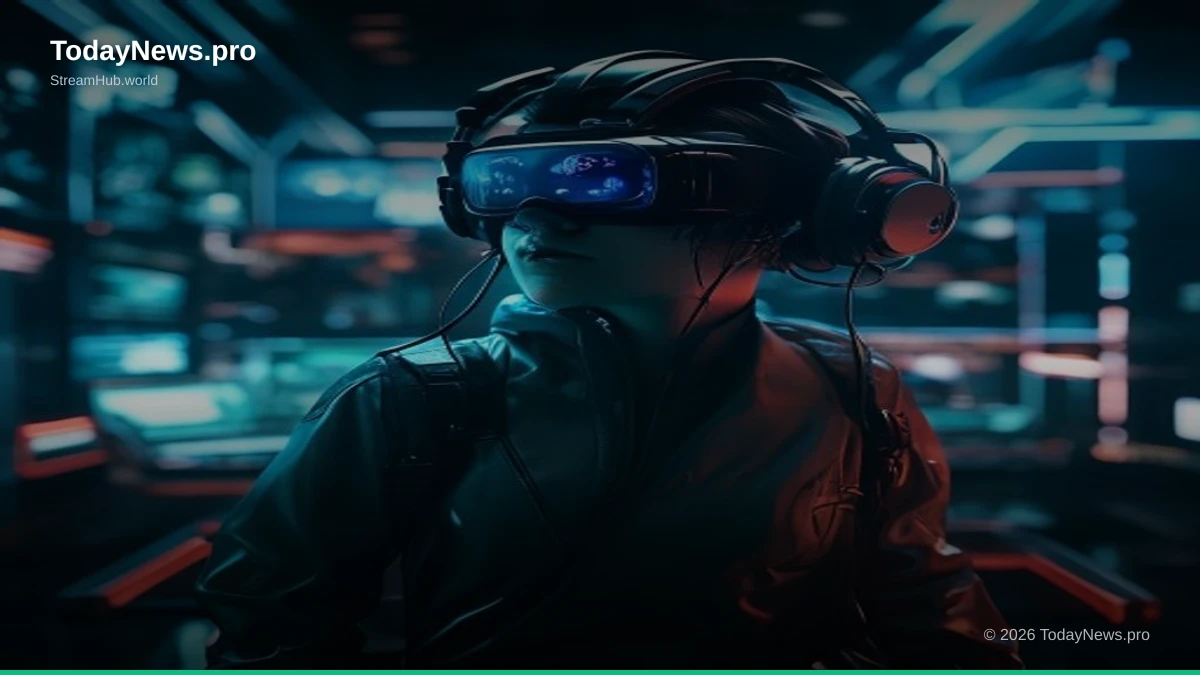
The global metaverse market is projected to reach $1.3 trillion by 2030, signaling a seismic shift beyond its gaming origins.
Beyond Pixels: The Metaverses Unfolding Reality
For years, the term "metaverse" conjured images of avatars navigating fantastical virtual landscapes, primarily within the realm of video games. Platforms like Roblox, Fortnite, and Decentraland offered glimpses into persistent, shared digital spaces where users could socialize, play, and create. However, this nascent understanding is rapidly evolving. The metaverse is no longer a niche hobby for digital natives; it is emerging as a complex ecosystem with profound implications for nearly every facet of human activity, extending far beyond entertainment.
This transformation is driven by a convergence of rapidly advancing technologies: virtual reality (VR), augmented reality (AR), artificial intelligence (AI), blockchain, and high-speed internet connectivity. These elements are weaving together to create immersive, interactive, and interconnected digital worlds that are beginning to mirror and augment our physical reality. The ambition is to build a successor to the mobile internet, a spatially organized network of persistent, real-time rendered environments and experiences that can be synchronously and persistently inhabited by an effectively unlimited number of users, each with an individual sense of presence.
The Evolution from Gaming to General Purpose
The initial success of metaversal concepts in gaming provided a crucial testing ground. Players became accustomed to digital ownership of in-game assets, virtual economies, and social interactions within these digital spaces. This familiarity paved the way for broader adoption. Developers and businesses recognized the potential to translate these experiences into practical applications for work, education, commerce, and social connection, moving the metaverse from a playground to a platform for real-world impact.
Consider the burgeoning trend of "digital twins." These are virtual replicas of physical objects, processes, or systems that can be used for simulation, analysis, and optimization. A factory floor can have a digital twin allowing for predictive maintenance, a city can have one for urban planning, and even a human body could have one for personalized medicine. This concept inherently bridges the physical and digital, a core tenet of the metaverse.
Social Presence and Digital Identity
One of the most compelling aspects of the metaverse is its ability to foster a sense of "presence" – the feeling of truly being in a shared space with others, even when physically apart. This is achieved through advanced avatars, realistic environmental rendering, and sophisticated communication tools. For remote work, this could mean virtual meeting rooms that feel as engaging as in-person discussions. For social interactions, it offers richer ways to connect with friends and family across distances, creating shared memories and experiences in digital realms.
The concept of digital identity is also undergoing a revolution. In the metaverse, users can curate and express their identities through highly customizable avatars, which can be more fluid and expressive than their physical counterparts. This opens up new avenues for self-expression, but also raises questions about authenticity, privacy, and the potential for misrepresentation. The blockchain's role in enabling secure and verifiable digital ownership of these identities and assets is paramount.
The Economic Engine: Virtual Goods and Decentralized Finance
The metaverse is poised to become a significant economic powerhouse, fueled by the creation, exchange, and ownership of virtual assets. This economic activity is largely underpinned by two key innovations: Non-Fungible Tokens (NFTs) and Decentralized Finance (DeFi).
The Rise of Virtual Economies and NFTs
NFTs are unique digital tokens that are stored on a blockchain and represent ownership of a specific asset. In the metaverse, this can range from digital art and collectibles to virtual land, in-game items, and even digital fashion. This enables true digital scarcity and ownership, allowing users to buy, sell, and trade assets with verifiable provenance. This has spawned entirely new markets and revenue streams for creators and collectors alike.
For instance, a virtual fashion designer can create a unique digital outfit as an NFT, which a user can then purchase and wear on their avatar in various metaverse platforms. This is not just a cosmetic change; it represents a tangible digital asset that can be resold or traded. The value of these assets is determined by market demand, scarcity, and perceived utility within the digital ecosystem.
The concept of "play-to-earn" gaming, where players can earn cryptocurrency or NFTs by participating in games, is a prime example of this burgeoning virtual economy. While still evolving, it demonstrates the potential for individuals to generate income through their engagement with digital worlds.
Decentralized Finance (DeFi) Integration
DeFi, a system of financial services built on blockchain technology that removes intermediaries, is also playing a crucial role in the metaverse's economic development. Decentralized exchanges (DEXs), lending protocols, and stablecoins are all being integrated into metaverse platforms, allowing for seamless transactions and financial operations within virtual environments.
This integration enables users to earn interest on their virtual assets, take out loans against their digital holdings, and engage in complex financial strategies without traditional banking systems. For businesses operating in the metaverse, DeFi offers new avenues for funding, investment, and revenue generation. Imagine a virtual real estate developer securing a loan in cryptocurrency to build a new digital property, or a creator launching an initial coin offering (ICO) for their metaverse project.
Reshaping Industries: From Education to Healthcare
The metaverse's potential to revolutionize traditional industries is perhaps its most exciting and transformative aspect. By offering immersive, interactive, and scalable solutions, it promises to enhance efficiency, improve learning outcomes, and create entirely new service models.
Education and Training Reimagined
The traditional classroom model is ripe for disruption. The metaverse can offer highly engaging and experiential learning environments. Medical students can practice complex surgeries on virtual patients, history students can walk through ancient Rome, and engineering students can build and test prototypes in simulated environments. This hands-on, risk-free approach can significantly improve knowledge retention and skill development.
Companies are also leveraging the metaverse for employee training. Immersive simulations can train workers on hazardous tasks, complex machinery operation, or customer service scenarios with a level of realism that is impossible in traditional settings. This not only enhances safety but also reduces training costs and time.
| Industry | Projected Adoption Rate (by 2028) | Key Applications |
|---|---|---|
| Education | 75% | Immersive learning, VR labs, historical simulations |
| Healthcare | 60% | Surgical training, remote patient monitoring, therapeutic VR |
| Manufacturing | 70% | Digital twins, remote collaboration, training simulations |
| Retail | 80% | Virtual showrooms, personalized shopping experiences, NFTs |
| Real Estate | 65% | Virtual property tours, digital land sales, architectural visualization |
Healthcare Innovations
In healthcare, the metaverse offers groundbreaking possibilities. Surgeons can plan and rehearse complex procedures in a virtual environment, surgeons in different locations can collaborate on a live operation, and patients can receive remote consultations and even therapy in immersive settings. VR-based pain management and mental health treatments are already showing significant promise.
The concept of "digital twins" for individual patients is also a frontier. By creating a virtual replica of a person's body, doctors can simulate the effects of different treatments, predict disease progression, and personalize healthcare strategies with unprecedented accuracy.
The Future of Work and Collaboration
The pandemic accelerated the adoption of remote work, and the metaverse promises to elevate this further. Virtual offices can offer a more engaging and collaborative experience than current video conferencing tools. Employees can interact with colleagues as if they were in the same room, brainstorm on virtual whiteboards, and feel a stronger sense of team cohesion.
This is particularly relevant for fields like architecture and design, where 3D visualization and collaborative review are critical. Architects can walk clients through a building that is still on the drawing board, making design decisions more intuitive and efficient.
The Architecture of Immersion: Technology Underpinning the Metaverse
The realization of the metaverse is dependent on a sophisticated and interconnected stack of technologies. Without these foundational elements, the immersive and persistent worlds we envision would remain purely theoretical.
Virtual Reality (VR) and Augmented Reality (AR)
VR and AR are the primary interfaces through which users will experience the metaverse. VR headsets completely immerse users in a digital environment, while AR overlays digital information onto the real world. The continuous improvement of these technologies, in terms of resolution, field of view, comfort, and processing power, is crucial for widespread adoption.
As VR headsets become lighter, more powerful, and more affordable, and as AR glasses become more discreet and functional, the barrier to entry for experiencing the metaverse will significantly decrease. This will transition the metaverse from a niche experience to a mainstream one.
Connectivity and Computing Power
The metaverse demands immense bandwidth and low latency. Technologies like 5G and future 6G networks are essential for seamless, real-time rendering and interaction. Without robust connectivity, experiences will be laggy and frustrating, hindering the sense of immersion.
Furthermore, the complex simulations and rendering required for persistent, high-fidelity virtual worlds necessitate significant computing power. Cloud computing, edge computing, and advancements in graphics processing units (GPUs) are all critical components in enabling the metaverse to scale.
Artificial Intelligence (AI) and Machine Learning (ML)
AI and ML are the invisible engines driving much of the metaverse's functionality. They are used to create more intelligent and responsive NPCs (non-player characters), personalize user experiences, generate content, and even moderate virtual environments. AI-powered tools can also assist in the creation of virtual assets and landscapes, significantly speeding up development.
For example, AI can analyze user behavior to tailor virtual environments or offer personalized recommendations. ML algorithms can also be used to detect and prevent malicious activity, ensuring a safer and more enjoyable experience for all users.
Challenges and Ethical Frontiers: Navigating the Uncharted Digital Territories
As exciting as the metaverse's potential is, its rapid development is also accompanied by significant challenges and ethical considerations that must be addressed proactively. Ignoring these issues could lead to a future that is inequitable, unsafe, or controlled by a few dominant entities.
Privacy and Data Security
The metaverse will collect vast amounts of personal data, from biometric information captured by VR headsets to behavioral patterns and social interactions. Ensuring the privacy and security of this data is paramount. Robust encryption, transparent data policies, and user control over their information will be essential.
The potential for data breaches or misuse of personal information in the metaverse is a serious concern. Users need to trust that their digital lives are protected, much like they expect their physical lives to be. Regulations and industry best practices will need to evolve rapidly to keep pace with technological advancements.
Accessibility and Inclusivity
A truly open metaverse should be accessible to everyone, regardless of their physical abilities, socioeconomic status, or geographic location. The cost of VR/AR hardware, the need for high-speed internet, and the digital literacy required to navigate these platforms can create significant barriers.
Efforts must be made to develop affordable hardware, explore alternative access methods, and provide comprehensive digital education. Otherwise, the metaverse risks becoming an exclusive club for the privileged, exacerbating existing societal inequalities. Ensuring diverse representation in avatar design and content creation is also crucial for inclusivity.
Governance and Moderation
Who governs the metaverse? This is a complex question with no easy answers. As decentralized technologies like blockchain gain prominence, the idea of decentralized autonomous organizations (DAOs) governing specific metaversal spaces is gaining traction. However, traditional platforms will likely implement their own governance structures.
Establishing clear rules of conduct, effective moderation systems, and mechanisms for dispute resolution will be critical for preventing harassment, hate speech, and other harmful behaviors. The challenge lies in balancing freedom of expression with the need to maintain safe and respectful environments. Finding the right balance between centralized control and decentralized governance is key.
Digital Scarcity and Environmental Impact
While NFTs enable digital scarcity, the underlying blockchain technologies, particularly proof-of-work systems, can be energy-intensive. As the metaverse grows, its environmental footprint will become a significant concern. The industry must prioritize the development and adoption of more energy-efficient blockchain solutions and sustainable computing practices.
The concept of "digital land grabs" and the speculative nature of some virtual assets also raise questions about responsible economic development within the metaverse. Ensuring that virtual economies are sustainable and do not exploit users is a critical ethical imperative.
Our Digital Future: A World of Interconnected Realities
The metaverse represents a profound evolution in how we interact with technology and with each other. It is not simply a new platform; it is a new paradigm that blurs the lines between the physical and digital worlds, creating opportunities and challenges that will shape our future in ways we are only beginning to comprehend.
The trajectory suggests a future where our digital lives are as rich, complex, and meaningful as our physical ones. We will work, play, learn, and socialize in interconnected virtual environments, leveraging immersive technologies to enhance our capabilities and expand our horizons. This will require a careful and considered approach, prioritizing ethical development, inclusivity, and user well-being.
The Interoperable Metaverse
A truly impactful metaverse will be one where different platforms are interoperable. This means that users can take their avatars, digital assets, and even their social connections from one metaverse experience to another. This vision of a seamlessly connected digital universe is still some way off, but it is the ultimate goal for many developers and enthusiasts.
Interoperability will foster greater competition, innovation, and user freedom, preventing any single entity from dominating the entire metaverse. It will create a more robust and dynamic ecosystem where users are not locked into proprietary systems.
The journey towards this interconnected future is ongoing. The metaverse is not a destination but a continuously evolving landscape. As technology advances and user adoption grows, we can expect to see increasingly sophisticated applications and more profound integrations into our daily lives. The metaverse is not just about escaping reality; it's about augmenting it, enhancing it, and in many ways, redefining it.