

 Linda Wu
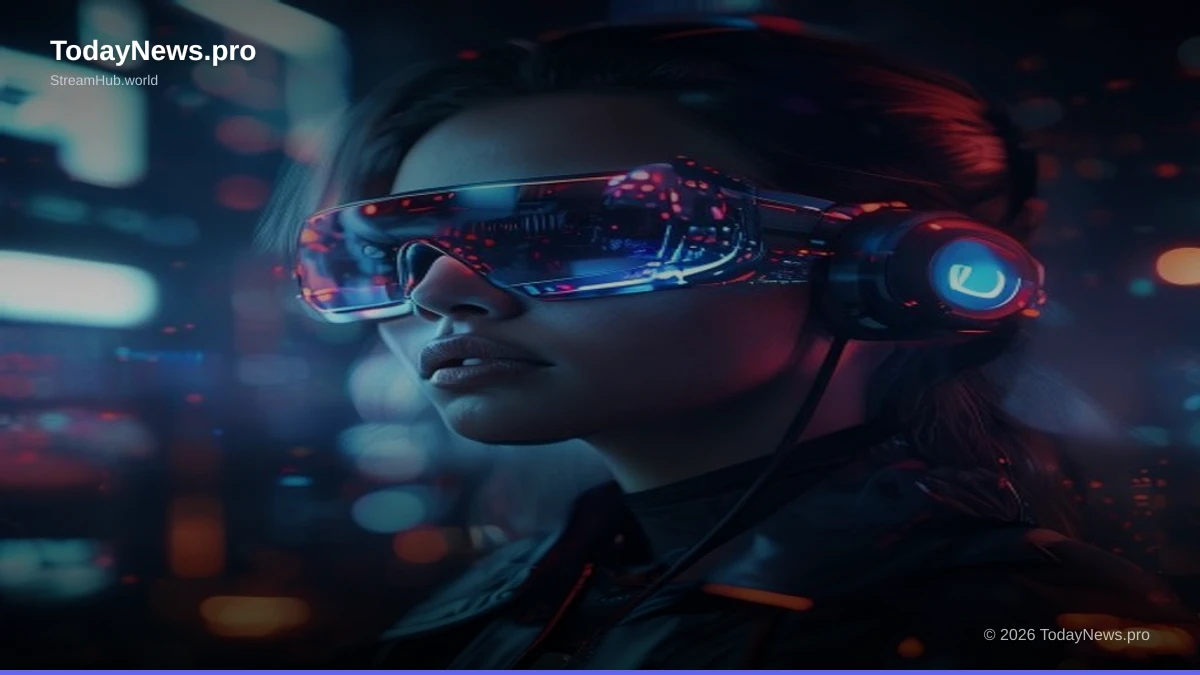
⏱ 20 min
The global metaverse market is projected to reach $1.6 trillion by 2030, a staggering increase from its current valuation, signaling a profound shift in how we interact, work, and transact. This isn't merely an evolution of online gaming; it's the dawn of Metaverse 2.0, a comprehensive digital ecosystem poised to redefine real-world applications and unlock unprecedented economic potential. We are moving beyond passive consumption of digital content to active participation in persistent, interconnected virtual worlds that mirror and augment our physical reality.
The Metaverse 2.0: A Paradigm Shift Beyond Pixels
The term "metaverse" itself has undergone a significant metamorphosis. Initially, it was largely synonymous with immersive online gaming experiences, platforms like Roblox and Fortnite offering virtual spaces for social interaction and entertainment. However, Metaverse 2.0 represents a broader, more integrated vision. It encompasses a persistent, interconnected network of 3D virtual worlds, experienced through immersive technologies like virtual reality (VR) and augmented reality (AR), but also accessible through traditional devices. The key distinction lies in its emphasis on utility, economic integration, and real-world impact, rather than solely entertainment. This new iteration is characterized by a focus on digital ownership, decentralized governance, and the seamless blending of physical and digital realms. Think of it not as a single destination, but as a continuum of experiences. You might attend a virtual concert with friends from across the globe, then transition to a digital twin of your office for a collaborative work session, or even explore a meticulously recreated historical site for educational purposes. The barriers between online and offline are dissolving, creating a richer, more multifaceted digital existence.Beyond the Screen: Immersive Technologies as Enablers
The foundational technologies driving this shift are VR and AR. VR headsets, like Meta's Quest series and Sony's PlayStation VR, offer complete immersion into digital environments, transporting users to entirely new realities. AR, on the other hand, overlays digital information and objects onto the real world, enhancing our perception and interaction with our physical surroundings. Think of AR applications for navigation, interactive product demonstrations, or even virtually trying on clothes. As these technologies become more sophisticated, affordable, and user-friendly, they will serve as the primary gateways to Metaverse 2.0 experiences. The advancement of haptic feedback technology is also crucial. Gloves and suits that can simulate touch and texture will further blur the lines between the physical and digital, making virtual interactions more tangible and believable. This level of sensory fidelity is essential for creating truly engaging and useful metaverse applications across various sectors.From Avatars to Assets: The Evolving Economic Landscape
The economic underpinnings of Metaverse 2.0 are as revolutionary as its immersive nature. Unlike the traditional internet, where digital content is largely rented or accessed through subscriptions, the metaverse is built upon principles of digital ownership, scarcity, and verifiable authenticity, often powered by blockchain technology. This allows for the creation of true digital assets – non-fungible tokens (NFTs) representing unique virtual items, land, artwork, and more. These digital assets are not merely collectibles; they have tangible economic value within and increasingly, across different metaverse platforms. Users can buy, sell, trade, and even rent these assets, creating a vibrant digital economy. This opens up new avenues for income generation for creators, businesses, and individuals alike, fostering a decentralized marketplace where value creation is democratized.The Rise of Decentralized Finance (DeFi) in the Metaverse
Decentralized Finance (DeFi) plays a pivotal role in enabling these new economic models. Cryptocurrencies and stablecoins serve as the native currencies for many metaverse economies, facilitating seamless transactions without intermediaries. Smart contracts, self-executing agreements written on the blockchain, automate processes like royalty payments to creators, ensuring fair compensation and transparent revenue distribution. This integration of DeFi removes traditional financial barriers and creates more equitable opportunities for participation. It also paves the way for innovative financial instruments, such as decentralized lending and borrowing for virtual assets, further stimulating economic activity within the metaverse.| Year | Market Size |
|---|---|
| 2023 | 45.0 |
| 2025 | 130.0 |
| 2028 | 500.0 |
| 2030 | 1600.0 |
Real-World Applications: Transforming Industries
The true promise of Metaverse 2.0 lies in its capacity to transcend entertainment and revolutionize established industries. The ability to create realistic simulations, foster immersive collaboration, and offer tangible digital experiences has far-reaching implications.Immersive Education and Training
The educational sector stands to benefit immensely. Imagine medical students practicing complex surgical procedures in a risk-free virtual environment, or history students walking through ancient Rome, interacting with its citizens. Traditional classroom limitations are overcome, allowing for personalized learning experiences, enhanced engagement, and accelerated skill acquisition. Vocational training for high-risk professions, such as firefighters or airline pilots, can be conducted with unparalleled realism and safety. Employees can undergo onboarding and skill development in simulated work environments, reducing the need for physical travel and costly real-world training facilities.Revolutionizing Remote Work and Collaboration
The pandemic accelerated the adoption of remote work, but Metaverse 2.0 offers a significant upgrade to virtual collaboration. Instead of flat video calls, employees can meet in persistent virtual offices, fostering a stronger sense of presence and camaraderie. Whiteboarding sessions become more dynamic with 3D models, and spontaneous water cooler conversations can be recreated, addressing the isolation often associated with remote work. Companies can build virtual showrooms to showcase products to clients globally, conduct team-building exercises in engaging virtual spaces, and even host large-scale virtual conferences with interactive exhibits and networking opportunities. This can lead to increased productivity, reduced operational costs associated with physical office spaces, and a more inclusive global workforce.Healthcares Digital Frontier
The healthcare industry is poised for a significant transformation. Surgeons can plan complex operations by visualizing patient anatomy in 3D before entering the operating room. Therapists can utilize VR for pain management, phobia treatment, and rehabilitation, offering controlled and immersive therapeutic environments. Remote patient monitoring can be enhanced with AR overlays, allowing healthcare professionals to guide patients through procedures or diagnostics from a distance. Furthermore, medical researchers can collaborate on visualizing complex molecular structures or disease progression in shared virtual laboratories, accelerating discovery and innovation.Projected Adoption of Metaverse Technologies by Sector
The Technology Underpinning Metaverse 2.0
The realization of Metaverse 2.0 hinges on several interconnected technological advancements. While VR and AR provide the immersive interface, the underlying infrastructure is equally critical.Blockchain and Decentralization
As previously mentioned, blockchain technology is fundamental to establishing trust, ownership, and decentralization within the metaverse. NFTs, powered by blockchains like Ethereum, Polygon, and Solana, enable verifiable ownership of digital assets. This prevents duplication and ensures that creators and owners have true control over their virtual property. Decentralized Autonomous Organizations (DAOs) are also emerging as a governance model for metaverse platforms. DAOs allow community members to vote on proposals and contribute to the development and direction of the virtual world, fostering a more democratic and user-centric environment. This distributed approach to governance is a hallmark of Metaverse 2.0, moving away from centralized corporate control.AI and Generative Content
Artificial Intelligence (AI) is revolutionizing content creation within the metaverse. Generative AI models can create realistic environments, dynamic non-player characters (NPCs), and unique digital assets at an unprecedented scale. This significantly lowers the barrier to entry for content creation, empowering individuals to build and populate virtual worlds. AI-powered NPCs can offer more dynamic and engaging interactions, adapting their behavior based on user actions. Furthermore, AI can personalize metaverse experiences, tailoring content and recommendations to individual user preferences, making each journey through the metaverse unique.70%
of businesses expect to use the metaverse for employee training by 2025.
500+
million active users projected in virtual worlds by 2025.
2x
increase in engagement reported for AR-enhanced e-commerce experiences.
Economic Potential: Unlocking New Markets
The economic opportunities within Metaverse 2.0 are vast and continue to expand. The ability to create, own, and trade digital assets gives rise to entirely new markets and business models.Virtual Real Estate and Digital Ownership
The concept of virtual real estate, popularized by platforms like Decentraland and The Sandbox, allows users to purchase, develop, and monetize plots of digital land. This land can be used for a variety of purposes, including building virtual stores, hosting events, creating art galleries, or simply as an investment. The value of this virtual real estate is driven by scarcity, demand, and the utility it offers within its respective metaverse. Beyond land, digital ownership extends to avatars, clothing, accessories, artwork, and any other unique digital item that can be tokenized as an NFT. This creates a robust market for digital goods, mirroring and in some cases, surpassing the value of physical goods.The Creator Economy in the Metaverse
Metaverse 2.0 is a fertile ground for the creator economy. Artists, designers, developers, and storytellers can build and monetize their creations directly within these virtual worlds. NFTs provide a mechanism for creators to retain ownership and earn royalties on secondary sales of their digital art, music, and other content. This democratizes the creation and distribution of wealth, allowing individuals to build sustainable careers by producing engaging virtual experiences and assets. The potential for income generation through design, development, event management, and even virtual performance is immense.
"The metaverse isn't just about building a digital replica of the real world; it's about creating a parallel universe where human creativity and economic activity can flourish in entirely new ways. The key is interoperability and ensuring that value created in one space can seamlessly transfer to another."
— Dr. Anya Sharma, Lead Futurist at Nexus Innovations
Challenges and the Road Ahead
Despite the immense potential, the widespread adoption of Metaverse 2.0 faces several significant hurdles. Addressing these challenges is crucial for unlocking its full promise.Interoperability and Standardization
One of the biggest challenges is the lack of interoperability between different metaverse platforms. Currently, assets and identities created in one metaverse are often incompatible with others. This fragmentation limits the seamless flow of value and user experience. Establishing industry-wide standards for data formats, identity management, and asset transfer is essential for creating a truly interconnected metaverse. Without interoperability, users will be confined to siloed digital experiences, hindering the growth of a unified virtual ecosystem. Collaboration between major tech companies and open-source initiatives will be vital in driving standardization efforts. You can learn more about the ongoing discussions on interoperability on Wikipedia.Ethical Considerations and Digital Governance
As the metaverse becomes more ingrained in our lives, ethical considerations and robust digital governance become paramount. Issues such as data privacy, digital security, online harassment, and the potential for addiction need to be proactively addressed. Establishing clear guidelines for user conduct, content moderation, and dispute resolution will be critical. The decentralized nature of some metaverse platforms presents unique governance challenges. Ensuring that these virtual worlds are safe, inclusive, and equitable for all participants requires thoughtful design and community involvement. The development of robust digital citizenship frameworks will be essential. Concerns around digital identity and potential for misuse are also being closely watched by regulatory bodies. You can follow related developments from organizations like Reuters Technology.Conclusion: The Dawn of the Interconnected Reality
Metaverse 2.0 is not a distant futuristic fantasy; it is an emerging reality that is rapidly evolving. Its potential to transform industries, create new economic opportunities, and redefine human interaction is undeniable. By moving beyond the confines of gaming, and integrating with real-world applications powered by advanced technologies like blockchain, AI, VR, and AR, the metaverse is poised to become an integral part of our lives. While challenges remain in achieving interoperability and establishing ethical frameworks, the trajectory is clear. The metaverse represents a fundamental shift towards a more immersive, interactive, and economically vibrant digital future. The journey ahead will be one of continuous innovation, collaboration, and adaptation as we collectively build and inhabit this new frontier.What is the key difference between Metaverse 1.0 and Metaverse 2.0?
Metaverse 1.0 primarily focused on immersive online gaming and social experiences. Metaverse 2.0 expands this vision to include significant real-world applications, economic integration through digital ownership and blockchain, and a focus on persistent, interconnected virtual worlds that augment physical reality, rather than just being standalone entertainment platforms.
How is blockchain technology important for the metaverse?
Blockchain technology is crucial for enabling verifiable digital ownership through Non-Fungible Tokens (NFTs), facilitating secure and transparent transactions with cryptocurrencies, and supporting decentralized governance models like DAOs. This ensures authenticity, scarcity, and user control over digital assets and virtual environments.
What are some practical examples of metaverse applications outside of gaming?
Examples include immersive education and training (e.g., surgical simulations), remote work collaboration (virtual offices, meetings), healthcare (surgical planning, therapy), virtual real estate and digital asset marketplaces, and enhanced e-commerce experiences (virtual showrooms, try-ons).
Will I need VR/AR headsets to access Metaverse 2.0?
While VR and AR headsets offer the most immersive experience, Metaverse 2.0 is designed to be accessible through a range of devices, including PCs, consoles, and mobile phones. The level of immersion will vary depending on the hardware used, but the core experiences and functionalities will be available to a broader audience.
What are the biggest challenges facing the widespread adoption of the metaverse?
Key challenges include achieving interoperability between different metaverse platforms, developing robust digital governance and ethical frameworks to address issues like privacy and security, ensuring accessibility and affordability of immersive technologies, and overcoming potential user skepticism or the digital divide.