

 Maria Gonzalez
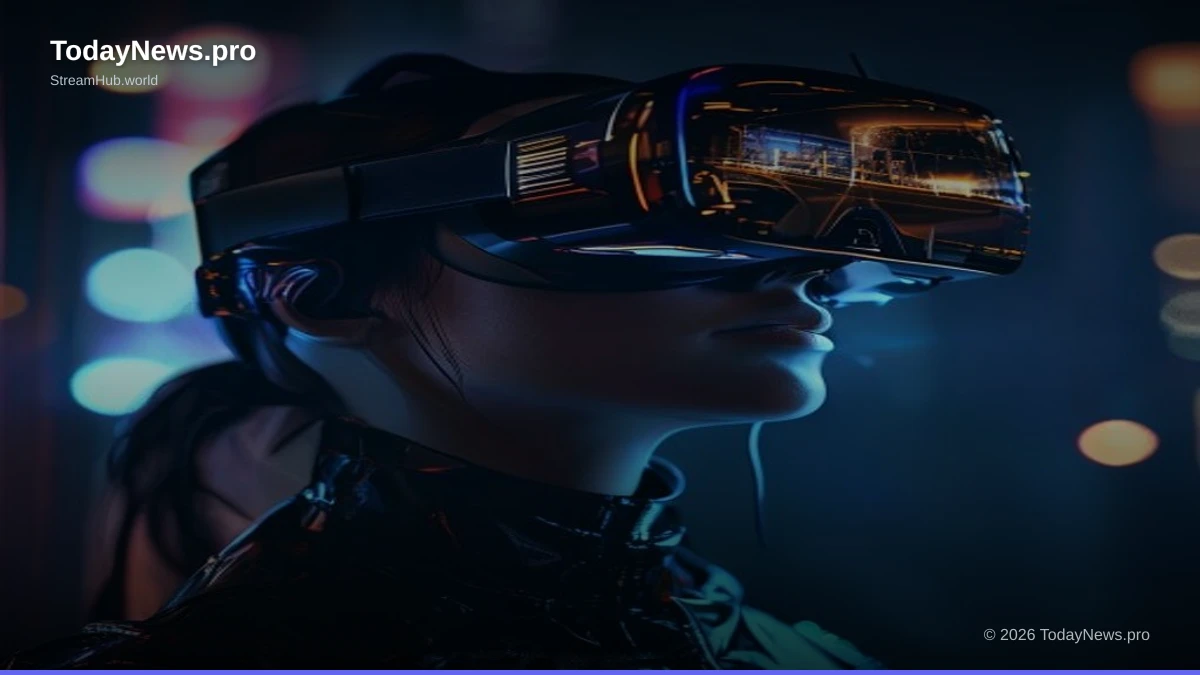
Global spending on extended reality (XR), a term encompassing virtual reality (VR), augmented reality (AR), and mixed reality (MR), is projected to reach over $300 billion by 2027, a stark indicator of its burgeoning importance beyond niche applications.
The Genesis of Merged Reality
For decades, the dream of seamlessly blending our digital and physical lives existed primarily in the realm of science fiction. Early iterations of virtual reality offered immersive, albeit often clunky, digital worlds. Augmented reality, while more integrated with the real world, was largely confined to overlays on smartphones or specialized headsets. Today, these distinct technologies are converging, not just coexisting, but actively merging to create what we now term "merged reality." This evolution marks a significant paradigm shift, moving beyond the limitations of singular experiences to a cohesive, interwoven existence.
The term "merged reality" itself is an umbrella concept, encompassing the spectrum from sophisticated AR to full-blown MR, where digital objects are not merely overlaid but interact dynamically with the physical environment. It signifies a future where the boundaries between what is real and what is digitally constructed become increasingly permeable, leading to entirely new modes of interaction, creation, and experience. This isn't just about wearing a headset; it's about integrating digital intelligence and information into the very fabric of our everyday existence.
Deconstructing Merged Reality: Beyond the Binary
The popular understanding often pits VR and AR as separate entities. Virtual Reality (VR) aims to fully immerse users in a completely digital environment, shutting out the physical world. Think of deeply engaging gaming experiences or virtual tours of distant locations. Augmented Reality (AR), conversely, overlays digital information onto the real world, enhancing it without replacing it. Smartphone apps like Pokémon GO or AR measurement tools are prime examples.
Merged reality, however, transcends this binary. It represents the sophisticated end of the XR spectrum, where digital elements possess a sense of presence and interactivity within the physical space. This means digital objects can be occluded by real-world objects, cast shadows, and react to physical movements and changes. Mixed Reality (MR) is a key component here, often used interchangeably with merged reality, but emphasizing the dynamic interaction between digital and physical elements. The ultimate goal is a fluid, intuitive blend that feels natural and unobtrusive.
Consider the difference: AR might show you a virtual sofa in your living room to see if it fits. Merged reality would allow you to walk around that virtual sofa, have it cast a shadow on your real floor, and even let a virtual pet interact with it as if it were physically present. This level of integration is what distinguishes merged reality as the next frontier.
The Continuum of Immersion
Understanding merged reality requires appreciating the XR continuum. At one end is the purely physical world, our everyday reality. Moving along the spectrum, we encounter augmented reality (AR), which adds digital layers. Further along is augmented virtuality (AV), where digital elements are integrated into a real-world context, and finally, virtual reality (VR), which completely replaces the physical world with a digital one. Merged reality, particularly MR, occupies a significant portion of this continuum, emphasizing the seamless interplay between the physical and digital.
The key differentiator lies in the degree of interaction and perception. In AR, digital objects typically exist independently of the physical environment’s geometry. In MR, digital objects are aware of and react to the physical environment, and vice-versa. This is achieved through advanced sensing, mapping, and rendering technologies that allow the digital and physical worlds to occupy the same spatial coordinates and interact intelligently.
The Technological Pillars of Merged Reality
The advent of merged reality is not a singular invention but a confluence of several rapidly advancing technological domains. Without breakthroughs in these core areas, the vision of seamless digital-physical integration would remain a distant aspiration. The sophistication of sensors, the intelligence of artificial systems, and the speed of data transmission are all critical.
Spatial Computing: The Foundation
At the heart of merged reality lies spatial computing. This paradigm shifts computing from abstract data processing to understanding and interacting with the physical world in three dimensions. It involves devices that can perceive, map, and model their surroundings in real-time, creating a digital twin of the physical environment. This mapping allows digital elements to be anchored to specific locations, interact with surfaces, and maintain their position as the user moves.
Key components of spatial computing include:
- SLAM (Simultaneous Localization and Mapping): Algorithms that allow devices to build a map of an unknown environment while simultaneously tracking their own location within that map.
- Depth Sensing: Technologies like LiDAR and structured light sensors that capture the distance of objects from the device, crucial for understanding the 3D geometry of the environment.
- Computer Vision: Algorithms that interpret visual information from cameras to recognize objects, surfaces, and people, enabling digital elements to react appropriately.
AI and Machine Learning: The Intelligent Layer
Artificial intelligence (AI) and machine learning (ML) are the invisible architects that imbue merged reality experiences with intelligence and responsiveness. AI-powered algorithms are essential for interpreting the complex data captured by sensors, enabling the system to understand context, predict user intent, and create dynamic digital interactions. From recognizing gestures and voice commands to understanding the semantics of a scene, AI is what makes merged reality feel intuitive and smart.
ML models are trained on vast datasets to perform tasks such as:
- Object Recognition: Identifying and classifying physical objects in the environment to trigger relevant digital content or interactions.
- Scene Understanding: Analyzing the overall composition of a scene to determine lighting conditions, surface types, and spatial relationships.
- User Intent Prediction: Anticipating what a user might want to do next based on their current actions and the context of the environment.
Connectivity: The Seamless Fabric
The ability to seamlessly integrate digital content and experiences relies heavily on robust and high-speed connectivity. Technologies like 5G and Wi-Fi 6 are paramount, providing the low latency and high bandwidth necessary to stream complex 3D assets, process real-time sensor data, and enable multi-user collaborative experiences without lag or stutter. Cloud computing also plays a vital role, offloading heavy processing tasks from local devices and enabling access to vast digital libraries and AI services.
This connectivity ensures that:
- Real-time Rendering: Complex digital models can be rendered and streamed to devices instantly, maintaining visual fidelity.
- Multi-user Synchronization: Multiple users can share the same merged reality space and interact with shared digital objects in real-time.
- Persistent Digital Layers: Digital information and objects can be reliably anchored to specific physical locations, accessible across different devices and sessions.
Applications Across Industries
The implications of merged reality extend far beyond gaming and entertainment. Its ability to overlay context-aware digital information and enable intuitive interaction with both physical and digital objects is poised to revolutionize numerous industries, boosting efficiency, enhancing creativity, and transforming how we work, learn, and engage with the world.
Transforming the Workplace
In the corporate world, merged reality promises significant productivity gains. Remote collaboration can be elevated from flat video calls to shared immersive workspaces where colleagues can interact with 3D models, review designs in situ, and troubleshoot complex machinery as if they were all physically present. Training and onboarding can become far more effective and engaging, allowing employees to practice complex tasks in a safe, simulated environment with real-time feedback.
Consider a surgeon practicing a new procedure on a digital twin of a patient, or an engineer remotely guiding a technician through a repair by annotating the physical equipment with digital instructions visible only to the technician. Field service technicians can receive step-by-step guidance overlaid onto their view of the machinery, reducing errors and repair times. Architects and designers can walk through full-scale virtual models of buildings on their actual construction sites, identifying potential issues before they arise.
| Industry | Merged Reality Application | Potential Benefit |
|---|---|---|
| Manufacturing | Remote assistance, design visualization, training simulations | Reduced downtime, improved quality control, faster product development |
| Healthcare | Surgical planning, patient education, remote diagnostics | Enhanced patient outcomes, improved training for medical professionals |
| Retail | Virtual try-ons, personalized shopping experiences, store layout optimization | Increased customer engagement, higher conversion rates |
| Education | Immersive learning modules, virtual field trips, interactive simulations | Increased student engagement, deeper understanding of complex subjects |
Revolutionizing Education
The classroom of the future will likely be profoundly shaped by merged reality. Abstract concepts in science, history, and mathematics can be brought to life through interactive 3D models and simulations. Students can dissect a virtual frog without harming an animal, explore the human circulatory system from the inside, or stand on the surface of Mars for a virtual field trip. This hands-on, experiential learning approach fosters deeper understanding and retention compared to traditional methods.
Imagine a history lesson where students can virtually walk through ancient Rome, or a physics class where they can manipulate forces in a simulated environment to understand their effects. Merged reality can also make education more accessible, allowing students with mobility issues to participate in virtual excursions and providing personalized learning paths tailored to individual needs and paces. The ability to visualize complex data and processes in 3D can demystify challenging subjects and spark a passion for lifelong learning.
Enhancing Entertainment and Social Interaction
While VR has already made significant inroads into gaming, merged reality will redefine interactive entertainment. Imagine playing a game where digital characters interact with your actual living room, or attending a live concert where virtual effects are seamlessly integrated with the physical stage. Social interactions can also evolve, with avatars that are more lifelike and able to share digital experiences within real-world environments.
The potential for creating shared digital experiences in physical spaces is vast. Friends could collaboratively build virtual worlds in a park, or watch a movie together with digital characters appearing in their shared living room. The lines between passive consumption and active participation will blur, leading to more engaging and personalized forms of entertainment. This can also extend to social gatherings, where augmented elements can enhance decorations, provide interactive games, or offer personalized information about attendees.
Challenges and Ethical Considerations
As merged reality systems become more sophisticated and integrated into our lives, a host of challenges and ethical questions arise. These range from fundamental concerns about privacy and data security to the societal implications of a reality increasingly mediated by technology.
Privacy and Data Security
Merged reality devices, by their very nature, collect an unprecedented amount of personal data about users and their environments. High-resolution cameras, microphones, and depth sensors capture everything from personal conversations and intimate spaces to the habits and routines of individuals. This rich data trove presents significant privacy risks if not handled with the utmost care and robust security measures. Who owns this data? How is it stored and protected from breaches? What are the implications if this data is misused for surveillance or targeted manipulation?
The potential for mass surveillance, whether by corporations or governments, is a pressing concern. The intimate knowledge gathered by these devices could be exploited for highly personalized advertising, behavioral manipulation, or even to track individuals' movements and associations in detail. Establishing clear regulations and ethical guidelines for data collection, usage, and retention is crucial before widespread adoption. The Electronic Frontier Foundation actively campaigns for digital privacy rights in emerging technologies.
Digital Divide and Accessibility
The advent of merged reality could exacerbate existing digital divides. High-end merged reality hardware and the necessary high-speed internet infrastructure are currently expensive and not universally accessible. This creates a risk of a two-tiered society where those with access can benefit from enhanced education, job opportunities, and social connections, while those without are left further behind. Ensuring equitable access and affordability will be critical to prevent merged reality from becoming an exclusive privilege.
Furthermore, the design of merged reality experiences must consider individuals with disabilities. Are interfaces accessible to those with visual, auditory, or motor impairments? Can digital content be adapted to different sensory needs? Proactive design considerations are essential to ensure that merged reality benefits everyone, rather than creating new barriers.
The Blurring Lines of Reality
Perhaps the most profound societal impact of merged reality lies in its potential to blur the lines between what is real and what is digitally constructed. As digital experiences become more immersive and indistinguishable from physical reality, questions of authenticity, perception, and even sanity may arise. How will we differentiate between genuine interactions and simulated ones? What are the psychological effects of prolonged immersion in digitally enhanced or entirely virtual worlds?
There is also the risk of "reality fatigue" or a detachment from the physical world. If digital experiences offer constant stimulation and escape, will individuals lose interest in the complexities and challenges of the real world? Navigating these philosophical and psychological implications will require careful societal dialogue and a conscious effort to maintain a healthy balance between our digital and physical lives. Understanding the psychology behind these immersive technologies is crucial, with Wikipedia's entry on Virtual Reality touching upon some of these aspects.
The Future Trajectory: Towards Ubiquitous Merged Reality
The journey towards ubiquitous merged reality is well underway, with technological advancements accelerating at an unprecedented pace. The current generation of devices, while impressive, represents merely the nascent stage of what is possible. Future iterations are expected to be lighter, more comfortable, and offer even higher fidelity in visual and auditory experiences, blurring the lines between the digital and physical to an almost imperceptible degree.
The convergence of AI, advanced optics, and miniaturized sensors will lead to devices that are as unobtrusive as eyeglasses or even contact lenses, seamlessly projecting information and allowing for intuitive interaction without bulky headsets. This seamless integration will unlock a wave of new applications and societal shifts, fundamentally altering how we perceive and interact with our surroundings. The metaverse, often discussed in the context of VR, will find its most powerful expression not as a separate digital realm, but as an interwoven layer accessible through merged reality devices.
The ultimate goal is a world where digital information and experiences are as readily available and intuitive as our physical senses. Imagine walking down a street and seeing real-time public transport information overlaid on bus stops, or looking at a historical building and instantly accessing its history and architectural details. The potential for education, productivity, and personal enrichment is staggering. As Dr. Anya Sharma of Futura Labs eloquently puts it, "The future isn't about escaping to a digital world, but about enhancing our existing one with intelligent, interactive digital layers that serve our needs and expand our capabilities." This sentiment encapsulates the promise of merged reality: a more informed, efficient, and creatively empowered existence.
The path forward will undoubtedly involve overcoming technical hurdles and societal challenges. However, the trajectory is clear: merged reality is not a fleeting trend but the foundational technology for the next era of human-computer interaction. The integration of digital intelligence into our physical world promises a future that is more connected, more informed, and richer in experience than we can currently comprehend. The transition from abstract digital interfaces to an integrated merged reality is a testament to human ingenuity and our enduring quest to transcend limitations.