

 Amanda Pope
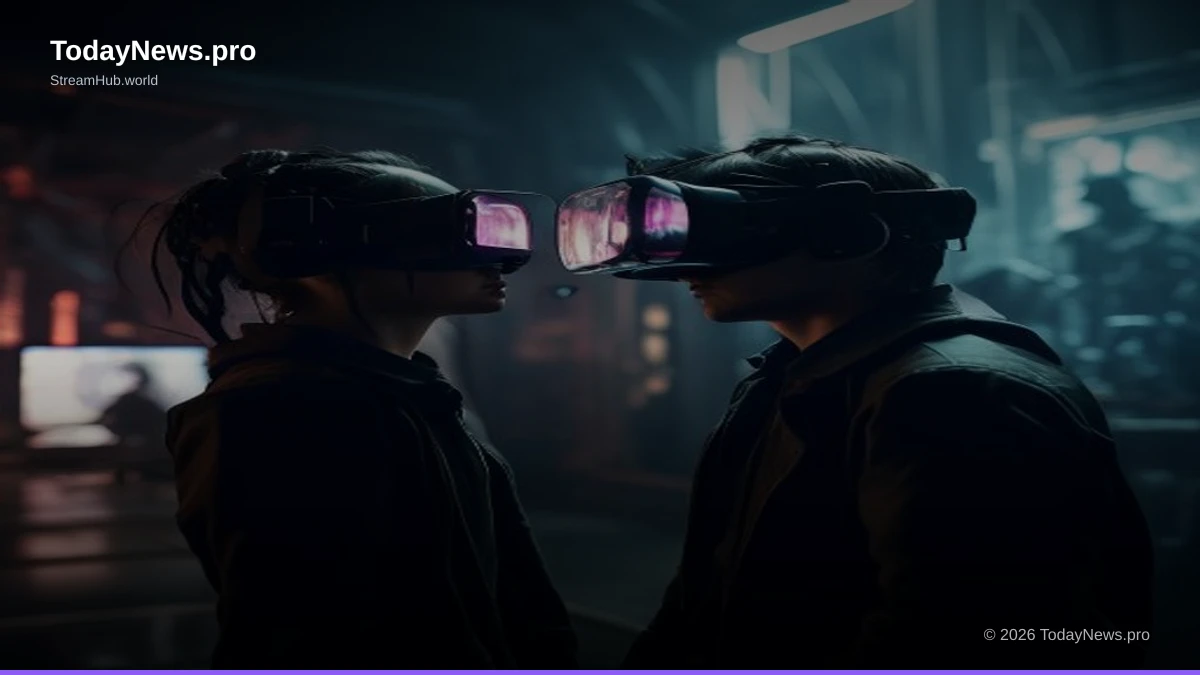
The global market for interactive entertainment, encompassing video games and immersive VR experiences, is projected to reach over $300 billion by 2027, a testament to the growing demand for engaging, participatory narratives.
From Passive to Participatory: The Shifting Landscape of Narrative
For centuries, storytelling has been a predominantly passive experience. Audiences consumed narratives, absorbing tales spun by authors, playwrights, and filmmakers. The engagement was intellectual and emotional, but rarely physical or decision-driven. The advent of new technologies, however, has fundamentally altered this dynamic, ushering in an era where the audience is no longer merely a spectator but an active participant in shaping the unfolding story.
This evolution is not a sudden leap but a gradual metamorphosis, driven by technological innovation and a growing desire for more personalized and impactful entertainment. We have moved from simply watching stories to influencing them, and now, to living within them.
The Dawn of Interactivity: Early Forays in Film
While the term "interactive storytelling" might evoke modern digital mediums, its roots can be traced back to early cinematic experiments. The concept of allowing audiences to influence the narrative, however rudimentary, was a fascinating prospect even in the silent film era. These early attempts often involved mechanical or simplistic branching mechanisms.
One of the earliest notable examples was the 1911 film "The Power of the Press," which featured a scene where the audience could vote on a character's fate. While this was a novelty, it laid a conceptual groundwork for audience agency. Later, in the 1960s, the Choose Your Own Adventure book series sparked widespread interest in branching narratives, demonstrating a clear appetite for stories where readers could dictate the plot's direction.
The Cine-Tactic Experiments
In the 1960s, experimental filmmakers explored ways to integrate audience participation directly into the screening experience. These were often low-tech but conceptually ambitious. One such example was the "Cine-Tactic" system, which allowed audiences to make choices through simple button presses, affecting which segment of film was shown next.
These experiments, though limited in scope and impact, highlighted a core human desire: to have a say in the stories we experience. They were precursors to more sophisticated interactive media, proving that the seeds of participatory narrative were sown long before the digital revolution.
Branching Narratives and the Rise of FMV
The 1980s and 1990s saw a significant acceleration in interactive storytelling, largely driven by the burgeoning home video market and the introduction of Full Motion Video (FMV) games. These games combined pre-recorded video footage with interactive elements, allowing players to make choices that would lead to different plot outcomes.
FMV games offered a tantalizing glimpse into a future where the line between film and game would blur. Titles like "Night Trap" and "Dragon's Lair" became cult classics, captivating audiences with their cinematic presentation and the thrill of influencing the on-screen action. However, technical limitations and the often-limited scope of interactivity meant these games rarely achieved the narrative depth of traditional films.
The CD-ROM Revolution
The widespread adoption of CD-ROM drives in personal computers was a pivotal moment. It allowed for much larger storage capacities, enabling richer visuals and more complex branching storylines. This era saw the rise of narrative-driven adventure games that heavily utilized FMV, such as "Myst" and "The 7th Guest."
While not strictly "films," these games were deeply cinematic in their presentation and focused on intricate narratives that players unraveled through exploration and puzzle-solving. They demonstrated that interactive storytelling could be a powerful medium for immersive and engaging experiences, even without traditional acting performances.
| Year | Title/Technology | Significance |
|---|---|---|
| 1911 | The Power of the Press | Early cinematic experiment with audience voting. |
| 1980s | Choose Your Own Adventure books | Popularized branching narrative concepts. |
| 1983 | Dragon's Lair | Pioneering FMV arcade game with cinematic animation. |
| 1992 | Night Trap | Controversial FMV game highlighting interactive narrative potential. |
| 1993 | Myst | Massively successful CD-ROM adventure game with immersive environments. |
Video Games: The Original Interactive Storytellers
It is impossible to discuss interactive storytelling without acknowledging the profound influence and innovation of the video game industry. From its earliest arcade roots, gaming has inherently been about interaction, and over decades, this interaction has evolved to encompass increasingly sophisticated narrative experiences.
Early text-based adventures and graphical role-playing games (RPGs) laid the foundation for complex narratives driven by player choice. Games like "Zork" and "Ultima" offered vast worlds and intricate storylines that players could influence through their decisions and actions.
The Era of Player Agency
The PlayStation 2, Xbox, and GameCube era, followed by the current generation of consoles, witnessed an explosion in narrative ambition within video games. Developers began to focus on character development, emotional arcs, and branching storylines that had genuine consequences. Games like "Mass Effect," "The Witcher" series, and "Detroit: Become Human" are prime examples of this trend, offering players the power to shape the fate of characters, entire worlds, and the very outcome of the story.
These games often employ complex dialogue trees, moral choices, and emergent gameplay mechanics that create unique narrative paths for each player. The player's actions are not just cosmetic; they can lead to vastly different endings, character relationships, and plot developments, making each playthrough a distinct storytelling experience.
Indie Developers and Narrative Innovation
The rise of independent game development has also been a significant catalyst for narrative experimentation. Freed from the constraints of large publishers, indie developers have pushed boundaries, exploring unconventional storytelling techniques and themes. Games like "Undertale," "Celeste," and "Outer Wilds" demonstrate incredible narrative depth and originality, often achieved with smaller budgets but immense creative vision.
These titles frequently challenge player expectations and explore complex emotional landscapes, proving that compelling interactive stories can come in all shapes and sizes. They have become vital incubators for new ideas that often influence the mainstream industry.
Virtual Reality: Immersive Worlds, Unprecedented Agency
Virtual Reality (VR) represents the next frontier in interactive storytelling, offering a level of immersion and agency previously unimaginable. Unlike traditional media, VR places the user directly within the narrative world, allowing them to look around, interact with objects, and even influence events through their physical presence and actions.
This shift from viewing a story to being *in* a story fundamentally changes the audience's relationship with the narrative. The sense of presence and embodiment in VR can evoke powerful emotional responses and create deeply personal storytelling experiences. Websites like Meta Quest showcase a growing library of VR narratives.
Embodiment and Environmental Storytelling
In VR, the environment itself becomes a crucial storytelling element. Players can physically explore and interact with their surroundings, uncovering clues, piecing together lore, and understanding the narrative through their own actions and observations. This form of "environmental storytelling" is highly effective in VR, making the world feel alive and responsive.
Furthermore, the concept of embodiment—feeling like you are truly present in the virtual space—enhances the emotional impact of the story. When a virtual character looks you in the eye or reacts to your gestures, the connection feels far more profound than any mediated experience. This has led to the development of VR films and experiences that leverage these unique qualities, such as "TheBlu" and "Beat Saber" (which, while a rhythm game, uses immersive environments to enhance the experience).
The Future of VR Narratives
The potential for VR in storytelling is vast. We are seeing early experiments in VR documentaries, interactive dramas, and even entirely new forms of narrative that are only possible within a virtual space. As VR hardware becomes more accessible and sophisticated, and as creators hone their storytelling techniques for this medium, we can expect to see increasingly compelling and emotionally resonant interactive VR experiences.
The challenges remain, including the cost of hardware, motion sickness for some users, and the need for robust content creation tools. However, the promise of truly immersive, participatory storytelling in VR is a powerful driving force for innovation. For more on the technology, see Wikipedia's Virtual Reality page.
The Convergence: Blurring Lines Between Film, Games, and VR
The distinction between traditional film, video games, and VR experiences is becoming increasingly blurred. As technologies evolve and creative ambitions grow, we are witnessing a fascinating convergence of these mediums.
The rise of "cinematic games" that boast Hollywood-level production values and character performances, alongside VR experiences that are increasingly adopting cinematic storytelling techniques, signals a new era of hybrid forms. Platforms that were once exclusively for one medium are now embracing elements of the others.
Interactive Films and Streaming Innovations
Streaming services are experimenting with interactive content, allowing viewers to make choices that affect the narrative. Netflix's "Bandersnatch" is a prominent example, offering a choose-your-own-adventure style film that garnered significant attention. While not as deeply interactive as a video game, it demonstrated a consumer appetite for more participatory viewing experiences on mainstream platforms.
These innovations suggest a future where passive viewing and active participation are not mutually exclusive but can coexist within the same entertainment ecosystem. The challenge lies in balancing accessibility for casual viewers with meaningful agency for those seeking deeper engagement.
The Role of AI in Future Storytelling
Artificial intelligence (AI) is poised to play a significant role in the evolution of interactive storytelling. AI can be used to generate dynamic storylines, create responsive characters, and personalize narratives in real-time based on player actions and preferences. Imagine an AI dungeon master that can adapt an entire quest on the fly based on your character's decisions.
This could lead to truly unique and infinitely replayable narrative experiences. For insights into AI's broader impact, consult Reuters' coverage of Artificial Intelligence.
Challenges and Opportunities in Interactive Storytelling
Despite the exciting advancements, interactive storytelling faces significant hurdles. The complexity of developing branching narratives can be exponentially higher than traditional linear storytelling, demanding more time, resources, and specialized skills from development teams.
Ensuring that player choices have meaningful consequences without creating an unmanageable number of narrative paths is a constant challenge. Furthermore, the audience's expectations are constantly rising, demanding more sophisticated interactions and emotionally resonant stories.
Monetization and Accessibility
Finding sustainable business models for interactive storytelling, particularly in VR, remains an ongoing challenge. While games have established models like premium purchases, free-to-play with microtransactions, and subscriptions, interactive films and VR experiences are still finding their footing. Ensuring accessibility for a broad audience, considering the cost of VR hardware and the learning curve for some interactive mechanics, is also crucial.
The Future Landscape
The future of interactive storytelling promises a rich tapestry of experiences. We can anticipate further integration of AI, more sophisticated VR and AR applications, and innovative approaches to narrative design across all platforms. The core human desire to connect with stories and to have a role in their unfolding will continue to drive innovation.
As technology advances, the boundaries between creator and audience will continue to dissolve, leading to more personalized, immersive, and impactful narrative journeys. The evolution is far from over, and the most compelling interactive stories may still be on the horizon.