

 James Holloway
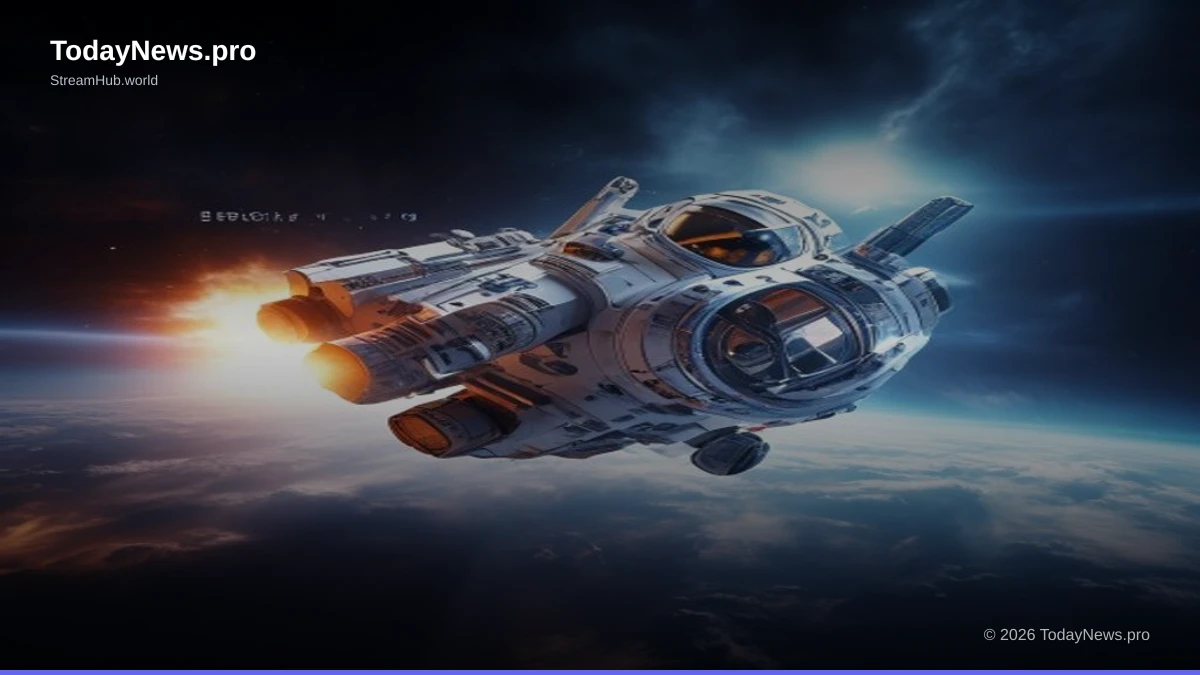
The global space economy, projected to reach $1.5 trillion by 2040, is no longer a domain solely for national space agencies; it is rapidly evolving into a vibrant commercial frontier, driven by the audacious dreams of space tourism and the profound imperative of deep space exploration.
The Dawn of a New Era: Space Tourism Takes Flight
For decades, space was the exclusive preserve of highly trained astronauts, a realm of arduous missions and immense scientific endeavor. The public imagination, however, has always been captivated by the cosmos, fueled by science fiction and the iconic images from space. Now, that dream is slowly but surely becoming accessible to a select few, marking the genesis of the commercial space tourism industry. This burgeoning sector promises not just breathtaking views but a fundamental shift in humanity's relationship with space, transforming it from a distant frontier into a potential destination.
The allure of experiencing weightlessness, witnessing the curvature of the Earth from above, and feeling the profound silence of the vacuum is an unparalleled draw. Companies are racing to offer these experiences, each with a distinct philosophy and technological approach. This competition is not only accelerating innovation but also driving down costs, making the prospect of space travel more tangible for future generations. The initial price tags are astronomical, yet the demand signals a significant market eager to participate.
The implications extend beyond mere recreation. The development of reusable spacecraft, advanced life support systems, and robust safety protocols for civilian spaceflight has direct applications for more ambitious endeavors, including scientific research and long-term human presence in space. The commercialization of space tourism is, in essence, a powerful engine for technological advancement, pushing the boundaries of what is currently possible.
Suborbital vs. Orbital: Two Paths to the Stars
Currently, the space tourism market is largely bifurcated into two main categories: suborbital and orbital flights. Suborbital flights, often referred to as "space tourism for the masses" (though still exceedingly expensive), offer a brief but exhilarating journey to the edge of space. Passengers experience a few minutes of weightlessness and witness the Earth from an altitude of approximately 100 kilometers (around 62 miles), the internationally recognized boundary of space. Orbital flights, on the other hand, are far more complex and costly, involving journeys to the International Space Station (ISS) or dedicated private space stations, allowing for days of continuous space travel and more extensive microgravity experiences.
The technological hurdles for each are significant. Suborbital vehicles, like those developed by Virgin Galactic and Blue Origin, often utilize rocket-powered launches and atmospheric re-entry. Orbital missions, however, require sustained propulsion to achieve orbital velocity and sophisticated docking capabilities, as demonstrated by SpaceX's missions to the ISS. The regulatory frameworks, safety certifications, and insurance requirements are also vastly different, reflecting the increased risks and complexities associated with higher-altitude and longer-duration missions.
Virgin Galactic: Pioneering Suborbital Joyrides
Virgin Galactic, founded by Sir Richard Branson, has been a prominent name in the space tourism race for over a decade. Their approach centers on a unique air-launch system, where their spacecraft, the VSS Unity, is carried aloft by a mothership, the WhiteKnightTwo, before detaching and igniting its rocket motor to ascend to the edge of space. This method allows for a gentler ascent and a more controlled descent compared to traditional vertical rocket launches.
The VSS Unity has successfully completed multiple test flights, including carrying passengers, demonstrating the viability of their suborbital concept. Passengers typically experience several minutes of weightlessness and spectacular views of Earth before returning for a runway landing, similar to an airplane. The company aims to offer regular commercial flights from Spaceport America in New Mexico, with a growing backlog of reservations.
The economic model for Virgin Galactic relies on a high-ticket price, with initial seats reportedly costing hundreds of thousands of dollars. However, the company's long-term vision includes scaling up operations to make these flights more accessible over time. The success of Virgin Galactic’s suborbital program is a crucial step in proving the commercial feasibility of private space travel for a broader audience.
The Evolution of SpaceShipTwo
The VSS Unity is the second iteration of Virgin Galactic's SpaceShipTwo design. The first, VSS Enterprise, tragically broke apart during a test flight in 2014, resulting in a fatality. This event underscored the inherent risks of spaceflight and led to significant re-engineering and enhanced safety protocols for subsequent designs. The lessons learned from the VSS Enterprise incident have been critical in the development of the VSS Unity, emphasizing rigorous testing and a phased approach to increasing operational capabilities.
The SpaceShipTwo system is designed for vertical take-off and horizontal landing, utilizing a hybrid rocket motor and a unique feather re-entry system for a safe descent. The spacecraft is capable of carrying six passengers and two pilots, offering an intimate and exclusive spaceflight experience. The development timeline has been longer than initially anticipated, a common theme in complex aerospace projects, but the progress made is undeniable.
Blue Origin: A Different Approach to the Frontier
Founded by Amazon founder Jeff Bezos, Blue Origin has pursued a strategy focused on vertical take-off and vertical landing (VTVL) reusable rocket technology. Their New Shepard system is designed to carry six passengers on suborbital flights, reaching altitudes above 100 kilometers. Unlike Virgin Galactic's air-launch, New Shepard launches vertically from a launchpad and lands vertically, employing multiple fins for stabilization during descent and retro-rockets for a soft landing.
Blue Origin's approach emphasizes robust engineering and a methodical testing process. The New Shepard capsule is equipped with large windows to provide passengers with panoramic views of Earth and space. The company has conducted numerous uncrewed and crewed test flights, progressively increasing the complexity and duration of its missions. Bezos himself has flown on one of these missions, demonstrating his commitment to the venture.
The company’s long-term vision extends beyond suborbital tourism. Blue Origin is developing the New Glenn, a heavy-lift orbital launch vehicle, and is a key player in NASA’s efforts to return humans to the Moon with its Blue Moon lander. This dual focus on tourism and deeper space exploration showcases a comprehensive strategy for commercial space development.
The Reusable Rocket Revolution
Both Virgin Galactic and Blue Origin are deeply invested in the concept of reusable spacecraft. This is a fundamental shift from the era of expendable rockets, where each launch meant discarding a massive, expensive piece of hardware. By making their launch systems and spacecraft reusable, these companies aim to drastically reduce the cost per launch, which is a critical factor in making space travel more accessible.
Blue Origin's VTVL technology for New Shepard is a testament to this. The booster and capsule are designed to return to Earth autonomously and land safely, allowing for rapid refurbishment and relaunch. This reusability not only lowers operational costs but also reduces space debris and environmental impact, aligning with growing global concerns about sustainability. The success of this reusable technology is a cornerstone of their commercial viability.
SpaceX: Redefining Orbital and Beyond
Elon Musk's SpaceX has perhaps been the most disruptive force in the commercial space sector. While not exclusively a tourism company, SpaceX's development of reusable orbital-class rockets, the Falcon 9 and Falcon Heavy, has revolutionized access to space. Their Crew Dragon spacecraft has successfully ferried astronauts to the International Space Station for NASA, marking the return of American human spaceflight capability and opening the door for private astronaut missions.
SpaceX's ambitions are grander than mere suborbital hops. They have facilitated private astronaut missions to the ISS, such as the "Inspiration4" mission, which was the first all-civilian orbital spaceflight. These missions, while still immensely expensive, demonstrate the growing capability for private individuals to travel and conduct activities in Earth orbit. The company is also developing its Starship, a fully reusable super heavy-lift launch system designed for interplanetary travel, including missions to Mars.
The Starship program represents a paradigm shift, aiming to make deep space exploration and potentially colonization a reality. If successful, Starship could drastically lower the cost of sending payloads and humans to the Moon, Mars, and beyond, fundamentally changing the economics and feasibility of space exploration. SpaceX's rapid iteration and development cycles, often involving spectacular but informative test failures, have accelerated their progress.
Private Missions to the ISS and Beyond
SpaceX's partnership with NASA to transport astronauts to the ISS has paved the way for private astronaut missions. These missions, often organized by private companies like Axiom Space, allow paying customers to spend time on the orbiting laboratory, conducting research or simply experiencing spaceflight. The Crew Dragon spacecraft, designed with comfort and safety in mind, can accommodate up to four private astronauts.
These missions serve a dual purpose: they generate revenue for SpaceX, helping to fund their more ambitious projects, and they provide valuable experience in operating human spaceflight missions with non-professional astronauts. The success of these missions is crucial for building public confidence and demonstrating the safety and feasibility of private orbital travel. The data gathered from these flights is invaluable for refining procedures and systems for future, more extensive missions.
The Starship Vision: Mars and Interplanetary Travel
The development of SpaceX's Starship is arguably the most significant undertaking in the pursuit of deep space exploration and commercialization. Starship is designed to be a fully reusable, super heavy-lift launch system capable of carrying over 100 tons of payload or people to orbit. Its ultimate goal is to facilitate human missions to Mars and beyond, with Musk envisioning a self-sustaining city on the red planet.
The iterative design and testing process for Starship has been highly public, with rapid prototyping and numerous flight tests at SpaceX's Starbase facility in Texas. While facing setbacks and considerable engineering challenges, the progress made in developing such a complex system is unprecedented. The potential of Starship to drastically reduce the cost of interplanetary travel could usher in a new era of space exploration and settlement.
| Company | Primary Focus | Vehicle(s) | Current Status | Estimated Ticket Price (Suborbital) |
|---|---|---|---|---|
| Virgin Galactic | Suborbital Tourism | VSS Unity, WhiteKnightTwo | Commercial flights underway | $450,000+ |
| Blue Origin | Suborbital Tourism, Deep Space Exploration | New Shepard, New Glenn (future) | Commercial flights underway | Undisclosed, estimated $200,000 - $300,000 |
| SpaceX | Orbital Missions, Deep Space Exploration | Crew Dragon, Falcon 9, Starship (future) | Orbital private missions to ISS, Starship testing | Starting from $55 million (orbital) |
The Unforeseen Challenges and Tremendous Costs
Despite the rapid advancements, the commercialization of space tourism and deep space exploration is fraught with significant challenges. The sheer cost of developing, building, and operating spacecraft is astronomical. The materials, manufacturing processes, and rigorous testing required for space-grade hardware are incredibly expensive. Furthermore, regulatory hurdles, safety certifications, and insurance premiums add substantial overhead.
Safety is paramount. Spaceflight remains an inherently risky endeavor. Even with the most advanced technology, the possibility of catastrophic failure cannot be entirely eliminated. The public perception of safety is crucial for the long-term success of the industry. Any major accident could have devastating consequences for investor confidence and public acceptance.
The environmental impact of increased rocket launches is also a growing concern. The long-term effects of rocket emissions on the upper atmosphere are not fully understood, and as launch frequencies increase, this will become a more pressing issue. Developing cleaner propulsion systems and more efficient launch technologies will be vital for sustainable growth.
Regulatory and Legal Frameworks
The legal and regulatory landscape for commercial space activities is still evolving. While nations have established frameworks for national space programs, the rapid growth of private sector involvement presents new challenges. This includes issues related to liability in case of accidents, traffic management in orbit, space debris mitigation, and the definition of national airspace versus international space.
International cooperation and standardization are essential to ensure the safe and orderly development of the space industry. Agencies like the United Nations Office for Outer Space Affairs (UNOOSA) play a role in fostering dialogue and developing guidelines. However, the pace of technological innovation often outstrips the pace of regulatory development, creating a dynamic and sometimes uncertain environment for companies.
The High Price of Admission
Currently, space tourism remains accessible only to the ultra-wealthy. The cost of a suborbital flight can run into hundreds of thousands of dollars, and orbital missions are in the tens of millions. While companies are striving to reduce these costs through reusability and economies of scale, it will likely be many years before space travel becomes affordable for the average person.
This exclusivity raises questions about equity and access. As the industry matures, there will be increasing pressure to find ways to democratize space access, perhaps through sponsored research missions, educational programs, or future technological breakthroughs that dramatically lower costs. The current market is driven by luxury and novelty, but the long-term vision must include broader participation.
Beyond Tourism: The Drive for Deep Space Exploration
While space tourism captures the public imagination, the true frontier of human ambition lies in deep space exploration. This involves venturing beyond Earth's orbit to explore the Moon, Mars, asteroids, and potentially the outer solar system. The driving forces behind this endeavor are multifaceted: scientific discovery, resource utilization, the search for extraterrestrial life, and ultimately, the long-term survival and expansion of humanity.
National space agencies like NASA, ESA, and CNSA continue to play a pivotal role, but increasingly, private companies are becoming indispensable partners. Their innovative technologies, agile development, and private investment are accelerating the pace of exploration. This collaborative model, often referred to as a "public-private partnership," is shaping the future of how we explore the cosmos.
The economic potential of deep space exploration is also significant. Asteroid mining, lunar resource utilization (such as water ice for fuel and life support), and the establishment of off-world outposts could create entirely new industries and economies. These endeavors require robust launch capabilities, advanced life support, and reliable in-space transportation – areas where the commercial space sector is making rapid strides.
The New Space Race: A Global Endeavor
The current era is often described as a "new space race," but it's a race with different dynamics than the Cold War competition between the US and the Soviet Union. Today, the race involves not only national agencies but also a growing number of private companies and a more diverse set of participating nations. This broad participation fosters innovation and allows for a more distributed approach to exploration.
Key players include not only established space powers but also emerging nations with ambitious space programs. The Moon is once again a focal point, with multiple countries and companies planning missions to establish a sustained presence. This renewed interest in lunar exploration is seen as a stepping stone for more ambitious missions to Mars and beyond.
Scientific Returns and the Search for Life
The scientific discoveries awaiting us in deep space are profound. Studying other celestial bodies can provide invaluable insights into the formation of our solar system, the origins of life, and the fundamental laws of physics. Missions to Mars, for example, are actively searching for signs of past or present microbial life, a discovery that would have revolutionary implications for our understanding of biology.
The James Webb Space Telescope, a collaboration between NASA, ESA, and CSA, is already revolutionizing astrophysics by peering deeper into the universe than ever before, searching for the first stars and galaxies. Future telescopes, both ground-based and space-based, will continue this quest, seeking to answer fundamental questions about our place in the cosmos and the possibility of life elsewhere.
The Lunar Gateway and Artemis: A Stepping Stone to Mars
NASA's Artemis program represents a significant commitment to returning humans to the Moon and establishing a sustainable presence there. A critical component of this program is the Lunar Gateway, a small space station that will orbit the Moon. The Gateway will serve as a staging point for lunar surface missions, a research laboratory, and a vital waypoint for future deep space exploration, including missions to Mars.
The Gateway is being developed through international and commercial partnerships. Companies like SpaceX are providing launch services for Gateway components, and private companies are expected to contribute modules and services. This collaborative approach is essential for managing the immense cost and complexity of such an ambitious undertaking.
The Artemis missions will involve not only landing astronauts on the lunar south pole, where water ice is believed to exist, but also conducting extensive scientific research, testing new technologies for long-duration spaceflight, and paving the way for future lunar bases. The Moon is seen as an ideal proving ground for the technologies and operational strategies needed for eventual human missions to Mars.
The Artemis program is also fostering the development of new lunar landers, including those from commercial providers like SpaceX and Blue Origin. These landers will be crucial for transporting astronauts and cargo to the lunar surface, and their development is accelerating the pace of lunar exploration. The competition among these companies is driving innovation and reducing costs, much like the early days of the commercial space race.
The Private Sectors Growing Influence in Scientific Missions
Beyond tourism and human exploration, the private sector is increasingly involved in scientific missions that were once exclusively the domain of national space agencies. Companies are developing small satellite constellations for Earth observation, communications, and even scientific research. This trend is democratizing access to space for scientific institutions and enabling more frequent and diverse research opportunities.
For example, private companies are building and launching CubeSats and small satellites that can carry specialized scientific instruments. These smaller, more affordable platforms allow universities and smaller research groups to conduct their own space-based experiments, accelerating scientific discovery across a wide range of disciplines, from atmospheric science to astrophysics.
Furthermore, private companies are offering launch services for these smaller payloads at significantly lower costs than traditional rockets. This has opened up opportunities for researchers who previously lacked the funding or access to launch their experiments. The integration of private sector capabilities into national space programs is becoming a standard model, allowing agencies to focus on their core scientific objectives while leveraging the efficiency and innovation of commercial partners.
The future of space exploration and commercialization is being shaped by a dynamic interplay between government initiatives and private enterprise. As technology advances and costs decrease, the dream of space tourism will become more accessible, and the grander ambitions of deep space exploration will move closer to reality. The journey "to infinity and beyond" has truly begun.