

 Alexander Veller
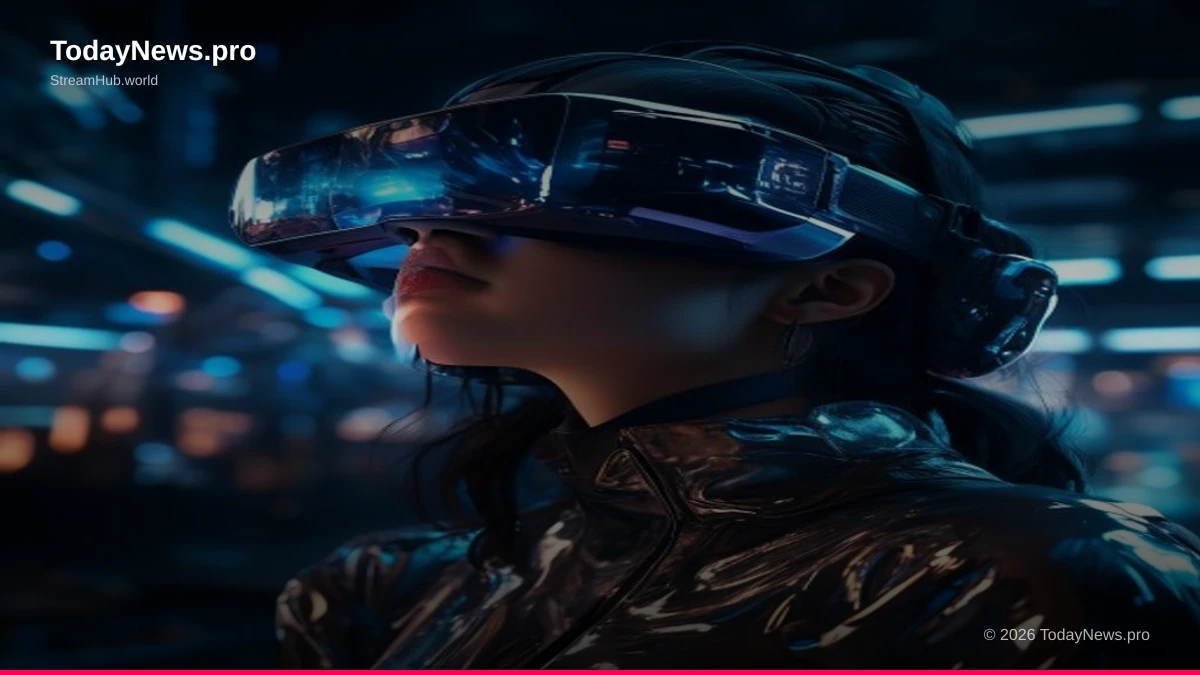
By 2028, the global Extended Reality (XR) market is projected to reach an astonishing $571.7 billion, a significant leap from its current valuation, signaling a profound shift in how we interact with digital information and experiences. This explosive growth underscores a critical transition: moving beyond the nascent stages of the "metaverse" concept to designing truly profound, believable, and impactful XR environments.
The Immersive Horizon: Beyond the Hype
The initial wave of XR, often bundled under the umbrella term "metaverse," focused heavily on novelty and speculative futures. While groundbreaking, many early experiences felt akin to advanced video games or glorified 3D websites. The true promise of Extended Reality—encompassing Virtual Reality (VR), Augmented Reality (AR), and Mixed Reality (MR)—lies not just in replicating physical spaces, but in augmenting human capabilities, fostering deeper connections, and unlocking entirely new forms of interaction and understanding. The period between 2026 and 2030 will be defined by a maturation of this technology, moving from experimental playgrounds to sophisticated tools and profound artistic expressions.
This evolution is driven by a confluence of factors: advancements in processing power, the miniaturization of sensors, the development of more intuitive user interfaces, and a growing understanding of human perception and cognition within digital environments. Companies and researchers are no longer content with simply layering digital onto physical; they are meticulously crafting experiences that engage our senses holistically, foster genuine emotional responses, and create a profound sense of "presence"—the feeling of truly being there.
The concept of "presence" is paramount. It's not just about high-fidelity graphics or realistic soundscapes. It's about the seamless integration of sensory input, intuitive interaction, and a narrative or functional context that makes the virtual or augmented world feel as real and consequential as our physical one. Achieving this requires a multidisciplinary approach, blending cutting-edge technology with deep insights from psychology, neuroscience, and design theory.
Defining True Immersion
True immersion in XR transcends passive observation. It demands active participation, believable feedback, and a sense of agency within the digital realm. This means moving beyond the limitations of current controllers and interfaces to more naturalistic forms of interaction. Think of gestures that are as nuanced as human communication, haptic feedback that mimics the texture and resistance of real-world objects, and auditory cues that accurately reflect spatial positioning and environmental acoustics.
The distinction between VR, AR, and MR will continue to blur as devices become more versatile. High-end VR will offer unparalleled escapes into fully realized digital worlds, while AR will increasingly weave digital information and interactive elements into our everyday surroundings. MR devices will bridge these, allowing for dynamic interplay between the physical and digital, where virtual objects can realistically interact with and be manipulated within the real world.
The success of these future XR experiences hinges on their ability to evoke emotion, facilitate learning, enhance productivity, and foster social connection. This requires a deliberate design philosophy that prioritizes the user's psychological and physiological well-being alongside technological sophistication. The days of simply "wowing" users with novelty are drawing to a close; the era of creating meaningful and impactful experiences has begun.
Beyond Visuals: The Multisensory Revolution
For too long, XR experiences have been predominantly visual. While crucial, a truly immersive reality engages all our senses, creating a richer, more believable, and deeply engaging experience. The next generation of XR design will prioritize the integration of sophisticated audio, haptic feedback, and even olfactory and gustatory (smell and taste) elements to create worlds that feel palpably real.
Spatial audio, for instance, has already made significant strides, allowing for incredibly realistic soundscapes where audio sources are precisely located in 3D space. By 2028, expect advancements that incorporate environmental acoustics, such as the reverberation of sound in different materials and the way sound might be muffled by objects or barriers. This depth in auditory perception will significantly enhance the feeling of presence and situational awareness.
The Tactile Frontier: Haptics and Beyond
Haptic technology is perhaps the most rapidly evolving frontier beyond visuals. Current haptic feedback in controllers offers basic vibrations. However, the coming years will see the widespread adoption of advanced haptic suits, gloves, and even localized stimulators capable of simulating a wide range of textures, pressures, and temperatures. Imagine feeling the rough bark of a virtual tree, the subtle vibration of a virtual engine, or the gentle pressure of a handshake from an avatar.
| Haptic Technology | Projected Impact (2026-2030) | Key Applications |
|---|---|---|
| Advanced Haptic Gloves | High (Enables detailed manipulation of virtual objects) | Virtual prototyping, remote surgery training, gaming, artistic creation |
| Full-Body Haptic Suits | Medium-High (Provides immersive physical sensations) | Immersive training simulations, virtual tourism, therapeutic applications |
| Localized Haptic Actuators | Medium (Adds subtle, realistic touch feedback) | AR overlays, user interface feedback, accessibility aids |
| Thermal Feedback Systems | Low-Medium (Simulates temperature variations) | Enhancing environmental realism in VR, specialized training (e.g., firefighting) |
The integration of these tactile sensations is not merely for novelty; it's crucial for enhancing usability and understanding. Feeling the weight and resistance of a virtual tool, for example, can dramatically improve learning curves in vocational training. Similarly, subtle haptic cues can guide users through complex interfaces or alert them to potential hazards in AR environments.
Olfactory and Gustatory Integration: The Next Frontier
While still in their nascent stages, technologies that stimulate our sense of smell and taste are on the horizon for wider experimentation. Early prototypes for olfactory displays can release specific scent compounds to match virtual environments. Imagine smelling the fresh pine of a virtual forest or the aroma of freshly baked bread in a virtual cafe. Gustatory stimulation is even more complex, but advancements in microfluidics and targeted electrical stimulation are being explored to simulate basic tastes.
These sensory inputs, when integrated with visual and auditory stimuli, can create an almost indistinguishable sense of reality. The challenge lies in miniaturization, affordability, and the precise, dynamic control required to deliver these sensations in real-time without overwhelming the user or causing sensory fatigue. By 2030, expect to see these technologies move from research labs into high-end or specialized commercial applications, paving the way for truly holistic XR.
Designing for Presence: Psychology and Physiology
Creating a convincing sense of presence in XR is as much about understanding human psychology and physiology as it is about technological prowess. Designers must consider how our brains interpret sensory information, how we establish our sense of self in a virtual space, and how to avoid adverse physiological reactions like motion sickness.
The concept of "embodiment"—the feeling of being in a virtual body—is central to presence. When users feel their virtual avatar is an extension of themselves, their engagement and sense of agency skyrocket. This is achieved through responsive tracking, consistent visual representation, and naturalistic interaction mirroring real-world body movements. The disconnect between visual feedback and physical sensation is a primary driver of cybersickness, a phenomenon that designers are actively working to mitigate.
Combating Cybersickness and Enhancing Comfort
Cybersickness, often manifesting as nausea, dizziness, and disorientation, remains a significant barrier to widespread XR adoption. Its roots lie in sensory conflict: the visual system perceives motion, while the vestibular system (responsible for balance) does not. Designers employ various strategies to combat this, including optimizing frame rates, minimizing latency, using visual anchors (like a virtual cockpit or a persistent UI element), and employing techniques like teleportation or smooth locomotion with user-controlled speed and acceleration.
Beyond cybersickness, long-term comfort is crucial. This involves ergonomic headset design, reducing weight and pressure points, and ensuring adequate ventilation to prevent overheating. The psychological impact of prolonged immersion also needs consideration, including managing potential feelings of isolation or detachment from reality.
The Social Fabric of Virtual Worlds
As XR experiences become more sophisticated, their social dimensions will become increasingly vital. Designing for believable social interaction, whether with AI-driven characters or other human users, requires a deep understanding of non-verbal cues, conversational dynamics, and the psychology of social presence. Avatars need to be expressive, environments conducive to interaction, and communication tools intuitive and unobtrusive.
The fidelity of avatar representation will improve dramatically, moving beyond basic character models to realistic digital twins or highly customizable, expressive forms. Eye-tracking and facial-expression capture will become standard, allowing for more nuanced and authentic social interactions. This focus on social presence will drive adoption in remote collaboration, education, and entertainment, fostering a sense of community in digital spaces.
The Hardware Evolution: Devices Shaping the Future
The hardware powering XR experiences is undergoing rapid miniaturization, increased processing power, and enhanced sensor capabilities. This evolution is key to unlocking more immersive and accessible XR for the masses. The focus is shifting towards lighter, more comfortable headsets, advanced display technologies, and integrated, context-aware sensors.
By 2028, expect a significant leap in display resolution and field of view (FOV) in VR headsets. Micro-OLED and micro-LED technologies will become more prevalent, offering higher pixel densities, superior contrast ratios, and lower power consumption. This will drastically reduce the "screen door effect" (visible pixels) and create visuals that are virtually indistinguishable from reality. Similarly, AR glasses will become sleeker, more stylish, and capable of overlaying high-definition digital information with remarkable clarity onto the real world.
Beyond Headsets: Wearables and Environmental Integration
While headsets will continue to be central, the future of XR hardware also involves a broader ecosystem of wearables and environmental integration. Smart contact lenses, while still in early development, hold the potential to deliver AR experiences directly onto the eye, offering an unprecedented level of seamless integration. Smart clothing embedded with sensors could provide real-time biometric data and enhance haptic feedback experiences.
Furthermore, the physical environment itself will become an interactive canvas. Advanced spatial mapping technologies will allow XR devices to understand and interact with rooms and objects in real-time, enabling persistent AR overlays and more sophisticated MR interactions. Think of your living room walls displaying interactive art or your kitchen counter transforming into a dynamic recipe guide.
The Power and Peril of Processing
The computational demands of rendering photorealistic graphics, processing complex sensor data, and running sophisticated AI algorithms in real-time are immense. The industry is addressing this through several avenues: more powerful on-device processors (e.g., advanced mobile chipsets specifically designed for XR), highly efficient edge computing, and the increasing reliance on cloud rendering. Cloud-based XR processing will allow for more visually complex and computationally intensive experiences to be delivered to less powerful, more affordable devices.
However, this reliance on connectivity also presents challenges, particularly concerning latency and data security. Designing for distributed processing will be crucial, ensuring a fluid experience regardless of the user's network conditions or the processing power of their local device. The development of specialized XR processors, akin to GPUs for graphics, will also drive significant performance gains.
Software and AI: The Architects of Believable Worlds
While hardware provides the foundation, it is the sophisticated software and advanced AI that will truly bring Extended Reality experiences to life. The coming years will see a paradigm shift in how virtual worlds are created, managed, and made dynamic, moving from static environments to intelligent, adaptive digital realities.
Procedural generation, powered by AI, will enable the creation of vast, detailed, and unique virtual environments on demand. This is particularly crucial for open-world games, virtual tourism, and large-scale simulations. AI will also be instrumental in creating more believable non-player characters (NPCs), endowing them with natural language understanding, emotional intelligence, and adaptive behaviors that make them feel like genuine inhabitants of a virtual world, rather than pre-programmed automatons.
AI as Creator and Companion
Artificial intelligence will act as both the architect and the companion in future XR experiences. AI algorithms will analyze user behavior, preferences, and even emotional states to dynamically adjust the environment, narrative, or challenges presented. This personalization will ensure that each user's experience is uniquely tailored to them, enhancing engagement and impact. For example, an AI could subtly alter the difficulty of a learning module based on a student's performance or adjust the mood of a virtual social gathering to foster better interaction.
The development of true AI-driven narrative engines is also on the horizon. These systems will be capable of generating branching storylines, emergent quests, and adaptive dialogue that respond organically to player choices, moving beyond pre-scripted narratives to create truly emergent storytelling. This will revolutionize how we consume interactive content, making each playthrough a unique adventure.
The Rise of Generative XR Content
The democratization of XR content creation will be significantly accelerated by AI. Tools that leverage generative AI will allow individuals with limited technical expertise to create sophisticated 3D assets, interactive environments, and even entire virtual experiences through natural language prompts or intuitive visual interfaces. This will fuel an explosion of user-generated content, making XR platforms richer and more diverse than ever before.
This shift will empower a new generation of creators, from independent artists and educators to small businesses looking to create engaging virtual storefronts or training modules. The barriers to entry for creating compelling XR content will be dramatically lowered, fostering a vibrant ecosystem of innovation and creativity. This generative approach extends to the creation of realistic avatars, custom haptic patterns, and even AI-generated music and soundscapes tailored to specific experiences.
Ethical Frontiers and User Well-being
As XR experiences become more pervasive and indistinguishable from reality, critical ethical considerations and the paramount importance of user well-being come to the forefront. The potential for addiction, privacy violations, and the blurring of lines between the virtual and real demand proactive and thoughtful approaches from developers, policymakers, and users alike.
The psychological impact of spending significant time in highly immersive virtual environments needs careful study. Concerns around escapism, addiction, and the potential for desensitization to real-world issues are valid. Developers must incorporate features that promote healthy usage habits, such as usage timers, natural breaks, and clear distinctions between virtual and physical realities. Education and awareness campaigns will be crucial to help users navigate these new digital frontiers responsibly.
Privacy, Data, and Digital Identity
XR devices collect an unprecedented amount of personal data, including biometric information, behavioral patterns, and even physiological responses. The privacy implications of this data are immense. Robust data protection frameworks, transparent data usage policies, and secure encryption will be non-negotiable. Users must have clear control over their data and understand how it is being collected and utilized.
The concept of digital identity in XR also presents ethical challenges. As avatars become more realistic and interactions more personal, the distinction between online persona and real-world identity can become blurred. Issues of impersonation, digital harassment, and the ownership of one's virtual likeness will require new legal and ethical frameworks. Ensuring that users can maintain control over their digital representations and that these identities are protected from misuse will be critical.
Accessibility and Inclusivity
A truly immersive XR future must be accessible to everyone, regardless of physical or cognitive abilities. Designers must prioritize universal design principles, ensuring that XR experiences can be adapted to a wide range of needs. This includes providing customizable control schemes, alternative input methods, adjustable visual and auditory settings, and considerations for users with mobility impairments, visual or hearing impairments, and neurodiversity.
The development of XR technologies also presents an opportunity to create new forms of accessibility. For instance, AR overlays could assist individuals with memory loss, or virtual environments could provide safe spaces for therapeutic interventions. Proactive efforts to integrate accessibility from the ground up, rather than treating it as an afterthought, will be essential for equitable adoption and the realization of XR's full potential for good. Wikipedia's entry on Ethics in Technology provides further context for these discussions. Reuters also often covers the latest developments in this space, for example, its reporting on AI Safety Concerns highlights the ongoing debates.
Industry Adoption: From Entertainment to Enterprise
The transformative potential of truly immersive XR experiences extends far beyond gaming and entertainment. The period between 2026 and 2030 will witness a significant surge in enterprise adoption, transforming industries from manufacturing and healthcare to education and retail. The key driver will be the demonstrable return on investment (ROI) that XR can deliver through enhanced training, improved efficiency, and novel customer engagement strategies.
In manufacturing, XR will revolutionize training and maintenance. Technicians can be trained on complex machinery in safe, virtual environments, reducing the risk of accidents and expensive equipment damage. AR overlays can provide real-time guidance during assembly or repair processes, displaying schematics, instructions, and diagnostic data directly in the worker's field of view. This not only speeds up processes but also reduces errors and improves knowledge retention.
Healthcare and Education: Transforming Learning and Care
The healthcare sector is poised for a profound XR revolution. Surgical training will move to highly realistic VR simulations, allowing surgeons to practice complex procedures repeatedly without risk to patients. Medical students can explore human anatomy in three dimensions, gaining a deeper understanding than traditional textbooks or 2D imaging allow. AR can assist in surgery by overlaying patient scans or vital signs onto the surgeon's view of the patient, enhancing precision and safety. Furthermore, XR offers new avenues for physical therapy, pain management, and mental health treatment through immersive therapeutic environments.
Education will also be fundamentally reshaped. Immersive field trips to historical sites, virtual explorations of the human body, or hands-on science experiments conducted in virtual labs will make learning more engaging, memorable, and accessible. XR can cater to diverse learning styles, offering interactive and experiential approaches that traditional methods cannot replicate. The ability to visualize abstract concepts in 3D will be invaluable across STEM disciplines.
Retail, Design, and Collaboration
Retailers will leverage XR to create hyper-personalized shopping experiences. Virtual showrooms will allow customers to explore products in a realistic 3D environment, try on virtual clothing, and visualize furniture in their own homes using AR. This can lead to increased customer satisfaction and reduced return rates. Designers will use XR to iterate on product designs in real-time, collaborating with stakeholders from across the globe in shared virtual spaces.
Remote collaboration will be significantly enhanced. Instead of flat video calls, teams will meet in persistent virtual offices, manipulating shared 3D models, whiteboards, and documents as if they were in the same physical room. This fosters a stronger sense of connection, improves communication, and boosts productivity for distributed workforces. The efficiency gains and innovative solutions XR offers are too significant for industries to ignore, driving its widespread adoption over the next five years.