

 Amanda Pope
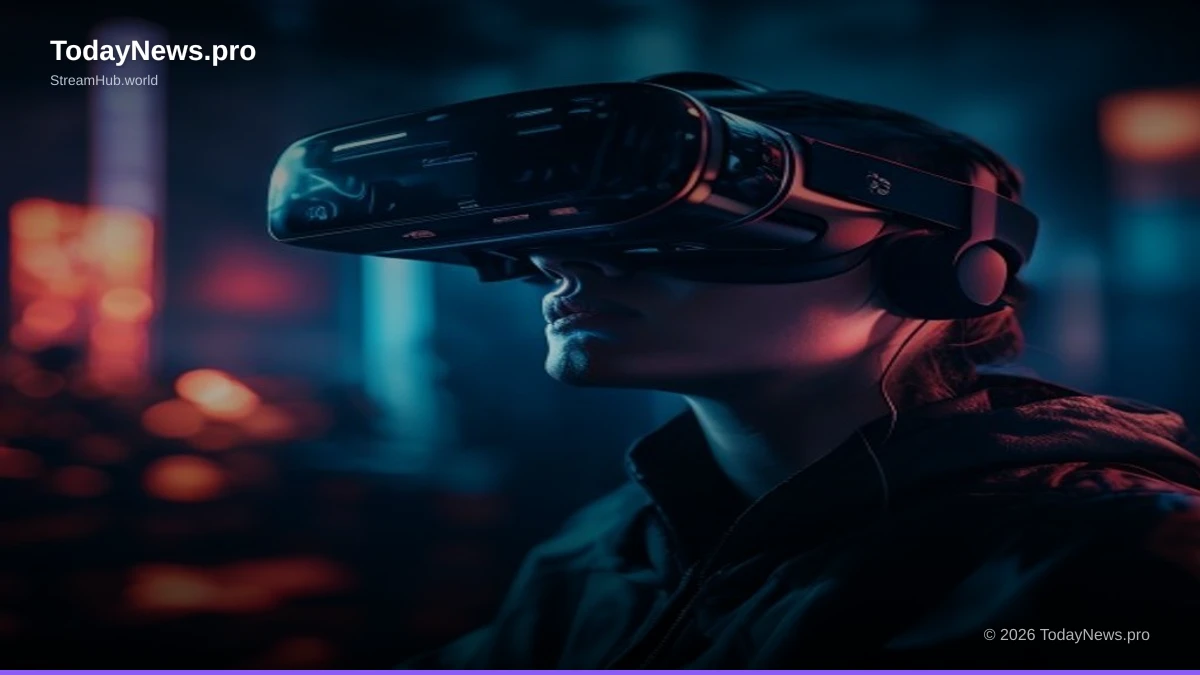
The global virtual reality market is projected to reach $209.7 billion by 2030, a staggering growth from $26.7 billion in 2022, indicating a massive surge in consumer and industry interest in immersive technologies that are fundamentally reshaping how stories are told and experienced.
The Dawn of Immersive Storytelling
For over a century, cinema has been a passive experience. Audiences have watched from a distance, their imaginations filling in the gaps. The advent of Virtual Reality (VR) and Augmented Reality (AR) marks a paradigm shift, transforming viewers into active participants and blurring the lines between observer and protagonist. This is not merely an upgrade to existing media; it's a redefinition of what it means to engage with a story.
Immersive storytelling, powered by VR and AR, offers an unprecedented level of sensory engagement. Instead of looking at a screen, users are placed *within* the narrative environment. This allows for a deeply personal and emotionally resonant connection with characters and plots that traditional media struggles to achieve. The spatial audio, the visual fidelity, and the potential for interactivity all contribute to an experience that can feel as real, if not more so, than waking life.
The initial wave of immersive content, while experimental, has already demonstrated the potential to evoke powerful emotions and create lasting memories. From exploring fantastical worlds to reliving historical events, VR and AR are unlocking new avenues for empathy, education, and entertainment. This revolution isn't confined to gaming; it's permeating film, theatre, documentaries, and even advertising, suggesting a future where our entertainment is as limitless as our imagination.
Defining the Immersive Experience
At its core, immersive storytelling is about presence – the feeling of "being there." VR achieves this by completely enveloping the user in a digital environment, typically through a headset that blocks out the real world. AR, on the other hand, overlays digital elements onto the user's physical surroundings, creating a blended reality. Both technologies aim to trick the senses into accepting the artificial as real, fostering a deeper connection to the narrative.
The key difference lies in the degree of immersion. VR offers total escapism, allowing for entirely constructed worlds and scenarios. AR, while less isolating, offers a unique form of engagement by integrating digital narratives into our everyday lives. Imagine historical figures appearing in your living room or fantastical creatures interacting with your furniture. The implications for creative expression are vast, opening doors for narrative forms that were previously unimaginable.
The technical underpinnings of these experiences – high-resolution displays, precise motion tracking, and responsive haptics – are constantly evolving. As these technologies mature, they promise to deliver even more convincing and emotionally impactful narratives. The goal is to move beyond passive viewing towards active participation, where the audience's choices and movements can influence the unfolding story.
The Psychology of Presence
The psychological impact of VR and AR is a key driver of their revolutionary potential. The feeling of presence in an immersive environment can trigger genuine emotional responses, from awe and excitement to fear and empathy. Neuroscientific studies are beginning to explore how these experiences affect the brain, revealing that they can activate similar neural pathways as real-world events.
This heightened emotional engagement makes immersive stories particularly powerful for fostering understanding and empathy. Documentaries experienced in VR, for instance, can place viewers in the shoes of individuals facing extreme circumstances, creating a profound sense of connection. This capacity for deep emotional resonance is what truly sets immersive storytelling apart.
Virtual Reality: Stepping Inside the Narrative
Virtual Reality headsets, once the stuff of science fiction, are now a tangible reality for millions. Devices like the Meta Quest 3, PlayStation VR2, and HTC Vive Pro 2 offer increasingly sophisticated ways to experience virtual worlds. When a user dons a VR headset, their field of vision is filled with a digital panorama, and their head movements are tracked in real-time, allowing them to look around the virtual space as naturally as they would in the real world.
This sense of embodiment is crucial. In a VR film, you're not just watching a character run from danger; you might be *standing next to them*, feeling the rumble of approaching footsteps, and looking for your own escape route. This active role in the narrative creates a visceral connection that transcends traditional filmmaking. The camera becomes your eyes, and your perspective dictates your experience of the story.
The storytelling potential in VR is immense. Directors can abandon traditional shot compositions and linear narratives, instead crafting environments that invite exploration. Users can choose where to look, what to interact with, and in some cases, what path the story takes. This opens up a new frontier for interactive narratives, where the audience is a co-creator of their own cinematic journey.
Types of VR Experiences in Entertainment
VR entertainment spans a broad spectrum. Traditional 360-degree videos offer a more passive, yet still immersive, cinematic experience. Users can look around a scene, but their agency is limited. Then there are fully interactive VR games and experiences, where users can move, interact with objects, and make choices that directly impact the narrative. These are often built using game engines like Unity and Unreal Engine, allowing for complex environments and character interactions.
Beyond gaming, VR is being used for narrative-driven experiences that mimic cinema. These can range from short films designed to evoke specific emotions to multi-hour interactive dramas. The key is to leverage the unique capabilities of VR to tell stories that wouldn't be possible in any other medium. This could involve experiencing a story from multiple perspectives, exploring abstract concepts visually, or participating in grand, epic narratives.
The development of spatial audio is another critical component. Sound design in VR is not just about what you hear, but where you hear it from. This directional audio, combined with visual cues, significantly enhances the feeling of presence and realism, making the virtual world feel more tangible and believable.
The Future of VR Cinema
The future of VR cinema is likely to involve increasingly sophisticated narrative structures, higher fidelity graphics, and more intuitive user interfaces. We can expect to see hybrid experiences that blend passive viewing with interactive elements, allowing audiences to choose their level of engagement. The development of social VR platforms also opens up possibilities for shared cinematic experiences, where friends can watch and react to stories together in virtual spaces.
As VR hardware becomes more accessible and powerful, the barrier to entry for both creators and consumers will continue to lower. This will undoubtedly lead to a proliferation of innovative content and a broader audience for immersive storytelling. The potential for VR to revolutionize filmmaking is immense, promising a future where audiences don't just watch movies, they live them.
Augmented Reality: Blending Worlds
While VR immerses users in entirely digital worlds, Augmented Reality overlays digital information and experiences onto the real world. This is achieved through AR glasses or, more commonly today, through smartphone cameras. Apps like Pokémon GO famously brought digital creatures into our physical surroundings, demonstrating the immediate appeal of AR.
In the realm of entertainment, AR offers a unique way to enhance existing realities. Imagine watching a historical drama where the characters and sets appear in your living room, or a concert where holographic performers interact with the physical stage. AR can transform everyday spaces into stages for storytelling, making narratives more accessible and integrated into our lives.
The interactive potential of AR is also significant. Users can engage with digital characters, solve puzzles tied to their physical environment, or even participate in location-based narratives. This blurs the lines between the digital and physical, creating experiences that are both familiar and fantastical. The portability and ubiquity of smartphones mean that AR content can reach a vast audience with minimal barriers to entry.
AR in Live Performances and Installations
Live events are a fertile ground for AR innovation. Concerts can feature elaborate holographic effects, theatre productions can use AR to create dynamic stage elements, and art installations can come alive with interactive digital layers. This allows for a richer, more engaging experience for attendees, adding a layer of magic and wonder that was previously impossible.
Consider a music festival where AR filters transform the crowd into fantastical creatures, or a museum exhibit where historical artifacts are brought to life with animated reconstructions. These applications not only enhance the entertainment value but can also deepen understanding and engagement with the content. The ability to overlay digital narratives onto existing physical spaces offers a powerful tool for artists and storytellers.
The Future of AR Storytelling
As AR hardware becomes more sophisticated, with advancements in AR glasses and more powerful mobile devices, the possibilities for storytelling will expand exponentially. We can anticipate more seamless integration of digital characters and environments into our daily lives, leading to persistent AR narratives that evolve and interact with our surroundings. Imagine a city where every street corner has a hidden story waiting to be discovered through your AR device.
The development of location-based AR experiences, tied to specific places and events, will also become more prevalent. This could lead to entirely new forms of entertainment, where stories are not confined to a screen but are woven into the fabric of our world. The challenge lies in creating compelling narratives that leverage the unique affordances of AR without overwhelming the user or detracting from their real-world experience.
Technological Pillars of Immersion
The revolution in immersive storytelling is underpinned by rapid advancements in several key technological areas. High-resolution displays, powerful processors, sophisticated sensors, and advanced software development kits (SDKs) are all converging to create increasingly realistic and interactive experiences.
For VR, the quality of the display is paramount. Pixels per inch (PPI) and refresh rates directly impact visual fidelity and reduce motion sickness. Advanced optics and wider fields of view enhance the sense of presence. Similarly, for AR, lightweight, high-resolution displays that can accurately render digital objects into the real world are crucial.
Motion tracking, whether inside-out (cameras on the headset tracking the environment) or outside-in (external sensors), is essential for translating user movements into the virtual or augmented space. Hand tracking, eye tracking, and full-body tracking are also becoming more refined, allowing for more natural and intuitive interactions with digital content.
Hardware Innovations
Current VR headsets boast impressive specifications, offering resolutions of 4K per eye and refresh rates of up to 120Hz. Handheld controllers provide haptic feedback, simulating touch and resistance, further enhancing immersion. The development of standalone headsets, like the Meta Quest series, has also democratized VR, removing the need for expensive gaming PCs.
AR hardware is evolving rapidly, with companies developing sleek AR glasses that can overlay information onto the user's vision without being overly obtrusive. These devices aim to offer a seamless blend of digital and physical realities, with features like spatial mapping to understand the user's environment and object recognition to interact with real-world elements.
The trend is towards smaller, lighter, and more powerful devices that can offer longer battery life and more complex computational capabilities. The integration of AI into these devices is also opening up new possibilities for intelligent interactions and adaptive storytelling.
Software and Content Creation Tools
Game engines like Unity and Unreal Engine have become indispensable tools for creating immersive content. They provide developers with robust frameworks for building 3D environments, scripting interactions, and optimizing performance for VR and AR platforms. The increasing availability of asset stores and pre-built components further accelerates the development process.
For filmmakers and narrative designers, specialized VR/AR creation tools are emerging. These allow for the creation of 360-degree video, interactive 3D scenes, and dynamic AR experiences. The challenge often lies in translating traditional storytelling techniques into an immersive context, requiring new approaches to pacing, character development, and audience engagement. Platforms like InstaVR and VRChat offer varying degrees of complexity and accessibility for content creators.
Challenges and the Road Ahead
Despite the exhilarating progress, immersive storytelling faces significant hurdles. The high cost of entry for VR hardware, the limited availability of compelling content, and the potential for motion sickness remain significant barriers for mainstream adoption. For AR, challenges include the development of truly user-friendly and affordable AR glasses, as well as the creation of experiences that seamlessly integrate into daily life without being intrusive.
Content creation is also a complex undertaking. Developing for VR and AR requires different skill sets and workflows than traditional media. Storytellers must learn to think in three dimensions, considering the user's agency and the spatial nature of the narrative. The absence of a universally adopted content standard also poses a challenge for developers and distributors.
Furthermore, ethical considerations surrounding privacy, data collection, and the potential for addiction or dissociation from reality need careful consideration as these technologies become more pervasive. Ensuring equitable access to these transformative experiences is also a crucial aspect of their responsible development.
Hardware Accessibility and Cost
While standalone VR headsets have become more affordable, the cost of high-end VR setups, including powerful PCs, can still be prohibitive for many consumers. AR glasses are even further from mass-market affordability, with current models largely aimed at enterprise users. This cost barrier limits the potential audience for immersive content and slows down the growth of the ecosystem.
The development of more affordable and accessible hardware is critical. Innovations in display technology, processing power, and form factor will be key to bringing immersive experiences to a wider demographic. The ongoing competition among major tech companies is likely to drive down prices and improve performance over time.
Content Fragmentation and Discovery
The immersive content landscape is fragmented across various platforms and devices. Discovering high-quality VR and AR experiences can be challenging, as there isn't yet a centralized, universally recognized marketplace or curation system akin to traditional app stores or streaming services. This fragmentation can make it difficult for both creators to reach their audience and for consumers to find compelling content.
The development of open standards and cross-platform compatibility would greatly benefit the industry. Furthermore, effective recommendation engines and curated content libraries will be essential for helping users navigate the growing volume of immersive experiences. Without effective discovery mechanisms, even the most groundbreaking content risks going unnoticed.
The Quest for the Killer App
Much like the early days of mobile phones or personal computers, VR and AR are still searching for their definitive "killer app" – a single experience that transcends early adoption and drives mass market demand. While gaming has shown immense promise, a narrative-driven film, documentary, or theatrical experience that captivates millions could be the catalyst for widespread adoption.
The development of compelling, accessible, and emotionally resonant stories that fully leverage the unique capabilities of VR and AR is paramount. This requires collaboration between traditional storytellers and technologists, fostering an environment where innovative narrative forms can flourish. The potential is undeniable, but realizing it hinges on overcoming these significant challenges.
The Evolving Landscape of Entertainment Consumption
The rise of immersive technologies signifies a fundamental shift in how audiences consume entertainment. Gone are the days of purely passive viewing. VR and AR invite active participation, offering experiences that are more personal, engaging, and memorable. This is particularly relevant for younger generations who are digital natives and are accustomed to interactive forms of media.
The ability to share these experiences, either in virtual social spaces or by overlaying digital elements onto shared physical environments, also points towards a more communal form of entertainment. Imagine watching a VR film with friends scattered across the globe, or collaborating on an AR art project in real-time. This social dimension adds another layer to the immersive experience.
The economic implications are also profound. New business models are emerging, including premium VR/AR content subscriptions, interactive advertising, and virtual events that can reach global audiences without the limitations of physical venues. The potential for monetization is vast, as creators find innovative ways to engage audiences and offer unique value.
Beyond the Cinema Screen
Immersive storytelling is not just about replicating traditional cinema in a new format. It's about creating entirely new narrative experiences that leverage the strengths of VR and AR. This includes interactive documentaries that allow viewers to explore different perspectives, educational content that brings historical events to life, and therapeutic applications that use immersive environments for healing and rehabilitation.
The lines between gaming, film, and interactive experiences are blurring. Many VR titles now incorporate sophisticated narrative arcs and character development, while VR films are exploring interactive elements and branching storylines. This convergence is leading to a richer and more diverse entertainment landscape.
The rise of the metaverse concept, a persistent, interconnected virtual world, further underscores this shift. Entertainment within the metaverse will likely be deeply immersive and interactive, with users actively participating in and shaping their experiences. This vision of the future entertainment landscape is one where the boundaries between the real and the digital are increasingly fluid.
The Role of AI in Immersive Narratives
Artificial intelligence is poised to play a crucial role in the future of immersive storytelling. AI can be used to generate dynamic content, create more realistic non-player characters (NPCs) with responsive behaviors, and personalize narratives based on user interactions and preferences. This could lead to stories that adapt in real-time, offering a truly unique experience for each individual.
AI-powered tools can also assist creators in the development process, automating tasks and providing insights into user engagement. Imagine AI systems that can analyze user movements and emotional responses to fine-tune the narrative flow or suggest new plot directions. The integration of AI promises to make immersive stories more intelligent, responsive, and engaging.
Case Studies: Pioneers in Immersive Cinema
Several groundbreaking projects have already demonstrated the power of immersive storytelling. The VR documentary "Notes on Blindness: Into Darkness" allowed viewers to experience the world from the perspective of a man losing his sight, creating a profound sense of empathy and understanding.
Felix & Paul Studios have been at the forefront of VR cinema, producing critically acclaimed works like "The Jurassic World VR Experience" and "Space Explorers." These productions showcase high production values and compelling narratives that leverage the immersive capabilities of VR to their fullest. Their work often focuses on creating a sense of awe and wonder, transporting viewers to extraordinary environments.
On the AR front, projects like "The Walking Dead AR" have allowed fans to interact with their favorite characters and storylines in the real world. The use of AR in live events, such as the holographic performances by artists like Tupac Shakur at Coachella, has also shown the potential to blend the digital and physical in spectacular ways.
These examples, while diverse, share a common thread: the innovative use of technology to tell stories in ways that were previously impossible. They serve as blueprints for future developments, inspiring creators and exciting audiences about the possibilities of immersive entertainment.
The continued evolution of VR and AR technologies, coupled with the growing creativity of storytellers, promises a future where entertainment is not just watched, but deeply experienced. The revolution is underway, and it's transforming the very fabric of how we engage with narratives.
For further reading on the technological underpinnings of VR, consult Wikipedia's Virtual Reality page. For insights into the business trends of AR, explore reports from Reuters and other reputable financial news sources.