

 Diana Prince
⏱ 25 min
The global VR/AR market is projected to reach $332.3 billion by 2027, signaling a seismic shift in how audiences consume and interact with visual narratives. This isn't just about watching a movie; it's about stepping inside it.
The Shifting Sands of Cinematic Immersion
The very definition of "cinema" has always been in flux, adapting to technological advancements and evolving audience expectations. From the silent film era's reliance on intertitles and expressive acting to the advent of sound, color, and stereoscopic 3D, filmmakers have consistently sought new ways to transport viewers beyond their seats. Today, we stand on the precipice of another profound transformation, driven by technologies that promise to dissolve the boundaries between the observer and the observed. Immersive storytelling, once the domain of science fiction, is rapidly becoming a tangible reality, reshaping the landscape of film, gaming, and interactive entertainment. This evolution is not merely about adding spectacle; it is about fundamentally altering the relationship between the storyteller and their audience, fostering a deeper emotional connection and a more profound sense of presence. The quest for immersion is as old as storytelling itself. Cave paintings, ancient theatre, and even the printed word all sought to draw audiences into constructed realities. However, modern technology has amplified this endeavor exponentially. The advent of digital mediums, coupled with exponential growth in computing power and display technology, has opened up unprecedented avenues for creating experiences that were previously unimaginable. This article will delve into the cutting-edge technologies, the narrative implications, and the economic forces shaping the future of immersive storytelling in film, from the intimate worlds of Virtual Reality to the ethereal spectacle of Holographic Projection.Virtual Reality: The Unblinking Eye of Presence
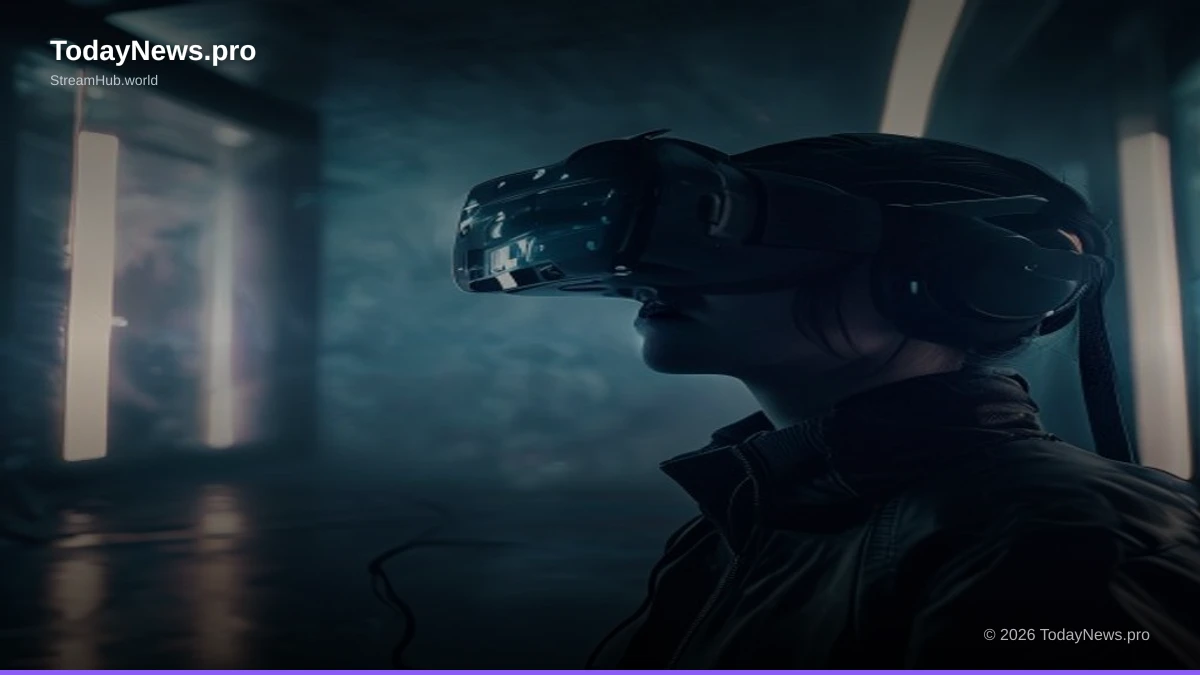
Virtual Reality (VR) is arguably the most mature of the immersive technologies, offering a fully contained digital environment that can transport users to entirely new worlds. Unlike traditional media, VR headset wearers are no longer passive observers but active participants. Their head movements dictate their viewpoint, creating an unparalleled sense of "presence" – the subjective feeling of "being there." This is achieved through sophisticated head-mounted displays (HMDs) that present stereoscopic images to each eye, creating a convincing illusion of depth. High refresh rates and low latency are crucial for preventing motion sickness and maintaining this illusion.The Mechanics of VR Immersion
The core of VR immersion lies in its ability to trick the brain into believing it has entered a different space. This involves not only visual fidelity but also spatial audio, which mimics how sound travels in the real world, further anchoring the user within the virtual environment. Haptic feedback, through specialized controllers or even full-body suits, adds another layer of sensory input, allowing users to "feel" virtual objects and interactions. This multi-sensory approach is key to crafting truly believable and engaging VR narratives.VR in Filmmaking: A New Canvas
Filmmakers are increasingly exploring VR as a unique storytelling medium. Instead of a fixed camera perspective, VR films allow directors to create 360-degree environments where the audience can look anywhere. This necessitates a rethinking of traditional cinematic techniques like shot composition and pacing. Storytelling in VR often leans towards experiential narratives, observational documentaries, or interactive adventures where the viewer's choices can influence the outcome. The ethical considerations of placing audiences in potentially disturbing or overwhelming scenarios are also a significant area of discussion within the VR filmmaking community.| VR Headset Type | Key Features | Typical Use Cases | Price Range (USD) |
|---|---|---|---|
| Standalone VR (e.g., Meta Quest 3) | No PC required, integrated processing, wireless | Gaming, social VR, casual experiences, education | $300 - $600 |
| PC-Tethered VR (e.g., Valve Index) | High-fidelity graphics, requires powerful PC, wired | Demanding games, professional simulations, high-end VR development | $500 - $1000+ |
| Mobile VR (e.g., Google Cardboard, older Samsung Gear VR) | Uses smartphone as display, low-cost, limited interaction | Basic 360 video viewing, introductory VR experiences | $15 - $100 |
Augmented Reality: Blurring the Lines of Our World
While VR aims to completely replace our current reality, Augmented Reality (AR) overlays digital information and imagery onto the real world. This can be achieved through smartphones, tablets, or dedicated AR glasses. AR offers a less isolating form of immersion, allowing users to remain connected to their physical surroundings while interacting with virtual elements. This makes AR particularly well-suited for practical applications, educational tools, and narrative experiences that blend the digital and the physical.AR in Everyday Life and Entertainment
The most ubiquitous example of AR is mobile AR applications, such as Pokémon GO, which overlays virtual creatures onto the user's camera feed. AR glasses, though still in their nascent stages for widespread consumer adoption, promise even deeper integration. Imagine walking through a historical city and seeing holographic reconstructions of ancient buildings appear before your eyes, or attending a concert and having real-time lyric overlays projected onto the stage. For filmmaking, AR opens up possibilities for interactive movie posters, location-based storytelling experiences, and even post-viewing engagement where digital elements can be accessed within the viewer's own environment.95%
of consumers believe AR can enhance their shopping experience.
1.5 Billion
AR-enabled smartphones worldwide in 2023.
40%
increase in engagement reported for AR-enhanced marketing campaigns.
Holographic Projection: The Ghost in the Machine
Holographic projection represents a more futuristic vision of immersive storytelling, aiming to create three-dimensional images that appear to float in mid-air, viewable from multiple angles without specialized eyewear. While true holographic displays akin to those seen in science fiction are still some way off, current technologies are making significant strides. This includes volumetric displays that project light fields and advanced projection mapping techniques that can create the illusion of 3D objects in space.The Promise of True 3D
The ultimate goal of holographic projection is to recreate the natural way we perceive depth and form, without the need for bulky headsets or screens. Imagine watching a film where characters and environments are projected directly into the viewing space, seamlessly integrating with the physical world. This could revolutionize live performances, allowing for virtual artists to perform alongside human counterparts, or create deeply engaging educational exhibits where historical figures can be brought to life. The challenges are immense, including achieving sufficient brightness, resolution, and refresh rates to create a convincing illusion, as well as the complexity of capturing and rendering volumetric data.Current Iterations and Future Prospects
Current applications of holographic-like technology can be seen in stages, concerts (e.g., Tupac's performance at Coachella), and high-end advertising. Companies are investing heavily in research and development for true volumetric displays. The potential for interactive holographic storytelling is immense, allowing audiences to not just view but also physically interact with projected narratives, perhaps manipulating objects or characters within a projected scene."The leap from viewing a story to inhabiting it is the ultimate frontier of narrative art. Holography, when fully realized, offers the most natural and intuitive bridge between the audience and the fictional world."
— Dr. Anya Sharma, Lead Researcher, Immersive Media Lab
The Technical Tapestry: From Pixels to Perceptual Fidelity
Achieving compelling immersion requires a sophisticated interplay of hardware and software. The rendering of high-fidelity graphics, synchronized with precise head and body tracking, forms the backbone of these experiences. The resolution of displays, the field of view, and the refresh rate all contribute to the sense of believability and comfort. For VR, this means minimizing the "screen door effect" (visible gaps between pixels) and ensuring a wide enough field of view to mimic human peripheral vision.Rendering and Tracking: The Pillars of Presence
Advanced rendering techniques, such as foveated rendering (which renders the area of focus at higher detail), are employed to optimize performance without sacrificing visual quality. Accurate and low-latency tracking of the user's movements is paramount. Inside-out tracking, which uses cameras on the headset to map the environment, has become increasingly common, offering greater freedom of movement compared to older outside-in tracking systems that relied on external sensors. The seamless integration of these elements is what allows the illusion of presence to be maintained.Spatial Audio and Haptics: The Unseen Layers
Beyond visuals, spatial audio is crucial for creating a believable sonic landscape. Object-based audio, where sounds are treated as individual entities that can be positioned and moved within a 3D space, enhances the sense of immersion significantly. Haptic feedback, delivered through controllers, vests, or gloves, allows users to feel the impact of actions, the texture of virtual objects, or even environmental effects like wind. This tactile dimension adds a visceral layer to the storytelling that can be incredibly powerful.Narrative Evolution: Storytelling Reimagined
The fundamental principles of good storytelling – compelling characters, engaging plots, and emotional resonance – remain critical in immersive experiences. However, the interactive and spatially aware nature of VR, AR, and holography necessitates new approaches to narrative design. Linear storytelling, where the audience follows a predetermined path, is often less effective in environments where the viewer can look anywhere.Branching Narratives and Player Agency
Immersive storytelling frequently embraces branching narratives, where the audience's choices can lead to different plot developments and endings. This enhances player agency and replayability. Directors and writers must consider not just what the audience sees, but also what they *can* do. This requires meticulous design of interactive elements, decision points, and consequences, ensuring that the narrative remains coherent and emotionally impactful regardless of the path taken.Environmental Storytelling and Emergent Narratives
Another key shift is towards environmental storytelling, where the narrative is conveyed through the details of the virtual world itself – the objects, the architecture, the ambient sounds. This allows for a more subtle and organic form of exposition. Emergent narratives, which arise from the interaction of systems and the player's actions within a virtual world, are also gaining prominence, particularly in VR gaming. The challenge for filmmakers is to guide the audience's attention and emotion within these open-ended environments."We're moving beyond the director as a puppeteer to the director as an architect of experience. In VR, we create a world and then observe how the audience explores it, guiding them subtly through design and context rather than explicit cues."
— Lena Petrova, Award-winning VR Director
For further exploration into the principles of interactive narrative design, the Wikipedia page on Interactive Fiction offers valuable insights into the evolution of player choice in digital storytelling.
The Business of Immersion: Investment and Industry Forecasts
The economic landscape of immersive technologies is booming, attracting significant investment from major tech companies, venture capitalists, and content creators. The convergence of gaming, film, and social media is fueling this growth, with a growing demand for high-quality, engaging immersive content.Market Growth and Investment Trends
Major players like Meta, Apple, Google, and Microsoft are investing billions of dollars in developing VR/AR hardware and software platforms. This investment is crucial for driving down costs, improving accessibility, and fostering content creation. Venture capital funding for AR/VR startups has seen significant surges, indicating strong confidence in the long-term potential of these technologies. The enterprise sector is also a major driver, with applications in training, design, and remote collaboration.| Year | Global AR/VR Market Size (USD Billions) | Projected Growth Rate |
|---|---|---|
| 2020 | 18.8 | - |
| 2023 | 68.4 | ~100% (CAGR) |
| 2027 | 332.3 | ~40% (CAGR) |
Content Creation and Monetization Models
The development of compelling content is paramount for the widespread adoption of immersive technologies. This involves not only technological innovation but also new business models. While traditional film distribution models might not directly translate, new avenues are emerging, including direct-to-consumer sales of VR experiences, subscription services for immersive content libraries, and in-experience advertising. The integration with gaming platforms also offers established monetization strategies like in-app purchases and season passes.For an overview of the financial aspects and market dynamics, Reuters Technology often features comprehensive reports on the AR/VR sector.
Challenges and the Road Ahead
Despite the rapid advancements, several significant challenges remain before immersive storytelling becomes as ubiquitous as traditional film. These include the cost and accessibility of hardware, the development of intuitive user interfaces, and the creation of compelling content that appeals to a mass audience.Hardware Accessibility and User Experience
The price point of high-end VR headsets remains a barrier for many consumers. While standalone devices are becoming more affordable, they still represent a significant investment. Furthermore, the comfort and ergonomics of prolonged headset use are ongoing areas of improvement. Developing intuitive user interfaces that don't require extensive training is also crucial for broader adoption. For AR, the challenge lies in creating stylish and functional glasses that offer a compelling user experience without being obtrusive.Content Gap and Ethical Considerations
While the volume of immersive content is growing, there is still a perceived "content gap" – a lack of critically acclaimed or universally appealing immersive films and experiences. The industry needs to foster more diverse creators and storytelling approaches. Ethical considerations, such as data privacy, the potential for addiction, and the impact of hyper-realistic virtual experiences on mental well-being, also require careful attention and proactive discussion. The potential for deepfakes and misinformation in AR and holographic contexts also presents a significant future challenge.Will VR replace traditional cinema?
It's unlikely that VR will completely replace traditional cinema. Instead, it's more probable that VR will emerge as a distinct, complementary medium with its own strengths and audience. Think of it like how television didn't replace cinema, but rather carved out its own niche.
What are the biggest technical hurdles for holographic projection?
The primary technical hurdles for true holographic projection include achieving sufficient brightness and resolution for a convincing 3D image, developing efficient methods for capturing and processing volumetric data, and creating large-scale displays that can project images into open spaces with high fidelity and minimal distortion.
How will immersive storytelling affect the role of the director?
The role of the director in immersive storytelling is evolving. While still responsible for the overall vision, directors may become more like architects of interactive experiences, guiding user agency and environmental narratives rather than dictating every frame. Collaboration with game designers and UX specialists becomes increasingly important.
Is immersive content suitable for all types of stories?
Not all stories are inherently suited to immersive formats. While immersive technologies excel at creating a sense of presence and enabling interactivity, deeply introspective or dialogue-heavy narratives might still be best served by traditional film. The medium must serve the story, not the other way around.