

 Linda Wu
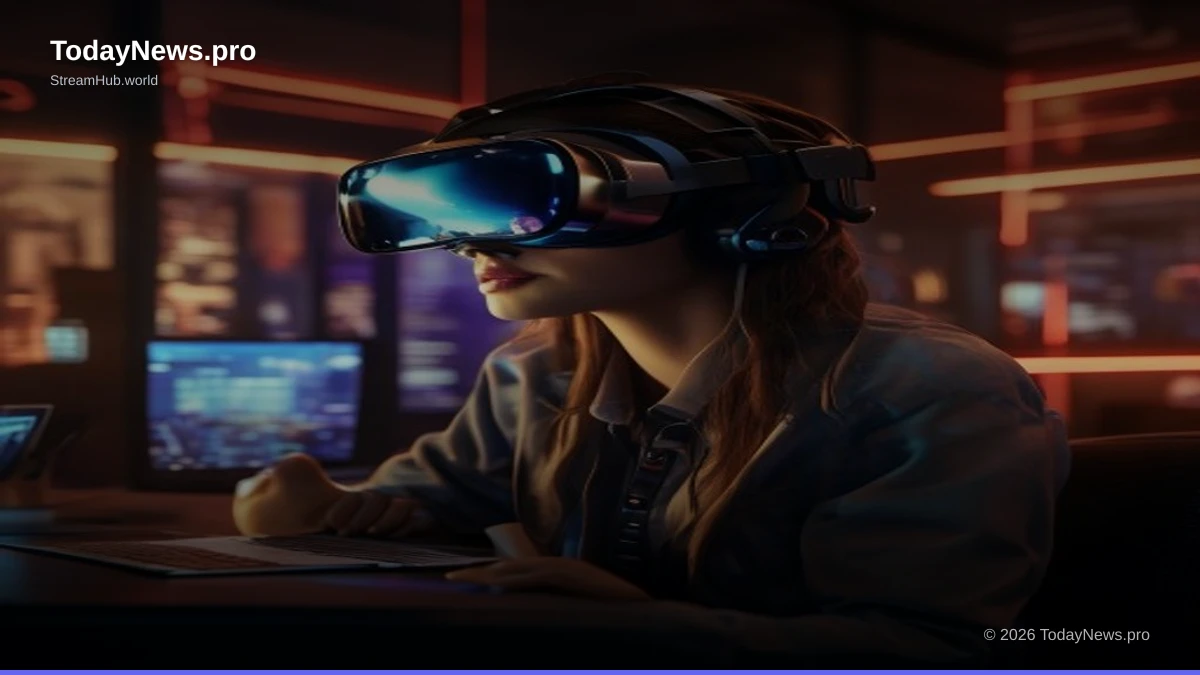
By 2030, the global market for immersive technologies, including virtual reality (VR) and augmented reality (AR), is projected to reach a staggering $678.8 billion, signaling a seismic shift in how we interact with digital information and each other.
The Dawn of the Immersive Internet
We stand at the precipice of a new digital epoch, one where the flat, two-dimensional screens that have dominated our interaction with the internet for decades are poised to give way to a fully immersive, three-dimensional experience. This evolution, often termed the "Immersive Internet" or the "Metaverse," promises to blur the lines between the physical and digital realms, fundamentally altering how we work, learn, socialize, and entertain ourselves.
Unlike the current internet, which we primarily "browse" through screens, the Immersive Internet invites us to "step inside" digital environments. Virtual Reality (VR) transports users entirely into simulated worlds, while Augmented Reality (AR) overlays digital information and objects onto our perception of the real world. Together, these technologies are not merely incremental improvements; they represent a paradigm shift in human-computer interaction.
The foundational concept of the Immersive Internet is persistent, interconnected virtual spaces where users, represented by avatars, can engage in a wide range of activities. This isn't just about gaming or entertainment; the implications for productivity, education, and social connection are profound and far-reaching.
Defining the Immersive Experience
At its core, the Immersive Internet leverages VR and AR to create a sense of presence and agency. VR headsets, such as Meta's Quest series or Sony's PlayStation VR, offer complete sensory immersion, blocking out the physical world to place users in meticulously crafted digital environments. AR, on the other hand, uses devices like smartphones, tablets, or dedicated AR glasses (e.g., Microsoft HoloLens, Magic Leap) to superimpose digital elements onto our real-world view, enhancing our surroundings with contextual information or interactive virtual objects.
This distinction is crucial. VR offers escapism and entirely new realities, while AR provides a layer of digital intelligence and interactivity to our existing physical space. The true power of the Immersive Internet lies in the seamless integration and interplay between these two modalities, creating a spectrum of experiences that cater to diverse needs and preferences.
Revolutionizing the Workplace: Beyond Remote Collaboration
The pandemic accelerated the adoption of remote work, but the current model, largely reliant on video conferencing and shared documents, still feels fragmented and less than ideal. The Immersive Internet promises to transcend these limitations, transforming virtual workspaces into dynamic, engaging, and highly collaborative environments.
Imagine virtual meeting rooms where participants, as lifelike avatars, can interact with 3D models, brainstorm on digital whiteboards that span entire walls, and experience a sense of shared presence that far surpasses a grid of faces on a screen. This enhanced sense of co-presence can foster deeper connections, improve non-verbal communication, and ultimately lead to more effective teamwork.
Virtual Offices and Collaborative Design
Companies are already experimenting with virtual office spaces. Platforms like Meta Horizon Workrooms or Engage VR offer dedicated virtual environments where teams can gather, conduct meetings, and even socialize. These spaces can be customized to reflect a company's brand and culture, offering a sense of place and belonging that is often missing in purely remote setups.
For industries reliant on design and engineering, the impact is even more dramatic. Architects can walk clients through full-scale virtual models of buildings before construction begins, allowing for immediate feedback and design adjustments. Engineers can collaborate on complex machinery in a shared virtual space, manipulating parts and identifying potential issues in real-time, saving significant time and resources compared to physical prototyping.
Training and Skill Development
The Immersive Internet offers unparalleled opportunities for immersive training and skill development. Instead of relying on manuals or static simulations, employees can engage in realistic, hands-on training scenarios. Surgeons can practice complex procedures repeatedly without risk to patients. Technicians can learn to operate and repair intricate machinery in a safe, controlled virtual environment.
This type of experiential learning leads to higher retention rates and better skill acquisition. VR simulations can replicate dangerous or high-stakes environments, allowing individuals to build confidence and competence before facing real-world challenges. The ability to replay scenarios, receive immediate feedback, and adapt training modules makes it an incredibly powerful tool for continuous learning and development.
Education Reimagined: Learning Without Limits
The traditional classroom model, with its fixed lessons and limited engagement, often struggles to captivate a diverse range of learners. The Immersive Internet has the potential to transform education from a passive consumption of information into an active, exploratory, and deeply engaging experience.
Imagine students not just reading about ancient Rome, but walking through its forums, interacting with virtual gladiators, and witnessing historical events unfold around them. This level of immersion fosters a deeper understanding and a more profound connection to the subject matter.
Virtual Field Trips and Experiential Learning
Virtual field trips can take students anywhere, from the depths of the ocean to the surface of Mars, without the logistical and financial constraints of physical travel. Exploring the human anatomy by navigating through a virtual bloodstream or dissecting a virtual frog without the ethical concerns are just a few examples of how VR can bring abstract concepts to life.
AR can also play a significant role. Students could point their devices at a textbook diagram of a DNA molecule and see it animate in 3D, allowing them to manipulate and understand its structure. In a science lab, AR overlays could guide students through complex experiments, providing real-time instructions and safety warnings.
Personalized Learning Paths
The Immersive Internet facilitates personalized learning experiences tailored to individual student needs and learning styles. AI-powered virtual tutors can adapt to a student's pace, identify areas of difficulty, and provide targeted support and practice. This data-driven approach allows educators to monitor progress more effectively and intervene when necessary, ensuring no student is left behind.
Students can also explore subjects that pique their interest beyond the confines of a standard curriculum, fostering a lifelong love of learning. The ability to experiment, fail safely, and learn from those failures is a critical component of deep understanding that immersive environments excel at providing.
| Year | VR Market | AR Market | Total |
|---|---|---|---|
| 2023 | 12.5 | 8.2 | 20.7 |
| 2025 | 22.1 | 15.5 | 37.6 |
| 2028 | 45.8 | 30.1 | 75.9 |
| 2030 | 70.2 | 48.9 | 119.1 |
Social Fabric in a Virtual World: Connection Redefined
While the internet has connected us across vast distances, it has often done so in a way that can feel superficial. The Immersive Internet aims to foster deeper, more meaningful connections by recreating the nuances of in-person social interaction within digital spaces.
Avatars can convey body language, facial expressions, and spatial presence, enriching communication beyond text and video calls. This allows for more authentic interactions, whether it's a casual chat with friends in a virtual café or a formal gathering with family members who live far away.
Virtual Gatherings and Shared Experiences
The concept of "being there" takes on new meaning in the Immersive Internet. Friends can attend virtual concerts together, explore digital art galleries, play immersive games, or simply hang out in shared virtual spaces, experiencing a sense of shared presence that online communication has historically struggled to achieve.
This is particularly impactful for maintaining relationships across geographical divides. Families separated by continents can gather for virtual holiday dinners, feeling as if they are in the same room, sharing a meal and conversations in a way that feels significantly more intimate than a video call. The ability to share experiences in a visually rich and interactive environment can strengthen bonds and reduce feelings of isolation.
New Forms of Social Interaction and Community Building
Beyond replicating existing social interactions, the Immersive Internet will likely give rise to entirely new forms of community and social expression. Virtual worlds can be tailored to specific interests, allowing niche communities to form and thrive. Hobbyists can gather in virtual workshops, artists can exhibit their work in digital galleries, and fans can attend virtual meet-and-greets with their favorite creators.
The accessibility of these platforms can also foster inclusivity. Individuals with physical disabilities may find greater freedom of movement and social participation in virtual environments. Furthermore, the ability to customize avatars allows for self-expression and identity exploration in novel ways.
However, it's crucial to acknowledge the potential for virtual spaces to mirror or even amplify societal issues like harassment and misinformation. Robust moderation and ethical design will be paramount to ensuring these digital communities are safe and welcoming for all.
The Technological Pillars Supporting the Immersive Internet
The realization of the Immersive Internet is not a singular technological leap but a convergence of several rapidly advancing fields. Several key technologies are foundational to its existence and continued development.
Advancements in Hardware: VR/AR Devices
The evolution of VR headsets has been remarkable, moving from bulky, tethered devices to increasingly lightweight, wireless, and high-resolution options. Improved optics, wider fields of view, and enhanced tracking capabilities are crucial for reducing motion sickness and increasing immersion. Similarly, AR glasses are becoming more sophisticated, offering greater processing power, better display technologies, and more intuitive interaction methods.
Beyond headsets, haptic feedback suits, gloves, and even full-body tracking systems are emerging, promising to add touch and physical sensation to virtual experiences, further blurring the lines between the digital and physical. The miniaturization and cost reduction of these components are key drivers for widespread adoption.
The Role of 5G and Beyond
The bandwidth and low latency requirements for seamless, real-time immersive experiences are immense. 5G networks are a critical enabler, providing the speed and responsiveness needed to stream high-fidelity graphics, process complex interactions, and maintain a persistent connection to virtual worlds without lag. Future generations of wireless technology will further enhance these capabilities.
This ubiquitous, high-speed connectivity is essential for supporting a vast number of users simultaneously within shared virtual environments, ensuring that the experience remains fluid and realistic for everyone involved. Without robust network infrastructure, the Immersive Internet would remain a niche technology.
Cloud Computing and AI
Cloud computing provides the scalable processing power and storage necessary to host persistent, complex virtual worlds. AI plays a multifaceted role, from powering intelligent NPCs (non-player characters) and creating dynamic environments to personalizing user experiences and analyzing user behavior for service improvement.
AI algorithms are instrumental in rendering realistic graphics, simulating complex physics, and enabling natural language interactions within virtual spaces. They also help in moderating content and ensuring user safety. The synergy between cloud infrastructure and artificial intelligence is indispensable for building and maintaining the sophisticated digital realities that define the Immersive Internet.
For more information on the underlying technologies, you can refer to the Virtual Reality Wikipedia page and explore the latest developments in Artificial Intelligence from Reuters.
Challenges and Ethical Considerations on the Horizon
While the potential of the Immersive Internet is undeniable, its widespread adoption is not without significant challenges and ethical dilemmas that require careful consideration and proactive solutions.
Privacy, Security, and Data Ownership
Immersive environments collect unprecedented amounts of user data, including biometric information, movement patterns, and even emotional responses. This raises serious concerns about privacy. Who owns this data? How will it be protected from breaches and misuse? The potential for intrusive advertising, surveillance, and identity theft is a significant risk.
Establishing robust data privacy regulations and security protocols will be paramount. Users will need to have clear control over their data and understand how it is being used. Decentralized identity solutions and blockchain technology are being explored as potential frameworks for enhancing user control and data ownership.
Digital Divide and Accessibility
The high cost of VR/AR hardware and the reliance on high-speed internet access could exacerbate the existing digital divide, creating a new class of digital haves and have-nots. Ensuring equitable access to these transformative technologies will be crucial for social equity and widespread benefit.
Efforts to develop more affordable hardware, provide public access points (e.g., in libraries or community centers), and create accessible interfaces for individuals with disabilities are essential steps. Without conscious effort, the Immersive Internet could become another barrier rather than a bridge.
Mental Health and Addiction
The highly engaging and immersive nature of virtual worlds raises concerns about potential addiction and negative impacts on mental health. Excessive time spent in virtual realities could lead to social isolation in the physical world, disassociation, and neglect of real-life responsibilities. The blurring of lines between virtual and real experiences could also lead to psychological distress.
Developing healthy usage guidelines, promoting digital well-being, and fostering open discussions about the psychological effects of prolonged immersion will be important. Educational campaigns and accessible mental health resources will be vital in mitigating these risks. The design of these platforms should prioritize user well-being and provide tools for managing engagement.
The Economic Landscape of the Immersive Web
The Immersive Internet represents not just a technological shift but a profound economic transformation. New industries will emerge, existing ones will be disrupted, and entirely new forms of commerce and value creation will take root.
The Rise of Virtual Economies
Within virtual worlds, robust economies are already developing, driven by the creation and trade of virtual goods, digital real estate, and unique experiences. Non-Fungible Tokens (NFTs) have played a role in enabling ownership and verifiable scarcity of digital assets, fueling this burgeoning sector.
From digital fashion for avatars to virtual land in metaverse platforms, the spending on virtual items is projected to grow exponentially. This creates opportunities for digital artists, designers, developers, and entrepreneurs to build businesses and generate income within these new economic paradigms. The concept of "play-to-earn" in gaming is an early indicator of this trend.
Impact on Traditional Industries
Many traditional industries will face significant disruption and adaptation. Retail, for example, could see a shift towards virtual showrooms and immersive shopping experiences. Real estate could be transformed by virtual property tours and the development of digital land. Advertising will evolve to become more integrated and interactive within these virtual environments.
Industries that embrace these changes early will be best positioned to thrive. The ability to offer immersive brand experiences, conduct virtual product launches, and engage customers in novel ways will become a competitive advantage. The metaverse could become a significant new frontier for marketing and consumer engagement.
The path to a fully realized Immersive Internet will be a complex journey, fraught with both immense opportunity and considerable challenge. As we navigate this transition, thoughtful development, ethical considerations, and a commitment to inclusivity will be crucial in shaping a digital future that benefits humanity as a whole.