

 Peter Warren
⏱ 15 min
The global Extended Reality (XR) market, encompassing Virtual Reality (VR), Augmented Reality (AR), and Mixed Reality (MR), is projected to reach a staggering $679.8 billion by 2030, with gaming serving as a primary driver of this exponential growth.
The Immersive Dawn: XR Gamings Trajectory to 2030
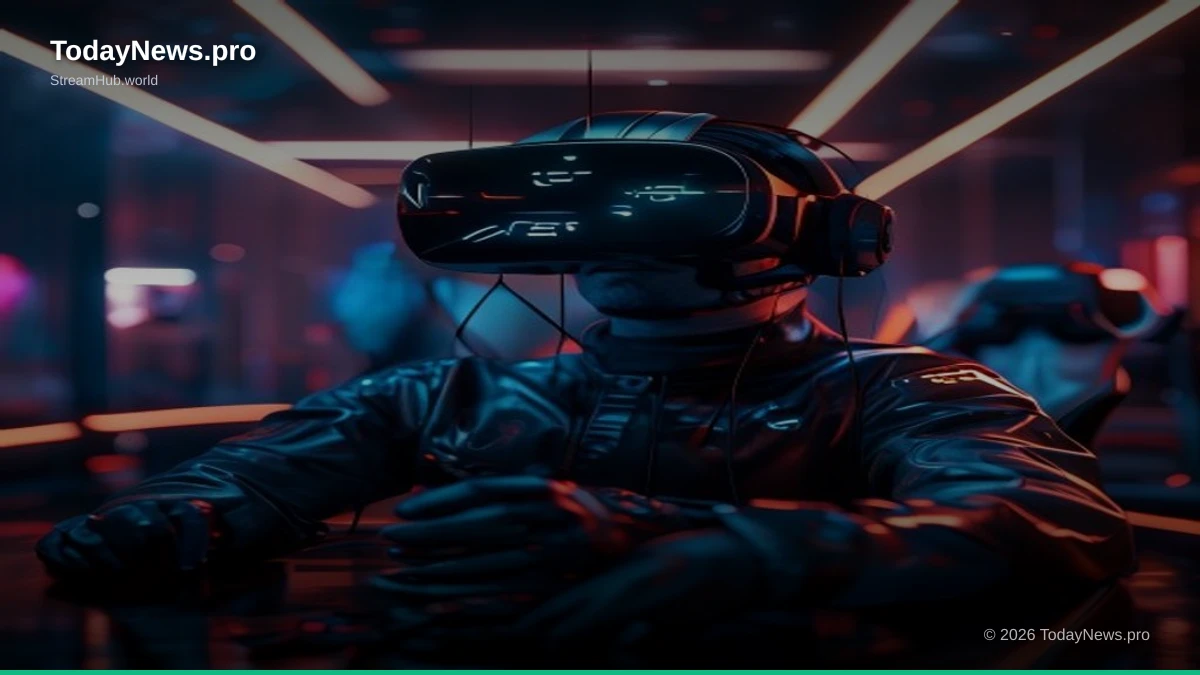
The landscape of video games is on the cusp of a profound transformation, moving beyond the flat screens that have dominated for decades. Extended Reality (XR) technologies – Virtual Reality (VR), Augmented Reality (AR), and Mixed Reality (MR) – are poised to redefine what it means to play, interact, and experience digital worlds. By 2030, XR gaming is not merely an emerging niche but a central pillar of the entertainment industry, offering unparalleled levels of immersion and interactivity. This shift is being propelled by rapid advancements in hardware, software, and a growing consumer appetite for more engaging digital experiences. The next seven years will witness XR gaming transition from a promising concept to a mainstream reality, fundamentally altering how we perceive and participate in virtual environments. The current gaming market, while robust, often relies on established paradigms. XR introduces a paradigm shift, moving from observation to participation. Imagine stepping *into* the game world, rather than merely controlling an avatar on a screen. This is the promise of XR, and by 2030, this promise will be largely fulfilled for a significant segment of gamers. The evolution is not just about visual fidelity; it's about sensory integration, intuitive control, and a seamless blending of the digital and physical. The journey to 2030 is marked by several key trends. Firstly, hardware is becoming more accessible, powerful, and comfortable. Gone are the days of clunky, expensive headsets tethered to high-end PCs. Standalone VR headsets are improving dramatically, and AR glasses are inching closer to mainstream adoption. Secondly, content development is maturing. Developers are moving beyond basic ports and are creating experiences specifically designed for the unique affordances of XR. This includes innovative gameplay mechanics, compelling narratives, and social interactions that leverage the immersive nature of these technologies. The economic implications are immense. Venture capital is flowing into XR startups, and major tech giants are investing heavily in R&D and ecosystem development. This capital infusion fuels innovation and accelerates the pace of adoption. The ecosystem itself is expanding, encompassing not just hardware manufacturers and game developers, but also content creators, platform providers, and even new forms of esports. ### The Allure of Presence At its core, XR gaming offers "presence" – the feeling of truly being in a different place or interacting with virtual objects as if they were real. This sensation is transformative. In VR, players can explore fantastical realms, confront monstrous foes, or solve intricate puzzles with a physical, visceral engagement that traditional gaming cannot replicate. In AR and MR, the digital world is layered onto our own, creating novel gameplay opportunities that blur the lines between reality and imagination. This deep sense of immersion is a powerful draw for both existing gamers and a new demographic seeking more profound entertainment experiences.Defining the Spectrum: VR, AR, and MR Evolving
Understanding the future of XR gaming necessitates a clear grasp of its constituent technologies: Virtual Reality (VR), Augmented Reality (AR), and Mixed Reality (MR). While often discussed together, they represent distinct approaches to blending the digital and physical. By 2030, the lines between these categories may blur further with the advent of more sophisticated devices, but their fundamental characteristics will continue to shape the gaming landscape. Virtual Reality (VR) completely immerses the user in a computer-generated environment, typically through a head-mounted display (HMD). This technology offers the deepest level of escapism, transporting players to entirely new worlds. In 2030, VR headsets will be lighter, offer higher resolutions, wider fields of view, and more advanced haptic feedback, making virtual worlds indistinguishable from reality for many. Augmented Reality (AR) overlays digital information and graphics onto the real world, typically viewed through smartphone screens or AR glasses. This technology enhances our perception of reality, allowing for games that interact with our physical surroundings. Think of Pokémon GO, but with vastly more sophisticated environmental mapping and interactive elements. By 2030, AR glasses will be more stylish, unobtrusive, and capable of projecting persistent, interactive digital content. Mixed Reality (MR) bridges the gap between VR and AR, allowing for the interaction of virtual objects with the real world. In MR, virtual elements can be anchored to physical surfaces, and users can interact with both real and virtual objects simultaneously. This offers the most versatile platform for future gaming, enabling experiences that are both grounded in reality and fantastically imaginative. Devices like Microsoft's HoloLens 2 are early indicators of this future, and by 2030, MR devices will be more common and capable. ### The Convergence of Realities The future of XR gaming is not an "either/or" proposition between VR, AR, and MR. Instead, we will witness a convergence. Advanced devices may offer variable immersion levels, allowing users to seamlessly transition between fully virtual, augmented, and mixed realities. This flexibility will unlock a new era of gaming, where the platform adapts to the player's environment and preferences. Developers will be tasked with creating experiences that can dynamically shift their characteristics, offering a truly adaptive and personalized gaming journey. This convergence is crucial for widespread adoption, as it caters to a broader range of user desires and contexts. ### Haptic and Sensory Advancements Beyond visual and auditory immersion, the future of XR gaming will heavily rely on advancements in haptic feedback and other sensory inputs. By 2030, we can expect sophisticated haptic suits, gloves, and even full-body prosthetics that provide realistic tactile sensations – feeling the recoil of a virtual weapon, the texture of an alien creature, or the impact of a virtual collision. Olfactory displays, though still nascent, could also play a role, adding another layer of realism to virtual environments. These multi-sensory integrations will elevate the feeling of "presence" to unprecedented levels, making virtual experiences truly tangible.Technological Catalysts Fueling the XR Revolution
The inexorable march of XR gaming towards ubiquity is not happening in a vacuum. It is underpinned by a confluence of technological advancements across multiple disciplines. These catalysts are not only improving existing XR capabilities but are also unlocking entirely new possibilities that were once confined to science fiction. The period leading up to 2030 will see these technologies mature and integrate, creating a virtuous cycle of innovation and adoption. One of the most significant drivers is the exponential progress in Artificial Intelligence (AI) and Machine Learning (ML). AI is crucial for creating more realistic and responsive virtual characters, generating dynamic game environments, and enabling more intuitive natural language interaction within games. ML algorithms can also optimize rendering processes, personalize player experiences, and even assist in the procedural generation of game content, reducing development time and cost. The evolution of display technology is another critical factor. Higher resolution screens, wider fields of view, and improved refresh rates are essential for reducing motion sickness and enhancing visual fidelity in VR and AR headsets. Advancements in micro-LED and holographic display technologies promise to make headsets smaller, lighter, and capable of projecting sharper, more vibrant images. The quest for "retinal resolution" – where pixels are imperceptible to the human eye – is a key goal driving this innovation. Furthermore, the development of sophisticated tracking systems is paramount. Inside-out tracking, which uses cameras on the headset to map the environment, has become standard, eliminating the need for external sensors. Future advancements will focus on higher precision, wider tracking volumes, and improved recognition of fine motor movements, such as individual finger gestures. Eye-tracking technology is also becoming increasingly important, enabling foveated rendering (rendering areas of the screen where the user is looking in higher detail) to improve performance, and allowing for more natural character interactions and menu navigation. The miniaturization and increased efficiency of computing hardware are also indispensable. Powerful mobile processors, coupled with advancements in wireless communication technologies like 5G and Wi-Fi 6E, are enabling more powerful standalone XR devices that are not reliant on external PCs. This untethered freedom is a significant factor in consumer adoption. ### Connectivity and Cloud XR The advent of 5G and future network generations is a game-changer for XR. Low latency and high bandwidth are critical for delivering high-fidelity XR experiences, especially for cloud-based rendering and streaming. Cloud XR, where complex processing is offloaded to remote servers, allows for more powerful and visually stunning experiences on less demanding, more affordable hardware. This democratizes access to high-end XR gaming, making it accessible to a wider audience without requiring significant upfront investment in powerful local hardware. ### Input and Interaction Revolution Beyond traditional controllers, XR gaming in 2030 will feature a diverse array of intuitive input methods. Advanced hand-tracking will allow players to manipulate virtual objects with natural gestures. Brain-computer interfaces (BCIs), while still in their early stages, hold the potential for even more direct control, allowing players to influence game events through thought alone. The integration of voice commands and contextual AI will further enhance natural interaction, making gameplay feel less like commanding a machine and more like communicating with a living environment.Market Dynamics: Projections and Economic Impact
The economic forecast for XR gaming by 2030 paints a picture of explosive growth and significant market disruption. This burgeoning sector is attracting substantial investment from both established tech giants and agile startups, signaling a strong belief in its future potential. Understanding these market dynamics is crucial for gauging the scale of this transformation. The global XR market, projected to exceed $600 billion by 2030, will see gaming as a primary revenue generator within this expansive figure. This growth is driven by increasing consumer adoption, falling hardware costs, and a burgeoning library of compelling content. The entertainment sector, in particular, is poised to benefit immensely from the immersive capabilities of XR technologies. The investment landscape is equally dynamic. Venture capital funding in XR companies has seen a significant uptick, with billions of dollars being injected into hardware development, software platforms, and content creation. Major players like Meta, Apple, Google, and Microsoft are all making substantial bets on the future of XR, investing heavily in both their proprietary ecosystems and in supporting third-party developers. This competition is accelerating innovation and driving down the cost of entry for consumers. The revenue streams within XR gaming will diversify. While hardware sales will remain a significant component, in-game purchases, subscription models, virtual goods, and even XR-specific advertising will become increasingly prevalent. The development of robust virtual economies within games will create new opportunities for player monetization and engagement. ### XR Gaming Market Size Projection (2023-2030)| Year | Global XR Gaming Market (USD Billion) |
|---|---|
| 2023 | 25.3 |
| 2025 | 55.8 |
| 2027 | 120.5 |
| 2029 | 255.9 |
| 2030 | 300+ (estimated, growth accelerating) |
35%
CAGR (Compound Annual Growth Rate)
$300B+
Projected Market Size by 2030
80%
Projected VR/MR headset penetration in core gaming households
The Player Experience: Transforming Interaction and Engagement
The most profound impact of XR gaming by 2030 will be on the player experience itself. Moving beyond passive consumption, XR transforms gaming into an active, embodied, and deeply personal journey. The sense of presence, coupled with intuitive interactions, creates an unparalleled level of engagement that redefines what it means to "play." In VR, players will no longer be mere observers. They will inhabit virtual bodies, their physical movements directly translating into in-game actions. This embodied presence fosters a deeper emotional connection to the game world and its characters. Imagine feeling the thrill of climbing a virtual mountain, the tension of a stealth mission where your own body is your cover, or the sheer joy of physically interacting with fantastical creatures. AR and MR will weave digital experiences into the fabric of our daily lives. Games will leverage real-world locations, transforming parks into battlegrounds, living rooms into virtual arcades, and city streets into interactive adventure zones. This seamless integration blurs the lines between play and reality, making gaming a more pervasive and accessible form of entertainment. The social aspect of gaming will also be revolutionized. XR platforms will enable more natural and intuitive social interactions, allowing players to gather in virtual spaces, communicate through body language and spatial audio, and collaborate on complex challenges. This social immersion will foster stronger gaming communities and create new opportunities for shared experiences. ### Immersive Narratives and Emotional Resonance XR technology allows for storytelling on an entirely new dimension. Players can become active participants in narratives, making choices that have tangible consequences within the game world. The ability to physically interact with the environment and characters will amplify emotional resonance, making moments of triumph more exhilarating and moments of loss more poignant. Developers will leverage this power to craft deeply engaging and memorable stories that can leave a lasting impact. ### Beyond Traditional Genres The unique capabilities of XR will foster the creation of entirely new game genres and sub-genres. While existing genres will be reimagined (e.g., VR shooters, AR strategy games), we will also see entirely novel forms of gameplay emerge that are only possible within an XR environment. This could include experiences focused on exploration, puzzle-solving through physical manipulation, or social simulation games that leverage real-world interactions in novel ways. ### The Evolution of Esports Esports will also be transformed by XR. Imagine watching an esports match from within the game world, experiencing the adrenaline rush alongside the players. Or consider entirely new esports disciplines that leverage the unique skills and physicality required for XR gameplay. This could lead to a significant expansion of the esports audience and the creation of new competitive leagues and formats.Player Engagement Metrics in XR vs. Traditional Gaming (Projected 2030)
Challenges and Opportunities on the Horizon
Despite the immense promise, the path to widespread XR gaming adoption by 2030 is not without its hurdles. Addressing these challenges is critical for unlocking the full potential of this transformative technology. However, for every challenge, there lies a corresponding opportunity for innovation and growth. One of the primary challenges remains hardware accessibility and comfort. While prices are falling, high-end VR headsets can still be a significant investment. Furthermore, issues like motion sickness, headset weight, and battery life need continued improvement to ensure long-term comfort and usability for a broad audience. The development of lighter, more ergonomic, and more affordable headsets will be crucial. Content creation is another area ripe with both challenge and opportunity. Developing compelling, high-quality XR games requires specialized skills, new development tools, and often, significant investment. The "killer app" phenomenon, where a single game drives hardware adoption, is still a goal for XR. The opportunity lies in fostering a vibrant developer ecosystem, providing robust development tools, and supporting diverse content creation. The adoption rate of XR technology among the general population is also a factor. Educating consumers about the benefits and possibilities of XR gaming, and providing accessible entry points, will be essential. Overcoming the perception of XR as a niche or experimental technology is a key marketing and educational challenge. The infrastructure for widespread XR adoption, particularly for cloud XR services, requires robust and widespread high-speed internet connectivity. While 5G is expanding, ensuring consistent and reliable access across diverse geographic locations will be vital for seamless cloud-based gaming experiences. ### Interoperability and Standardization A significant challenge for the future of XR gaming is the lack of established standards and interoperability between different hardware platforms and software ecosystems. This can lead to fragmented experiences and limit the reach of games. The opportunity lies in the development of open standards and protocols that allow for greater compatibility, enabling developers to reach a wider audience and players to enjoy their content across various devices. Organizations like the XR Association and the Metaverse Standards Forum are working towards this goal. ### User-Generated Content and Modding The vibrant communities built around user-generated content and modding have been a cornerstone of traditional gaming success. Replicating and expanding this in XR presents both challenges (e.g., complexity of tools) and immense opportunities. Enabling players to create and share their own XR experiences will be a powerful driver of engagement and longevity for XR gaming platforms. This democratizes content creation and fosters incredible innovation."The biggest hurdle isn't just the technology; it's about creating intuitive, accessible experiences that resonate with a broad audience. We need to move beyond tech demos and build truly engaging games that people want to play for hours."
The opportunities presented by XR gaming are vast. From novel gameplay mechanics and immersive storytelling to new forms of social interaction and economic models, the potential for innovation is virtually limitless. The companies and developers that can effectively navigate the challenges and capitalize on these opportunities will shape the future of entertainment.
— Dr. Anya Sharma, Lead XR Researcher, FuturePlay Labs
Ethical Considerations in Virtual Worlds
As XR gaming rapidly evolves and becomes more integrated into our lives, it brings with it a host of ethical considerations that must be proactively addressed. The immersive nature of these technologies raises unique questions about user well-being, data privacy, and the potential for misuse. Navigating these ethical waters responsibly is paramount for ensuring a positive and sustainable future for XR gaming. One of the most immediate concerns is user safety and well-being. Extended use of VR headsets can lead to eye strain, headaches, and motion sickness. Developers and platform providers have a responsibility to implement features that mitigate these risks, such as adjustable comfort settings, clear warnings, and play-time limitations. The psychological impact of highly immersive experiences, including potential for addiction or detachment from reality, also warrants careful study and ethical guidelines. Data privacy is another critical area. XR devices collect a vast amount of personal data, including biometric information, behavioral patterns, and environmental data. Robust data protection policies, transparent data usage practices, and secure data storage are essential to building user trust. Players need to be informed about what data is being collected, how it is being used, and have control over their personal information. The potential for harassment and abuse in virtual social spaces is a significant concern. As XR gaming becomes more social, platforms must implement effective moderation tools, reporting mechanisms, and community guidelines to foster safe and inclusive environments. The anonymity afforded by some virtual spaces can embolden negative behavior, making robust moderation a non-negotiable requirement. The concept of "digital ownership" and the economics of virtual goods also present ethical dilemmas. Ensuring fairness, preventing exploitation, and establishing clear legal frameworks for virtual assets will be crucial as virtual economies grow. The potential for scams and fraud within these emerging markets necessitates vigilant oversight. ### Digital Identity and Representation The way users represent themselves in virtual worlds, and how those representations are perceived and treated, is an increasingly important ethical consideration. Ensuring diverse and inclusive avatar options, and preventing discrimination or stereotyping based on digital identity, will be vital for fostering equitable virtual communities. The blurring lines between real and virtual identities also raise questions about authenticity and accountability. ### The Blurring Line Between Gaming and Reality As AR and MR technologies become more sophisticated, the line between virtual experiences and our physical reality will continue to blur. This raises questions about consent when digital elements are overlaid onto public spaces, and the potential for AR experiences to manipulate or deceive users. Responsible design and clear labeling of augmented content will be essential to avoid confusion and maintain user trust."We are entering an era where the digital and physical are inextricably linked. This presents an unprecedented opportunity for creativity and connection, but it also demands that we approach design and deployment with a profound sense of responsibility and foresight regarding the ethical implications."
Addressing these ethical considerations is not just about compliance; it's about building a sustainable and trustworthy XR gaming ecosystem. By prioritizing user well-being, privacy, and inclusivity, the industry can foster a future where XR gaming is not only immersive and exciting but also a force for positive social and personal development.
— Professor Evelyn Reed, Digital Ethics and Society, University of the Digital Age
Will XR gaming replace traditional gaming by 2030?
It's unlikely to completely replace traditional gaming. Instead, XR gaming will likely coexist and complement it, offering a distinct and more immersive experience that appeals to a segment of the gaming market. Traditional gaming will continue to evolve alongside XR.
What are the biggest technological barriers to XR gaming adoption?
Key barriers include the cost and comfort of hardware (headsets), the need for more compelling content across various genres, motion sickness reduction, and ensuring widespread access to high-speed internet for cloud-based experiences.
How will XR gaming impact social interactions?
XR gaming is expected to significantly enhance social interactions by enabling more natural and embodied communication in virtual spaces. Players will be able to connect, collaborate, and compete in shared immersive environments, fostering stronger communities and new forms of social engagement.
What are the privacy implications of XR gaming?
XR devices collect extensive personal data, including biometric and behavioral information. Strong data protection, transparent usage policies, and user control over data are critical to address privacy concerns and build trust within XR gaming platforms.