

 Tom 'Retro' Baker
⏱ 18 min
The global virtual reality market is projected to reach $100.3 billion by 2027, a staggering testament to its rapidly growing influence on how we consume entertainment.
The Dawn of Immersive Storytelling
For decades, our engagement with movies and games has been largely passive or confined to the flat plane of a screen. We watch characters unfold their destinies from a distance, or control avatars with a controller, feeling a disconnect between our physical selves and the digital worlds we inhabit. However, a seismic shift is underway, powered by the convergence of Virtual Reality (VR), Augmented Reality (AR), and sophisticated Haptic feedback systems. This isn't just an evolution; it's a revolution redefining what it means to experience narratives and interactive entertainment. We are moving from spectatorship to participation, from observation to immersion, fundamentally altering our perception of digital realities. The promise of VR and AR has long been the stuff of science fiction, but advancements in hardware, software, and our understanding of human perception are rapidly bringing these concepts into our living rooms and beyond. The goal is no longer simply to see and hear a story, but to be *within* it, to interact with it, and to feel its impact on a visceral level. This article delves into the intricate ways VR, AR, and haptics are not just enhancing, but fundamentally transforming the landscape of film and gaming, opening up possibilities previously confined to the imagination.Virtual Reality: Stepping Into New Worlds
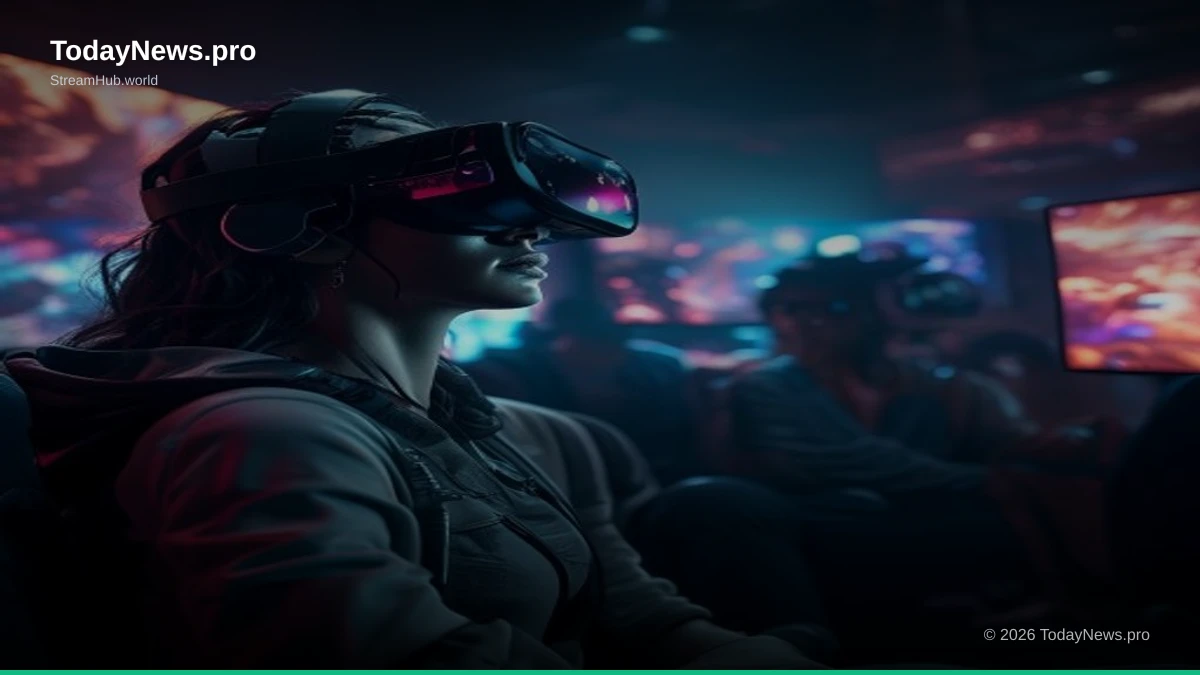
Virtual Reality, at its core, aims to transport users to entirely different environments. Unlike traditional media, VR headsets create a sense of presence by completely immersing the user's senses, primarily sight and sound, within a computer-generated world. This is achieved through stereoscopic displays that present slightly different images to each eye, mimicking natural binocular vision and creating a convincing depth perception. The accompanying spatial audio further enhances this illusion, allowing sounds to originate from specific directions and distances, making the virtual environment feel alive and reactive. The immediate impact of VR on gaming is undeniable. Players are no longer looking at a character on a screen; they *are* the character. This shift from third-person to first-person perspective, combined with head tracking, allows for intuitive control and a level of immersion previously unimaginable. Imagine ducking behind cover in a virtual firefight, physically reaching for a weapon, or looking around corners to scout enemy positions. This physical engagement translates into a heightened sense of stakes and realism, making gaming experiences profoundly more compelling and, for some, intensely thrilling.The Cinematic Shift: VR Films
The film industry is cautiously but increasingly exploring the potential of VR storytelling. Instead of a fixed camera perspective, VR films place the viewer at the center of the action. This means a director can guide attention through visual cues, sound design, and character placement, but the viewer retains the freedom to look around. This presents unique challenges for traditional narrative structures, which often rely on controlled pacing and framing. However, it also offers opportunities for new forms of storytelling, focusing on environmental exploration, emergent narratives, and deeply personal emotional connections with characters and events. Early VR films have explored documentaries, experimental narratives, and even interactive dramas, pushing the boundaries of what a "movie" can be. The development of VR is not without its hurdles. Motion sickness, often referred to as "cybersickness," remains a significant concern for many users, stemming from a disconnect between visual input and the vestibular system's sense of motion. High-resolution displays and advanced tracking technologies are constantly working to mitigate this, but it is a persistent challenge. Furthermore, the cost of high-end VR hardware can still be a barrier to widespread adoption, though prices are steadily decreasing, making VR more accessible to a broader audience.200+
VR Gaming Titles Released Annually
$10.3B
VR Content Market Value (2023)
85%
Reported Increase in User Engagement with VR Games
Augmented Reality: Blending the Digital and Physical
While VR replaces our reality with a digital one, Augmented Reality (AR) overlays digital information and imagery onto our existing physical world. This is typically achieved through smartphone cameras, dedicated AR glasses, or even smart lenses. The key differentiator is that AR maintains a connection to the real world, enhancing it rather than substituting it entirely. This makes AR uniquely suited for applications that require context and interaction within our immediate surroundings. In gaming, AR has already found a significant foothold. Titles like Pokémon GO demonstrated the immense potential of overlaying digital creatures onto the real world, encouraging exploration and social interaction. AR games can turn mundane locations into adventure zones, transforming parks into battlegrounds or city streets into treasure hunts. The ability to see digital elements interact with physical objects – a virtual dragon perched on your real-world coffee table, for instance – creates a sense of wonder and playfulness that is distinct from purely virtual experiences.AR in Filmmaking and Interactive Narratives
Beyond gaming, AR is beginning to influence how we experience films and stories. Imagine watching a historical documentary and, through your AR device, seeing historical figures walk and talk in your own living room, or viewing a 3D model of an ancient artifact superimposed on your table. This allows for a more dynamic and educational consumption of content. Furthermore, AR can be used to extend the narrative of a film beyond the screen. A movie character might leave clues or messages that can only be found and deciphered using an AR app, encouraging deeper engagement with the story world and fostering a sense of mystery and discovery for dedicated fans. The accessibility of AR through smartphones has been a major driver of its growth. Most people already own a device capable of AR, lowering the barrier to entry compared to VR. This widespread availability has led to innovative uses in marketing, education, and entertainment. AR filters on social media platforms are a ubiquitous example, allowing users to playfully alter their appearance or interact with virtual objects. As AR hardware, particularly glasses, becomes more sophisticated and affordable, its integration into daily life, and thus into entertainment, will undoubtedly deepen."Augmented reality is not about escaping reality; it's about enriching it. We're moving towards a future where the digital and physical seamlessly intertwine, creating entirely new canvases for storytelling and interaction that were simply not possible before."
— Dr. Anya Sharma, Lead Researcher, Immersive Technologies Lab
Haptic Feedback: Feeling the Game, Feeling the Film
Perhaps the most overlooked, yet critically important, element in creating true immersion is the sense of touch. Haptic feedback technology aims to replicate the sensation of touch, pressure, and even texture within a digital experience. This goes far beyond simple controller rumble, encompassing advanced systems that can simulate the feeling of impacts, the resistance of an object, or even the subtle sensation of a virtual breeze. In gaming, haptics are revolutionizing how players interact with the virtual world. Imagine feeling the recoil of a weapon in your hands, the subtle vibration of a car engine, or the distinct thud of landing after a jump. This tactile feedback adds a layer of realism and sensory richness that profoundly enhances the gaming experience. It can also be used to convey crucial information to the player – for instance, a warning vibration when an enemy is near, or a distinct feel for different types of surfaces underfoot.Beyond Gaming: Haptics in VR and Film
The application of haptics extends significantly to VR experiences. Full-body haptic suits are emerging that can simulate impacts and sensations across the entire body, making virtual combat or even experiencing extreme weather conditions feel incredibly real. Gloves with sophisticated haptic actuators can allow users to "touch" and manipulate virtual objects, feeling their shape, texture, and resistance. This level of tactile interaction is crucial for making VR feel less like a simulation and more like a lived experience. In the realm of film, haptics are still in their nascent stages but hold immense promise. Imagine a cinema seat that vibrates with the rumble of an explosion, or a wearable device that subtly nudges you when a character is experiencing discomfort. While widespread adoption in theaters is a long-term prospect, the integration of haptics into home entertainment systems, particularly through specialized chairs or wearable accessories, could dramatically amplify the emotional impact of movies. A dramatic scene could be underscored by a subtle tremor in your chair, or a tense moment could be accompanied by a faint pulse against your skin, deepening the viewer's emotional connection.| Haptic Technology | Primary Application | Key Features |
|---|---|---|
| Vibration Motors | Game Controllers, Mobile Devices | Basic tactile feedback, rumble effects |
| Linear Resonant Actuators (LRAs) | Smartphones, Wearables | Sharper, more distinct vibrations, localized feedback |
| Force Feedback Systems | Gaming Peripherals (steering wheels, joysticks), VR Gloves | Simulates resistance, tension, and impact |
| Ultrasonic Haptics | Touchscreens, AR Displays | Creates tactile sensations on surfaces without physical contact |
| Full-Body Haptic Suits | VR Training, Entertainment | Simulates impact, pressure, and temperature across the body |
The Evolution of Cinematic and Gaming Experiences
The convergence of VR, AR, and haptics represents a paradigm shift in how we engage with digital narratives. Traditional games, while evolving with increasingly sophisticated graphics and gameplay mechanics, have largely remained confined to the visual and auditory senses. VR throws the player directly into the action, demanding physical engagement and offering an unparalleled sense of presence. AR, on the other hand, brings the digital world to us, creating interactive experiences that are woven into our everyday environments. The impact on filmmaking is equally profound. VR cinema allows for non-linear narratives and a deeply personal viewing experience. Viewers can choose where to look, what to focus on, and in some cases, even influence the outcome of the story. This democratizes the viewing experience and opens up new avenues for artistic expression, moving away from the director's absolute control towards a more co-creative relationship with the audience. AR can augment film viewing with supplementary information, interactive elements, or even extended story content, blurring the lines between passive consumption and active participation.Case Studies: Pioneers in Immersive Entertainment
Several companies and projects are at the forefront of this immersive entertainment revolution. In gaming, studios like Valve with their "Half-Life: Alyx" have set new benchmarks for VR gameplay, showcasing how narrative depth and engaging mechanics can be combined with cutting-edge VR technology. For AR gaming, Niantic's "Pokémon GO" remains a cultural phenomenon, demonstrating the power of location-based AR to drive real-world engagement. In the film industry, studios like Baobab Studios have been producing critically acclaimed VR animated shorts, such as "Invasion!" and "Wolves in the Walls," which explore the narrative potential of the medium. Companies like Felix & Paul Studios are pushing the boundaries of 360-degree cinematic VR documentaries, placing viewers in front of historical events or alongside extraordinary individuals. The integration of haptics, while still emerging, is being explored by companies developing specialized VR peripherals and even by theme parks creating immersive attractions.Projected Growth of Immersive Technologies in Entertainment
Challenges and the Road Ahead
Despite the exhilarating progress, the immersive entertainment revolution faces significant hurdles. For VR, the need for dedicated hardware, potential for motion sickness, and the sheer computational power required for truly convincing experiences remain challenges. The content library, while growing, still needs to mature to rival the depth and breadth of traditional media. Furthermore, the social aspect of VR can be isolating; while social VR platforms exist, they haven't yet achieved the widespread adoption of traditional multiplayer gaming. AR faces its own set of obstacles. The development of lightweight, stylish, and affordable AR glasses is a critical step towards mainstream adoption. Currently, relying on smartphones, while accessible, limits the seamlessness of the experience. Battery life for AR devices is also a concern. The ethical implications of constant digital overlay on our reality – issues of privacy, data collection, and potential for distraction – also need careful consideration and regulation. Haptic technology, while promising, is still in its early stages of widespread integration. Developing consistent and reliable haptic feedback across various platforms and experiences is a complex engineering challenge. The cost of advanced haptic hardware can also be prohibitive for widespread consumer adoption. Ensuring that haptics genuinely enhance, rather than distract from, the core experience is paramount for its success."We are at a pivotal moment. The technology is rapidly maturing, but the true art lies in how we design experiences that are not just technically impressive, but emotionally resonant and inherently fun. The next decade will be about perfecting that blend."
— Kenji Tanaka, Chief Technology Officer, Immersive Dynamics Inc.
The Future of Entertainment: A Convergence
The future of entertainment is not about VR *or* AR *or* haptics; it is about their seamless convergence. Imagine putting on a lightweight pair of AR glasses that can also provide subtle haptic feedback. These glasses could overlay a virtual character in your living room, and you could feel the texture of their clothing as they walk past, or the gentle pressure of their hand as they interact with you. This blended reality will create experiences that are far more sophisticated and deeply engaging than anything we have today. VR will likely become more refined, with higher resolutions, wider fields of view, and reduced motion sickness, becoming the go-to for deep dives into entirely fabricated worlds. AR will continue to integrate into our daily lives, enhancing everything from navigation to education to casual gaming, making the digital world an ever-present layer on top of our physical one. Haptics will become the invisible thread that connects us physically to these digital realms, adding a crucial dimension of touch that makes these experiences feel truly tangible. The lines between gaming, film, and even social interaction will continue to blur. Interactive films will become more common, allowing viewers to step into the shoes of characters and influence narratives in profound ways. Games will evolve to tell more complex, cinematic stories, leveraging the immersive power of VR and the contextual awareness of AR. The entertainment landscape of tomorrow will be one where the distinction between the real and the virtual is not a barrier, but a fluid spectrum of experience.What is the primary difference between VR and AR?
Virtual Reality (VR) completely replaces your real-world environment with a simulated one, typically experienced through a headset. Augmented Reality (AR) overlays digital information, such as images or sounds, onto your real-world view, enhancing rather than replacing it.
How does haptic feedback work?
Haptic feedback uses actuators, vibrations, and other tactile technologies to create sensations of touch and motion that users can feel. These systems translate digital signals into physical responses, mimicking real-world touch.
Will VR headsets become as common as smartphones?
While adoption rates are increasing, widespread VR headset ownership comparable to smartphones is still some way off. Factors like cost, comfort, and the need for dedicated content are still being addressed. However, the trend is towards greater accessibility.
What are the ethical concerns surrounding AR?
Ethical concerns with AR include potential privacy violations due to constant data collection, the risk of distraction and information overload, and the potential for digital manipulation of reality. Responsible development and regulation are key.
Can VR or AR be used for education?
Absolutely. Both VR and AR have significant applications in education, offering immersive learning experiences. VR can simulate historical events or complex scientific processes, while AR can provide interactive overlays for textbooks or real-world objects.