

 Linda Wu
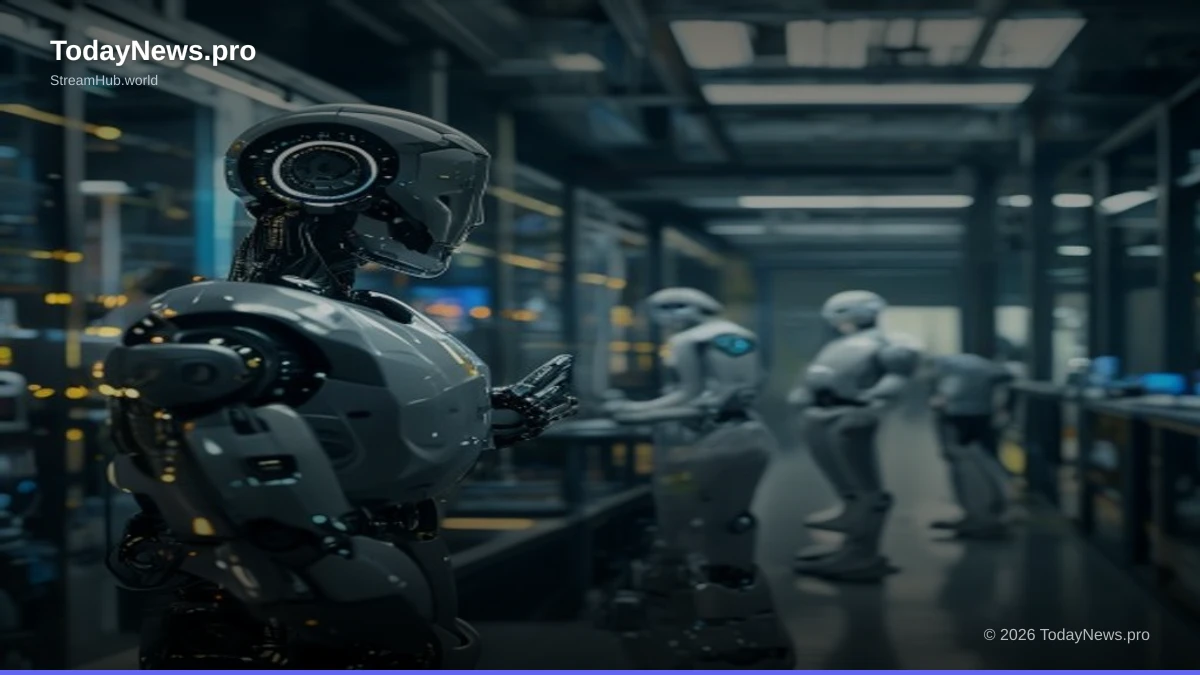
By 2030, the global collaborative robot market is projected to reach $25 billion, a significant surge driven by increasing demand for automation in diverse industries.
The Dawn of the Collaborative Era
For decades, robots in industrial settings were synonymous with caged-off, dangerous machinery, performing repetitive tasks with unyielding precision. These "hard automation" systems operated in strict isolation from their human counterparts, a necessary safeguard for worker safety. However, a paradigm shift is underway. We are entering an era where humans and robots are not just sharing the same workspace, but actively collaborating, leveraging each other's strengths to achieve outcomes previously unattainable. This is the era of Human-Robot Collaboration (HRC).
This new generation of robots, often referred to as "cobots," are designed with safety, flexibility, and human interaction at their core. They possess advanced sensors, force feedback mechanisms, and intuitive programming interfaces, allowing them to work seamlessly alongside humans without the need for extensive safety fencing. This partnership promises to redefine productivity, enhance worker well-being, and unlock new possibilities across a vast spectrum of human endeavors.
The driving forces behind this revolution are multifaceted. Firstly, an aging global workforce and a shortage of skilled labor in many sectors necessitate intelligent automation solutions that augment, rather than replace, human workers. Secondly, the increasing complexity of manufacturing and logistical processes demands adaptable systems that can handle intricate tasks. Finally, advancements in artificial intelligence, machine learning, and sensor technology have made sophisticated, context-aware robotic systems a tangible reality.
The Cobot Evolution: From Isolation to Integration
Early industrial robots were marvels of engineering, capable of immense speed and strength. However, their very power made them inherently dangerous to be around. The concept of safety cages became the industry standard, a physical barrier separating man and machine. While effective for certain tasks, this separation limited the scope of robotic application and often created bottlenecks in production lines.
Cobots represent a fundamental redesign. They are engineered to be inherently safe, often featuring rounded edges, lightweight construction, and sophisticated force-limiting capabilities. If a cobot encounters unexpected resistance, such as a human arm, it immediately stops or redirects its motion, preventing injury. This intrinsic safety allows for close-proximity operation, enabling a dynamic interplay between human dexterity and robotic precision.
The transition from caged automation to collaborative robotics is not merely a technological upgrade; it's a philosophical shift. It acknowledges that human intelligence, adaptability, and problem-solving skills remain invaluable, and that robots are best utilized when they complement these human attributes. This synergy is what fuels the innovation we are witnessing today.
Beyond the Assembly Line: New Frontiers for HRC
While the automotive industry was an early adopter of robotic automation, the application of cobots is rapidly expanding into sectors far beyond traditional manufacturing. From healthcare to logistics, agriculture to even the creative arts, the flexibility and adaptability of HRC are proving transformative.
In manufacturing, cobots are not just performing heavy lifting or repetitive tasks. They are assisting skilled workers with intricate assembly processes, providing precise placement of components, or acting as intelligent tools that enhance human capabilities. For instance, a human worker might possess the dexterity to perform a complex soldering task, while a cobot could precisely position the components, hold them steady, and even perform pre-assembly checks, significantly reducing errors and increasing throughput.
The logistics and warehousing sector is another fertile ground for HRC. As e-commerce continues its exponential growth, the demand for efficient order fulfillment is paramount. Cobots can work alongside human pickers, retrieving items from shelves, transporting them to packing stations, or even assisting with the packing process itself. This not only speeds up operations but also reduces the physical strain on human workers, who can focus on more cognitive tasks like quality control and problem-solving.
Healthcares Robotic Assistants
The healthcare industry is witnessing a profound impact from HRC, particularly in areas requiring precision and tireless repetition. Surgical robots, already a sophisticated form of automation, are evolving to include collaborative elements, where surgeons can guide robotic arms with enhanced dexterity and tremor reduction. Beyond surgery, cobots are being deployed in rehabilitation centers, assisting patients with repetitive physical therapy exercises under the supervision of a therapist. Their tireless nature and precise control can offer a consistent and effective rehabilitation regimen.
Furthermore, in laboratories, cobots can handle the tedious and repetitive tasks of sample preparation, pipetting, and analysis. This frees up highly skilled researchers to focus on experimental design, data interpretation, and the pursuit of groundbreaking discoveries. The accuracy and speed of cobots in these sensitive environments can lead to faster research cycles and potentially life-saving advancements.
Agricultures Smart Helpers
The agricultural sector, often facing labor shortages and challenging environmental conditions, is also embracing HRC. Cobots equipped with advanced vision systems can perform delicate tasks like fruit picking, ensuring that produce is harvested at its optimal ripeness without damage. They can also assist with planting, weeding, and even monitoring crop health, providing data that helps farmers make more informed decisions. This not only increases efficiency but also contributes to sustainable farming practices.
| Industry Sector | Key HRC Applications | Benefits |
|---|---|---|
| Manufacturing | Assembly, pick-and-place, quality inspection, machine tending | Increased productivity, reduced errors, improved ergonomics |
| Logistics & Warehousing | Order picking, sorting, packing, material handling | Faster fulfillment, reduced labor costs, enhanced worker safety |
| Healthcare | Surgical assistance, rehabilitation, laboratory automation | Enhanced precision, patient care, accelerated research |
| Agriculture | Harvesting, planting, weeding, crop monitoring | Labor optimization, increased yields, sustainable practices |
Understanding the Human-Robot Interface
The success of human-robot collaboration hinges on an intuitive and effective interface. The days of complex programming languages and extensive training are giving way to user-friendly interfaces that allow even non-experts to interact with and deploy cobots. This accessibility is crucial for widespread adoption, especially in small and medium-sized enterprises (SMEs) that may not have dedicated robotics engineers.
Several key advancements are shaping the HRI:
Intuitive Programming and Control
One of the most significant breakthroughs is the development of intuitive programming methods. "Lead-through" programming, where a human operator physically guides the robot arm through the desired movements, is becoming commonplace. The robot then learns and records these motions, allowing it to replicate them autonomously. Visual programming interfaces, often drag-and-drop systems, further simplify the process, allowing users to define tasks and workflows without needing to write code.
Voice commands and gesture recognition are also emerging as powerful interface tools. Imagine a worker instructing a cobot to move a heavy object or assist with a delicate maneuver using simple verbal commands or hand signals. This level of interaction not only enhances usability but also allows for more dynamic and responsive collaboration.
Sensing and Perception
The ability of cobots to perceive and understand their environment is fundamental to safe and effective collaboration. Advanced sensors, including proximity sensors, force sensors, and vision systems (cameras), allow robots to detect human presence, identify objects, and understand their surroundings. Machine learning algorithms enable these robots to learn from their interactions and adapt their behavior accordingly.
For example, a cobot working on an assembly line might use its vision system to identify different parts and their correct orientation. If a human worker inadvertently moves a part, the cobot’s sensors would detect this change, and the robot could pause or adjust its actions to avoid a collision or error. This contextual awareness is what elevates cobots from mere tools to true collaborative partners.
Safety: The Unnegotiable Foundation
The concept of safety in HRC is paramount. It’s not an afterthought; it’s woven into the very design and operational principles of these machines. The goal is to create an environment where humans and robots can work in close proximity without any compromise to worker well-being. This requires a multi-layered approach that encompasses both the robot's inherent safety features and the careful design of the collaborative workspace.
The International Organization for Standardization (ISO) provides critical guidelines for HRC. ISO 10218, for instance, outlines the general safety requirements for industrial robots, while ISO/TS 15066 specifically addresses collaborative robot systems and workstations. These standards dictate aspects like force and torque limitations, speed, collision detection, and the overall risk assessment process.
Inherent Safety Features
Cobots are designed with several inherent safety mechanisms. Force and torque limiting is a prime example. These robots are programmed to detect excessive forces or torques and immediately halt their motion. This prevents them from causing harm even if they come into direct contact with a human. Lightweight construction also plays a role; a lighter robot is less likely to cause injury if it makes contact.
Another crucial aspect is speed and separation monitoring. Cobots can operate at reduced speeds when a human is in close proximity and then accelerate to higher speeds when the workspace is clear. This dynamic adjustment ensures safety without unduly sacrificing productivity. Advanced sensor systems, including vision and proximity sensors, provide constant environmental awareness, allowing the robot to anticipate potential collisions and react accordingly.
Risk Assessment and Workspace Design
Beyond the robot's built-in safety, a thorough risk assessment of the entire collaborative task is essential. This involves identifying potential hazards, evaluating their severity, and implementing mitigation strategies. The design of the workspace is critical; clear demarcation of zones, appropriate lighting, and the absence of trip hazards contribute to a safe environment. The collaborative task itself must be analyzed to ensure that the robot's movements and the human's movements are synchronized safely.
For instance, if a cobot is performing a welding operation, safety protocols must ensure that the human operator is not in the path of the welding torch or exposed to fumes during the collaborative phase. Training for human operators is also a vital component, ensuring they understand the robot's capabilities, limitations, and safety protocols. ISO/TS 15066 provides comprehensive guidance on these aspects.
Ethical and Societal Implications
As human-robot collaboration becomes more prevalent, it raises significant ethical and societal questions that demand careful consideration. While the promise of increased productivity and enhanced work environments is alluring, we must also address the potential impact on employment, the nature of human skills, and the evolving relationship between humans and machines.
One of the most immediate concerns is the potential for job displacement. While cobots are designed to augment human capabilities, there's a valid concern that in some roles, they might reduce the need for human labor. This necessitates a proactive approach to reskilling and upskilling the workforce, ensuring that individuals can adapt to new roles that emerge alongside automation.
The Future of Skills and Employment
The rise of HRC suggests a shift in the demand for skills. Instead of focusing solely on manual dexterity or brute strength, the workforce of the future will likely emphasize cognitive abilities, critical thinking, problem-solving, creativity, and the ability to manage and interact with intelligent systems. This calls for a re-evaluation of educational curricula and lifelong learning initiatives.
Furthermore, the collaborative nature of these robots could lead to the creation of entirely new job categories. Think of "robot supervisors," "HRC system integrators," or "human-robot interaction designers." These roles would require a blend of technical understanding and human-centric skills.
The economic implications are also profound. Increased productivity can lead to economic growth, but it's crucial to ensure that the benefits are distributed equitably. Policies that support workers through transitions, provide access to training, and potentially explore new social safety nets may be necessary to mitigate the negative impacts of automation on certain segments of the population. Wikipedia's article on automation provides a broad overview of its historical and societal impacts.
Human-Robot Relationships
Beyond the workplace, the concept of robots as companions or assistants in our daily lives is also gaining traction. This raises questions about the nature of human-robot relationships, the potential for emotional attachment, and the ethical boundaries of such interactions. As robots become more sophisticated in their ability to understand and respond to human emotions, the lines between tool, assistant, and even companion may blur.
The development of social robots, designed for interaction and companionship, presents a unique set of ethical challenges. Ensuring that these robots are developed and deployed in ways that are beneficial and not exploitative is a critical undertaking. This includes considerations around data privacy, the potential for manipulation, and the impact on human social development.
Will robots take all our jobs?
Are collaborative robots truly safe?
What skills will be most important in a collaborative robot future?
The Future of Work and Companionship
The trajectory of human-robot collaboration points towards a future where the lines between human and machine capabilities continue to blur, leading to profound shifts in both our professional lives and our personal spheres. The labs and research institutions working on these technologies are not just building better tools; they are architecting the very fabric of our future society.
In the workplace, we can anticipate a more integrated and intelligent work environment. Cobots will become increasingly ubiquitous, acting as extensions of human workers, amplifying their abilities, and taking on tasks that are either too strenuous, too precise, or too tedious for humans alone. This will lead to increased efficiency, higher quality products, and potentially more engaging and less physically demanding roles for humans.
The Evolving Workplace Ecosystem
The concept of a "smart factory" or "intelligent warehouse" will become the norm. These environments will be characterized by seamless communication and coordination between human workers, cobots, and other automated systems. AI-powered systems will optimize workflows in real-time, anticipating needs and reallocating resources dynamically to maintain peak performance. Human workers will transition into roles of supervision, complex problem-solving, and overseeing the overall operational flow, leveraging their unique cognitive and creative strengths.
Moreover, the accessibility of cobots through intuitive interfaces will democratize automation, allowing small businesses and startups to compete more effectively by leveraging advanced technological capabilities without prohibitive upfront investment or specialized expertise. This could foster innovation and entrepreneurship across a wider range of industries.
Robots as Companions and Caregivers
Looking beyond the industrial setting, the future of HRC also extends into our homes and personal lives. We are already seeing the emergence of sophisticated robotic assistants designed to aid with daily tasks, provide companionship, and support elderly or disabled individuals. These "companion robots" are being developed with advanced AI to understand natural language, recognize emotions, and offer personalized assistance.
The potential for robots to assist in elder care, for example, is immense. They can help with medication reminders, monitor vital signs, provide social interaction, and even assist with mobility. This could allow individuals to maintain their independence longer, reducing the burden on human caregivers and improving the quality of life for many. The ethical considerations surrounding these roles are, however, significant and will require ongoing dialogue and careful development. Reuters often covers the latest developments in this rapidly evolving field.
The journey into a future of pervasive human-robot collaboration is well underway. The innovation happening within the labs today is paving the way for a world where our co-workers and companions are increasingly intelligent, adaptable, and capable of augmenting our own abilities in ways we are only beginning to imagine.