

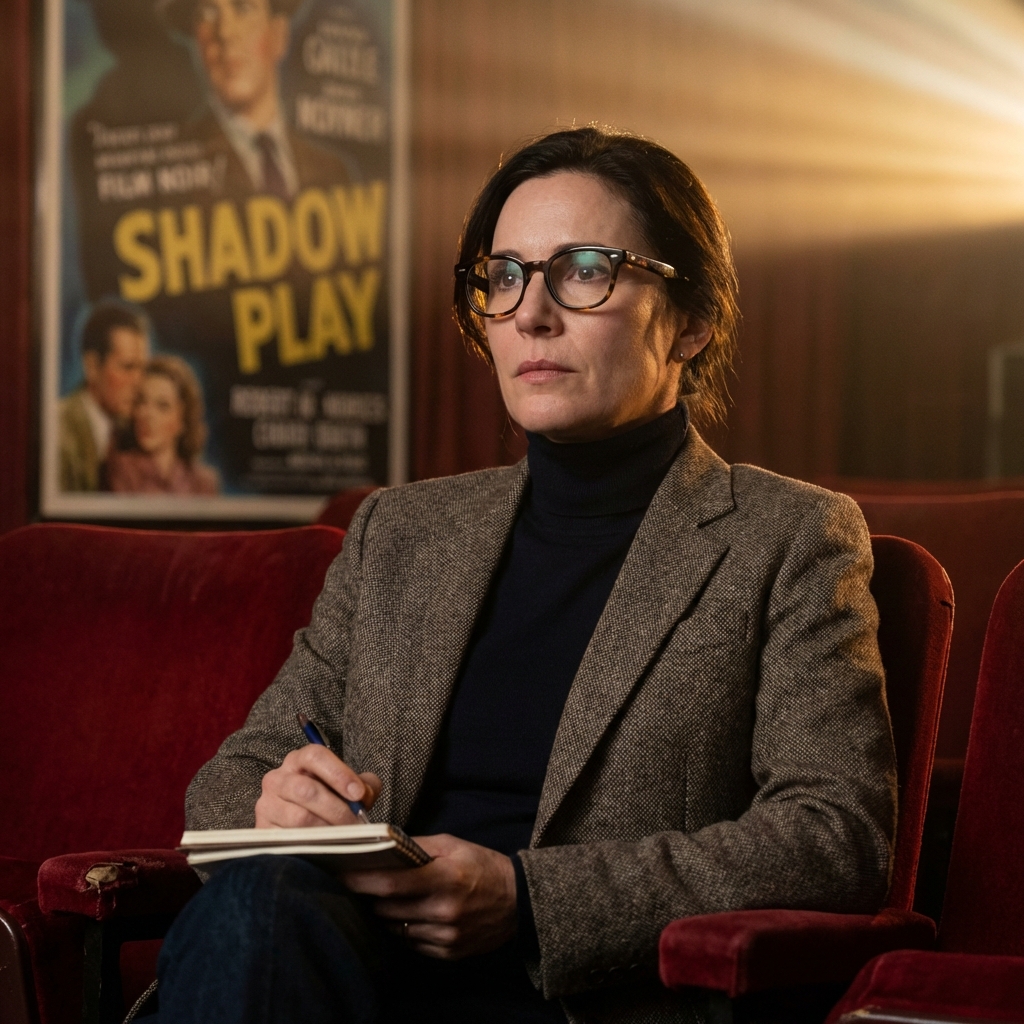
 Kenji Sato

The Algorithmic Overture: AIs Entry into Hollywood
The integration of AI into Hollywood began subtly, primarily in backend operations and data analysis. Studios initially leveraged machine learning to predict box office success based on demographic data, script elements, and marketing strategies. Tools analyzing audience sentiment from social media became commonplace, guiding casting decisions and even influencing plot points in real-time. This data-driven approach allowed for a more informed, albeit less intuitive, decision-making process.Early Adoption and Data-Driven Insights
Before AI started writing scripts or generating visuals, its presence was felt in the boardroom. Predictive analytics platforms crunched vast datasets of past film performance, genre trends, and audience preferences. This allowed studios to de-risk investments, identifying projects with a higher probability of commercial success.
The concept of "data-driven filmmaking" gained traction, aiming to quantify artistic elements into predictable revenue streams. While initially met with skepticism from traditionalists, the undeniable financial benefits of these AI insights began to sway opinion. Companies like ScriptBook and Cinelytic emerged, offering sophisticated analysis tools.
Shifting Perceptions and Increasing Investment
As AI's capabilities expanded beyond mere analysis, its potential for creative assistance became apparent. The initial apprehension among artists and technicians began to wane as they witnessed AI tools streamlining laborious tasks. This growing acceptance, coupled with significant investment from tech giants and venture capitalists, accelerated AI's integration across the entire production pipeline.
Scriptwritings Silicon Muse: Generating Narratives
The notion of an AI penning a compelling screenplay was once science fiction. Today, AI-powered language models are capable of generating plot outlines, character dialogues, and even entire scripts. These tools, trained on colossal libraries of existing literature and film, can mimic various writing styles, explore diverse narrative structures, and suggest novel plot twists.Generative Text Models and Their Capabilities
Large Language Models (LLMs) like OpenAI's GPT series and Google's LaMDA are at the forefront of AI scriptwriting. They can be prompted with a premise, a genre, or even a single sentence, and in return, produce coherent narrative . These models can generate character backstories, descriptive scene settings, and realistic dialogue, often surprising writers with their creativity.
For instance, an AI could be tasked with creating a romantic comedy set in ancient Rome, complete with period-appropriate dialogue and contemporary humor. The results, while sometimes requiring significant human refinement, can offer a wealth of ideas, breaking through writer's block and accelerating the initial drafting phase. Platforms like Sudowrite are already offering these capabilities to writers.
Human-AI Collaboration in Storytelling
The most effective application of AI in scriptwriting is not outright replacement but collaborative partnership. AI can serve as an invaluable co-writer, suggesting alternative plot developments, identifying clichés, or even simulating audience reactions to different narrative choices. This synergy allows human writers to focus on the emotional depth, thematic resonance, and unique artistic vision that AI currently struggles to replicate.
Writers can use AI to brainstorm multiple story arcs simultaneously, explore character motivations from different angles, or even generate variations of a scene to find the most impactful version. This iterative process, guided by human sensibility, can lead to richer and more complex narratives than either human or AI could achieve alone.
Data-Driven Story Refinement
Beyond generation, AI can analyze existing scripts for narrative flow, pacing, and character arc consistency. By identifying potential plot holes or areas where audience engagement might dip, AI can provide actionable feedback, allowing for proactive script revisions. This data-informed approach can save significant time and resources in the development process.
Visualizing the Impossible: AI in Pre-Production and CGI
The visual landscape of cinema is being radically reshaped by AI, particularly in the realms of concept art, storyboarding, and the creation of visual effects (VFX). AI tools can now generate photorealistic concept art from textual descriptions, animate characters, and even build entire digital environments, drastically reducing the time and cost associated with these complex processes.AI-Powered Concept Art and Storyboarding
Tools like Midjourney, Stable Diffusion, and DALL-E 2 are revolutionizing concept art. Artists can now type a description – "a dystopian city skyline at sunset, with flying vehicles and neon signs, in the style of Syd Mead" – and receive dozens of high-quality visual interpretations within minutes. This accelerates the ideation phase, allowing directors to visualize their concepts with unprecedented speed and detail.
Similarly, AI can generate storyboards from scripts, creating visual sequences that help filmmakers plan shots and camera angles. This not only speeds up pre-production but also ensures a more cohesive visual language from the outset. The ability to rapidly iterate on visual ideas empowers creative teams to explore a broader range of aesthetic possibilities.
The Evolution of CGI and Digital Environments
The creation of complex CGI has historically been an incredibly labor-intensive and expensive endeavor. AI is changing this paradigm. Generative adversarial networks (GANs) can create realistic textures, models, and even entire digital landscapes. AI can also assist in animating characters, creating more fluid and lifelike movements by learning from vast motion capture datasets.
For example, creating a sprawling alien planet for a sci-fi epic traditionally required legions of artists to model every rock, tree, and atmospheric effect. Now, AI can generate these elements based on parameters, allowing VFX artists to focus on the finer details and integration. This democratizes the creation of visually stunning worlds, making them accessible to a wider range of productions.
AI-Driven Lighting and Compositing
Even in post-production, AI is making inroads. AI can analyze existing footage and suggest optimal lighting setups for digital elements being composited into live-action scenes. It can also automate tedious tasks like rotoscoping and green screen keying, freeing up artists for more creative work. This not only increases efficiency but also improves the final visual quality.
The Actorless Ensemble: AI-Generated Performances and Deepfakes
Perhaps the most controversial and transformative application of AI in filmmaking is its ability to generate or alter human performances. Deepfake technology, while often discussed in negative contexts, holds immense potential for cinematic storytelling, from de-aging actors to resurrecting deceased performers. AI can also generate entirely synthetic actors, raising profound questions about authenticity and the future of acting as a profession.De-aging and Digital Resurrection
AI has become incredibly adept at de-aging actors, allowing them to convincingly portray younger versions of themselves. This eliminates the need for extensive makeup or casting younger actors for flashback sequences, as seen in films like "The Irishman." More controversially, AI can be used to digitally recreate performances of actors who are no longer alive, raising ethical debates about consent and legacy.
The ability to digitally resurrect performers like Peter Cushing in "Rogue One: A Star Wars Story" showcases the technological marvel, but also the complex ethical considerations. The question of whether it is appropriate to use an actor's likeness without their explicit, ongoing consent is a significant hurdle.
Synthetic Actors and Virtual Performances
Beyond manipulating existing actors, AI can create entirely synthetic performers from scratch. These "virtual actors" can be designed with specific looks, vocal qualities, and emotional ranges. This could lead to a future where entire characters are generated and animated by AI, performing roles that might be too dangerous, too expensive, or simply impossible for human actors.
The implications for the acting profession are immense. While some see this as an expansion of creative possibilities, others fear job displacement. The nuanced performance, the spark of human improvisation, and the emotional connection an audience feels with a human actor are qualities that AI currently struggles to replicate authentically.
The Ethics of Digital Likeness
The widespread use of deepfake technology and AI-generated performances brings a host of ethical challenges. Issues of consent, intellectual property, and the potential for misuse are paramount. Clear guidelines and regulations will be necessary to navigate this new frontier, ensuring that technology is used responsibly and ethically.
Editings Electric Hand: Streamlining Post-Production
The post-production phase, particularly the editing process, is ripe for AI-driven optimization. AI can assist editors by automatically logging footage, identifying key moments, and even assembling rough cuts based on script or mood. This frees up human editors to focus on the creative nuances of pacing, emotional impact, and storytelling rhythm.Automated Footage Logging and Scene Selection
Modern films generate terabytes of footage. AI can sift through this massive archive, tagging clips by scene, character, camera angle, and even emotional tone. This intelligent logging system makes it exponentially faster for editors to find the specific shots they need, eliminating hours of manual searching.
Furthermore, AI can be trained to identify "hero" takes – the best performances or shots within a scene – based on predefined criteria. This reduces the subjective workload of reviewing multiple takes, allowing editors to quickly identify the strongest options for their cut.
AI-Assisted Rough Cuts and Pacing Analysis
Some AI tools can generate preliminary rough cuts of scenes or even entire sequences based on script dialogue and action. While these initial cuts are rarely perfect, they provide a solid foundation for human editors to build upon. This "AI starter edit" can significantly shorten the time required to get a project to a viewable stage.
AI also offers sophisticated pacing analysis. It can identify moments where the film might be dragging or where the tension needs to be heightened, providing objective data to inform editorial decisions. This complements the subjective intuition of a human editor, leading to a more balanced and engaging final product.
Color Grading and Sound Design Assistance
Beyond the edit, AI is assisting in other post-production tasks. AI can suggest color palettes based on genre or mood, and even automate some basic color correction. In sound design, AI can help identify and isolate dialogue from background noise or generate ambient soundscapes. These advancements streamline complex technical processes, allowing creatives to focus on artistic intent.
The Audience Algorithm: Personalization and Distribution
The influence of AI extends beyond the production floor into how films are distributed and consumed. Streaming platforms employ sophisticated AI algorithms to recommend content to viewers, shaping their viewing habits and influencing what gets produced next. This data-driven approach to audience engagement is transforming the business of cinema.Personalized Content Recommendations
Streaming giants like Netflix, Amazon Prime Video, and Disney+ rely heavily on AI to understand viewer preferences. Their recommendation engines analyze viewing history, ratings, and even how long someone watches a particular show or movie. This personalized approach keeps viewers engaged and encourages them to discover new content.
The success of these platforms is directly tied to the effectiveness of their AI algorithms. By predicting what viewers want to watch, they can curate a vast library of content in a way that feels tailored to each individual, a feat impossible through traditional distribution methods. This also provides valuable insights to content creators about audience tastes.
AI in Marketing and Audience Targeting
AI is also revolutionizing film marketing. Algorithms can identify specific audience segments most likely to be interested in a particular film and target advertising campaigns accordingly. This ensures that marketing budgets are spent more efficiently, reaching the most receptive viewers.
Predictive analytics can forecast box office performance, helping studios make informed decisions about release dates, distribution strategies, and even the scale of marketing campaigns. This data-driven approach aims to maximize reach and revenue in a competitive market.
The Shifting Landscape of Distribution
The data gleaned from AI algorithms influences not only marketing but also content creation itself. Studios are increasingly using AI-driven insights to greenlight projects that align with demonstrated audience interests. This can lead to a more predictable, but potentially less diverse, cinematic landscape.
The rise of AI-powered analytics also plays a role in the ongoing debate about theatrical releases versus direct-to-streaming. By understanding audience viewing habits and preferences, AI can inform strategic decisions about how and where films are released to achieve maximum impact and profitability. This is a complex interplay between technology, business, and art.
| Tool Category | 2023 Estimate (USD Billions) | 2028 Projection (USD Billions) | Compound Annual Growth Rate (CAGR) |
|---|---|---|---|
| Script Analysis & Generation | 0.8 | 3.5 | 34.5% |
| Concept Art & Storyboarding | 1.2 | 6.0 | 38.2% |
| VFX & CGI Generation | 2.5 | 15.0 | 43.1% |
| Editing & Post-Production | 0.7 | 4.0 | 41.5% |
| Marketing & Distribution Analytics | 1.5 | 7.5 | 37.8% |
Ethical Labyrinths and Future Frontiers
The AI revolution in Hollywood is not without its challenges. The ethical implications of using AI in creative processes are vast and complex, touching upon issues of authorship, copyright, job security, and the very definition of art. Navigating these labyrinths will be crucial for shaping a responsible and equitable future for cinema.Authorship, Copyright, and Intellectual Property
Who owns the copyright to a screenplay written by an AI? Or a visual effect generated by an algorithm? These questions are already being debated in legal circles and are likely to lead to significant shifts in intellectual property law. Defining authorship in an era of human-AI collaboration is a paramount concern.
The creative industries have long been built on the foundation of individual or collaborative human authorship. As AI plays a more active role, the lines blur. Establishing clear frameworks for ownership and credit will be essential to protect creators and ensure fair compensation. This is a legal and philosophical battleground.
Job Displacement and the Future of Creative Roles
A significant concern among artists, writers, actors, and technicians is the potential for AI to displace human workers. While AI can augment creative roles, it also has the capacity to automate tasks previously performed by humans. This necessitates a proactive approach to retraining and redefining roles within the industry.
The focus may shift from performing highly repetitive or technical tasks to overseeing and guiding AI systems, injecting creative judgment, and focusing on the uniquely human elements of storytelling. The industry must adapt by fostering new skills and creating pathways for human creativity to coexist with AI capabilities.
Will AI replace human actors entirely?
Who is responsible if an AI-generated script contains plagiarized content?
Can AI truly be creative?
The Future of Cinema: Human-AI Symbiosis
The most promising future for AI in Hollywood is one of symbiosis, where human creativity and AI capabilities work in concert. AI can handle the heavy lifting of data analysis, repetitive tasks, and generating novel starting points, while humans provide the vision, emotional intelligence, and artistic judgment that define compelling cinema.
Imagine directors using AI to explore an infinite number of visual styles for a scene, writers collaborating with AI to weave intricate plotlines, and actors using AI to rehearse complex emotional arcs. This fusion could unlock new genres, push narrative boundaries, and make filmmaking more accessible and efficient than ever before. The challenge lies in finding this balance, ensuring that technology serves art, not the other way around.
The ongoing dialogue between technologists, artists, and industry leaders will shape the trajectory of this revolution. As AI continues to evolve at an unprecedented pace, Hollywood stands at a pivotal moment, poised to redefine what is possible on the silver screen and beyond. The future of cinema will be a testament to the innovative spirit of humanity, amplified by the power of artificial intelligence.