

 Kenji Sato
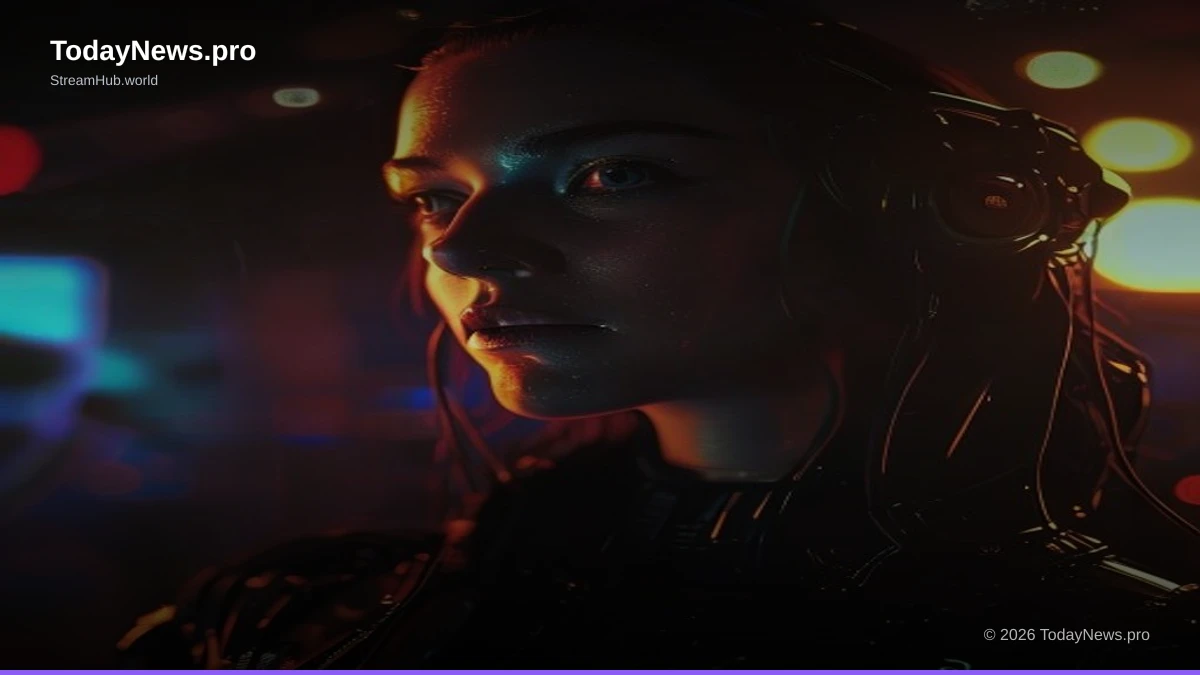
In 2023, the global market for AI in the media and entertainment sector was valued at an estimated $1.8 billion, a figure projected to skyrocket to over $11 billion by 2030, signaling a seismic shift in how content is conceived, created, and consumed.
Hollywoods Digital Awakening: AI Enters the Picture
Hollywood, a bastion of tradition and artistic expression, is undergoing a profound transformation, driven by the relentless march of artificial intelligence. Once confined to the realm of science fiction narratives, AI is now a tangible force, actively participating in the creative process. This isn't a distant future; it's a present reality that is fundamentally reshaping filmmaking, storytelling, and the broader creative industries. From the initial spark of an idea to the final polish of a blockbuster, AI tools are becoming indispensable collaborators, augmenting human creativity and introducing unprecedented efficiencies.
Defining the Digital Muse
The term "digital muse" encapsulates AI's evolving role. It's not merely a tool for automation but a generative partner, capable of suggesting plot points, crafting dialogue, and even visualizing entire scenes. This advanced form of AI, particularly generative AI, is trained on vast datasets of existing creative works, allowing it to understand patterns, styles, and narrative structures. The implications for filmmakers are immense, offering new avenues for exploration and innovation.
The integration of AI into Hollywood's workflow is not a monolithic event but a multifaceted integration across various stages of production. Studios and independent filmmakers alike are exploring these tools to streamline processes that were once labor-intensive and time-consuming. This democratization of creative tools is a significant aspect of AI's impact, potentially leveling the playing field for smaller production houses.
Early Adopters and Experimental Frontiers
While the mainstream adoption is gaining momentum, early adopters within Hollywood have been quietly experimenting with AI for years. These pioneers have recognized the potential for AI to break through creative blocks, explore unconventional narrative paths, and accelerate the development cycle. Their experiences are now informing the broader industry's approach, moving from cautious curiosity to active integration.
From Script to Screen: AI as a Storytelling Partner
The genesis of any film lies in its story, and AI is proving to be a revolutionary force in this foundational stage. Scriptwriting, often a solitary and arduous journey, is being augmented by AI's ability to analyze successful narratives, generate character arcs, and even suggest dialogue variations. This doesn't replace the screenwriter but provides them with a powerful co-pilot, capable of exploring myriad narrative possibilities at an unprecedented speed.
AI-Powered Script Development
Generative AI models can analyze thousands of existing scripts to identify common plot devices, pacing structures, and dialogue patterns that resonate with audiences. Screenwriters can then leverage these insights to refine their own work, ensuring emotional impact and narrative coherence. AI can also be used to generate loglines, synopses, and even entire scene outlines based on a given premise, serving as a powerful brainstorming tool.
Furthermore, AI can assist in character development by generating detailed character backstories, personality traits, and dialogue styles that are consistent and compelling. This allows writers to flesh out their characters more thoroughly and explore their motivations from multiple angles. The ability to generate alternative plot twists or dialogue options can help screenwriters overcome writer's block and discover more engaging storytelling avenues.
Predictive Analytics and Audience Engagement
Beyond raw generation, AI is being employed to predict audience reception to different story elements. By analyzing vast datasets of audience feedback, box office performance, and social media trends, AI algorithms can offer insights into which themes, character archetypes, or plot resolutions are likely to resonate most strongly. This predictive capability can guide writers and producers in shaping stories that have a higher probability of commercial and critical success.
However, this predictive power also raises questions about creative originality and the potential for homogenization of storytelling. Relying too heavily on what has worked in the past could stifle innovation and lead to formulaic narratives. The art of storytelling, at its core, involves risk-taking and challenging audience expectations, something that AI, by its nature, is programmed to avoid.
| AI Application | Description | Benefit |
|---|---|---|
| Generative Scriptwriting | AI models create dialogue, scene descriptions, and plot outlines. | Accelerated brainstorming, overcoming writer's block. |
| Character Arc Generation | AI assists in developing complex and consistent character journeys. | Deeper characterization, enhanced narrative depth. |
| Audience Sentiment Analysis | AI predicts audience reactions to story elements and themes. | Informed creative decisions, higher potential for engagement. |
| Predictive Story Analytics | AI analyzes past successes to forecast future audience appeal. | Reduced risk in development, optimized content strategy. |
Visual Alchemy: AIs Impact on Production and Post-Production
The visual spectacle of filmmaking is where AI's influence is perhaps most immediately apparent. From pre-visualization and set design to visual effects and editing, AI is revolutionizing how films are brought to life on screen, offering tools that were once the exclusive domain of highly specialized teams.
Revolutionizing Visual Effects (VFX)
The creation of photorealistic digital environments, fantastical creatures, and impossible scenarios has always been a cornerstone of cinematic magic. AI is dramatically accelerating and democratizing the VFX pipeline. Tools like AI-powered rotoscoping, motion capture cleanup, and intelligent background generation are significantly reducing the time and cost associated with these complex tasks.
For instance, AI can now generate highly realistic textures and 3D models based on simple text prompts or reference images, enabling artists to create intricate assets much faster. Generative adversarial networks (GANs) are being used to create entirely new visual elements, from crowds of extras to complex weather effects, with a level of realism that was previously unimaginable. The ability to seamlessly integrate CGI with live-action footage is also being enhanced through AI-driven compositing and color grading.
AI in Editing and Post-Production
The editor's craft, once solely reliant on human judgment and intuition, is also being augmented by AI. AI-powered editing software can now automatically identify and select the best takes, suggest optimal cuts, and even perform basic scene assembly based on script cues or narrative pacing. This frees up editors to focus on the more nuanced aspects of storytelling, such as emotional rhythm and thematic resonance.
Furthermore, AI is revolutionizing color grading, sound design, and even the restoration of archival footage. AI algorithms can analyze footage and suggest color palettes that enhance mood and atmosphere, or automatically remove background noise and enhance dialogue clarity. The ability to upscale low-resolution footage to high definition with remarkable fidelity is another significant advancement.
Virtual Production and Real-Time Rendering
The rise of virtual production, heavily reliant on real-time rendering and sophisticated digital environments, is intrinsically linked to AI advancements. AI-powered tools are enhancing the creation of digital sets and characters that can be rendered in real-time on LED volumes, allowing directors and actors to see the final shot during principal photography. This level of immersion and immediate feedback dramatically alters the shooting process.
AI algorithms are also being used to optimize rendering times, improve the realism of digital actors, and even generate entirely new virtual environments on the fly. This convergence of AI and virtual production is enabling filmmakers to achieve unprecedented levels of creative control and efficiency, blurring the lines between the physical and digital realms.
The Business of Bytes: AI in Hollywoods Economic Landscape
Beyond the creative process, AI is deeply impacting the economic underpinnings of Hollywood. From optimizing marketing campaigns to streamlining distribution and predicting box office success, AI is becoming a crucial component of the industry's business strategy. The potential for cost savings and revenue maximization is driving significant investment in AI technologies.
Streamlining Production and Reducing Costs
The ability of AI to automate repetitive tasks, optimize resource allocation, and predict potential production bottlenecks is leading to significant cost reductions. AI-powered scheduling software can create more efficient shooting plans, minimizing downtime and maximizing the productivity of cast and crew. This leads to shorter production cycles and a more predictable budgetary outcome.
AI also plays a role in pre-production by assisting with casting choices based on data analysis of actor performance and audience appeal. In post-production, as discussed, AI dramatically reduces the time and expense associated with VFX, editing, and sound mixing. This democratization of advanced tools also allows smaller independent films to compete with larger studio productions on a more even playing field.
Data-Driven Marketing and Distribution
The way films are marketed and distributed is being revolutionized by AI. By analyzing vast amounts of data on consumer behavior, social media trends, and past viewing habits, AI algorithms can identify target audiences with remarkable precision. This allows studios to tailor marketing campaigns, optimize advertising spend, and even predict the most effective release strategies for different markets.
AI is also being used to personalize content recommendations on streaming platforms, a crucial element in retaining subscribers and maximizing viewership. For theatrical releases, AI can help predict box office performance, allowing for more informed decisions about marketing budgets and release strategies. The goal is to move from broad-stroke marketing to highly targeted and effective outreach.
The Future of Film Finance and Investment
AI's ability to analyze market trends, assess script viability, and predict financial returns is also influencing film finance. Investors are increasingly looking to AI-driven analytics to de-risk their investments and identify projects with the highest potential for profitability. This could lead to a more data-informed approach to greenlighting projects, potentially shifting some of the decision-making away from purely subjective creative judgments.
However, this reliance on predictive analytics also raises concerns about the stifling of experimental or niche projects that might not fit the traditional AI-driven success metrics but could be artistically groundbreaking. The balance between data-driven decision-making and artistic freedom remains a critical point of discussion.
Ethical Currents and Creative Controversies
As AI becomes more deeply embedded in Hollywood, a complex web of ethical considerations and creative controversies has emerged. These discussions are critical to shaping the future of the industry in a responsible and equitable manner.
The Specter of Job Displacement
One of the most significant concerns surrounding AI in filmmaking is the potential for job displacement. Roles that involve repetitive tasks, such as certain aspects of animation, data entry, or even basic editing, could be automated. The Writers Guild of America (WGA) and SAG-AFTRA have both raised alarms about AI's potential to undermine the livelihoods of creative professionals, leading to significant labor disputes.
The core of these arguments often centers on the distinction between AI as a tool that assists human creators and AI as a replacement for human creativity. The fear is that studios might opt for AI-generated content over hiring human writers, actors, or artists, thereby devaluing human labor and artistic skill. The ongoing negotiations highlight the industry's struggle to define the boundaries and protections needed in this new era.
Copyright, Ownership, and Authenticity
The question of copyright and ownership of AI-generated content is a legal and ethical minefield. If an AI generates a script or a piece of visual art, who owns the copyright? Is it the AI itself, the developers of the AI, or the user who prompted its creation? These questions have far-reaching implications for intellectual property law and the established frameworks of creative ownership.
Furthermore, the use of AI to generate content in the style of existing artists or to create "deepfakes" raises serious concerns about authenticity and potential misuse. The ability to mimic the voice or likeness of actors without their consent is a particularly contentious issue, leading to demands for clear regulations and ethical guidelines. The concept of artistic authenticity is being challenged as AI blurs the lines between human and machine creation.
The Bias in the Algorithm
AI systems are trained on data, and if that data contains biases, the AI will inevitably reflect and potentially amplify those biases. In the context of filmmaking, this could manifest in AI-generated scripts that perpetuate stereotypes, or in character suggestions that lack diversity. Ensuring that AI tools are developed and used in a way that promotes inclusivity and avoids harmful biases is a critical challenge.
This requires careful curation of training data, ongoing algorithmic audits, and a conscious effort to build AI systems that are equitable and representative. The responsibility lies not only with AI developers but also with the filmmakers and studios who deploy these tools, ensuring they are used to create a more diverse and inclusive cinematic landscape, not to reinforce existing prejudices. Wikipedia's extensive documentation on algorithmic bias provides a valuable starting point for understanding this complex issue: Wikipedia on Algorithmic Bias.
The Future Canvas: What Lies Ahead for AI in Cinema
The trajectory of AI in filmmaking is one of rapid evolution, promising further integration and more sophisticated applications. As the technology matures, its role will likely expand from being a supplementary tool to a more integral component of the creative and production ecosystem.
Hyper-Personalized Content and Interactive Narratives
Looking ahead, AI could enable truly hyper-personalized viewing experiences. Imagine films that adapt their endings or character dialogues based on individual viewer preferences or real-time emotional responses. Interactive narratives, where the audience plays a more active role in shaping the story, could become commonplace, powered by AI's ability to dynamically generate content and respond to user input.
This shift towards personalized and interactive content raises profound questions about the nature of cinema as a communal experience and the director's singular vision. It could pave the way for entirely new forms of storytelling, blurring the lines between passive viewing and active participation. The potential for AI to facilitate these dynamic narrative structures is immense.
AI-Powered Virtual Actors and Digital Humans
The advancement of AI in creating digital humans is set to accelerate. We may see AI-powered virtual actors, indistinguishable from their human counterparts, performing in films. This could offer unprecedented flexibility for filmmakers, allowing them to cast "actors" for any role, at any age, without the logistical constraints of human availability or the aging process.
This development brings with it a host of ethical considerations regarding the portrayal of deceased actors, the potential for AI to replace living actors, and the very definition of performance. The ability of AI to generate realistic human performances will undoubtedly push the boundaries of what is visually possible in cinema.
The Democratization of Filmmaking Continues
As AI tools become more accessible and user-friendly, the barrier to entry for aspiring filmmakers will continue to lower. Complex visual effects, sophisticated editing, and even script generation could become available to individuals and small teams with limited budgets. This democratization of filmmaking promises to foster a new wave of diverse voices and innovative storytelling from around the globe.
The future of Hollywood is not a battle between humans and AI, but a collaboration. The most compelling narratives will likely emerge from the synergy between human creativity, intuition, and emotional intelligence, amplified by the power and efficiency of AI. The challenge lies in navigating this transition ethically, ensuring that technology serves art, and that the human element remains at the heart of storytelling. Reuters provides insightful reporting on the latest developments: Reuters on AI.