

 Amanda Pope
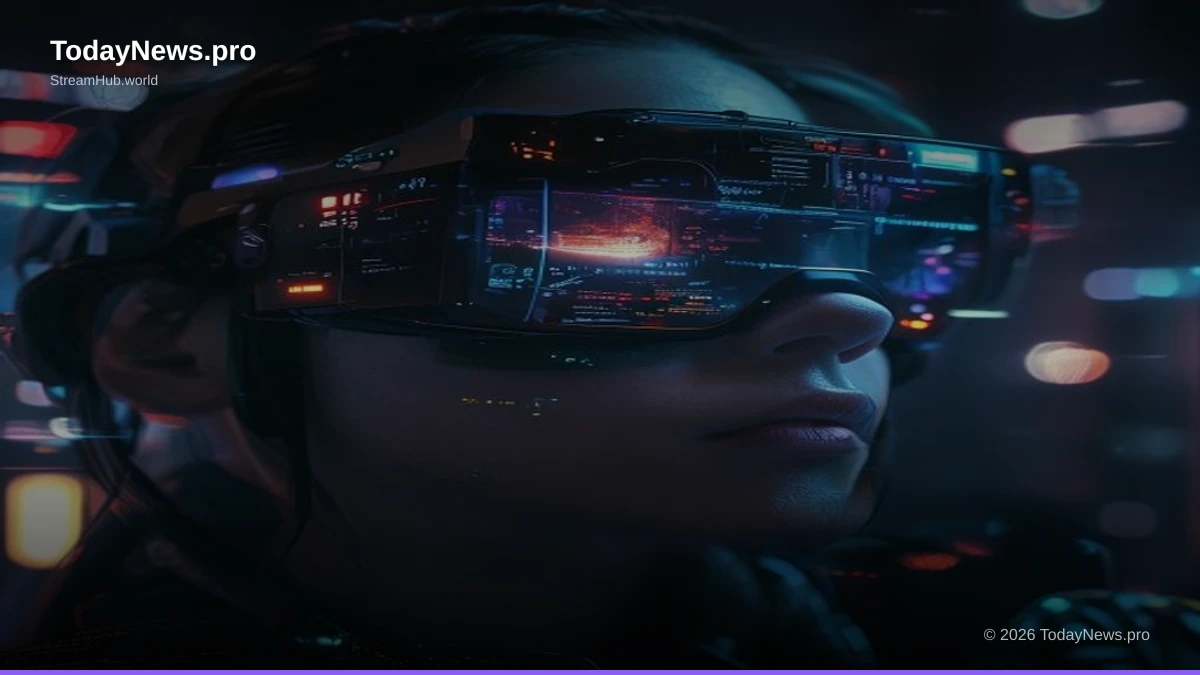
The global market for extended reality (XR) technologies, encompassing virtual reality (VR), augmented reality (AR), and mixed reality (MR), is projected to reach over $600 billion by 2027, signaling a seismic shift in how we consume digital content, including cinema.
The Sensory Revolution: More Than Just Sight and Sound
For over a century, cinema has been a predominantly visual and auditory experience. We watch, we listen, and we imagine. The flickering images on a screen and the carefully crafted soundscapes have been the primary tools for filmmakers to evoke emotion and transport audiences. However, a new era is dawning, one where technology allows us to engage more of our senses, transforming passive observation into active participation. Haptic technology and augmented reality are at the forefront of this sensory revolution, promising to deepen immersion and redefine what it means to experience a film.
This evolution moves beyond simply enhancing the visual fidelity or the surround sound. It aims to engage the tactile sense, allowing viewers to feel the rumble of an explosion, the gentle patter of rain, or the tension of a character's grip. Simultaneously, AR is poised to overlay digital information and interactive elements onto our physical world, creating a dynamic and personalized cinematic encounter that extends far beyond the confines of a traditional screen.
The implications are profound. Filmmakers will have new palettes of sensory input to wield, audiences will experience narratives in unprecedentedly visceral ways, and the very definition of what constitutes a "cinematic experience" will be challenged and expanded.
Haptic Feedback: Feeling the Narrative
Haptic technology, in its simplest form, provides users with physical feedback. Think of the vibration of your smartphone when you receive a notification, or the subtle resistance of a gaming controller. In the context of cinema, haptic feedback is evolving from simple vibrations to sophisticated tactile sensations. Imagine a movie where you can feel the subtle tremor of an approaching earthquake, the impact of a punch, or even the texture of an object a character is holding.
The Spectrum of Haptic Sensations
Current haptic technologies range from basic vibrotactile feedback to more advanced forms that can simulate texture, pressure, and temperature. For cinema, this translates to specialized chairs, vests, and even gloves that can deliver these sensations. The goal is to synchronize these physical feelings with on-screen events, creating a powerful sense of presence and realism. This isn't about overwhelming the viewer, but rather about adding layers of sensory information that can amplify emotional resonance and narrative impact.
A thrilling chase scene might be accompanied by the feeling of wind rushing past, the vibrations of a speeding vehicle, and the jarring impact of near misses. A tender moment between characters could be enhanced by a subtle warmth emanating from a haptic device, or the gentle pressure that simulates a comforting touch. This level of sensory engagement has the potential to make stories more relatable and memorable.
Haptic Devices in the Home and Cinema
While high-end cinema installations have experimented with haptic seats for years, the technology is increasingly finding its way into consumer devices. Smart sofas, gaming chairs with integrated haptic systems, and even wearable devices are becoming more sophisticated and affordable. This accessibility is crucial for widespread adoption. Companies like bHaptics and Tanvas are developing innovative haptic suits and touch surfaces that could one day be integrated into home entertainment systems or specialized viewing rooms.
The data suggests a growing interest in this area. A recent survey indicated that 72% of consumers would be interested in experiencing movies with haptic feedback if it enhanced their immersion.
Haptic Storytelling: A New Directorial Tool
For directors and sound designers, haptics opens up an entirely new dimension of creative expression. They can now choreograph physical sensations alongside visual and auditory cues. This requires a different approach to filmmaking, with a greater emphasis on sensory design. Imagine the subtle vibration that signals a character's growing anxiety, or the sharp jolt that signifies a sudden realization. These are narrative elements that can be conveyed through touch.
The development of standardized haptic scripting languages and tools will be essential for this new form of storytelling to flourish. Just as Foley artists create sound effects, a new breed of "haptic designers" will emerge to craft the physical sensations that complement the narrative. This interdisciplinary approach promises to elevate cinematic storytelling to new heights of emotional impact.
Augmented Reality: Blurring the Lines of Reality
Augmented reality overlays digital content onto the real world, typically through a smartphone camera or specialized AR glasses. In the context of cinema, this means that the film can extend beyond the screen and interact with the viewer's environment. This could manifest in numerous ways, from characters seemingly stepping out of the screen to interactive story elements that appear in the viewer's living room.
AR Experiences Beyond the Screen
Imagine watching a historical drama and having AR glasses project accurate 3D models of ancient buildings onto your surroundings, allowing you to explore them at your leisure. Or consider a sci-fi film where alien creatures briefly materialize in your room, interacting with your furniture. This level of immersion breaks down the traditional barrier between the viewer and the narrative world.
AR cinema can also be highly personalized. Viewers could choose different narrative paths, access supplementary information about characters or settings, or even interact with the story through gestures or voice commands. This shifts the audience from a passive observer to an active participant in the unfolding drama. The potential for interactive documentaries, where viewers can explore historical events in their own space, is also immense.
The Rise of AR Glasses and Mobile AR
While mobile AR, accessed via smartphones, has seen widespread adoption, the future of AR cinema is intrinsically linked to the development of advanced AR glasses. Devices like Apple's Vision Pro, Meta's Quest Pro, and various enterprise-focused headsets are paving the way for more seamless and integrated AR experiences. As these devices become lighter, more powerful, and more affordable, the possibilities for AR cinematic content will expand exponentially.
Current mobile AR applications for films often focus on promotional content or companion experiences, such as character models or behind-the-scenes footage. However, the trajectory points towards fully integrated narrative AR experiences that can be enjoyed as standalone films or as enhancements to traditional viewing.
Interactive Narratives and Personalized Storytelling
AR allows for a profound level of interactivity that was previously unimaginable in traditional cinema. Viewers could potentially influence character decisions, uncover hidden plotlines, or even alter the course of the narrative based on their interactions. This creates a unique and highly engaging experience for each individual viewer, making every viewing session a bespoke adventure.
For instance, in a mystery film, the viewer might use AR to scan clues scattered around their room, piecing together the puzzle at their own pace. In a fantasy epic, they might be able to cast spells using gestures to influence the on-screen action. This democratizes the storytelling process, empowering the audience to become co-creators of their cinematic journey.
The market for AR content creation tools is also growing, with platforms like Unity and Unreal Engine increasingly supporting AR development. This will make it easier for filmmakers and independent creators to produce compelling AR narratives.
Technological Underpinnings and Industry Adoption
The advancements in haptic technology and AR are not happening in a vacuum. They are driven by parallel progress in computing power, sensor technology, display capabilities, and artificial intelligence. The miniaturization of powerful processors, the development of high-resolution and wide-field-of-view displays, and sophisticated motion tracking systems are all critical enablers for these immersive experiences.
Hardware and Software Ecosystems
The development of a robust hardware and software ecosystem is crucial for the widespread adoption of haptic and AR cinema. This includes the creation of user-friendly interfaces, intuitive content creation tools, and standardized protocols for delivering sensory feedback. Companies are investing heavily in R&D to push the boundaries of what's possible.
On the hardware front, advancements in micro-actuators for haptics, eye-tracking sensors for AR, and spatial audio processing are all contributing to more realistic and immersive experiences. Software platforms are evolving to support the creation of complex, multi-sensory narratives. This includes advanced rendering engines, physics simulations, and AI algorithms that can adapt to user input and environmental conditions.
The Role of 5G and Edge Computing
The rollout of 5G networks is a significant catalyst for the growth of AR and haptic cinema. The high bandwidth and low latency of 5G are essential for streaming rich, interactive content and delivering real-time haptic feedback without perceptible delays. This is particularly important for mobile AR experiences and for cloud-rendered VR/AR content.
Edge computing, which processes data closer to the source of generation, also plays a vital role. By offloading processing from user devices to local servers, it enables more complex simulations and richer sensory experiences without draining device batteries or requiring constant high-speed internet connections. This is a key factor in making high-fidelity AR and haptic experiences accessible on a wider range of devices.
Industry Investment and Collaboration
Major technology companies and established film studios are actively investing in and experimenting with these technologies. From Qualcomm's Snapdragon XR platforms to Meta's ongoing metaverse research and Apple's foray into spatial computing, the investment is undeniable. Film studios are partnering with tech companies to explore new storytelling formats and to develop experiences that can be distributed across various platforms.
These collaborations are essential for bridging the gap between technological innovation and creative execution. They allow for the development of practical applications and the creation of compelling content that showcases the potential of haptic and AR cinema. The industry recognizes that this is not just a trend, but a fundamental shift in the future of entertainment.
Challenges and the Road Ahead
Despite the exciting potential, the widespread adoption of haptic and AR cinema faces several significant hurdles. These include the cost of hardware, the development of compelling content, and user acceptance.
Cost and Accessibility of Hardware
High-quality haptic suits, advanced AR glasses, and sophisticated VR headsets can be prohibitively expensive for the average consumer. While prices are gradually decreasing, making these technologies accessible to a broader audience remains a critical challenge. For AR cinema to reach its full potential, it needs to be consumable on devices that people already own or can afford to acquire.
The fragmentation of the hardware market also presents a challenge. Different platforms and devices may require specialized content, making it difficult for creators to achieve broad reach. Standardization and interoperability will be key to overcoming this barrier.
Content Creation and Storytelling Evolution
Creating engaging and meaningful content for haptic and AR experiences requires a new set of skills and a shift in traditional filmmaking methodologies. Filmmakers need to learn how to design for multi-sensory input and how to create interactive narratives that are both coherent and compelling. This necessitates investment in training and the development of new creative pipelines.
The current library of truly groundbreaking haptic and AR cinematic content is still relatively small. As more creators experiment and as tools become more sophisticated, we can expect to see a surge in innovative storytelling. However, it will take time for this new form of media to mature and for audiences to fully understand and embrace its potential.
User Comfort and Ethical Considerations
Ensuring user comfort and preventing motion sickness or sensory overload is paramount, especially for VR and AR experiences. The design of haptic feedback also needs to be carefully calibrated to avoid being intrusive or distracting. Furthermore, as AR becomes more integrated into our lives, ethical considerations around privacy, data collection, and the potential for manipulation will need to be addressed.
The long-term psychological effects of deeply immersive experiences also warrant careful study. As technology allows for increasingly realistic simulations, understanding the impact on our perception of reality and our emotional well-being will be crucial.
Regulatory Landscape and Standardization
As these technologies mature, regulatory frameworks will likely emerge to address issues such as data privacy, content moderation, and accessibility standards. The development of industry-wide standards for haptic feedback, AR content formats, and interoperability will be essential for seamless integration and widespread adoption. International collaboration on these standards will be vital to avoid market fragmentation.
The legal implications of interactive narratives, where user choices can affect the story, also need to be considered. Questions of authorship and intellectual property in co-created narratives could become increasingly complex.
Case Studies and Early Innovations
While still in its nascent stages, haptic and AR cinema has seen some compelling early innovations and case studies that showcase its transformative potential.
Haptic-Enhanced Theme Park Attractions
Theme parks have long been pioneers in immersive experiences. Attractions like "Soarin' Around the World" at Disney parks use motion-based simulators and even scent technology to enhance the feeling of flight. More advanced haptic systems are being integrated into rides to simulate impacts, wind, and even subtle environmental cues, deepening the immersion of the narrative. The success of these attractions demonstrates a clear consumer appetite for sensory-enhanced storytelling.
Interactive AR Films and Experiences
Several independent filmmakers and studios have begun experimenting with AR storytelling. Projects like "The Turning Forest" by the AR storytelling company ARwall allow users to interact with a narrative that unfolds in their physical space. The "Unbound" VR experience by Baobab Studios, while primarily VR, explores narrative branches and character interaction that hint at future AR possibilities. These projects, though often experimental, serve as important proof-of-concepts.
A notable example is the use of AR for movie marketing campaigns. Fans can use their smartphones to bring characters or movie posters to life in their own environment, creating engaging pre-release experiences. This serves as a gateway for many consumers to experience AR in a cinematic context.
Future Cinema Labs and Research Projects
Universities and research institutions are actively exploring the future of cinema. Projects at places like MIT Media Lab and the USC School of Cinematic Arts are developing new interfaces and narrative structures that integrate haptics and AR. These academic endeavors often push the boundaries of what is technically feasible and explore the fundamental principles of immersive storytelling.
One such project might involve a director using a specialized tablet to "draw" haptic sensations onto a scene in real-time, which are then felt by the audience through a connected haptic suit. This level of direct creative control over tactile feedback is a significant step forward.
| Year | Notable Haptic/AR Cinema Project | Key Innovation |
|---|---|---|
| 2017 | "The Turning Forest" (AR Experience) | Interactive narrative projected into real-world environment. |
| 2019 | Disney's Star Wars: Galaxy's Edge (Theme Park) | Integrated haptic feedback in interactive elements and environments. |
| 2021 | "Unbound" VR (Baobab Studios) | Early exploration of branching narratives and character interaction in immersive media. |
| 2023 | Apple Vision Pro Announcement | Highlighting spatial computing and the potential for AR cinema experiences. |
The insights gained from these early ventures are invaluable for guiding the development of more sophisticated and widely accessible haptic and AR cinematic experiences.
The Future of Immersive Storytelling
The integration of haptic technology and augmented reality marks a profound shift in the evolution of cinema. We are moving beyond the passive consumption of stories towards a future where audiences can feel, touch, and interact with the narratives they experience.
A New Era of Emotional Resonance
By engaging more senses, filmmakers will be able to evoke deeper emotional responses. The physical sensation of fear, joy, or sadness can amplify the impact of on-screen events, creating a more profound and memorable connection between the audience and the story. This sensory storytelling has the potential to redefine empathy and understanding.
Imagine feeling the chill of a character's fear, the warmth of their embrace, or the exhilarating rush of their triumph. These are experiences that transcend mere visual or auditory perception and tap into our fundamental human responses. The future of cinema is one where we don't just watch, but we *feel* the story.
Personalized and Participatory Cinema
AR, in particular, promises a future of personalized and participatory cinema. Each viewer's experience can be unique, shaped by their environment, their choices, and their interactions. This moves away from the one-size-fits-all model of traditional filmmaking towards a more dynamic and engaging form of storytelling.
The convergence of AI, haptics, and AR will enable narratives that adapt in real-time to the viewer's emotional state or even physiological responses. This creates a truly symbiotic relationship between the storyteller and the audience, where the film is a living, breathing entity that evolves with each viewing.
The Blurring of Realities
As these technologies mature, the lines between the cinematic world and our own reality will continue to blur. AR will seamlessly integrate digital narratives into our physical spaces, while haptics will provide the tactile dimension that makes these experiences feel incredibly real. This blurring could lead to entirely new forms of entertainment, education, and even social interaction.
The ultimate goal is not to replace traditional cinema, but to expand its horizons, offering audiences a richer, more diverse, and deeply personal way to engage with stories. The journey has just begun, and the possibilities are as boundless as our imagination.