

 Maria Gonzalez
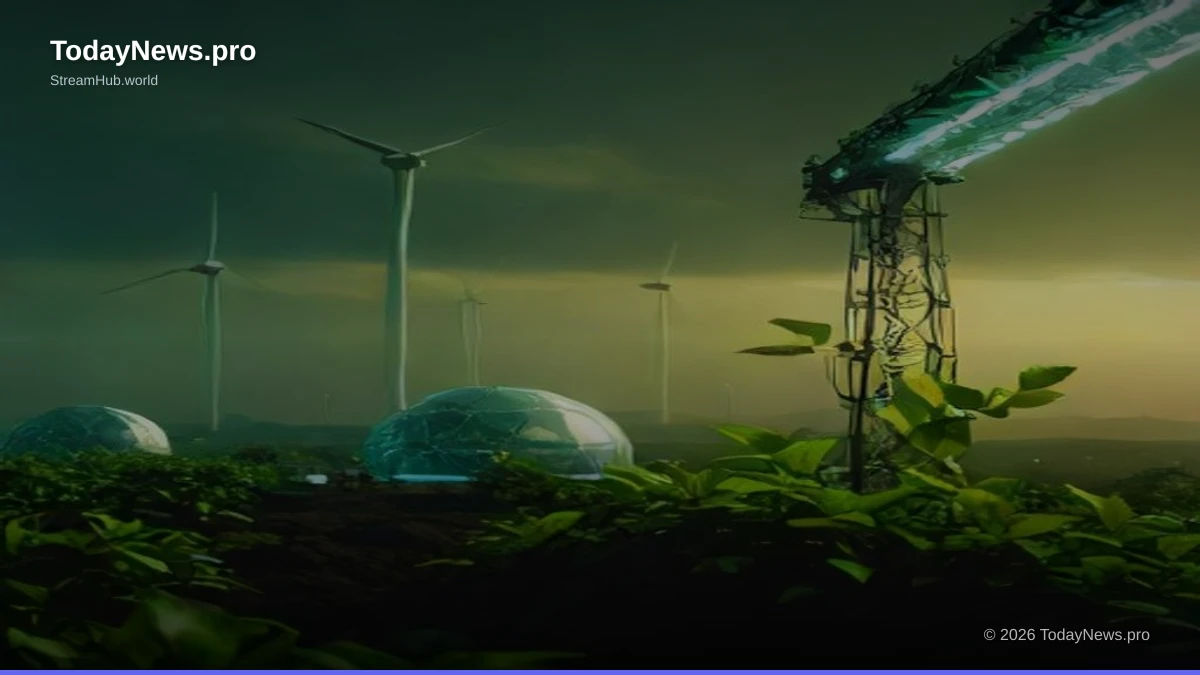
The Earth's average temperature has risen by approximately 1.1 degrees Celsius since the late 19th century, a change driven by human activities, primarily fossil fuel burning, which increases heat-trapping greenhouse gas levels in Earth's atmosphere. This warming is not merely an abstract statistic; it translates into a cascade of devastating consequences, from intensifying extreme weather events like hurricanes and heatwaves to sea-level rise and threats to global food security.
The Urgent Imperative: A Planet in Peril
The scientific consensus is unequivocal: climate change is no longer a distant threat but a present reality. The Intergovernmental Panel on Climate Change (IPCC) has repeatedly warned that urgent and ambitious action is required to limit global warming to 1.5 degrees Celsius above pre-industrial levels, a threshold beyond which the risks of irreversible environmental damage significantly increase. Resource scarcity, exacerbated by growing populations and unsustainable consumption patterns, further amplifies the urgency of this challenge.
We are witnessing a global demand for resources that outstrips the planet's regenerative capacity. Freshwater stress affects billions, biodiversity is declining at an alarming rate, and the extraction of raw materials continues to pollute and degrade ecosystems. This dual crisis of climate change and resource scarcity demands a paradigm shift in how we live, produce, and consume. Fortunately, a wave of technological innovation is emerging, offering not just solutions, but pathways to a more resilient and sustainable future.
Innovations in Renewable Energy: Powering a Sustainable Tomorrow
The cornerstone of any climate solution lies in decarbonizing our energy systems. For decades, fossil fuels have powered industrialization and modern life, but their combustion releases vast quantities of greenhouse gases. The transition to renewable energy sources is therefore paramount. Significant advancements have been made in solar and wind power, making them increasingly cost-competitive with traditional energy sources.
Solar Power Revolution
Photovoltaic (PV) technology continues to evolve, with new materials like perovskites promising higher efficiencies and lower manufacturing costs. Flexible, transparent, and even power-generating building materials are no longer science fiction. These innovations are expanding the potential applications of solar energy beyond traditional solar farms, integrating it seamlessly into urban landscapes and everyday objects.
The cost of solar energy has plummeted dramatically over the past decade. According to the International Renewable Energy Agency (IRENA), the global weighted-average levelized cost of electricity (LCOE) for utility-scale solar PV fell by 82% between 2010 and 2019. This economic viability has fueled widespread adoption, transforming the energy landscape.
Wind Energys Ascent
Wind turbines are becoming larger and more efficient, capturing more energy from lower wind speeds. Offshore wind farms, once a niche technology, are now a major source of renewable power, with floating platforms enabling deployment in deeper waters. Innovations in blade design, materials science, and predictive maintenance are further enhancing the reliability and output of wind energy.
Beyond Solar and Wind
While solar and wind dominate headlines, other renewable energy technologies are also gaining traction. Geothermal energy, harnessing the Earth's internal heat, offers a consistent and reliable baseload power source. Advancements in advanced nuclear reactor designs, though still facing public perception challenges, offer a low-carbon alternative with high energy density. Tidal and wave energy technologies are also being developed, tapping into the immense power of the oceans.
Carbon Capture and Utilization: Turning a Threat into a Resource
Even with aggressive emissions reductions, some level of greenhouse gases will remain in the atmosphere. Carbon Capture, Utilization, and Storage (CCUS) technologies offer a crucial complementary strategy. These technologies aim to capture CO2 emissions from industrial sources or directly from the atmosphere, preventing them from entering the climate system or even removing existing CO2.
Direct Air Capture (DAC)
Direct Air Capture (DAC) systems are designed to extract CO2 directly from ambient air. While still an emerging field, significant progress is being made in developing more energy-efficient and scalable DAC technologies. Companies are experimenting with different sorbent materials and processes to lower the cost and energy intensity of capturing CO2 from the diffuse concentration in the atmosphere.
Carbon Utilization: A New Frontier
The captured CO2 doesn't have to be merely stored underground. A burgeoning field of innovation focuses on utilizing CO2 as a feedstock for creating valuable products. This "carbon utilization" approach transforms a waste product into a resource, creating a circular carbon economy. Examples include using CO2 to produce synthetic fuels, chemicals, building materials like concrete, and even advanced plastics. This not only sequesters carbon but also offers economic incentives for its capture.
| CO2 Utilization Pathway | Potential Products | Estimated Market Size (USD Billion, 2030) |
|---|---|---|
| Synthetic Fuels | Jet fuel, diesel, gasoline | 25-50 |
| Chemicals | Methanol, urea, polymers | 10-20 |
| Building Materials | Carbonated concrete, aggregates | 5-15 |
| Carbonated Beverages | Soft drinks, industrial uses | 2-5 |
While CCUS technologies are promising, their widespread deployment faces economic and logistical hurdles. The energy required for capture and the cost of transportation and storage remain significant challenges. However, as research and development accelerate, and as policy incentives increase, CCUS is poised to play a vital role in achieving net-zero emissions. For more on this, see the Wikipedia entry on Carbon Capture and Storage.
Sustainable Agriculture and Food Systems: Feeding the World Responsibly
Agriculture, while essential for human survival, is also a significant contributor to greenhouse gas emissions and a major consumer of freshwater and land. Innovations in this sector are critical for both mitigating climate change and ensuring food security in a world with a growing population.
Precision Agriculture
Precision agriculture leverages technologies like GPS, sensors, drones, and AI to optimize farming practices. This allows farmers to apply water, fertilizers, and pesticides only where and when they are needed, drastically reducing waste, minimizing environmental impact, and increasing yields. Soil sensors can monitor moisture and nutrient levels, while drones can survey fields for disease or pest outbreaks, enabling targeted interventions.
Vertical Farming and Controlled Environment Agriculture (CEA)
Vertical farms, often located in urban areas, grow crops in stacked layers under controlled conditions. These systems use significantly less water and land than traditional farming, and by eliminating long-distance transportation, they reduce carbon emissions associated with food distribution. CEA allows for year-round production, independent of weather conditions, and can be powered by renewable energy sources.
Alternative Proteins and Sustainable Food Production
The production of traditional meat has a substantial environmental footprint, contributing to deforestation, methane emissions, and water pollution. Innovations in alternative proteins, such as plant-based meats and lab-grown (cultivated) meat, offer promising solutions. These technologies aim to replicate the taste and texture of meat with a fraction of the environmental impact. Furthermore, advancements in regenerative agriculture practices, focusing on soil health and biodiversity, are crucial for creating more resilient and carbon-sequestering food systems.
Circular Economy Technologies: Designing Out Waste
The linear "take-make-dispose" economic model is a primary driver of resource depletion and pollution. The circular economy, in contrast, aims to keep resources in use for as long as possible, extracting maximum value from them before recovering and regenerating products and materials at the end of each service life. Technology is the enabler of this crucial shift.
Advanced Recycling and Upcycling
New technologies are revolutionizing recycling, moving beyond simple downcycling to true upcycling. Chemical recycling processes can break down complex plastics into their original monomers, allowing them to be repolymerized into virgin-quality plastics. Advanced sorting technologies, using AI and spectroscopy, can more accurately identify and separate different materials, increasing the purity and value of recycled feedstocks.
Product-as-a-Service (PaaS) and Digital Twins
The PaaS model shifts the focus from ownership to access. Companies retain ownership of products and offer them as a service, incentivizing them to design for durability, repairability, and recyclability. Digital twins, virtual replicas of physical products, can track their lifecycle, monitor performance, predict maintenance needs, and facilitate efficient end-of-life processing. This data-driven approach is fundamental to optimizing resource utilization within a circular framework.
Sustainable Materials Innovation
Beyond recycling, innovation is focused on developing entirely new materials that are biodegradable, compostable, or made from renewable resources. Bioplastics derived from corn starch or algae, and materials like mycelium (mushroom roots) used for packaging, are gaining traction. These materials reduce reliance on fossil fuels and minimize waste at the end of their life.
| Circular Economy Sector | Key Technologies | Environmental Impact Reduction |
|---|---|---|
| Materials and Manufacturing | Chemical recycling, 3D printing, additive manufacturing | Reduced virgin material extraction, waste diversion |
| Electronics | Modular design, remanufacturing, blockchain for tracking | Extended product lifespan, reduced e-waste |
| Textiles | Fiber-to-fiber recycling, bio-based dyes, rental platforms | Reduced water and chemical use, minimized landfill waste |
Smart Grids and Energy Efficiency: Optimizing Consumption
Reducing our energy demand is as critical as generating clean energy. Smart grids and advancements in energy efficiency technologies are key to minimizing waste and optimizing energy distribution.
The Smart Grid Revolution
Traditional power grids are often inefficient and lack the flexibility to integrate distributed renewable energy sources. Smart grids utilize digital communication technology to monitor, control, and optimize the flow of electricity. They enable two-way communication between utilities and consumers, allowing for better load balancing, demand response, and integration of intermittent renewables like solar and wind. This reduces the need for costly and polluting peaker plants.
Smart Buildings and IoT
The Internet of Things (IoT) is transforming buildings into intelligent, energy-efficient spaces. Smart thermostats, lighting systems, and appliances can learn user behavior and adjust energy consumption accordingly. Building management systems can monitor and optimize HVAC, lighting, and other systems in real-time, leading to significant energy savings. Advanced insulation materials and energy-efficient window technologies further contribute to reducing heating and cooling demands.
Industrial Energy Efficiency
In the industrial sector, innovations such as waste heat recovery systems, highly efficient motors, and advanced process controls are leading to substantial energy savings. AI-powered optimization of manufacturing processes can identify inefficiencies and reduce energy consumption without compromising output. For more on energy efficiency, explore Reuters' insights on energy efficiency technologies.
The Role of AI and Big Data in Environmental Stewardship
Artificial intelligence (AI) and big data analytics are not just buzzwords; they are powerful tools revolutionizing our ability to understand, predict, and mitigate environmental challenges.
Environmental Monitoring and Prediction
AI algorithms can analyze vast datasets from satellites, sensors, and ground-based stations to monitor deforestation, track pollution levels, predict extreme weather events with greater accuracy, and assess biodiversity. Machine learning models can identify patterns and anomalies that human analysts might miss, providing early warnings of environmental degradation or natural disasters.
Optimizing Resource Management
Big data analytics, powered by AI, is crucial for optimizing the management of scarce resources. This includes intelligent water management systems that predict demand and optimize distribution, smart energy grids that balance supply and demand, and optimized logistics for supply chains to reduce emissions. AI can also help in designing more efficient materials and processes.
Climate Modeling and Policy Development
Sophisticated climate models, enhanced by AI, provide crucial insights into future climate scenarios. These models help policymakers understand the potential impacts of different emissions pathways and evaluate the effectiveness of various mitigation and adaptation strategies. The ability to process and interpret complex climate data is essential for informed decision-making.
Challenges and the Road Ahead
While the technological advancements are inspiring, significant challenges remain. The upfront cost of implementing many of these innovations can be substantial, requiring massive investment from both public and private sectors. Policy frameworks need to be robust and adaptive, providing incentives for adoption and disincentives for polluting activities. Global cooperation is essential, as climate change and resource scarcity are borderless issues.
Furthermore, the ethical implications of new technologies, such as the potential for job displacement due to automation or the responsible deployment of AI in environmental management, must be carefully considered. Public awareness and engagement are also critical; widespread adoption of sustainable practices requires a shift in individual and collective behavior. The journey towards a sustainable future is complex, but the innovations emerging today offer a beacon of hope, demonstrating that technology, guided by human ingenuity and a shared commitment to the planet, can indeed help us green our future and overcome the critical challenges of climate change and resource scarcity.