

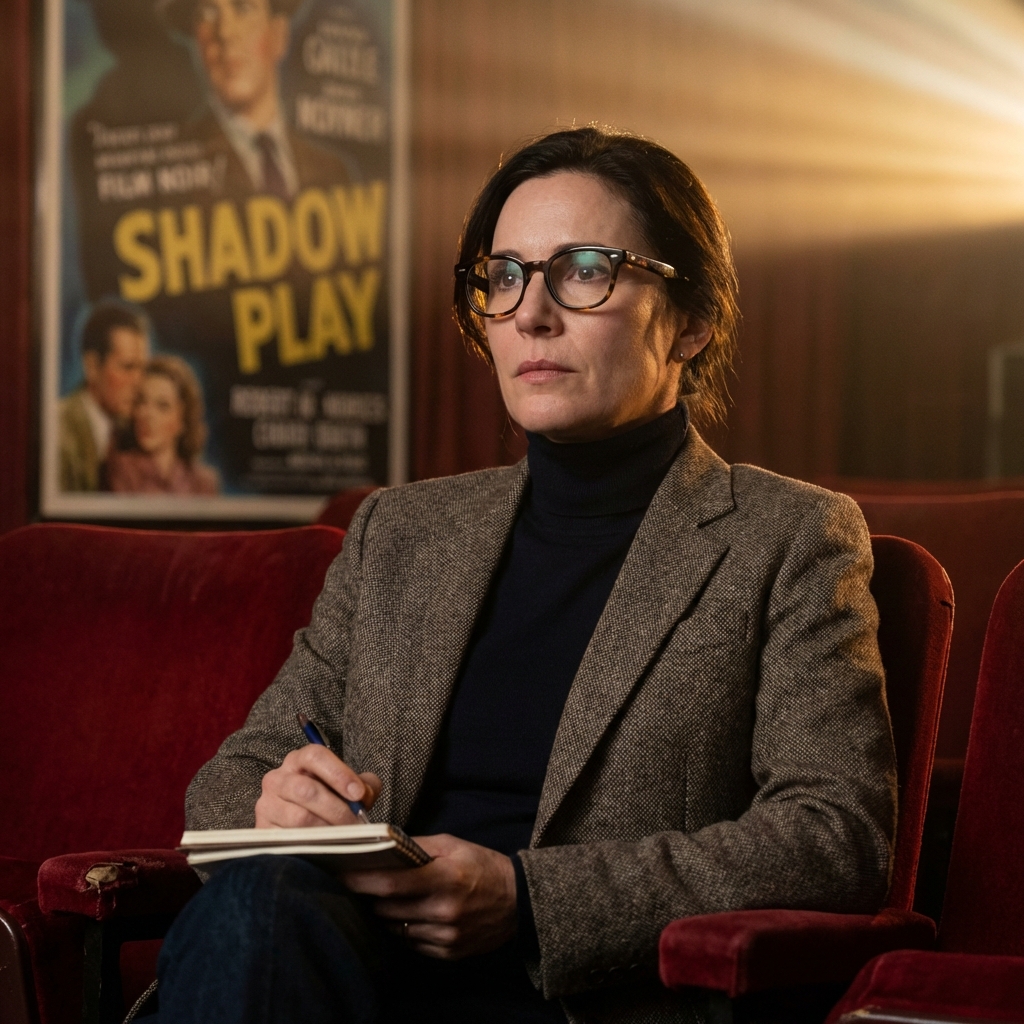
 Scott Wright

⏱ 35 min
Hollywood, a crucible of dreams and a titan of global entertainment, is undergoing a seismic shift. Reports indicate that studios are exploring generative AI tools, with some already piloting them, to expedite pre-production processes, potentially shaving weeks off script development and concept art creation. This marks not just an evolutionary step, but a revolutionary leap in how stories are conceived, visualized, and brought to the screen.
Generative AI: A New Dawn for Hollywood
The entertainment industry, long reliant on human ingenuity and painstaking craft, is now grappling with the profound implications of generative artificial intelligence. From the nascent stages of scriptwriting to the final polish of visual effects, AI is no longer a theoretical concept confined to science fiction narratives; it is an emerging reality poised to redefine the very fabric of filmmaking. This transformative technology offers unprecedented opportunities for efficiency, creativity, and innovation, but also presents significant challenges that demand careful consideration. The confluence of advanced algorithms and artistic vision promises a future where the boundaries of cinematic possibility are pushed further than ever before.Understanding Generative AI in Context
Generative AI refers to a class of artificial intelligence models capable of creating new content, such as text, images, music, and even video, based on patterns learned from vast datasets. In Hollywood's lexicon, this translates to AI systems that can brainstorm plot ideas, generate character backstories, design concept art, compose musical scores, and even synthesize realistic dialogue. Unlike traditional AI that might analyze existing data for insights, generative AI actively produces novel outputs, acting as a sophisticated digital collaborator or even an autonomous creator. The rapid advancements in large language models (LLMs) and diffusion models have propelled these capabilities from the realm of research labs to practical applications across various creative industries.The Allure of Efficiency and Scale
The primary driver behind Hollywood's interest in generative AI is the promise of enhanced efficiency and scalability. Producing a feature film is a monumentally complex and expensive undertaking, involving thousands of individuals and intricate workflows. AI can automate or accelerate many time-consuming tasks. For instance, generating multiple script variations or exploring diverse visual styles for set design can be achieved in a fraction of the time it would take human teams. This acceleration can lead to faster production cycles, reduced costs, and the potential for more ambitious projects to be greenlit. The ability to quickly iterate on creative concepts allows for a more agile and responsive development process.Augmenting, Not Replacing, Human Creativity
While the specter of AI replacing human jobs is a valid concern, the current consensus within many creative spheres, including early adopters in Hollywood, is that generative AI will primarily serve as an augmentation tool. It is viewed as a powerful assistant that can handle the more laborious or repetitive aspects of the creative process, freeing up human artists, writers, and directors to focus on higher-level conceptualization, emotional depth, and nuanced storytelling. AI can provide a wealth of starting points, suggestions, and drafts, which are then refined, curated, and infused with human insight and artistic intent. This collaborative model aims to amplify, rather than diminish, human creative potential.Revolutionizing Scriptwriting and Narrative Development
The foundational element of any film is its story, and generative AI is beginning to make significant inroads into the scriptwriting process. From initial concept generation to refining dialogue, AI is offering new avenues for storytellers to explore. This technology has the potential to democratize script development and unlock narrative possibilities previously constrained by time and resources.Idea Generation and Plot Outlining
Generative AI models, particularly those trained on vast corpuses of literature and screenplays, can be prompted to generate novel plotlines, character archetypes, and thematic concepts. Writers can use these AI-generated ideas as springboards for their own creativity, exploring directions they might not have otherwise considered. AI can also assist in outlining complex narratives, ensuring structural coherence and pacing. By analyzing successful story structures and identifying common narrative arcs, AI can provide frameworks that writers can then populate with their unique vision and characters.Dialogue Crafting and Character Voice
Crafting authentic and compelling dialogue is an art form. Generative AI can assist in this by suggesting lines, refining existing dialogue for naturalism, and even helping to establish consistent character voices. For instance, an AI can be trained on a specific character's existing dialogue to generate new lines that are stylistically consistent. This can be particularly useful for developing secondary characters or generating a multitude of dialogue options for a scene, which the writer can then select and polish. The goal is to enhance the richness and believability of character interactions.Script Analysis and Improvement
Beyond creation, AI can also be employed to analyze existing scripts for potential weaknesses. This includes identifying pacing issues, cliché phrases, or areas where character motivations might be unclear. By flagging these elements, AI can provide writers with actionable feedback, allowing them to iterate and improve their work more efficiently. This analytical capability extends to ensuring a script aligns with specific genre conventions or target audience expectations, offering a data-driven approach to script refinement.| Application | Description | Potential Benefits |
|---|---|---|
| Idea Generation | AI suggests plot points, character concepts, and thematic elements. | Expands creative horizons, overcomes writer's block. |
| Outlining | AI structures narratives, proposes scene sequences. | Ensures plot coherence, improves pacing. |
| Dialogue Writing | AI generates or refines character dialogue. | Enhances naturalism, develops character voice. |
| Script Analysis | AI identifies weaknesses in pacing, character, and dialogue. | Facilitates iterative improvement, ensures genre consistency. |
The VFX Renaissance: Beyond Pixels and Practicality
Visual effects (VFX) have always been a cornerstone of cinematic spectacle, pushing the boundaries of what can be shown on screen. Generative AI is poised to usher in a new era of VFX, making previously impossible or prohibitively expensive effects more accessible and sophisticated.Accelerated Concept Art and Pre-visualization
The initial visual representation of a film's world is critical. Generative AI can rapidly produce a vast array of concept art, character designs, and environmental sketches based on textual descriptions or mood boards. This allows directors and production designers to explore a wider range of aesthetic possibilities in the early stages of pre-production. Furthermore, AI can aid in pre-visualization, creating rough animated sequences that map out camera movements, character blocking, and key visual moments, streamlining the planning process for complex shots.Realistic Asset Generation
Creating detailed 3D models of characters, props, and environments is a labor-intensive process. Generative AI can now create highly realistic and varied 3D assets, textures, and even entire digital landscapes. This not only speeds up asset creation but also allows for greater diversity and complexity in digital worlds. Imagine AI generating thousands of unique alien flora for a sci-fi planet, or intricate historical building facades for a period drama, all with remarkable detail and consistency.Enhanced Digital Compositing and Animation
AI's ability to understand and manipulate images is profoundly impacting VFX compositing and animation. AI tools can intelligently blend live-action footage with CGI elements, seamlessly integrate digital characters into real-world sets, and even assist in animating characters by predicting and filling in movement sequences. This can range from de-aging actors with unprecedented realism to creating complex crowd simulations with individualistic behaviors. The precision and speed offered by AI are set to redefine the limits of digital manipulation.Projected Growth in AI-Powered VFX Spending
AI in the Directors Chair and Beyond
The influence of generative AI extends beyond the script and visual effects departments, touching upon the very core of filmmaking – direction, editing, and post-production. AI is emerging as a tool that can assist in decision-making, optimize workflows, and even contribute to the final artistic output.AI-Assisted Editing and Post-Production
Editing, the art of assembling raw footage into a cohesive narrative, can be significantly streamlined with AI. Tools are being developed that can automatically identify the best takes, suggest cuts based on emotional cues or pacing, and even perform basic color correction and sound mixing. This allows human editors to focus on the more nuanced aspects of storytelling, such as rhythm, emotional arc, and thematic resonance, rather than spending hours sifting through hours of footage.Virtual Production and Real-Time Rendering
Generative AI is a natural fit for the burgeoning field of virtual production, which utilizes real-time rendering and LED screens to create immersive sets. AI can help generate dynamic backgrounds, populate virtual environments with intelligent agents (like virtual crowds), and even assist in real-time character animation driven by actor performance capture. This integration enables directors to see their vision come to life on set with unprecedented immediacy, allowing for more fluid and experimental filmmaking.Personalized Content and Audience Engagement
Looking further ahead, generative AI could enable the creation of more personalized cinematic experiences. While still largely theoretical for feature films, AI could potentially adapt narrative elements or visual styles based on individual viewer preferences. On a more immediate level, AI can be used to generate diverse marketing materials, trailer variations, and promotional content tailored to different audience demographics, optimizing engagement and reach.75%
of VFX artists believe AI will augment their roles
40%
reduction in pre-production time projected by some studios
2x
faster asset generation for digital environments
Ethical Quagmires and the Human Element
The rapid integration of generative AI into Hollywood is not without its significant ethical considerations and potential pitfalls. The very definition of authorship, copyright, and the value of human creativity are being called into question, demanding a robust dialogue and proactive solutions.Copyright and Intellectual Property
A major concern revolves around copyright and intellectual property. If an AI generates a script or an image, who owns the copyright? Is it the company that developed the AI, the user who prompted it, or is the output uncopyrightable? This ambiguity could lead to legal battles and a reevaluation of existing IP laws. The use of existing copyrighted material in AI training datasets also raises questions about fair use and potential infringement.Job Displacement and the Future of Talent
The fear of widespread job displacement among writers, artists, editors, and other creative professionals is a prominent concern. While many advocate for AI as an augmentation tool, the economic pressures on studios to cut costs could lead to a greater reliance on AI, potentially reducing the demand for human labor in certain roles. Ensuring that AI integration benefits, rather than harms, the creative workforce is a critical challenge."We are at a crossroads. Generative AI has the potential to unlock unprecedented creative avenues, but we must ensure that it serves as a tool to empower artists, not to marginalize them. The conversation around fair compensation, ownership, and the preservation of human artistry is paramount." — Anya Sharma, Lead AI Ethicist, Creative Futures Initiative
Authenticity and the Soul of Storytelling
A more philosophical concern is the impact of AI on the authenticity and "soul" of storytelling. Can an AI truly convey human emotion, lived experience, or nuanced social commentary in the same way a human creator can? Critics worry that an over-reliance on AI could lead to formulaic, soulless content that lacks the unique spark of human imagination. Maintaining the integrity and emotional resonance of narratives is a delicate balance to strike.The Economic Landscape: Investment and Disruption
The financial implications of generative AI in Hollywood are substantial, attracting significant investment while also posing a threat of disruption to established business models. Understanding this evolving economic landscape is crucial for all stakeholders.Investment and Startup Boom
Venture capital is pouring into AI startups focused on creative industries. Companies developing AI-powered scriptwriting software, VFX generation tools, and AI-driven animation pipelines are attracting significant funding. This influx of capital is accelerating the development and deployment of these technologies, pushing innovation forward at an unprecedented pace. Major tech companies are also investing heavily, recognizing the immense potential of AI in content creation.Cost Savings and ROI
For studios and production companies, the primary economic appeal of generative AI lies in its potential for significant cost savings and improved return on investment (ROI). By reducing the time and resources required for various production phases, AI can make projects more financially viable. This could lead to an increase in the volume of content produced, catering to the ever-growing demand for streaming services and other media platforms.Disruption of Traditional Services
The widespread adoption of AI tools could disrupt traditional service providers in the film industry. VFX houses that do not adapt to AI-powered workflows may find themselves struggling to compete with those that embrace the technology. Similarly, certain freelance roles that are heavily reliant on tasks that AI can automate may face reduced demand. This necessitates a period of adaptation and reskilling within the industry workforce.Future Prospects and Unforeseen Narratives
The trajectory of generative AI in Hollywood is one of rapid evolution, promising a future filled with both exciting possibilities and uncharted territories. As the technology matures, its integration will likely become more seamless, leading to entirely new forms of storytelling and cinematic experiences.The Rise of AI-Assisted Filmmaking Teams
We can anticipate the emergence of fully integrated AI-assisted filmmaking teams, where AI acts as a co-pilot at every stage of production. Imagine AI suggesting optimal camera angles in real-time based on narrative intent, or automatically generating diverse background characters with unique personalities for crowd scenes. This collaborative model will push creative boundaries and redefine the roles of human creatives.Interactive and Adaptive Storytelling
Generative AI holds the key to unlocking truly interactive and adaptive storytelling experiences. Future films might be able to adjust their narratives, endings, or even character interactions based on audience input or real-time sentiment analysis. This could lead to highly personalized and immersive cinematic journeys that are unique to each viewer. The concept of a static, pre-defined narrative may become a relic of the past.New Genres and Artistic Expressions
The capabilities of generative AI could spawn entirely new genres of film or artistic expressions that are currently unimaginable. AI's ability to generate novel visual styles, synthesize complex emotions, and explore abstract concepts could lead to avant-garde filmmaking that challenges conventional notions of narrative and aesthetics. The future of storytelling is likely to be more experimental, diverse, and surprising than we can currently conceive.Will AI replace human writers in Hollywood?
While AI can assist in scriptwriting by generating ideas, outlines, and dialogue options, it is unlikely to fully replace human writers. The nuance, emotional depth, lived experience, and unique artistic voice that human writers bring are currently irreplaceable. AI is expected to serve as a powerful collaborative tool, augmenting rather than supplanting human creativity.
How will AI impact the jobs of VFX artists?
Generative AI is expected to significantly change the roles of VFX artists. It can automate many tedious tasks, such as asset generation and some aspects of compositing, allowing artists to focus on more complex creative challenges and higher-level design. Artists who adapt to working with AI tools and develop new skill sets will likely find their roles evolving, rather than disappearing entirely.
Who owns the copyright of AI-generated content in filmmaking?
The legal landscape surrounding AI-generated content is still evolving. Currently, copyright laws in many jurisdictions require human authorship. This means that purely AI-generated works may not be copyrightable, or ownership might be contested between the AI developer, the user who prompted the AI, and the entity that commissioned the work. New legal frameworks are being developed to address these issues. For now, using AI as a tool with significant human input and modification is the safer approach for establishing copyright.
Can AI create truly original and emotionally resonant stories?
AI can generate stories that are technically coherent and explore themes based on its training data. However, the deep emotional resonance and nuanced understanding of the human condition that stem from lived experience and genuine empathy are currently beyond AI's capabilities. Human writers and directors imbue stories with a "soul" that AI can mimic but not authentically replicate. The most compelling narratives will likely arise from the collaboration between human artists and AI tools.