

 Sarah Jenkins
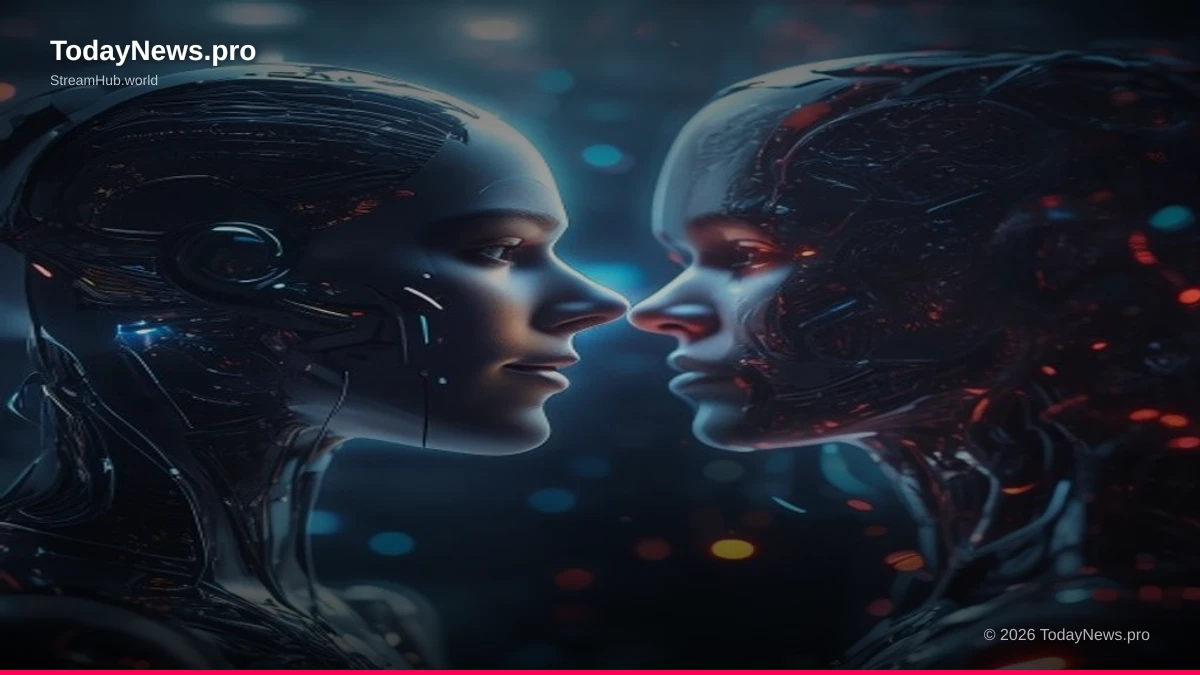
A recent survey by Artelligence found that 72% of professional artists are actively experimenting with generative AI tools in their workflows, signaling a significant shift in creative practices.
The Algorithmic Muse: Generative AIs Entry into the Creative Pantheon
Generative Artificial Intelligence, once the realm of science fiction, has rapidly evolved into a tangible force reshaping the landscape of human creativity. These sophisticated algorithms, capable of producing novel content across diverse mediums – from text and imagery to music and code – are no longer mere tools but are increasingly perceived as collaborators or even nascent creators themselves. The advent of models like OpenAI's DALL-E, Midjourney, and Stable Diffusion for visual art, and GPT-3/4 for textual generation, has democratized access to complex creative processes, allowing individuals without traditional artistic training to manifest intricate visions.
This technological leap is not simply about automation; it represents a profound expansion of what is possible. Artists are discovering new avenues for ideation, rapid prototyping, and even unexpected artistic directions. The very definition of authorship is being challenged as the line between human intent and algorithmic output blurs. As these systems become more adept at understanding and replicating nuanced styles and complex prompts, their role in the creative ecosystem is becoming increasingly central, prompting a fundamental re-evaluation of the creative process.
The Foundation of Generative Models
At their core, generative AI models are trained on vast datasets of existing human-created content. Through complex neural networks, they learn patterns, styles, and relationships within this data. When given a prompt, they then use this learned knowledge to generate entirely new outputs that are statistically probable based on their training. This process, while appearing magical, is deeply rooted in pattern recognition and probabilistic inference. The quality and diversity of the training data directly influence the output's originality and sophistication. The iterative nature of their development means they are constantly improving, learning from new data and user feedback, pushing the boundaries of what they can produce.
From Pixels to Prose: A Spectrum of Creation
The impact of generative AI spans a breathtaking spectrum of creative disciplines. In visual arts, AI can generate photorealistic images, abstract compositions, and even mimic the styles of historical masters with remarkable fidelity. Musicians are using AI to compose original melodies, generate backing tracks, and explore new sonic textures. Writers are leveraging AI for brainstorming, drafting stories, generating poetry, and even crafting marketing copy. The implications for animation, game development, and architectural design are equally transformative, promising faster iteration cycles and entirely novel aesthetic possibilities. The speed at which these models can produce variations and explore different creative avenues is unparalleled.
Collaboration or Replacement: Redefining the Artists Role
The most immediate and perhaps most contentious debate surrounding generative AI centers on its potential to replace human artists. While some fear a future where algorithms render human creativity obsolete, a more nuanced perspective suggests a powerful symbiotic relationship is emerging. Generative AI can act as an unparalleled assistant, handling laborious tasks, suggesting novel ideas, and providing rapid iterations that would be impossible for a human alone. This frees up artists to focus on higher-level conceptualization, curation, and refining the AI's output to imbue it with their unique artistic vision and emotional depth. The role of the artist is thus evolving from sole creator to conductor, curator, and critical editor of AI-generated content.
This collaborative model allows for an amplification of human creativity, not its diminishment. Artists can use AI to overcome creative blocks, explore styles they might not have mastered, or generate complex visuals that would otherwise require extensive technical skill or resources. The human element remains crucial in providing the original spark of inspiration, guiding the AI's direction through carefully crafted prompts, and ultimately making subjective artistic decisions about what constitutes a compelling and meaningful final piece. The ability to iterate rapidly with AI also allows for more extensive experimentation.
The Prompt Engineer: A New Creative Discipline
The art of crafting effective prompts has emerged as a critical skill in the age of generative AI. This "prompt engineering" requires an understanding of the AI model's capabilities, a creative imagination, and the ability to translate abstract ideas into precise, descriptive language. A well-crafted prompt can unlock extraordinary results, while a poorly formulated one might yield generic or nonsensical outputs. This new discipline blends technical understanding with artistic intuition, demanding a novel set of skills that are becoming increasingly valuable in creative industries. The nuance in prompt wording can lead to vastly different outcomes.
Augmenting, Not Erasing, Human Skill
The prevailing sentiment among many leading creatives is that AI serves as a powerful augmentation tool. For graphic designers, AI can generate countless logo variations or background textures in minutes, allowing them to focus on brand strategy and client communication. For writers, AI can draft initial outlines or suggest plot twists, accelerating the writing process and allowing for deeper narrative exploration. In music, AI can provide harmonic progressions or instrumental arrangements, enabling composers to focus on melody and emotional expression. The human capacity for subjective judgment, emotional resonance, and conceptual depth remains irreplaceable. The AI is a tool, much like a brush or a chisel, albeit one with an unprecedented level of autonomy.
Disruption Across Disciplines: From Code to Canvas
The influence of generative AI extends far beyond traditional art forms, disrupting nearly every industry that relies on creative output. In software development, AI can generate code snippets, debug existing programs, and even suggest architectural improvements, accelerating the pace of innovation. In marketing, it can craft compelling ad copy, design visuals, and personalize customer interactions at scale. Even in fields like scientific research, AI is being used to generate hypotheses, design experiments, and analyze complex datasets, pushing the boundaries of discovery. This widespread applicability means that understanding and integrating AI is becoming crucial for professional success across a vast array of sectors.
The economic implications are substantial. Industries that can effectively leverage generative AI are likely to see significant gains in efficiency and productivity. This could lead to lower costs for consumers, faster product development cycles, and the emergence of entirely new business models. Conversely, industries that fail to adapt risk being outcompeted by those that embrace these new technologies. The rapid pace of AI development means that continuous learning and adaptation will be key for individuals and organizations alike to remain competitive.
The Future of Content Creation
Generative AI is fundamentally altering the economics and logistics of content creation. For media companies, AI can assist in generating news articles, social media posts, and even video scripts, enabling them to produce content at an unprecedented scale and speed. This has the potential to democratize content creation further, allowing smaller organizations and individual creators to compete with larger entities by leveraging AI for efficiency. However, it also raises questions about content authenticity, the spread of misinformation, and the potential for AI-generated content to saturate online spaces.
Impact on Design and Engineering
In the realm of product design and engineering, generative AI is proving to be a powerful ally. It can rapidly generate thousands of design iterations based on specified parameters, such as material strength, cost, and aesthetic requirements. This allows engineers to explore a far wider design space than previously possible, leading to optimized solutions that are lighter, stronger, and more cost-effective. For instance, in aerospace, AI has been used to design novel aircraft components that are both structurally sound and aerodynamically efficient. This iterative design process, powered by AI, can significantly shorten development timelines.
| Industry | Current AI Adoption Rate (Estimated) | Projected Growth in AI Integration (Next 5 Years) |
|---|---|---|
| Marketing & Advertising | 78% | 95% |
| Software Development | 65% | 88% |
| Entertainment & Media | 55% | 80% |
| Architecture & Design | 40% | 70% |
| Scientific Research | 30% | 60% |
Emergence of New Art Forms: The Post-Human Canvas
Generative AI is not merely replicating existing art forms; it is actively fostering the creation of entirely new ones. "AI art" itself is becoming a recognized genre, characterized by its unique aesthetic, conceptual underpinnings, and the collaborative process between human and machine. Artists are exploring the inherent "quirks" and emergent properties of AI models, treating them as creative partners with their own distinct "personalities." This has led to the development of what some call "algorithmic expressionism" or "prompt-based surrealism," where the dialogue between human intention and AI interpretation yields unexpected and often profound results.
The accessibility of these tools also means that individuals who might not have considered themselves artists can now engage in creative expression. This democratization of art creation is leading to a wider range of voices and perspectives contributing to the cultural landscape. The emphasis shifts from technical mastery of a medium to conceptual clarity, imaginative prompting, and the critical curation of AI-generated outputs. This opens up artistic creation to a much broader demographic, fostering a more inclusive and diverse creative ecosystem.
Algorithmic Aesthetics
A distinct aesthetic is emerging from AI-generated art. This can manifest in the uncanny realism of some images, the surreal juxtaposition of elements, or the intricate, fractal-like patterns that AI can generate. Artists are learning to harness these algorithmic tendencies, pushing the AI to produce outputs that are both surprising and thematically resonant. The exploration of "latent space" – the abstract multidimensional space where AI models store learned representations of data – is becoming a new frontier for artistic discovery. This involves manipulating the AI's internal parameters to generate novel visual or auditory experiences.
Interactive and Evolving Art
Generative AI is enabling the creation of dynamic, interactive artworks that can evolve in real-time. Imagine a sculpture whose form changes based on audience sentiment, or a musical composition that adapts its melody and rhythm in response to environmental data. These "living" artworks challenge traditional notions of static artistic creation, offering immersive and personalized experiences. The AI acts not just as a producer but as an intelligent engine that facilitates continuous creative evolution. This interactive dimension fosters a deeper engagement between the viewer and the artwork.
Ethical Labyrinths and Intellectual Property Quandaries
The rapid rise of generative AI has brought with it a complex web of ethical considerations and legal challenges, particularly concerning intellectual property. A primary concern is the provenance of the data used to train these models. If AI is trained on copyrighted material without proper attribution or permission, who owns the resulting output? Current copyright law is ill-equipped to handle these nuances, leading to ongoing debates and potential litigation. Establishing clear guidelines for attribution, ownership, and fair use in the context of AI-generated content is a critical challenge for legal and creative communities alike.
Another significant ethical dilemma revolves around the potential for AI to generate misinformation, deepfakes, and harmful content. The ease with which AI can create realistic but fabricated images, videos, and text poses a threat to public trust and can be exploited for malicious purposes. Developing robust detection mechanisms and promoting digital literacy are crucial steps in mitigating these risks. The responsibility for the ethical use of AI ultimately rests with both the developers of the technology and the users who deploy it.
Copyright and Ownership in the AI Era
The question of who owns AI-generated content is far from settled. If an AI creates a masterpiece, does the copyright belong to the AI developer, the user who prompted it, or is it in the public domain? Existing legal frameworks, designed for human creators, struggle to accommodate this new paradigm. Several lawsuits are already underway, testing the boundaries of copyright law. For instance, the U.S. Copyright Office has stated that works created solely by AI are not eligible for copyright protection, but works where AI is used as a tool by a human creator may be. This distinction is crucial but often difficult to delineate precisely.
The U.S. Copyright Office's stance highlights a key aspect: AI as a tool versus AI as an author. When a human artist uses AI to assist in their creative process, providing significant creative input and direction, the resulting work might be considered a human creation. However, if the AI operates with minimal human intervention, its output may not qualify for copyright protection. This nuanced approach requires careful consideration of the level of human control and creative contribution in the AI's generation process. The ongoing legal battles will undoubtedly shape future legislation.
Bias, Fairness, and Algorithmic Discrimination
Generative AI models, like all AI, are only as unbiased as the data they are trained on. If the training data contains historical biases related to race, gender, or socioeconomic status, the AI's outputs can perpetuate and even amplify these biases. This can lead to discriminatory outcomes in areas like hiring, loan applications, and even artistic representation. Ensuring fairness and mitigating bias requires rigorous auditing of training data and the development of AI systems designed to promote equity and inclusivity. The challenge lies in identifying and correcting these ingrained biases within complex algorithms.
The Future of Creative Industries: Adaptation and Innovation
The creative industries are at a pivotal moment, characterized by both immense opportunity and significant disruption. Those who embrace generative AI as a powerful tool for ideation, creation, and efficiency are likely to thrive. This necessitates investment in AI literacy, training for creative professionals, and the development of new workflows that integrate AI seamlessly. Companies that foster a culture of experimentation and adaptation will be best positioned to navigate the evolving landscape and capitalize on the unique advantages offered by AI.
Conversely, industries that resist these changes or fail to understand their implications risk falling behind. The ability to adapt quickly, retrain workforces, and reimagine business models will be paramount. The future of creative industries will likely be a hybrid model, where human ingenuity and artistic vision are amplified and enhanced by the capabilities of generative AI, leading to unprecedented levels of creativity and innovation. The key will be to maintain a human-centric approach, ensuring that AI serves to augment, rather than replace, human creativity and judgment.
The Evolving Skillset of Creative Professionals
The demand for traditional artistic skills will not disappear, but it will be complemented by new, AI-centric competencies. Creative professionals will need to develop proficiency in prompt engineering, AI model selection, data curation, and ethical AI deployment. Understanding how to collaborate effectively with AI systems, interpret their outputs critically, and integrate them into larger creative projects will become essential. Continuous learning and a willingness to embrace new technologies will be hallmarks of successful creatives in the coming years.
New Business Models and Revenue Streams
Generative AI is creating opportunities for entirely new business models. Platforms that offer AI-powered creative services, marketplaces for AI-generated art and assets, and consulting services focused on AI integration are emerging. Artists and creators can leverage AI to produce personalized content at scale, develop interactive experiences, or even create entirely new forms of digital art that were previously impossible. The ability to generate unique, tailored content quickly and cost-effectively opens up new revenue streams and market niches.
Navigating the Algorithmic Renaissance
We are living through an algorithmic renaissance, a period where artificial intelligence is fundamentally reshaping our understanding and practice of creativity. The journey ahead is one of constant evolution, marked by both exciting possibilities and profound challenges. As generative AI continues its rapid development, it is imperative for individuals, industries, and policymakers to engage thoughtfully with its implications. Fostering open dialogue, investing in education and ethical frameworks, and championing human-centric innovation will be crucial in ensuring that this powerful technology serves to elevate, rather than diminish, the human spirit of creativity.
The future of human creativity is not one of replacement, but of transformation. By embracing generative AI as a partner, we can unlock new frontiers of artistic expression, push the boundaries of innovation, and ultimately, redefine what it means to create in the 21st century. The ongoing dialogue about AI's role in creativity is vital for shaping a future where technology and human imagination work in concert to produce works of unprecedented beauty, complexity, and impact. Exploring the ethical dimensions and legal frameworks is an ongoing, critical endeavor.
For further reading on the impact of AI on art, consider:
- Reuters - Technology: Artificial Intelligence
- Wikipedia - Generative Art
- arXiv - Generative AI: A Survey