

 Elena Kogan
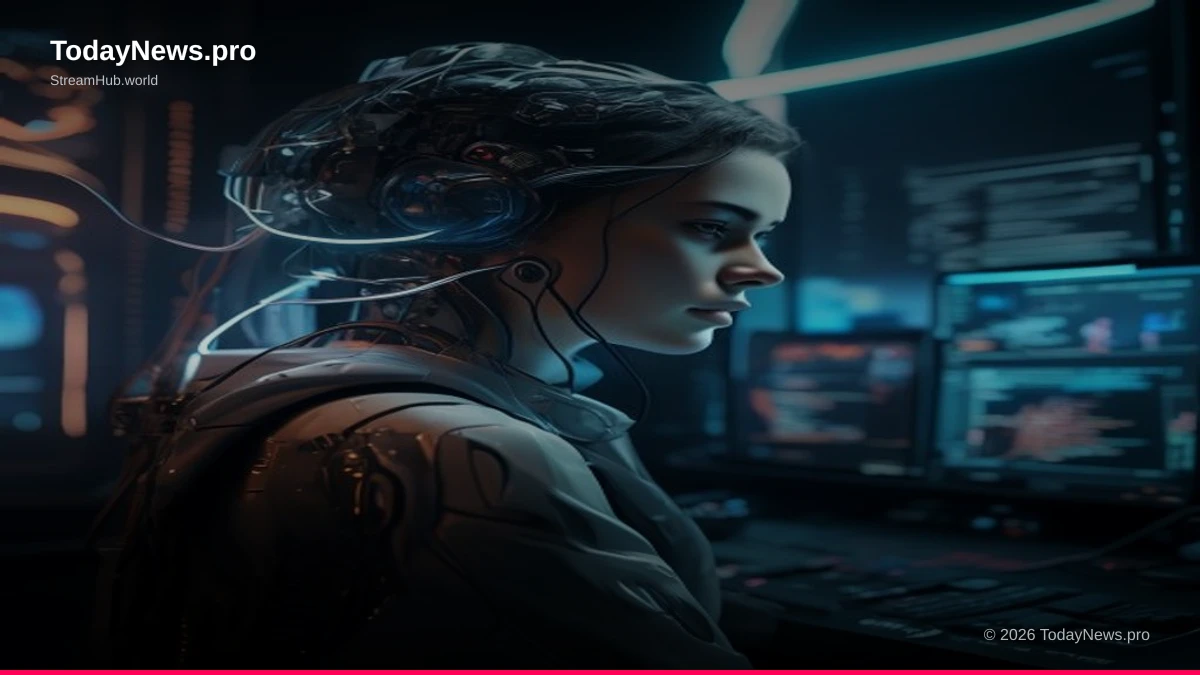
The global generative AI market is projected to surge from $15.6 billion in 2023 to $110.8 billion by 2030, representing a compound annual growth rate (CAGR) of 31.7%, according to a report by Acumen Research and Consulting. This explosive growth signifies a fundamental shift in how we approach creative tasks, making powerful AI tools accessible to individuals and businesses alike.
Generative AI: The Democratization of Creation
For decades, sophisticated creative tools were the exclusive domain of professionals with specialized training and expensive software. The advent of generative AI is dismantling these barriers, placing the power to generate text, images, music, and even code into the hands of virtually anyone with an internet connection. This democratization is not about replacing human creativity, but about augmenting it, providing new avenues for expression, exploration, and problem-solving.
Generative AI models, often trained on vast datasets, learn patterns and structures that enable them to produce novel content. This content can range from simple text-based responses to complex, multi-modal creations. The accessibility of these tools means that an aspiring novelist can brainstorm plot points, a small business owner can design marketing materials, or a student can understand complex scientific concepts through AI-generated explanations and visualizations. The implications are far-reaching, promising to accelerate innovation and broaden the scope of human ingenuity.
Understanding the Core Technology
At its heart, generative AI relies on machine learning algorithms, particularly deep learning models like Generative Adversarial Networks (GANs) and Transformer architectures. These models learn from existing data to create new data that resembles the training set but is not identical to it. For instance, a text generation model trained on a corpus of literature can learn the nuances of sentence structure, vocabulary, and narrative flow, allowing it to write new stories or articles. Similarly, image generation models learn the relationships between pixels and abstract concepts, enabling them to create photorealistic or stylized images from textual descriptions.
The underlying principle is predictive. Given a prompt or a starting point, the AI predicts the most likely continuation based on its training. This predictive capability, when applied across massive datasets, allows for astonishingly coherent and creative outputs. The continuous refinement of these models, driven by ongoing research and development, means that their capabilities are constantly expanding, pushing the boundaries of what's possible.
Unlocking Textual Prowess: AI for Writers and Communicators
The written word has been one of the first and most profoundly impacted domains by generative AI. Tools like OpenAI's ChatGPT, Google's Bard, and Anthropic's Claude have become indispensable for a wide array of writing tasks, from drafting emails and social media posts to crafting complex narratives and technical documentation.
For content creators, these AI assistants can act as tireless brainstorming partners, overcoming writer's block by suggesting different angles, keywords, or even complete paragraphs. They can assist with research by summarizing lengthy documents or providing factual information in an easily digestible format. Furthermore, they can refine existing text through grammar checks, style improvements, and tone adjustments, ensuring that the final output is polished and effective.
Brainstorming and Idea Generation
Staring at a blank page can be daunting. Generative AI can provide an instant spark. By feeding a general topic or a few keywords into a large language model (LLM), users can receive a plethora of ideas, outlines, and potential content angles. For example, an author struggling with a plot twist could ask an AI to suggest three unexpected turns for a detective novel, complete with brief explanations of their impact.
This iterative process of prompting and refining allows for rapid exploration of creative possibilities. It's akin to having a seasoned co-writer who never tires and has access to an encyclopedic knowledge base. The key is to be specific in your prompts to guide the AI towards the desired outcome. Instead of "write a story," try "write a short story about a sentient teacup who dreams of visiting the moon, set in Victorian England."
Content Refinement and Editing
Beyond generating new content, AI excels at polishing existing work. LLMs can act as sophisticated editors, identifying grammatical errors, suggesting stylistic improvements, and even adapting the tone of a piece. For instance, you could paste a draft of a marketing email and ask the AI to make it sound more urgent or more friendly, depending on the target audience.
These tools can also help overcome language barriers. For non-native speakers, AI can translate and rephrase text to ensure clarity and accuracy. For those aiming for specific audiences, AI can help tailor the language to be more accessible, formal, or persuasive. Wikipedia's extensive articles often serve as excellent training data for LLMs, contributing to their broad understanding of various subjects and writing styles. Wikipedia's entry on Generative AI provides a foundational overview of the technology.
Visual Virtuosity: Generating Art and Imagery with AI
The visual arts are experiencing a renaissance fueled by generative AI. Tools like Midjourney, DALL-E 3, and Stable Diffusion allow users to create stunning images from simple text descriptions, transforming abstract ideas into tangible visual realities. This technology is not just for professional artists; it's a powerful tool for designers, marketers, hobbyists, and anyone with a visual concept to bring to life.
The process is often as simple as typing a descriptive phrase, known as a "prompt." For example, "An astronaut riding a unicorn on the moon, in the style of Van Gogh, with a cinematic lighting." The AI then interprets these words and generates an image that attempts to match the description. The level of detail and artistic quality achievable is remarkable, often surpassing what might be expected from a single human artist in a comparable timeframe.
| AI Image Generator | Key Features | Ease of Use | Typical Cost |
|---|---|---|---|
| Midjourney | High-quality artistic output, strong community, Discord-based | Moderate | Subscription-based (starts around $10/month) |
| DALL-E 3 (via ChatGPT Plus/Microsoft Designer) | Excellent prompt understanding, integration with other tools, photorealism | Easy | Included with ChatGPT Plus or Microsoft 365 subscription |
| Stable Diffusion (various interfaces like DreamStudio, Automatic1111) | Open-source, highly customizable, can be run locally | Moderate to Advanced (depending on interface) | Free (open-source), paid interfaces/cloud options |
| Adobe Firefly | Focus on commercial safety, integration with Adobe Suite, generative fill | Easy | Included with Adobe Creative Cloud subscriptions |
Crafting Effective Visual Prompts
The art of prompt engineering is crucial for achieving desired results in AI image generation. A well-crafted prompt is specific, descriptive, and often includes stylistic elements. Consider the difference between "a cat" and "a fluffy ginger cat sitting on a windowsill, bathed in golden hour sunlight, digital art." The latter provides the AI with far more context, leading to a more nuanced and visually appealing output.
Experimentation is key. Users are encouraged to try different keywords, artistic styles (e.g., "oil painting," "watercolor," "cyberpunk," "photorealistic"), camera angles, and lighting descriptions. Many platforms offer features to refine images, such as upscaling, variations, and inpainting (editing specific parts of an image), allowing for iterative improvement and creative control.
Applications in Design and Marketing
For businesses and marketing professionals, generative AI image tools offer significant advantages. They can quickly generate unique visuals for social media campaigns, website banners, product mockups, and advertisements. This not only saves time and budget compared to traditional methods like stock photography or custom illustration but also allows for hyper-personalization of visual content.
Imagine a fashion brand needing different visuals for each product line, or a real estate agency requiring diverse property imagery. AI can produce these variations rapidly, tailored to specific campaign needs. Companies are also using these tools for mood boards, concept art, and even to visualize product prototypes before physical development, streamlining the entire design process. The Reuters news agency has extensively covered the impact of AI on creative industries, highlighting both opportunities and challenges. Reuters' analysis provides insights into this evolving landscape.
Melodies and Motion: AI in Audio and Video Production
While text and images have seen rapid adoption, generative AI is also making significant inroads into audio and video production, offering new possibilities for musicians, podcasters, filmmakers, and content creators.
In audio, AI can generate original music tracks in various genres, compose background scores for videos, or even create realistic voiceovers. Tools like Amper Music and AIVA can produce royalty-free music based on mood, genre, and desired instrumentation. For voiceovers, AI can clone voices or generate entirely new synthetic voices, offering flexibility for narration and character development.
AI-Powered Music Composition and Production
Musicians can leverage AI to overcome creative blocks, explore new melodic ideas, or generate backing tracks for practice or performance. AI music generators can be programmed to create songs in specific styles, tempos, and moods, providing a vast library of customizable audio content. This is particularly valuable for independent artists who may not have access to professional studios or session musicians.
For video creators, AI-generated music offers an efficient way to source background scores that perfectly match the tone and pacing of their content. Instead of spending hours searching for suitable royalty-free tracks, creators can generate custom music in minutes, tailored to their exact needs. This democratizes access to high-quality audio production for all levels of creators.
The Emerging Landscape of AI Video Generation
While still in its nascent stages compared to text and image generation, AI video generation is rapidly advancing. Tools like RunwayML and Pika Labs are enabling users to create short video clips from text prompts or existing images. This opens up exciting possibilities for dynamic storytelling, animated explainer videos, and unique visual effects.
The technology is moving towards generating longer, more coherent video sequences with better motion and narrative flow. Imagine creating a short animated advertisement for a new product simply by describing it, or generating a visual representation of a historical event. While fully autonomous AI filmmaking is still a distant prospect, these tools are already valuable for rapid prototyping and creating engaging visual content for social media and marketing purposes.
Coding Companions: AI as a Developers Assistant
The impact of generative AI extends beyond creative fields into the realm of software development. AI-powered coding assistants like GitHub Copilot, Amazon CodeWhisperer, and Google's Duet AI are transforming the way developers write, debug, and learn code.
These tools analyze code in real-time and suggest code completions, entire functions, and even tests. They can help developers write boilerplate code faster, identify potential bugs, and learn new programming languages or frameworks more efficiently. This significantly boosts developer productivity and can lower the barrier to entry for aspiring programmers.
Accelerating Code Development
One of the primary benefits of AI coding assistants is the acceleration of the development process. By suggesting code snippets and completing lines of code, these tools can drastically reduce the time spent on writing routine functions or implementing common patterns. This allows developers to focus more on the unique logic and architecture of their applications.
For example, when a developer starts typing a comment describing a function, an AI assistant can often generate the entire function body based on that description. This is particularly useful for repetitive tasks, such as writing API calls, database queries, or UI components. The ability to generate tests automatically also contributes to faster development cycles and improved code quality.
Enhancing Learning and Debugging
Beyond speeding up coding, AI assistants can also serve as valuable learning tools. When a developer encounters an unfamiliar piece of code or a complex concept, the AI can provide explanations, suggest alternative implementations, or even generate example code. This makes it easier to learn new languages, libraries, and best practices.
Debugging is another area where AI excels. By analyzing error messages and code context, AI tools can suggest potential causes for bugs and offer solutions. This can significantly reduce the time spent on troubleshooting, especially for complex or obscure issues. The ability to interact with the AI by asking questions about the code further enhances its utility as a debugging and learning companion.
Ethical Considerations and the Future of Human Creativity
As generative AI becomes more powerful and pervasive, it raises important ethical questions about authorship, copyright, bias, and the very nature of human creativity. While these tools offer immense potential, navigating these challenges is crucial for their responsible development and deployment.
One significant concern is the potential for AI-generated content to infringe on existing copyrights. Models trained on vast datasets of copyrighted material may inadvertently reproduce protected works. Furthermore, questions arise about who owns the copyright of AI-generated output: the user who prompted it, the developers of the AI, or no one at all? Legal frameworks are still evolving to address these complexities.
Authorship, Copyright, and Intellectual Property
The concept of authorship is being redefined. When an AI generates a piece of text or an image, is the AI the author, or is it the person who provided the prompt? Current legal interpretations often lean towards the human user as the author, provided there is sufficient human creative input. However, this is an active area of debate and legal challenge.
The implications for intellectual property are profound. If AI can generate content that is indistinguishable from human-created work, how do we protect original creations? This challenges existing copyright laws and may require new approaches to intellectual property protection, potentially involving watermarking AI-generated content or establishing clear guidelines for its use.
Bias and Fairness in AI-Generated Content
Generative AI models learn from the data they are trained on. If this data contains biases—whether racial, gender, or cultural—the AI will likely perpetuate and even amplify these biases in its output. This can lead to discriminatory or stereotypical content, which is particularly concerning in applications affecting public discourse or decision-making.
Mitigating bias requires careful curation of training data, ongoing monitoring of AI outputs, and the development of fairness-aware algorithms. Transparency about the data used and the limitations of AI models is also essential. The goal is to ensure that generative AI tools promote inclusivity and avoid reinforcing societal inequalities. As noted by UNESCO, ethical considerations are paramount in the development and deployment of AI. Their work often highlights the importance of human-centered AI. UNESCO's guidance on AI ethics provides a valuable framework.
Augmenting, Not Replacing, Human Creativity
Perhaps the most crucial aspect of generative AI's future is its role in augmenting, rather than replacing, human creativity. These tools can handle the drudgery, assist with inspiration, and accelerate the execution of creative ideas. However, the core of human creativity—intuition, emotion, lived experience, critical judgment, and the ability to imbue work with personal meaning—remains uniquely human.
The future likely involves a symbiotic relationship where humans leverage AI to explore creative territories previously inaccessible, pushing the boundaries of what art, literature, and innovation can achieve. The most impactful creations will likely come from those who master the art of collaborating with AI, using it as a powerful paintbrush, a sophisticated pen, or an insightful collaborator.
Getting Started: Practical Steps for AI Exploration
Embarking on the journey with generative AI is more accessible than ever. The first step is often the most important: simply start experimenting. The landscape of AI tools is vast and constantly evolving, but several user-friendly platforms can serve as excellent entry points.
For text generation, platforms like ChatGPT, Bard, and Claude offer free tiers or trials that allow users to explore their capabilities. For image generation, free versions or limited trials of tools like DreamStudio (for Stable Diffusion) or Bing Image Creator (powered by DALL-E 3) can provide a taste of AI art. The key is to approach these tools with curiosity and a willingness to learn through practice.
Choosing the Right Tools for Your Needs
The best AI tool for you depends on your specific goals.
- Text-based tasks: If you need help writing articles, emails, code explanations, or brainstorming ideas, large language models like ChatGPT, Bard, or Claude are ideal.
- Visual content: For creating images, logos, or illustrations, explore Midjourney, DALL-E 3, Stable Diffusion, or Adobe Firefly.
- Audio and Music: For generating music or sound effects, look into tools like AIVA or Amper Music.
- Coding Assistance: Developers will find GitHub Copilot and Amazon CodeWhisperer invaluable.
Mastering the Art of Prompt Engineering
As highlighted throughout this article, effective prompting is the bridge between your intention and the AI's output. Think of prompts as instructions for a highly capable, but sometimes literal, assistant. The more clear, specific, and descriptive you are, the better the results will be.
Experiment with different phrasing, include details about style, mood, context, and desired format. Don't be afraid to iterate. If the first output isn't quite right, refine your prompt, add more details, or try a different approach. Learning to "talk" to AI effectively is a skill that will only grow in importance.
Continuous Learning and Community Engagement
The field of generative AI is moving at an unprecedented pace. New tools and techniques emerge regularly. Staying updated is key to leveraging the latest advancements. Many AI platforms have active online communities, forums, and social media groups where users share tips, prompts, and their creations. Engaging with these communities can provide invaluable insights and inspiration.
Online courses, tutorials, and documentation are also excellent resources for deepening your understanding of specific tools and AI concepts. By embracing a mindset of continuous learning and exploration, you can unlock the full potential of generative AI to boost your creativity and achieve your goals.